Bora can turn an easy walk across Trieste into a surprisingly physical one, but it does not mean the city shuts down. The Bora wind in Trieste arrives in sharp, irregular gusts, so exposed waterfront routes become the main problem. City buses are usually the useful fallback, while boats are more vulnerable to cancellation. On stronger days, skip exposed piers, shorten outdoor walks, keep luggage under control and check transport notices before leaving your hotel or the station.
The important detail is the gustiness. A calm minute does not mean the wind has finished. Bora blows from the east and northeast, descending toward the Gulf from the Karst, and the next raffica, or gust, can be much stronger than the wind you felt a few seconds earlier.
How strong can the Bora actually get?
It is not simply Trieste’s name for an ordinary windy day. ARPA Friuli Venezia Giulia describes Bora as a cold, dry continental wind that is most frequent in winter but can occur in every season. Strong episodes can produce gusts well above 100 km/h, and readings above 150 km/h have been recorded on the Trieste coast.
That does not mean every Bora forecast is dangerous. The practical mistake is treating all forecasts alike. Look for the Italian words Bora moderata, Bora sostenuta, vento forte and especially raffiche. The gust forecast matters more to a pedestrian than a simple average wind-speed number.
For the latest regional forecast, use the official Meteo FVG bulletin rather than relying only on a generic weather app. The regional forecast regularly describes expected Bora strength specifically for Trieste and the coast.
Where walking becomes difficult first
Piazza Unità and the Rive
Trieste’s waterfront is where an ordinary sightseeing route can suddenly become awkward. Piazza Unità d’Italia is open toward the sea, and the broad Rive along the waterfront offer little protection compared with streets a few blocks inland. Expect sudden side gusts when coming around building corners and crossing open spaces.
You do not need to abandon the historic centre because the wind is blowing. Instead, treat the waterfront as optional. If crossing Piazza Unità feels uncomfortable, move through the streets behind the square and return to the sea when conditions ease.
Molo Audace is not the place to test how strong the wind is
Molo Audace projects straight into the Gulf and is one of the city’s most exposed sightseeing stops. On a mild windy day it can be exhilarating. During powerful gusts, walking to the end simply adds exposure, with sea spray and little reason to be there other than the view.
If the wind is strong enough that you are struggling to walk normally on the Rive, skip the pier. Do not interpret a short lull as an invitation to race out and back before the next gust.
Use the street network as shelter
The buildings behind the waterfront can provide much better protection, although no street should be assumed completely sheltered. A practical sightseeing pattern is to move between indoor stops through the historic centre rather than following the sea continuously.
During severe wind, also think about what is above you. Trieste’s municipal civil-protection planning identifies falling branches, roof materials and other windblown objects as hazards during extreme events. Avoid lingering under trees, scaffolding or visibly loose objects just because they offer temporary shelter.
What to wear and what not to carry
A waterproof jacket with a hood is much more useful than an umbrella when strong gusts are forecast. An umbrella can quickly become something you are fighting rather than something keeping you dry.
- Secure hats, scarves and anything clipped loosely to a bag.
- Keep at least one hand free rather than walking with a phone, coffee and umbrella at the same time.
- Zip backpacks and handbags fully. Lightweight papers and shopping bags disappear remarkably quickly in a gust.
- Wear shoes with reliable grip if rain, sea spray, snow or ice accompany the wind.
- Do not leave a light suitcase, stroller or shopping bag standing unattended while you check your phone.
The combination of wind and rain is much less pleasant than either condition separately. Locally, you may hear bora chiara for Bora with clearer weather and bora scura when cloud, precipitation and the wind occur together.
Arriving at Trieste Centrale with luggage
Trieste Centrale opens onto the Piazza della Libertà station area. From here, walking toward the centre is normally straightforward, but pulling a wheeled suitcase toward Corso Cavour and the waterfront becomes noticeably less attractive during strong gusts.
If you have a large suitcase, use a city bus or taxi for the short transfer rather than deciding you must walk simply because your hotel looks close on the map. Several urban routes connect the station area with the centre and the Rive. Routes change periodically, so check the live planner rather than memorising a bus number months before the trip.
If you do walk, keep the suitcase close to your body instead of letting it trail at full arm’s length. Lightweight four-wheel cases are particularly easy for a cross-gust to twist sideways.
What happens to Trieste buses during Bora
There is no special citywide “Bora timetable” under which buses automatically stop once the wind reaches a particular level. What matters is the actual condition of roads and individual routes.
Severe weather can lead to temporary diversions, suspended stops or road closures. TPL FVG publishes these through its service notices. Useful Italian terms include:
- deviazione: diversion;
- fermata sospesa: stop temporarily not served;
- percorso modificato: altered route;
- servizio sospeso: service suspended;
- servizio regolare: service operating normally.
If a stop on the Rive has been suspended, do not simply wait there because the shelter looks inviting. The notice normally identifies the replacement stop or changed routing.
The Trieste to Muggia boat needs more caution
Maritime transport is more directly exposed to the weather than the urban bus network. TPL FVG’s official rules state that services can be changed or suspended in adverse marine or weather conditions at the captain’s discretion.
The regular Trieste-Muggia passenger boat normally leaves from Molo Bersaglieri, close to Piazza Unità, and reaches Muggia in about 30 minutes. Before walking to the pier on a strong-wind day, check the current maritime-service information and the service alerts.
If the boat is suspended, Muggia is not cut off. The useful recovery option is the land route: urban line 20 connects Muggia with central Trieste and the railway-station area. Check that day’s timetable because routing and frequencies can vary by season.
What about the Opicina tram?
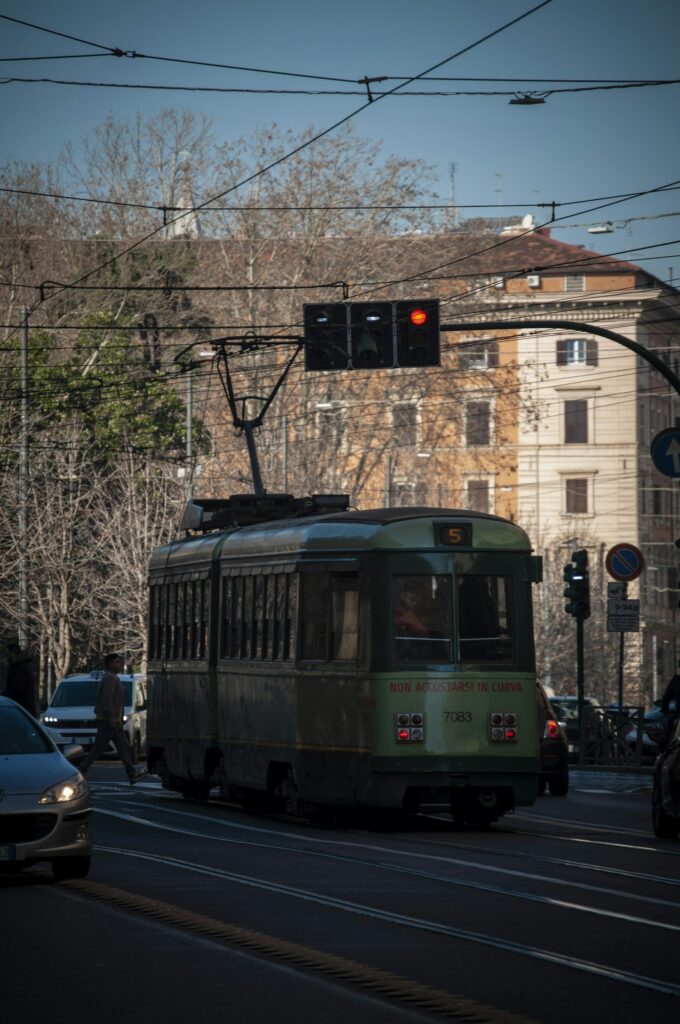
Do not assume the historic Tram di Opicina is either definitely running or definitely suspended merely because Bora is forecast. It is a separate transport service with its own operational notices, and its route climbs from the city toward the Karst plateau, where conditions can feel very different from the waterfront.
Check TPL FVG on the day rather than building an important connection around an unchecked tram departure. The same rule applies after any spell of extreme weather, when an obstruction or infrastructure issue may continue after conditions in the city centre have improved.
Trains and flights are a separate question
Strong wind in Piazza Unità does not automatically mean trains from Trieste Centrale are cancelled. Rail disruption depends on conditions affecting the railway itself, so check your train operator if severe weather is occurring rather than judging from what you can see outside your hotel.
The same applies to flights. Wind can affect aviation operations, but a windy city centre is not enough information to predict what will happen at the airport. Trieste Airport provides live flight information and advises passengers to confirm short-term operational changes with their airline.
A practical way to decide whether to walk
Do not try to invent your own universal wind-speed cutoff. Terrain, gust strength and official warnings matter more than one number on a weather app.
- Moderate Bora with no warning: normal sightseeing is often still practical. Expect a windier waterfront and decide locally whether Molo Audace is comfortable.
- Sustained Bora with strong gusts: shorten exposed sections, use buses more often and build the day around museums, cafés and sheltered streets.
- Conditions that make normal walking difficult: leave the waterfront and exposed viewpoints rather than continuing simply because they are on your itinerary.
- An official closure or safety warning: follow it. Do not walk around a barrier to get a photograph of the conditions that caused the closure.
Children, strollers and reduced mobility
Strong gusts make an otherwise flat pedestrian route more demanding for anyone who needs predictable footing. With young children, keep them close when crossing open squares and leave exposed piers for another time. A stroller should not be taken onto an exposed waterfront simply to complete a sightseeing checklist.
For wheelchair users, travelers with limited balance or anyone carrying heavy luggage, a bus or taxi can turn an unpleasant station-to-hotel or waterfront transfer into a very simple one. The problem is often not distance but the sudden sideways force of a gust.
Changing the sightseeing day instead of cancelling it
Trieste is unusually easy to rearrange because many indoor sights, cafés and historic streets are close together. If the waterfront is uncomfortable in the morning, move the exposed stops later rather than forcing the original order. You can also build your Italy itinerary around shorter walking sections and move coastal stops to a calmer day.
Miramare is another place where checking conditions first makes sense because much of its appeal comes from its position beside the Gulf and its park. If it is part of your plans, the Italy on Foot guide to Miramare Castle covers the practical visit and transport options.
If the Bora disrupts your original plan
- Check Meteo FVG to see whether the wind is expected to strengthen, weaken or persist.
- Check TPL FVG before leaving for a bus, tram or boat connection.
- If a maritime trip to Muggia is suspended, switch to the land bus rather than waiting indefinitely at the pier.
- If you arrive at Trieste Centrale during powerful gusts, use local transport for the last part of the journey instead of struggling down the waterfront with luggage.
- Move museums, cafés and sheltered historic-centre walks earlier in the day and leave Molo Audace, Barcola and other exposed coastal stops for better conditions.
The most useful rule is simple: Bora changes the route before it changes the trip. The waterfront becomes optional, buses become more valuable, maritime connections need explicit checking, and a brief calm spell should never be mistaken for proof that the gusts are finished.