A guided e-bike ride along Rome’s Appian Way typically takes three to six hours, depending on where you start and whether the route includes the Roman aqueducts or an underground catacomb visit. Most tours supply an electric bicycle, helmet and guide, but the riding conditions vary considerably. Some start close to the ancient road, while others leave from central Rome and involve cycling through city traffic before reaching the archaeological park.
When choosing an Appian Way bike tour, check the total distance, percentage of off-road riding, amount of city traffic and exact meeting point before paying. An electric motor makes hills easier, but it does not remove the need to balance, brake and steer over uneven ancient paving. For most visitors, riding experience and the proposed route matter more than the advertised difficulty label.
What is an Appian Way e-bike tour?
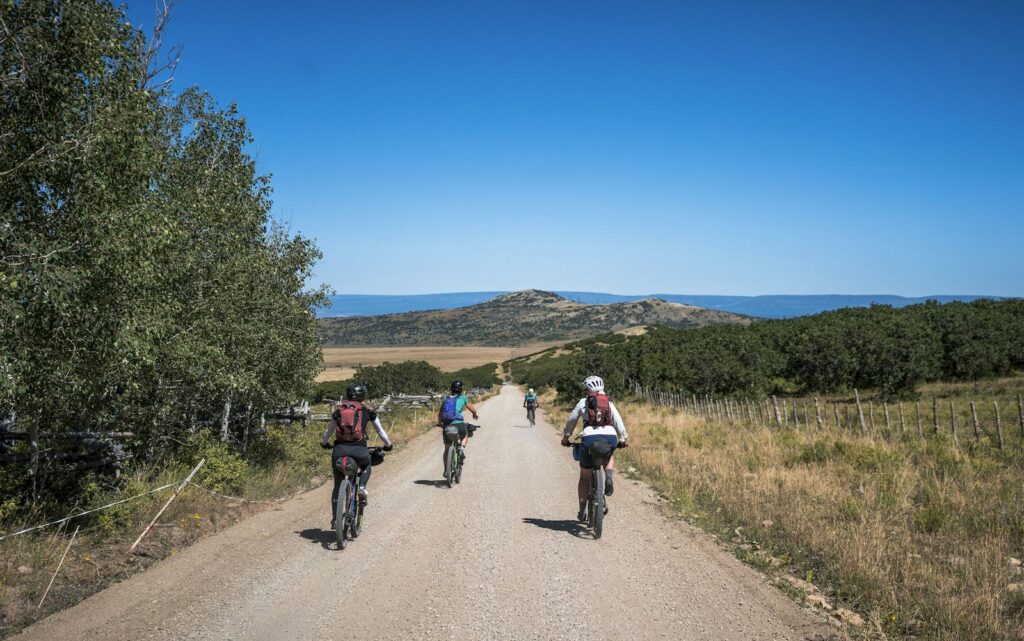
The Appian Way, or Via Appia Antica, is one of ancient Rome’s most important roads. Construction began in 312 BC, and its surviving sections pass Roman tombs, archaeological remains, stone walls and stretches of countryside within the modern city.
The road forms part of the larger Appian Way Regional Park, known as Parco Regionale dell’Appia Antica. This protected area also includes the Caffarella Valley, the Aqueducts Park and other archaeological landscapes.
Guided cycling tours use a combination of historic road surfaces, dirt tracks, park paths and, on some itineraries, ordinary city streets. The guide leads the group, explains the landmarks and decides where to stop.
Most electric bikes are pedal-assist models. You still pedal, but a motor provides assistance when you move. Under Article 50 of Italy’s Highway Code, standard electrically assisted bicycles have a continuous rated motor output of up to 250 watts, with assistance progressively reduced and cut off at 25 km/h or when the rider stops pedaling.
That assistance is helpful on inclines and longer routes. It does not make the bike self-balancing or prevent its wheels from slipping on loose gravel or uneven stones.
Three types of guided rides to compare
The starting location determines how much time you spend cycling in traffic and how much of the advertised tour is devoted to the archaeological landscape.
1. Tours starting near the Appian Way
Some operators begin at a rental or visitor center along Via Appia Antica. For example, the park information and rental area around Via Appia Antica 58-60 provides access to guided cycling routes and equipment.
These tours may concentrate on the ancient road, nearby Roman monuments and the Caffarella Valley. Depending on the route, some city traffic may still be unavoidable, especially around the northern approach.
This arrangement can be practical if you want to spend most of your booked time in the park rather than riding across central Rome.
However, you must arrange your own journey to the meeting point. Ask whether the starting location is accessible by public transport and how much walking is required from the nearest stop.
2. Tours cycling from central Rome
Other tours start near the Colosseum, Baths of Caracalla or another central location. The group collects its bikes and cycles toward the ancient road together.
This may be convenient if you are staying in central Rome, but it adds urban riding to the experience.
As a specific example, TopBike Rental describes its longer Appian Way routes as approximately 40% city riding and 60% off-road riding. These percentages apply to that operator’s published itinerary, not to every guided tour.
Ask exactly which city streets are used and whether the route includes dedicated cycle paths, quiet roads or busy junctions.
For someone comfortable cycling in traffic, the journey out of Rome may be part of the experience. For a nervous rider, it can be the least enjoyable portion of the day.
3. Tours with a shuttle transfer from central Rome
Some operators arrange a minibus transfer from the Circus Maximus area to the Appian Way before the cycling begins.
This allows the group to avoid much of the urban approach and begin riding closer to the archaeological landscape.
For example, Bicycle Roma currently advertises an approximately four-and-a-half-hour experience that includes a transfer from the Circus Maximus area, a catacomb visit and guided cycling through the Appian Way and Aqueducts Park.
Check whether the advertised duration includes the outward and return transfers. A five-hour experience with transportation and a 45-minute catacomb visit may provide considerably less actual cycling time than a five-hour ride starting at the park.
Also confirm whether the bikes travel separately or are already waiting at the cycling start point.
Choosing between a three-hour, four-hour and six-hour tour
Tour duration is useful, but distance and terrain offer a better indication of how demanding the ride will be.
Three-hour tours
A shorter route can focus on the Appian Way’s archaeological landmarks and nearby parkland without attempting to reach every major site.
For example, one published guided itinerary covers approximately 12.5 kilometres in three hours, passing the Maxentius complex, the Mausoleum of Cecilia Metella and other remains along the ancient road.
Another three-hour route focuses more heavily on the Caffarella Valley and covers approximately 6.5 kilometres.
These are very different amounts of cycling within the same duration. Choose the shorter distance if you prefer frequent stops, more time listening to explanations or a gentler introduction to riding on uneven ground.
Four-hour tours
Four-hour experiences often extend beyond the main Appian Way monuments into the Aqueducts Park. This adds open landscape and large aqueduct remains to the historical road experience.
Some routes cover approximately 18 to 27 kilometres, depending on the starting point and the paths selected.
A four-hour tour with a 27-kilometre route may involve steady riding and limited time at each stop. Do not assume that four hours means a relaxed cycling pace.
For reasonably confident cyclists, this can be a useful compromise between seeing several landscapes and avoiding a full-day excursion.
Five- to six-hour tours
Longer tours commonly add a guided visit to the catacombs, additional viewpoints or more substantial breaks.
For example, one published six-hour itinerary covers approximately 27 kilometres and includes a guided underground catacomb visit. Its four-hour version covers a similar distance but omits the underground visit.
This illustrates why comparing hours alone can be misleading. Two extra hours may be spent at an attraction and during scheduled stops rather than cycling farther.
Choose a longer tour if you want both cycling and underground archaeology, and if you are comfortable spending much of the day on a bike.
Which landmarks will you see along the route?
The precise itinerary depends on your starting point, available time and whether the tour continues toward the aqueducts. Most operators select from several established archaeological and natural areas.
Porta San Sebastiano and the Aurelian Walls
Porta San Sebastiano is a monumental gate in Rome’s ancient defensive walls and a useful landmark near the northern approach to Via Appia Antica.
Tours leaving from central Rome may pass through or near this area on the way to the park.
Ask whether the gate is a photography stop or simply a landmark passed while cycling. It may appear in the itinerary without a separate visit to the associated museum.
Church of Domine Quo Vadis
The small church known as Domine Quo Vadis stands near the northern section of the Appian Way. It is associated with the Christian tradition of St. Peter encountering Jesus while leaving Rome.
Some routes use this area as a reference point before continuing toward the catacombs and the quieter stretches of the ancient road.
The area is important for route planning because traffic conditions change farther south. The park authority recommends using a separate path through the San Callisto catacomb property when available to avoid part of the busier road.
Villa and Circus of Maxentius
The Maxentius complex includes the remains of an imperial villa, an ancient circus and the Mausoleum of Romulus.
This is an interesting stop for understanding how large Roman properties extended beyond the city walls.
Some tours explain the complex from outside, while others include time to enter accessible sections when they are open.
Ask whether the itinerary includes an interior visit and how long the group will spend there. Stopping outside the gates for a photograph is different from exploring the archaeological site.
Mausoleum of Cecilia Metella
The Mausoleum of Cecilia Metella is one of the most recognizable monuments along the Appian Way. Its circular stone structure stands beside the historic road near the beginning of the particularly scenic archaeological stretch.
Most cycling tours pass the monument, and many stop nearby for an explanation and photographs.
Entering the mausoleum is a separate matter. Ask whether admission is included or whether the group views it only from the road.
Villa dei Quintili and other Roman ruins
Longer routes may pass the extensive remains associated with the Villa dei Quintili, an ancient Roman residential complex later connected with Emperor Commodus.
Depending on the route, the guide may describe the ruins from outside or arrange a separate visit.
If entering the villa matters to you, check the itinerary carefully. A tour that passes its perimeter does not automatically include admission or enough time to explore it.
Park of the Aqueducts
The Parco degli Acquedotti is known for the large remains of ancient Roman aqueducts crossing open green space. It offers a different landscape from the tomb-lined Appian Way.
The park covers approximately 240 hectares and includes dirt paths used by walkers and cyclists. It is generally accessible without an entrance ticket.
Reaching the aqueducts requires additional cycling and sometimes road crossings between park sections. Ask how the guide connects the two areas and how much distance the extension adds.
If the aqueducts are the main reason you want the tour, confirm that the route actually reaches the arches rather than stopping at a distant viewpoint.
Caffarella Valley
The Caffarella Valley is another important part of the regional park, with fields, paths, historic remains and agricultural landscapes.
Some tours travel through the valley when returning toward their starting point. Others concentrate on the Caffarella and nearby Appian Way sections.
The park authority identifies steep slopes and uneven surfaces in several parts of the valley. A route through the Caffarella should therefore be evaluated by its exact paths, rather than simply being described as an easy park ride.
How difficult is cycling on the ancient Roman road?
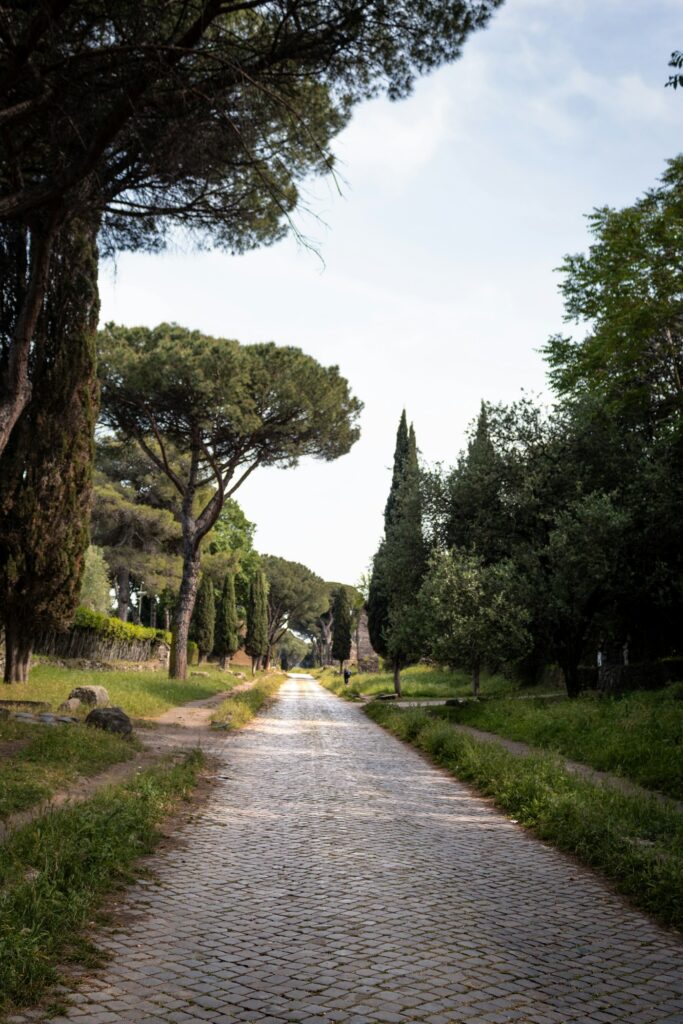
The Appian Way has several different surfaces, including modern asphalt, small cobblestones, compacted dirt and original Roman stone paving.
The ancient paving, called basolato, consists of large stone slabs. Some are rounded or worn, with gaps and irregular edges. Riding directly across these surfaces can be uncomfortable, particularly on a bike with narrow tires or limited suspension.
In places, cyclists can use dirt tracks running beside the original stones. These may provide a more comfortable line, although they can become muddy or slippery after rain.
A suitable e-bike helps with the effort of pedaling, but it cannot compensate for poor balance, weak braking skills or an inability to control the bike at low speeds.
If you are unsure about a section, get off and walk the bike. There is no reason to ride over difficult stones simply because you are participating in a guided group.
Before booking, ask what proportion of the route uses original paving, rough dirt paths and ordinary roads. A description such as “easy e-bike tour” may refer to the physical effort rather than the technical difficulty.
Is the Appian Way closed to cars?
Parts of the Appian Way have traffic restrictions, but the entire road is not permanently car-free.
The regional park publishes specific restrictions for Sundays, public holidays and the archaeological sections farther south.
Sunday and public-holiday restrictions
According to the park authority, motor-vehicle restrictions apply along Via Appia Antica from Porta San Sebastiano toward Frattocchie and Santa Maria delle Mole on Sundays and public holidays, subject to authorized exceptions.
The published restricted hours are:
- Standard time: 9 a.m. to 4 p.m.
- Daylight saving time: 9 a.m. to 6 p.m.
These restrictions can make Sunday cycling more comfortable, particularly along parts of the northern approach that carry ordinary traffic on other days.
However, access restrictions do not guarantee that every section is completely free of vehicles. Authorized traffic, road crossings and connections outside the restricted area still require attention.
Weekday traffic restrictions
On ordinary weekdays, the northern part of the route includes streets where cyclists share space with motor vehicles.
Farther south, the road enters a permanent limited-traffic section around the Mausoleum of Cecilia Metella. Access for ordinary through traffic is restricted, although authorized vehicles may still be present.
The Appian Way Regional Park’s official route information explains the different sections, road surfaces and traffic conditions.
If avoiding city traffic is a priority, consider a tour starting within the park or one that uses a shuttle to reach the quieter section. Still ask about crossings and any unavoidable road riding.
The San Callisto route can affect your tour
The regional park recommends a private access road through the grounds of the Catacombs of San Callisto as an alternative to approximately 1.5 kilometres of busier Appian Way traffic.
This route is useful for cyclists approaching the quieter archaeological section, but it is subject to the catacombs property’s opening arrangements.
The park currently describes the access as generally available from 9 a.m. to 6 p.m., except on Wednesdays and during its seasonal closure.
For visitors planning early 2027 trips, the Catacombs of San Callisto currently publish an annual closure from January 13 to February 10, 2027.
Ask the operator what route is used when the access is closed. A guide may have an alternative through the Caffarella Valley or may need to use a road section with more traffic.
The important detail is how the detour changes the actual riding conditions, not merely whether the tour can still operate.
Do you need previous e-bike experience?
You do not necessarily need to have used an electric bicycle before, but you should already be a confident cyclist.
Most pedal-assist bikes are straightforward to learn, and a guide can explain how to switch assistance levels and operate the gears.
However, electric bikes are often heavier than conventional bicycles. That extra weight becomes noticeable when stopping, making tight turns or moving over loose stones.
Before leaving the rental point, make sure you can:
- Start and stop without losing balance.
- Use both brakes smoothly.
- Make controlled turns at low speed.
- Look behind you while maintaining a straight line.
- Change assistance levels without becoming distracted.
- Walk the bike comfortably over a difficult section.
- React safely if another rider stops unexpectedly.
Some operators conduct a short riding assessment before departure and may refuse participation if a guest cannot safely handle the bicycle.
If you have not ridden a bicycle for several years, consider whether a long, partly off-road tour is the right place to return to cycling.
Choosing the right e-bike and equipment
Many Appian Way operators use electric hybrid bikes or e-mountain bikes with wider tires designed for mixed surfaces.
For rough sections, tire width, reliable brakes and suspension can make a meaningful difference.
Ask whether the bicycle will be selected according to your height and whether the operator provides different frame sizes.
You should be able to mount and dismount comfortably, reach the brakes and control the bike while stopped. If you are particularly short or tall, confirm availability before booking rather than assuming the fleet will have an appropriate size.
Check whether the tour supplies a properly fitted helmet, water and a small bag for essential belongings. Wearing a suitable helmet is sensible on these mixed surfaces, and many operators make helmet use a condition of participation.
Also ask whether the bike has a suspension fork, how the assistance works and whether the guide provides a demonstration before the group begins.
Can children join Appian Way e-bike tours?
Children may be able to participate, but age, height and equipment limits vary considerably between companies.
One provider may accept children on child seats or extension bikes, while another may require every participant to ride independently.
Current published operator policies illustrate the differences. EcoBike Roma advertises certain e-bikes for children from age eight who are at least 135 cm tall. TopBike Rental describes child seats for ages one to four, extensions for ages five to eight and independent e-bikes for children aged nine and above on specified tours.
These are individual provider policies, not general rules applying to every tour.
When booking for children, send their ages, heights, weights and cycling experience. Ask exactly which equipment will be used and whether it is suitable for the particular off-road route.
A child seat or extension adds weight and changes the balance of the adult’s bicycle. Some operators explicitly classify their longer mixed-surface routes as more difficult when carrying a child.
Do not assume that a child who can comfortably cycle around a park at home is ready for a long excursion involving Roman paving, rough tracks and road crossings.
What if someone in your group has limited mobility?
Pedal assistance can reduce the effort required to cycle uphill or cover longer distances. It does not remove the physical demands of mounting a bike, balancing, steering or absorbing bumps.
Travelers with knee, hip, back or balance problems should discuss their limitations with the operator before booking.
Ask whether the route includes steep slopes, rough paving or situations where the rider must dismount and walk the bicycle.
A step-through frame may make mounting easier, but availability needs to be confirmed. It is also important that the rider can operate the brakes and control the weight of the bike safely.
For someone unable to ride confidently, a walking tour of a shorter section, an authorized golf cart excursion or another guided transport arrangement may be more suitable.
Should you include a catacomb visit?
The Appian Way is home to several important Christian burial sites, including the Catacombs of San Callisto and San Sebastiano.
Including a catacomb visit adds a different experience to the cycling route. Instead of viewing monuments from the road, you descend into underground galleries with an authorized guide.
However, catacomb admission does not automatically come with an e-bike booking. Some tours include it, some offer it as an optional upgrade and others pass the entrance without stopping.
For San Callisto, the official visitor information states that underground visits are guided, usually last about 40 minutes and operate at scheduled intervals. The catacombs are currently closed on Wednesdays, with additional annual and holiday closures.
San Sebastiano also offers guided visits only, with its own calendar and admission arrangements. Its official website currently lists Monday as the weekly closing day.
Check the official San Callisto opening calendar and the San Sebastiano visitor information for your dates.
Also remember that catacomb visits involve stairs, underground passages and uneven walking surfaces. A rider who is comfortable on the bike may still find the underground visit difficult.
If you want more background before choosing, the Italy on Foot guide to the Catacombs of San Callisto explains what visitors can expect underground.
Do you need admission tickets for the Appian Way?
Access to the historic road and the open areas of the regional park is free. You do not need a general admission ticket simply to cycle along Via Appia Antica or through the accessible sections of the surrounding parkland.
Individual archaeological sites have their own access arrangements. The national archaeological park introduced revised ticketing on July 1, 2026, including a €12 combined ticket valid for seven days from first entry, subject to the specified booking and access conditions. This covers several listed archaeological sites, including the Mausoleum of Cecilia Metella and Villa dei Quintili, but does not cover the separately managed catacombs.
Review the official archaeological park ticket rules if your tour includes entering paid sites.
Ask the cycling operator to distinguish between landmarks seen from outside and attractions entered during the tour.
How much do guided e-bike tours cost?
Prices vary according to the duration, group size, route, equipment and whether admission tickets or transfers are included.
As a current advertised example, TopBike Rental lists a four-hour shared Appian Way and Aqueducts tour at €65 per person and a six-hour version with a catacomb visit at €85 per person. Those are that operator’s published prices, rather than standard charges across Rome.
Private group bookings may cost several hundred euros. EcoBike Roma, for example, advertises guided park-based routes starting from €240, with the final booking arrangements depending on the chosen experience.
When comparing quotes, establish whether the price includes:
- The electric bicycle and appropriate frame size.
- A fitted safety helmet.
- The guide’s services for the full route.
- Any shuttle between central Rome and the park.
- Admission tickets to catacombs or archaeological sites.
- Water or refreshments.
- Child seats or extension bikes, if required.
- Personal accident insurance, if offered.
- Taxes and booking fees.
A shorter tour with separate transport and admission charges can end up costing more than a longer package with those items included.
Group tour or private guide?
A shared tour is generally more economical and works well when you are comfortable maintaining the advertised pace.
Before joining one, check the maximum group size and the minimum number of participants required for departure. Some operators reserve the right to reschedule or cancel if too few people book.
A private tour gives your group more flexibility over pace and stopping arrangements, within the limits of the route and access rules.
It can be useful for families, photographers, experienced cyclists who want a particular itinerary or groups whose members have different fitness levels.
However, private does not mean that any route is possible. Archaeological-site opening times, busy roads, weather and path restrictions still apply.
If your main concern is road safety or limited cycling experience, explain that before booking. A private guide cannot make an unsuitable route safe merely by reducing the number of participants.
Where exactly do you meet the guide?
Meeting points are easy to confuse because many tours are marketed as departing from Rome without identifying where the cycling actually begins.
A booking may require you to meet:
- At a bike rental shop near the Colosseum.
- At the Appian Way information center around Via Appia Antica 58-60.
- Near Circus Maximus for a shuttle transfer.
- At another specified shop or park entrance.
Ask for the full street address and building number, not simply “Appian Way” or “Circus Maximus.”
Check whether the tour finishes at the same point. This matters if you plan to continue sightseeing or have a restaurant or museum reservation afterward.
Allow time for registration, helmet fitting and a bicycle adjustment. Arriving exactly at the advertised departure time may be too late if the group is expected to be ready to ride at that moment.
What should you wear and bring?
Wear comfortable clothes suitable for cycling and closed-toe shoes with a secure grip. Avoid loose trousers or clothing that could catch in the chain or moving parts of the bicycle.
In summer, bring sunscreen and adequate water. Large sections of the route are exposed to the sun, and the temperature can feel considerably warmer away from shaded streets.
During spring and autumn, a lightweight rain jacket can be useful. In winter, gloves and an extra layer may make the ride more comfortable, particularly in the morning.
A small bag is usually sufficient for personal belongings. Some operators supply handlebar bags or allow small backpacks, but larger luggage should be left at your accommodation.
Ask whether the route includes reliable opportunities to refill water. The regional park identifies drinking fountains along parts of the Appian Way, but facilities become less frequent on more remote stretches.
What about lunch, toilets and rest breaks?
Not every route includes a meal. Some operators schedule a short refreshment stop, while others provide time to buy food independently.
Ask whether the quoted duration includes lunch and whether the meal is included in the price.
Toilets are another useful consideration. Facilities are available around some visitor centers, catacombs and nearby businesses, but you should not expect them at every archaeological stop.
If you need regular breaks, mention this when booking. The guide may be able to plan appropriate stops, although options are more limited on longer countryside sections.
For a tour lasting five or six hours, do not leave breakfast to chance. Eat beforehand unless the operator explicitly confirms a substantial early food stop.
What happens if it rains?
The Appian Way can be challenging after rain because dirt paths may become muddy, puddles can hide uneven surfaces and stone paving may become slippery.
Some guided tours operate in light rain and provide ponchos. Others may change the route, postpone the ride or cancel when conditions become unsafe.
Ask whether the operator changes its itinerary after heavy rain, even when the weather has cleared by departure time.
A tour that is manageable on dry compacted dirt can become significantly more difficult when the surface is wet.
Before paying, confirm who decides whether the tour operates, what weather conditions qualify for rescheduling and whether a refund is available if the activity is cancelled.
Do not assume that a rainy forecast automatically entitles you to cancel without charge.
What happens if your e-bike breaks down?
A guided tour should have a clear procedure for mechanical problems and flat tires.
Ask whether the guide carries basic repair equipment, whether a replacement bicycle can be supplied and what happens if the bike cannot be repaired on the route.
Electric bikes also depend on battery capacity. A properly planned tour should use equipment with sufficient charge for the itinerary, but ask what happens if the battery or electrical assistance fails.
If someone cannot continue, the operator should explain whether assistance or collection is available and whether additional transport costs apply.
Do not assume that a support vehicle follows every cycling group. Some tours use a shuttle only at the beginning and end, while others have no accompanying vehicle.
Is it better to rent an e-bike and explore independently?
You can rent a bicycle or e-bike near the Appian Way and explore the accessible park routes without booking a guided tour.
This can be a less expensive alternative for confident cyclists who are comfortable following a map and making their own decisions about road crossings and difficult surfaces.
The park information center publishes cycling routes and offers maps and practical guidance. The official Appian Way visitor information explains rental locations and access to different sections.
However, independent riders must plan around traffic restrictions, opening times and route conditions themselves. A line on a digital map may follow an ancient paved section that is uncomfortable to ride or a road that carries more traffic than expected.
A guided tour is more useful when you want historical explanations, help connecting the different park areas and someone familiar with the safer available routes.
If you simply want an hour or two of relaxed cycling, renting a bike for a short park route may be enough.
How to fit the ride into your Rome itinerary
For most travelers, an Appian Way excursion works best as a dedicated morning or half-day activity.
Even a four-hour tour can occupy most of the day once you account for travel to the meeting point, checking in, the ride itself and returning to your accommodation.
Choose a day when you do not have another demanding attraction immediately afterward. Cycling over rough surfaces can be tiring, even with electric assistance.
If you want to visit the Colosseum or Roman Forum on the same day, leave enough time for a break and confirm your return location before purchasing timed-entry tickets.
You can use the Italy on Foot trip planner to organize the cycling excursion alongside your other Rome activities, transport connections and meal plans. Record the actual meeting address and expected finishing time rather than relying on the tour title alone.
For summer visits, an earlier ride may be more comfortable than spending the hottest hours of the afternoon on exposed paths. In winter, choose a departure that leaves enough daylight to complete the itinerary.
Cancellation policies and booking changes
Cancellation rules differ between operators. Some shared tours allow free cancellation until 24 hours before departure, while private bookings may require more notice or a non-refundable deposit.
Check the terms before paying, especially if your Rome schedule depends on flights, trains or other activities that may change.
Ask what happens if:
- The minimum number of participants is not reached.
- Your family arrives late at the meeting point.
- Bad weather makes the planned route unsafe.
- An archaeological site or catacomb is unexpectedly closed.
- You cannot safely handle the assigned bicycle.
- A member of your group becomes ill.
- The tour must be shortened because of a mechanical problem.
Pay particular attention to riding-skill requirements. Some operators state that a guide may refuse to let a participant continue if they cannot demonstrate safe bicycle control.
Ask whether such a refusal leads to a refund, partial refund or loss of the booking fee. This can be especially important when someone in your group has very little cycling experience.
Questions to ask before booking an Appian Way e-bike tour
A detailed enquiry should establish the route, equipment, riding conditions and total cost before you commit.
- Where exactly does the tour start and finish?
- Do we cycle from central Rome, meet inside the park or use a shuttle transfer?
- What is the total distance in kilometres?
- How much of the route is on city roads, dirt tracks and original Roman paving?
- Are there busy junctions or unavoidable traffic sections?
- How does the route change on Sundays or when the San Callisto access road is closed?
- What cycling experience is required?
- Is there a riding assessment before departure?
- Which e-bike models and frame sizes are available?
- Are helmets included and required?
- Can children participate, and what equipment is supplied for their ages and weights?
- Are the catacombs included, and which site will we visit?
- Are admission tickets and any shuttle transfer included in the quoted price?
- How many people will be in the group?
- What is the minimum number required for the tour to operate?
- Will there be restroom, water and food stops?
- What happens if the weather makes the route unsafe?
- What assistance is available if a bicycle breaks down or someone cannot continue?
- What is the total price, including any insurance, equipment or booking fees?
- What are the cancellation, rescheduling and late-arrival conditions?
For confident cyclists who want to see the aqueducts and Roman ruins, a guided four-hour ride can provide a useful balance of distance and sightseeing. Choose a longer excursion if entering the catacombs is important, and consider a shorter park-based route if you prefer fewer kilometres or want to avoid much of the city approach. Whatever you book, confirm the road and off-road sections, the actual riding distance and the bike’s suitability before paying. Those details will tell you far more about the experience than the word “easy” in a tour description.