Vespa tours in Rome come in two main formats: you drive your own scooter behind a guide, or you ride as a passenger while an experienced local driver handles the traffic. Most guided experiences last around two to three hours and combine sightseeing from the road with stops at viewpoints and landmarks. The passenger option requires no driving licence, while self-drive tours require suitable documentation and previous scooter-riding experience.
Before booking a Vespa tour Rome visitors should decide how comfortable they are with real city traffic. A guided convoy still involves busy junctions, uneven cobblestones and unpredictable road conditions. Riding with a driver lets you concentrate on the surroundings, although you still need to be comfortable sitting on the back of a moving scooter. The route, safety requirements, insurance and cancellation terms should all be confirmed before paying.
What are the different types of Vespa tours in Rome?
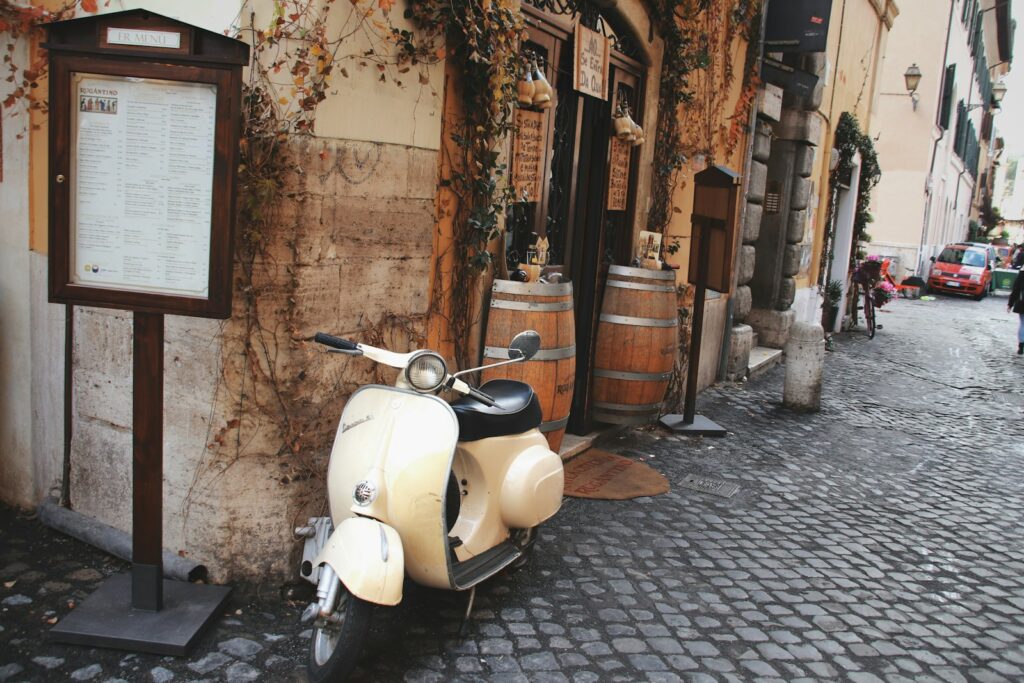
Several experiences are advertised under the same general description, but the practical differences are significant. A self-drive tour, a passenger ride and a Vespa sidecar excursion require different levels of participation.
Self-drive Vespa tours: you control the scooter
On a guided self-drive tour, you ride your own Vespa and follow a guide who leads the group through Rome. The guide usually chooses the route, coordinates stopping points and provides commentary when everyone parks.
You remain responsible for controlling your scooter, following traffic laws and maintaining a safe distance from other vehicles. The guide cannot brake, steer or react to hazards for you.
Most self-drive tours require previous experience riding a motor scooter or motorcycle. Some operators conduct a short practical assessment before departure and can refuse participation if a customer cannot demonstrate safe control.
This format is suitable for travelers who already ride scooters confidently and want the experience of driving a Vespa themselves.
It is less suitable for someone who has never used a motorbike, has only ridden an electric kick scooter or expects the guide to teach them how to ride.
Vespa tours with a driver: you ride as a passenger
On a passenger tour, a local driver controls the Vespa while you sit on the rear seat. You wear a helmet, follow the driver’s safety instructions and travel between sightseeing stops without needing a motorcycle licence.
For two travelers, this generally means two scooters with two drivers, unless the operator offers another approved vehicle arrangement. A standard two-seat Vespa cannot carry a professional driver and two paying passengers together.
The driver may provide commentary at stops, or a separate guide may lead the group. Ask how the sightseeing explanations work, especially if the tour advertises historical information rather than simply a scenic ride.
Passenger tours are often a more practical choice for first-time visitors who want to experience Rome by scooter without taking responsibility for driving in unfamiliar traffic.
However, sitting on the back still requires balance, appropriate posture and the ability to hold on securely. It is not equivalent to sitting inside a car.
Vespa sidecar tours
Some Rome companies offer guided rides using Vespas fitted with sidecars. The guest may sit in an attached sidecar rather than behind the driver.
This provides a different riding position and can be appealing to people who do not want to sit on the rear seat of a two-wheeled scooter.
Sidecar seating arrangements vary, so ask how many guests each vehicle accommodates, how passengers are restrained and whether helmets are supplied and required for the particular vehicle.
A sidecar does not automatically make the experience wheelchair accessible or suitable for every traveler with reduced mobility. Boarding may still involve stepping down into a low seat, bending the knees and climbing out afterward.
Rome’s official tourism website lists a Vespa sidecar sightseeing experience, illustrating this alternative to conventional passenger and self-drive tours.
Short Vespa rides with photographs
Some experiences concentrate on taking photographs with a Vespa against Roman landmarks. These may involve a relatively short ride, several planned photo stops and little historical commentary.
That can be appropriate if your priority is photographs rather than learning about the city’s history.
Before booking, check how much time is spent riding, how many locations are visited and whether photographs are taken by the driver, a separate photographer or simply with your own phone.
A 60-minute photo experience and a three-hour guided sightseeing tour are different services, even when both advertisements show Vespas parked near the Colosseum.
Should you drive yourself or book a driver?
The decision should begin with your existing riding experience.
- Choose self-drive if you regularly ride scooters or motorcycles, have the appropriate licence and feel comfortable controlling a vehicle in busy urban traffic.
- Choose a passenger tour if you want to experience the ride but would rather leave steering, braking and route decisions to a local driver.
- Consider a sidecar if you prefer a different seating arrangement and the vehicle meets your physical and safety requirements.
- Choose another type of tour if you are uncomfortable on motorcycles, have significant balance difficulties or cannot meet the operator’s passenger requirements.
Driving with a guide removes much of the navigation problem, but it does not remove the hazards of riding. If the main reason you want a guide is that you are worried about controlling a scooter, the passenger option is likely to be more appropriate.
What driving licence do you need for a self-drive Vespa tour?
Italian licensing rules depend on the vehicle’s category and engine size. The operator must also be satisfied that your documents meet its rental and insurance conditions.
Common Vespa tour vehicles include 125cc automatic scooters, although some companies use different models.
Under Italy’s driving licence system:
- Category AM: Covers qualifying mopeds, including conventional 50cc vehicles with a maximum design speed of 45 km/h.
- Category A1: Covers qualifying motorcycles up to 125cc and 11 kW, within the applicable power-to-weight limit.
- Categories A2 and A: Cover additional motorcycle categories according to their restrictions.
- Italian Category B: Also allows the holder to ride qualifying A1 motorcycles within Italy under the national equivalence rules.
The last point causes confusion among international visitors. Italy’s permission to ride certain 125cc motorcycles with a Category B car licence is a national entitlement. Travelers holding licences issued in other countries should not automatically assume that their ordinary car licence gives them the same motorcycle entitlement.
Before booking, send the company the country that issued your licence, its categories and the exact vehicle you want to ride. Ask it to verify that your documents authorize that vehicle in Italy and meet the insurance requirements.
The Italian Ministry of Infrastructure and Transport explains the national Category B motorcycle entitlement, while Article 125 of the Highway Code sets out licence equivalences.
Do American, British and other foreign visitors need an International Driving Permit?
For licences issued outside the EU and European Economic Area, Italian law generally requires the original valid national licence together with an International Driving Permit (IDP) or an official Italian translation, subject to applicable international agreements.
An IDP accompanies your national licence. It does not create a motorcycle qualification that your underlying licence does not provide.
EU and EEA licences are recognized under their applicable rules, but the actual vehicle category still matters. British and other non-EU licence holders should confirm the documentary requirements for their particular circumstances rather than relying on a general statement about foreign licences.
Check Article 135 of the Italian Highway Code for the rules concerning non-EU and non-EEA driving licences.
Some tour operators apply additional minimum ages or riding-experience requirements. One may accept drivers from age 18, while another requires drivers to be at least 20.
Bring the original physical documents requested by the provider. A photograph of your driving licence on your phone may not be accepted.
Can you learn to ride a Vespa during the tour?
A guided sightseeing tour should not be treated as a beginner motorcycle lesson.
Most self-drive operators expect participants to understand throttle control, braking, steering and balance before arriving. The introductory briefing usually explains the particular scooter and the planned ride rather than teaching basic motorcycling skills.
Even modern automatic Vespas require practice. They are heavier than bicycles, accelerate differently and demand controlled braking at low speeds.
Rome adds further challenges: cobblestones, narrow streets, taxis, buses, motorcycles filtering through traffic and pedestrians crossing unexpectedly.
Ask whether the operator provides a practical riding check before entering traffic and what happens if you do not pass it.
Some companies may offer an alternative passenger arrangement for an additional charge. Others may cancel your participation without refund when you fail to meet the stated experience requirements.
If you have no real scooter experience, book a passenger tour or take a proper riding course elsewhere before considering a self-drive experience.
What routes do Vespa tours usually follow?
Many guided itineraries combine ancient Rome, central landmarks and panoramic viewpoints. The exact route changes according to the starting point, traffic restrictions, duration and whether the tour is shared or private.
Most attractions are seen from outside. A Vespa tour is primarily a street-level sightseeing experience, and entering monuments generally requires separate tickets and considerably more time.
Colosseum and Circus Maximus
The Colosseum is a common starting point or photography stop. Some tours begin in Monti, a neighborhood near the monument, and travel toward the Colosseum’s exterior viewpoints.
Ask where the group will actually park. The streets around the monument include pedestrian sections, controlled access and areas where stopping is restricted.
A tour advertising the Colosseum does not necessarily include admission or permit the scooter to pull up directly beside the amphitheater.
Circus Maximus is another common stop, often viewed from the road or a suitable nearby stopping point. It can be combined with the Colosseum and the Aventine Hill without requiring a long cross-city journey.
Aventine Hill and the Orange Garden
Some itineraries climb the Aventine Hill to reach the Orange Garden, known as Giardino degli Aranci, or other viewpoints overlooking Rome.
This is a useful example of where a scooter makes a practical difference. The route involves an uphill approach that can be tiring on foot, particularly during hot weather.
However, the garden itself is a pedestrian space. You should expect to park legally nearby and walk to the viewpoint if the stop is included.
Ask whether the tour actually enters the garden or simply travels through the surrounding area. The garden has opening hours, and its panoramic terrace may be busy around sunset.
Janiculum Hill and Trastevere
The Janiculum, or Gianicolo, is another frequent stop because of its broad views over Rome’s rooftops and domes.
Some operators combine the viewpoint with streets around Trastevere. This creates variety between the hill’s panoramic scenery and the older neighborhood below.
Not every lane in Trastevere is open to motor vehicles. A guide should use permitted streets and arrange appropriate stopping points.
If the route advertises a Trastevere visit, ask whether you will stop and walk through part of the neighborhood or simply ride along accessible streets.
Castel Sant’Angelo and the Vatican area
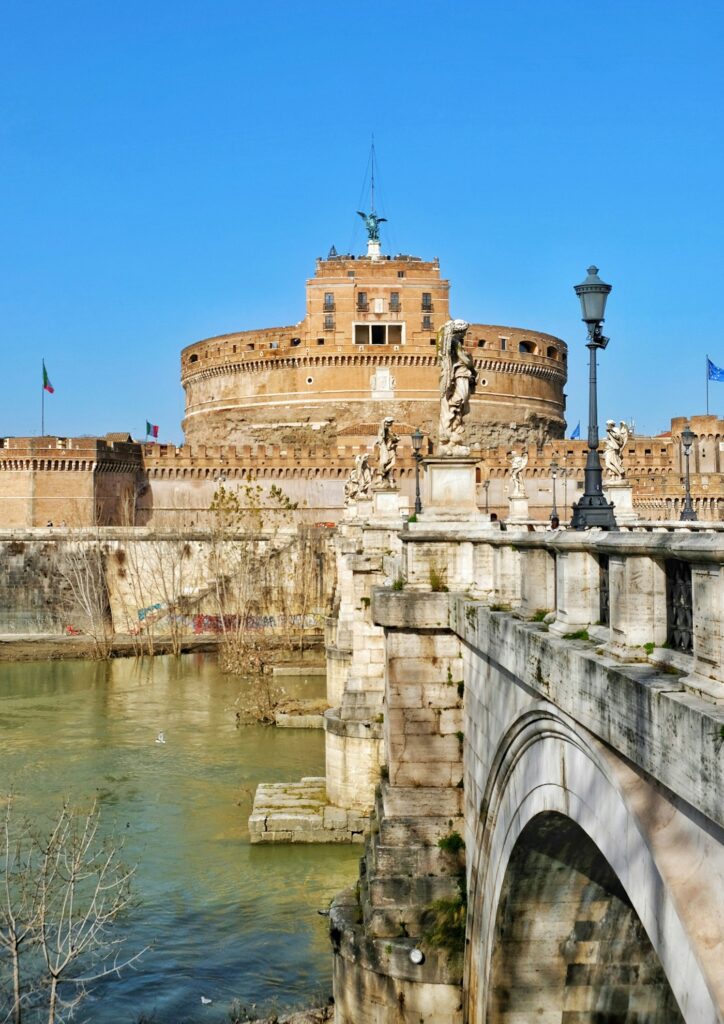
Longer tours may travel along the Tiber toward Castel Sant’Angelo and the streets around Vatican City.
The bridge and surrounding landmarks can provide attractive photograph opportunities, but riders must follow the applicable street and pedestrian restrictions.
Seeing St. Peter’s Square or Basilica from outside is different from visiting the interior. A short Vespa tour generally does not include museum or church admission.
If the Vatican area is particularly important to you, ask how much of the tour is spent getting there and whether the route allows a meaningful stop.
Trevi Fountain, Piazza Navona and the Spanish Steps
These landmarks often appear in advertising, but much of their immediate surroundings are pedestrian-oriented.
You should expect the guide to park or stop at a permitted location and walk with the group when necessary.
Do not assume that a scooter can enter Piazza Navona, approach the Trevi Fountain basin or park at the foot of the Spanish Steps.
For a short sightseeing tour, these stops can consume more time than expected because of crowds and the need to walk from a legal stopping point.
Ask which landmarks are actual stops and which are simply passed during the ride.
How long should a Vespa tour last?
Most guided options fall between about one and three hours, although private customized excursions can last longer.
One-hour tours
A one-hour experience is generally most suitable for someone wanting a short ride or several photographs at recognizable locations.
It leaves limited time for detailed commentary and longer sightseeing stops, particularly when the advertised duration includes the safety briefing and helmet fitting.
If photographs are your priority, check whether the session is primarily a photoshoot and how much actual riding time is included.
Two-hour tours
Two hours can provide a useful introduction to central Rome. It generally allows a few major landmarks and photo stops, without requiring a large part of the day.
For first-time passengers, this can also be a sensible duration. Sitting on the rear seat of a scooter for an extended period may become uncomfortable, especially on uneven roads.
Two-and-a-half to three-hour tours
This is a common format for guided Vespa sightseeing. It allows more time to combine the historic center with a panoramic viewpoint such as the Janiculum or Aventine Hill.
Ask how frequently the group stops and whether the ride includes time for photographs, refreshments or explanations.
A three-hour booking with several meaningful stops may provide a more relaxed experience than a shorter tour attempting to pass every major landmark.
Private extended tours
Longer private excursions may be possible when the operator offers customized routes. These are useful if you want particular neighborhoods or viewpoints, but spending more time on a scooter also means greater physical fatigue.
If you want extensive historical explanations, time inside attractions or a leisurely meal, another tour format may be more practical than extending the riding time.
Can Vespas enter Rome’s restricted traffic zones?
Rome has several ZTL areas, short for zona a traffico limitato. These restrict access to certain streets, often using cameras to identify unauthorized vehicles.
The rules for motorcycles and mopeds differ from those for ordinary cars.
According to Roma Servizi per la Mobilità, motorcycles and mopeds generally have free access to the ordinary central ZTL areas and can park in designated two-wheel spaces.
However, there is a significant exception: the ZTL A1 Tridente, covering part of the area around the Spanish Steps and northern historic center. Motorcycle access there is restricted to eligible authorized categories and requires the appropriate arrangements.
The city publishes separate Tridente A1 motorcycle-access rules.
There is another distinction worth understanding. Permission to enter an ordinary ZTL does not authorize riding along pedestrian-only streets, ignoring temporary road closures or parking wherever space is available.
These limitations apply to guided tours as well as independent scooter riders. A guide should know the route restrictions and explain where the group can legally stop.
What is riding through Rome actually like?
Rome’s traffic requires continuous attention. Scooters share streets with buses, cars, delivery vehicles, cyclists and pedestrians, and road conditions can change quickly.
The characteristic small cobblestones, known as sampietrini, can become slippery when wet. There are also drainage covers, potholes, uneven repairs and narrow streets where vehicles travel close together.
If you are driving, pay particular attention to the following:
- Keep enough distance from the guide and other vehicles to brake safely.
- Watch for pedestrians emerging from between parked vehicles.
- Avoid sudden braking or sharp steering on uneven stone surfaces.
- Do not copy another rider’s maneuver unless it is safe and legal for you.
- Expect cars, buses and taxis to change position around busy junctions.
- Do not use your phone or attempt to take photographs while controlling the scooter.
- Pull over only where stopping is legal and safe.
A useful question before booking is whether the route includes major roads and busy intersections or concentrates on quieter streets.
If you become separated from the group, follow the operator’s agreed procedure. Do not accelerate, run a red light or make an unsafe turn to catch up with the guide.
What helmets and safety equipment should be included?
Under Article 171 of Italy’s Highway Code, riders and passengers on ordinary motorcycles and mopeds must wear a properly fastened, approved helmet. Specific exceptions exist for certain specially equipped vehicles, but visitors on conventional two-wheeled Vespas should expect to wear helmets throughout the ride.
The tour operator should provide suitable helmets when they are included in the booking. Ask whether different sizes are available and whether helmets are checked, cleaned and replaced when necessary.
A helmet that slides around or cannot be fastened correctly is unsuitable. Request another size before departure.
Closed-toe shoes are sensible for both drivers and passengers. Avoid loose sandals or flip-flops that may slip from the footrests.
Long trousers and a jacket provide more protection than shorts and a sleeveless top. Even during warm weather, consider abrasion-resistant clothing if you will be riding in traffic.
Some operators supply disposable helmet liners, rain ponchos or other accessories. Ask exactly what is included rather than assuming every provider supplies the same equipment.
Can couples share one Vespa?
Yes, some guided self-drive tours allow one person to drive while another sits behind them, provided the scooter is approved for two occupants and the operator permits the arrangement.
The driver needs the appropriate licence and must be comfortable carrying a passenger. Riding with someone on the back changes the scooter’s balance, braking distance and handling.
A rider who is confident alone may find it more difficult to manage tight turns and low-speed stops with a passenger.
Before booking a two-person scooter, confirm the maximum permitted combined load, the passenger’s seating position and whether the operator requires previous experience riding with a passenger.
If neither person wants to drive, you will generally need two driver-operated scooters or another suitable passenger vehicle arrangement.
Are Vespa tours suitable for children?
Children may be accepted on some guided passenger experiences, but minimum ages and safety requirements vary by operator.
Italian law prohibits carrying children under five as passengers on ordinary two-wheeled motorcycles and mopeds. Article 170 of the Highway Code also requires passengers to sit in a stable, balanced position using the vehicle’s designated equipment.
Even when a child is legally old enough, an individual operator may impose a higher minimum age, a height restriction or other requirements.
For example, some Rome tour providers currently set their minimum passenger age at six.
If you are booking with children, ask:
- What is the minimum permitted age?
- Is there a height or weight requirement?
- Does the child need to hold the driver independently?
- Are appropriately sized helmets available?
- Is the child seated behind a professional driver or a parent?
- Are passenger restraints or other required safety features provided?
- What happens if the child becomes frightened or wants to stop?
A small child should never be carried on an adult’s lap or placed between the driver and handlebars.
If your child is unable to sit securely, reach the appropriate footrests or follow safety instructions, choose another sightseeing arrangement.
Sidecar experiences have different vehicle configurations, but their suitability for children must also be checked with the operator and against the relevant vehicle requirements.
What about pregnancy, balance problems and limited mobility?
A Vespa ride is physically different from a car journey. Passengers feel the movement of the vehicle, may need to hold on during braking and must be able to mount and dismount safely.
Some Rome passenger-tour operators explicitly exclude pregnant guests. Others impose height or weight limits based on their vehicles and insurance conditions.
If you are pregnant, have significant back or neck problems, experience dizziness or have difficulty maintaining balance, discuss your circumstances with an appropriate healthcare professional and the provider before booking.
For travelers with reduced mobility, ask whether the vehicle’s seating arrangement is physically manageable. A conventional Vespa typically requires stepping over or around part of the scooter and sitting astride the seat.
A sidecar may provide a different boarding position, but it still requires a safe transfer into and out of the seat. Ask for photographs of the actual vehicle and details of any steps, handholds or restraints.
If you need a wheelchair-accessible sightseeing experience or cannot remain securely seated on a moving two- or three-wheeled vehicle, consider a suitable accessible road vehicle instead.
What insurance covers a self-drive Vespa tour?
Insurance is one of the most important differences between driving and riding as a passenger.
Self-drive operators generally provide the legally required third-party motor liability insurance, known in Italian as responsabilità civile auto or RCA.
That does not automatically mean damage to the rented Vespa, the rider’s injuries, theft or every other expense is covered without a deductible.
Before paying, ask for the rental insurance terms and establish:
- What third-party liability coverage applies.
- Whether damage to the rented scooter is covered.
- The damage deductible, known as a franchigia.
- Whether theft is covered and under what conditions.
- Whether personal accident coverage is included for the rider.
- Whether an authorized passenger is covered.
- What happens if another vehicle causes a collision.
- Whether the insurance requires particular licence categories or driving experience.
- What responsibilities remain with you after an accident.
Pay special attention to exclusions for unauthorized riders, prohibited roads, driving under the influence or failure to comply with rental conditions.
For a tour with a professional driver, ask whether the operator has appropriate insurance for carrying paying passengers and whether the service is legally authorized in its advertised form.
Do not rely entirely on a general statement such as “fully insured.” Request an explanation of what that means for your specific booking.
Security deposits and potential damage charges
Some self-drive operators require a refundable security deposit in addition to the tour price.
As one current example, Rome by Vespa advertises a €500 deposit for self-drive bookings, returned when the scooter is brought back undamaged under the stated terms. Other providers use different amounts and insurance arrangements.
Ask whether the deposit is a card authorization, an actual card charge or a cash payment. If it is a card authorization, establish how long the hold may remain before being released.
Before taking the scooter, inspect it with the operator and record existing scratches or damage. Check the bodywork, mirrors, lights, tires and braking controls.
Ask what happens if the scooter is damaged while parked during a tour stop, and how any disputed damage is assessed.
Also clarify responsibility for traffic fines. Guided participation does not automatically transfer liability for the rider’s traffic violations to the tour company.
How much do Vespa tours in Rome cost?
Pricing varies according to whether you drive, ride with a professional driver or book a private experience. Duration, included photographs and group size also affect the total.
Published 2026 examples show the differences. Rome by Vespa currently lists a two-and-a-half-hour guided self-drive experience starting at €135 for one person on a scooter, or €180 for two people sharing a scooter. Its driver-operated passenger tour is advertised at approximately €144 per person, with private versions priced separately.
Another operator, Rome Vespa Tour, advertises a three-hour driver-operated passenger experience at €119 per guest.
These are individual providers’ advertised prices, not standard market rates. Availability, group arrangements and package inclusions should be checked for your dates.
For two adults, compare the total price carefully. Two people sharing a self-drive Vespa may cost substantially less than two professional drivers carrying them separately, but the services involve different responsibilities and risks.
Ask whether the quote includes:
- One scooter per rider or a shared two-person scooter.
- A professional driver if you are booking as a passenger.
- Guiding and historical commentary.
- Helmets and hygiene liners.
- Fuel or charging costs.
- Insurance and applicable deductibles.
- Any security deposit.
- Photographs taken by the guide.
- Refreshments or food stops.
- Hotel pickup and return, if offered.
- Taxes and booking charges.
A lower advertised price may refer to a short photography experience, while a higher price may include a longer guided route and several stops. Compare what happens during the tour before deciding.
Shared tours versus private tours
Shared tours usually follow a standard itinerary and departure time. Several scooters travel together behind the guide, stopping at selected landmarks.
They can be more economical, but there may be limited flexibility to change the route or spend longer at a particular location.
Ask how many scooters normally join the group and whether guests with different riding abilities are placed together.
Private tours can be useful if you have particular sightseeing interests, need a slower pace or want more flexibility over photo stops.
However, a customized itinerary still has to respect traffic restrictions, safe stopping locations and the time available.
A private tour does not guarantee empty roads or exclusive access to monuments.
What is the best time of day for a Vespa tour?
Morning, afternoon and evening rides offer different experiences.
Morning tours
Morning tours can be more comfortable during warmer months, especially when departing before the strongest midday heat.
Traffic and crowds vary by neighborhood and weekday. An early tour may allow easier photographs at some viewpoints, but it does not guarantee quiet streets during Rome’s commuting hours.
If you are collecting a scooter at the start of the tour, leave enough time for document checks and a safety briefing.
Afternoon tours
Afternoon tours can fit between morning sightseeing and dinner. They may also include viewpoints with attractive late-day light.
During summer, however, heat can be uncomfortable when wearing a helmet and protective clothing, especially while stopped in traffic.
Ask whether the tour includes shaded stops or refreshments. Carry water and avoid scheduling a ride immediately after several hours of walking in the sun.
Evening tours
Evening tours offer a chance to see illuminated monuments and experience Rome after dark.
They also require greater attention to visibility and road conditions. Headlights, reflections on paving and traffic around restaurants and nightlife areas can create different challenges from daytime riding.
If you are inexperienced, riding your own scooter at night is probably not the best introduction to Rome’s streets.
Ask whether the evening route differs from the daytime itinerary and whether the tour concentrates on illuminated exterior sights rather than detailed sightseeing stops.
What happens if it rains?
Rain affects both comfort and road safety. Rome’s cobblestones can become slippery, painted road markings may offer reduced grip and potholes can be harder to identify when filled with water.
Some operators continue in light rain and supply ponchos or raincoats. Others reschedule or cancel when conditions are considered unsafe.
For example, one driver-operated Rome tour currently states that rain does not automatically cancel the experience, while another operator sets a cancellation window that applies regardless of the guest’s weather preferences.
Before paying, ask who decides whether conditions are safe, whether the route may change and what happens if a self-drive participant is unwilling to ride on wet roads.
Do not assume that rain automatically entitles you to a refund.
If the forecast is poor and you are uncomfortable riding on slippery surfaces, discuss alternative dates or the passenger option before the cancellation deadline.
What should you wear and bring?
Wear practical clothing that allows you to sit comfortably on the scooter and move your legs without restriction.
Closed-toe shoes with secure soles are preferable to flip-flops. Avoid loose scarves, long skirts or hanging straps that could interfere with the vehicle or become caught in moving parts.
A lightweight jacket may be useful even in mild weather because you will be exposed to wind while moving. In colder months, gloves and additional layers can make a noticeable difference.
Bring only essential belongings. A small securely closed bag is easier to manage than a large backpack or shopping bag.
Some scooters have limited under-seat storage, but do not assume there will be room for several bags. Ask whether the provider can store luggage during the tour.
For self-drive bookings, carry your original licence and any required international documentation, as well as the payment card needed for a deposit.
Where do Vespa tours start and finish?
Meeting points differ between operators. Some start near the Colosseum or Monti, while others use locations closer to Termini, Piazza della Repubblica or other central areas.
Driver-operated tours may offer hotel pickup, but this is not universal. Some require guests to meet at a fixed location even when the tour is private.
Ask for the exact street address and a recognizable landmark. A description such as “near the Colosseum” is insufficient when several streets and entrances surround the monument.
Confirm whether the advertised start time is the time you should arrive or the time the group begins riding.
Also ask whether the tour finishes where it starts. If your group wants to continue sightseeing in another neighborhood, returning to the original meeting point may affect the rest of your plans.
How to fit a Vespa ride into your Rome itinerary
A two- or three-hour scooter tour can cover several neighborhoods, so it is worth considering which landmarks you will also visit independently.
If the tour includes exterior views of the Colosseum, Circus Maximus and the Janiculum, you may want to use the rest of the day for museums, meals or walking through an area that the ride only passed briefly.
Do not count a brief photo stop as a full visit. If you want to enter the Colosseum, Pantheon or another attraction, arrange admission separately and allow time to reach the correct entrance.
For broader transport and sightseeing options, the Italy on Foot guide to getting around Rome explains alternatives to driving, including walking, taxis and public transport.
You can also use the Italy on Foot trip planner to organize the tour alongside attraction bookings, meals and travel between neighborhoods. Include the actual meeting address and allow time for document checks and the safety briefing before the scheduled departure.
Avoid booking another timed attraction immediately after the ride. Traffic, photo stops or unexpected route changes may affect the finishing time.
How to check whether a tour operator is suitable
Before booking, check the identity of the company providing the service rather than relying only on a marketplace listing.
Ask for the business’s legal details and clarification of whether it supplies guided scooter rental, a paid passenger experience or another type of service.
For self-drive tours, the company should be able to explain its licence requirements, rental contract, insurance, deposit and damage policy.
For driver-operated experiences, ask whether the drivers and vehicles are authorized and insured for the advertised passenger service.
If the tour includes professional historical guiding, clarify who provides the commentary and whether the relevant professional qualifications or authorization are in place.
Warning signs include unclear licence requirements, pressure to drive despite inexperience, an operator who refuses to explain insurance terms or a booking confirmation that does not identify the actual service.
Be particularly cautious if someone suggests that traffic restrictions do not apply because the vehicle is a Vespa. Ordinary ZTL access rules, pedestrian restrictions and stopping regulations are separate matters.
What happens if you cannot complete the tour?
A mechanical problem, illness, accident or difficulty controlling the scooter can end a tour early.
For self-drive bookings, ask whether the operator has a support vehicle or another way to recover a scooter that cannot continue.
Establish what happens if you fail the initial riding assessment. Some companies may offer a professional driver for an additional fee, while others may apply their cancellation or no-refund policy.
If you are a passenger and become uncomfortable during the ride, tell the driver at the next safe opportunity and request a stop.
Ask whether a guest who stops participating can be returned to the original meeting point and whether additional transport charges apply.
For a breakdown or an accident, follow the operator’s instructions and contact emergency services when necessary. Italy’s emergency number is 112.
Booking deposits and cancellation conditions
Cancellation policies vary significantly between providers. Some shared and private tours allow free cancellation until 24 or 48 hours before departure, while others require longer notice.
One Rome operator currently advertises free cancellation up to 48 hours before its guided tours. Another driver-operated service specifies a seven-day cancellation deadline.
These are individual business policies, and the booking platform you use may have separate conditions.
Before paying, ask what happens if:
- You cancel before the scheduled tour.
- Your flight or train arrives late.
- You reach the meeting point after departure.
- Your driving documents are not accepted.
- You cannot pass the scooter-riding assessment.
- Bad weather makes the planned route unsafe.
- The operator cancels because of insufficient participants.
- A professional driver or guide becomes unavailable.
- Road closures prevent access to important advertised stops.
If a substitute tour or different vehicle is offered, ask whether you can approve the change and whether any price difference will be refunded.
For self-drive bookings, clarify whether the security deposit is separate from the booking payment and how refunds or card holds are handled.
When a Vespa tour may not be the right activity
A scooter tour is useful when you specifically want the riding experience and enjoy seeing a city from street level.
It may be less useful if your main goal is to learn detailed history, enter several monuments or spend considerable time inside museums.
If you are anxious about traffic, sitting behind a professional driver may solve much of that concern. However, if you dislike motorcycles or feel physically uncomfortable on a moving scooter, another form of sightseeing will be more appropriate.
A guided walking tour can provide more time for historical explanations. A private car or suitable accessible vehicle may be preferable for travelers who need greater seating support or cannot safely mount a scooter.
Likewise, someone planning to explore Rome independently for several days may not need a guided Vespa tour at all. Walking and public transport can cover most central sightseeing needs without taking on the responsibilities of renting a motor vehicle.
Questions to ask before booking a Vespa tour in Rome
A detailed enquiry should establish exactly what you will ride, who drives and what is included in the price.
- Is this a self-drive tour, a passenger tour with a professional driver or a sidecar experience?
- If self-drive, what licence categories and documents are required for my country of issue?
- What is the engine size and exact model of the scooter?
- How much previous riding experience do you require?
- Is there a practical assessment before departure, and what happens if I cannot complete it?
- Can two guests share one scooter, and who is permitted to drive?
- For passenger tours, is there one professional driver per guest?
- What is the minimum passenger age, and are there height or weight restrictions?
- Are properly fitted helmets and other safety equipment included?
- What insurance applies to the vehicle, driver and passengers?
- What is the damage deductible, and is a refundable security deposit required?
- How long is the tour, including the briefing and stops?
- Which landmarks are photo stops and which are only passed during the ride?
- Does the tour include historical commentary, and who provides it?
- How much riding takes place on busy city roads?
- How many scooters will be in the group?
- Where exactly does the tour begin and end?
- Are fuel, photographs, refreshments and applicable fees included?
- Can the operator explain the ZTL restrictions affecting the planned route?
- What happens if it rains or the route changes?
- What are the cancellation, late-arrival and mechanical-breakdown policies?
For travelers who already ride scooters regularly, a guided self-drive tour can provide a structured way to experience Rome’s streets without planning every turn. For those without meaningful riding experience, a tour with a professional driver is the more appropriate option. Before paying, verify the licence or passenger requirements, the exact route, the vehicle’s insurance and the total cost. If you choose to drive, make sure you are comfortable controlling the scooter in traffic before leaving the meeting point, regardless of how easy the advertised itinerary sounds.