A private tour of Rome’s Borghese Gallery usually takes 90 minutes to two hours, with a dedicated guide explaining the paintings and sculptures by Bernini, Caravaggio, Raphael, Titian and Canova. The museum operates on timed entry, and most visitors receive a two-hour admission window. Hiring a private guide does not extend that time or give you exclusive access to the galleries.
Before booking a private Borghese Gallery tour, confirm that your guide has secured admission for the correct date and time, whether tickets and headsets are included, and where you will meet. The gallery has strict capacity limits, so guide availability alone does not guarantee entry. You can also choose an official shared guided tour or visit independently for considerably less money.
What does a private Borghese Gallery tour include?
A private guided visit normally involves a professional guide accompanying only your party through the museum’s permanent collection. The guide explains selected artworks, provides historical context and adjusts the explanations to your interests.
The Galleria Borghese occupies a historic villa commissioned by Cardinal Scipione Borghese in the early seventeenth century. The collection is displayed across 20 richly decorated rooms on two principal exhibition floors.
Most private tours focus on the major sculptures and paintings rather than trying to give an equally detailed explanation of every room.
A typical experience follows this sequence:
- Meet the guide outside the museum at an agreed location.
- Check tickets and complete any necessary admission formalities.
- Deposit bags or other prohibited belongings at the cloakroom.
- Enter the exhibition galleries during the reserved admission slot.
- Visit selected rooms and hear explanations of the main artworks.
- Finish the guided portion before the admission window ends.
- Collect belongings and leave the museum at the required time.
Some guides provide approximately 90 minutes of commentary and leave the remaining admission time for independent viewing. Others guide visitors for almost the full two hours.
Ask which arrangement applies. The extra time can be useful if you want to return to a particular painting, take photographs or look more closely at a sculpture after hearing its story.
The two-hour admission limit is the most important rule
The Borghese Gallery does not operate like a museum where visitors can enter in the morning and stay until closing.
Admission is controlled through scheduled visits, and the museum currently allows up to 180 visitors in each entry shift. Most visits last two hours, with new entry shifts beginning every hour.
The published admission windows are:
- 9 a.m. to 11 a.m.
- 10 a.m. to noon.
- 11 a.m. to 1 p.m.
- Noon to 2 p.m.
- 1 p.m. to 3 p.m.
- 2 p.m. to 4 p.m.
- 3 p.m. to 5 p.m.
- 4 p.m. to 6 p.m.
- 5 p.m. to 7 p.m.
- 5:45 p.m. to 7 p.m.
The final 5:45 p.m. entry is an exception. It provides only one hour and fifteen minutes before the museum closes.
These are official admission windows, not guaranteed private-tour departure times. Your guide must arrange a suitable entry slot and organize the commentary within the museum’s rules.
A private guide cannot simply extend your museum visit beyond the reserved window. If you want additional explanations, ask whether part of the historical introduction can take place outside before admission.
The gallery’s official visiting information provides the current entry schedule and admission conditions.
How long should the guided portion last?
For most first-time visitors, 90 minutes of guiding followed by approximately 30 minutes of independent viewing is a useful arrangement.
The museum is relatively compact, but the artworks deserve time for close observation. Bernini’s sculptures, in particular, reward walking around them to see details from different angles.
One-hour highlights tour
A shorter guided introduction may be suitable if you have limited stamina, are visiting with young children or already know which artworks interest you.
However, one hour is unlikely to allow detailed explanations of both floors.
Ask the guide to prioritize a small number of works. For example, you might focus on Bernini’s major sculptures and selected Caravaggio paintings.
Check whether the operator offers this duration. Many standard guided products are approximately 90 minutes long.
90-minute private tour
This is a practical choice for most visitors. It allows the guide to discuss the principal sculptures and paintings while keeping a reasonable pace through the galleries.
The Borghese Gallery’s own guided tours also use a 90-minute format.
If your guide finishes before the admission window closes, confirm whether you may use the remaining time independently. This should be agreed before the visit rather than assumed.
Two-hour private tour
A full two-hour guided visit can suit travelers who are particularly interested in Renaissance and Baroque art.
You may have time for more detailed discussions of individual artists, the Borghese family and the historical arrangement of the collection.
The disadvantage is that there is little independent viewing time. You will also need to keep moving so that the guide finishes before your admission period expires.
Ask whether the advertised two hours begin at the museum entrance or include the preliminary meeting and ticket procedures.
Three-hour or longer tour packages
Some companies advertise experiences lasting three hours or longer. These may combine a guided museum visit with time in Villa Borghese park, a walking introduction or another nearby attraction.
The extended duration does not automatically mean you will spend three hours inside the gallery.
Ask the operator to separate the museum admission period from the remainder of the itinerary.
How much are Borghese Gallery admission tickets?
The museum’s standard admission prices, as currently published, are:
- Full-price adult admission: €16 plus the €2 mandatory reservation fee, making €18 in total.
- Final 5:45 p.m. admission: €11 plus the €2 reservation fee, making €13 in total.
- Eligible visitors aged 18 to 25: Reduced admission is available under the museum’s nationality and residency conditions. Check the applicable checkout total and required identification.
- Visitors under 18: Free admission, although advance reservation remains compulsory.
The museum generally charges a €2 reservation fee even for free admission, but children aged five and under and certain other eligible categories are exempt from that fee. They still need the appropriate reservation.
Temporary exhibitions can increase admission prices. Check the current amount through the official Borghese Gallery ticket office before purchasing.
These charges cover museum admission. They do not include a private guide unless your package explicitly combines both services.
How to make sure your tour includes valid tickets
When you book a private guide, ask who is responsible for arranging museum admission.
There are two common approaches.
The tour company books the tickets
Some operators provide a complete package covering the guide and timed-entry tickets for everyone in your party.
This can make the process simpler because the provider coordinates the guide’s availability with the admission slots.
However, check the booking confirmation carefully. It should identify the museum, date, entry time, number of participants and whether every required ticket is included.
If your party includes children or visitors entitled to reduced admission, ask whether the price reflects those entitlements.
Also ask when the operator will confirm that the tickets have been secured. A reservation for the guiding service alone does not guarantee that the museum has space.
You buy the admission tickets separately
Some independent guides charge only for their professional services and expect visitors to arrange admission themselves.
This can work well, but you must coordinate the entry time before buying.
Ask the guide which admission times they can accommodate and whether any specific booking arrangements apply to guided parties.
The museum has dedicated booking rules for tour operators, professional guides and organized groups. Do not assume a guide can use any ordinary ticket purchased independently.
If the guide is handling entry under a professional booking arrangement, follow their instructions rather than buying a separate ticket that may not match the reservation.
Where should you buy Borghese Gallery tickets?
The safest starting point is the museum’s official website, which directs visitors to its authorized ticketing service operated through Gebart and the relevant reservation system.
Tickets can also be arranged by telephone at +39 06 32810, with the booking service currently operating Monday through Friday from 9:30 a.m. to 6 p.m.
The museum specifically warns visitors about unofficial resellers and tickets advertised as skip-the-line access.
The important distinction is that timed admission is already the standard system. Paying more for an advertised priority-entry product does not remove the security checks or create a separate unlimited-access entrance.
There is currently no official fast-track admission category that allows visitors to bypass the museum’s controlled entry procedure.
When comparing a private-tour quotation, ask whether the additional price pays for guiding, advance coordination or other services. Avoid paying a premium solely because a listing promises to bypass a queue that the museum itself does not offer a special fast-track ticket for.
Choosing between the available guide options
There are several ways to arrange explanations inside the gallery. They differ in price, flexibility and whether the guide is dedicated to your party.
Option 1: Join an official museum guided tour
The Borghese Gallery offers scheduled guided tours organized through its ticketing and visitor-services provider, Gebart.
These tours are led by qualified museum guides and art historians, usually last 90 minutes and are limited to 15 participants.
The currently published supplement is €8 per person, in addition to the applicable museum admission and reservation charges.
English-language tours are scheduled at 9:10 a.m., 11:10 a.m., 3:10 p.m. and 5:10 p.m., subject to availability and any changes to the program.
This can be a useful alternative to private guiding for one or two adults who want knowledgeable explanations without paying for an exclusive service.
The disadvantage is the fixed route and group format. You cannot expect the guide to spend extra time on your favorite artist or substantially change the explanations to suit your personal interests.
Option 2: Arrange a dedicated museum guide for an organized group
The gallery also publishes a guided service for organized groups that do not bring their own guide.
Under the current tariff, an English, French, German or Spanish guided visit costs €200 per group, plus the applicable admission charges and €1.50 per person for earphone rental.
The guided portion lasts 90 minutes.
This service operates under the museum’s group-booking rules, which generally specify groups of seven to fifteen people, with additional provisions for guides and children under fifteen.
Do not assume that a couple can directly reserve this group product as a two-person private experience. Contact the booking service to clarify the options for your actual party size.
The official guided-tour information explains both the scheduled per-person tours and the separate group-guiding tariffs.
Option 3: Hire an independent private guide
Independent licensed tourist guides and specialist tour companies also arrange private visits to the gallery.
This can provide more flexibility over the language, level of explanation and artworks covered. A family with children may prefer a guide who uses short stories and visual challenges, while someone interested in sculpture might want more detailed explanations of Bernini’s techniques.
Before booking, ask who will actually lead the visit. Some companies advertise private guiding without identifying the guide until shortly before the tour.
Request information about the guide’s professional qualification, experience at the Borghese Gallery and knowledge of the artists you particularly want to study.
Also verify that the guide understands the museum’s professional booking requirements. The gallery has separate procedures for tour operators and guides, including specific arrangements for smaller parties and organized groups.
For guided groups, earphone systems may be required. The museum makes their use compulsory for guided tours with at least five participants and applies additional requirements to formal group visits.
The guide should explain whether the necessary equipment and fees are included in your package.
Option 4: Visit independently with an audioguide
The museum rents audioguides for €5. They are available in several languages, including English, and cover the permanent collection as well as relevant material from temporary exhibitions.
This is a less expensive option when you want explanations but prefer to move around the galleries independently.
You can spend more time with particular artworks and skip subjects that do not interest you, as long as you remain within your allotted admission window.
Audioguides are available near the ticket office. Ask about availability if they are an important part of your visit.
For a first-time visitor comfortable exploring museums independently, an ordinary timed ticket and audioguide may be entirely sufficient.
Does private mean the museum will be empty?
No. A private guided tour normally means that the guide works exclusively with you or your party. Other visitors continue using the museum during the same admission period.
You will share the galleries with visitors who have individual tickets, people on official guided tours and other authorized groups.
The museum limits attendance, but popular rooms can still feel busy when several visitors gather around a famous sculpture.
If a company advertises an exclusive museum visit, ask exactly what that means.
A genuinely exclusive or after-hours visit is a separate arrangement requiring authorization and a quotation from the museum. It is not the same as hiring a private guide during ordinary opening hours.
The museum handles special events and exclusive arrangements through its administration. Ask for documentary confirmation before paying for any experience advertised as having private access to the building.
Which artworks should a private tour include?
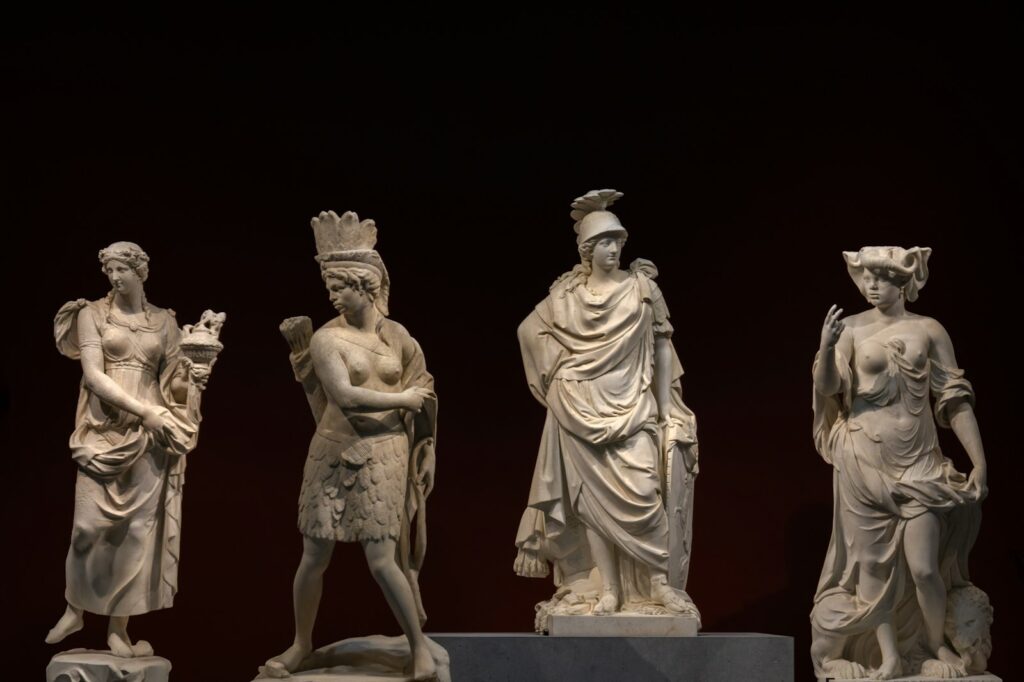
The gallery has works by several major Renaissance and Baroque artists, but you may find the visit more satisfying if you identify a few priorities in advance.
A guide can then organize the explanations around those interests, subject to the museum’s current room arrangements.
Bernini’s Apollo and Daphne
Gian Lorenzo Bernini’s Apollo and Daphne is among the gallery’s most celebrated sculptures.
It depicts the moment when Daphne transforms into a laurel tree while attempting to escape Apollo, a story from Ovid’s Metamorphoses.
A guide can explain how Bernini represents movement, changing forms and different textures in marble. The details are particularly interesting when viewed from more than one position.
Ask the guide to allow enough time to examine the hands, hair, leaves and figures rather than delivering the entire explanation from a single viewpoint.
Bernini’s The Rape of Proserpina
This sculpture depicts Pluto carrying Proserpina away and is notable for its dramatic movement and the extraordinary way Bernini represents flesh in marble.
Its modern English title is also commonly given as Pluto and Proserpina or The Abduction of Proserpina.
A private guide can provide the mythological background and explain the sculpture’s composition without assuming every visitor already knows the story.
Bernini’s David
Bernini’s David captures the biblical figure at the moment of action rather than in a static pose.
It is particularly useful for understanding the movement and theatrical qualities associated with Baroque sculpture.
If you have seen Michelangelo’s David in Florence, ask the guide to compare the artistic approaches. The comparison can help explain why these famous sculptures feel so different.
Caravaggio’s paintings
The gallery holds several important works by Caravaggio, including Boy with a Basket of Fruit, David with the Head of Goliath and Madonna and Child with St. Anne, often called Madonna dei Palafrenieri.
These paintings provide opportunities to discuss dramatic lighting, realism and Caravaggio’s unusual approach to traditional subjects.
For visitors especially interested in painting, ask the guide to devote more time to the Caravaggio collection rather than spending most of the visit discussing sculpture.
Canova’s Pauline Bonaparte as Venus Victrix
Antonio Canova’s reclining sculpture of Pauline Bonaparte provides an interesting comparison with Bernini’s Baroque works.
It can also open a discussion about the Borghese family’s later history, portraiture and the Neoclassical style.
Raphael and Titian
The painting collection includes major Renaissance works such as Raphael’s The Deposition and Titian’s Sacred and Profane Love.
A guide can explain how these paintings differ from Caravaggio’s work in composition, color and historical context.
If you want a balanced introduction to the collection, ask for a route that includes both floors rather than concentrating exclusively on Bernini.
What if a famous artwork is unavailable?
Artworks can be temporarily moved, loaned for exhibitions or affected by conservation and installation work.
The Borghese Gallery also hosts temporary exhibitions that may change the arrangement of rooms and the works on display.
If a particular painting or sculpture is the main reason for your visit, ask the tour operator to check its expected availability.
A private guide does not have the authority to open a closed room or provide access to an artwork unavailable to ordinary visitors.
The museum currently integrates temporary exhibitions into its normal visitor route, with admission covered by the applicable ticket. Prices may increase during certain exhibitions.
Before accepting a fixed itinerary, ask what the guide will substitute if an important room becomes inaccessible.
How early should you arrive?
Arrive with enough time to locate the museum entrance, meet your guide, deal with tickets and deposit any prohibited bags before your admission slot begins.
Allowing approximately 20 to 30 minutes before the scheduled entry is a useful planning precaution, particularly if it is your first visit or you are traveling with a group.
The exact meeting time should come from your booking confirmation. Some tour operators require a specific check-in time, and that instruction takes precedence over a general estimate.
If your admission begins at 10 a.m., do not assume that you can arrive at 10:20 a.m. and still receive the entire two-hour visit.
The museum uses controlled entry procedures, and a late arrival may prevent the guide from completing the itinerary.
Tell the operator immediately if your transport is delayed. Do not assume the gallery can move your admission to the next available shift.
Where exactly is the Borghese Gallery entrance?
The museum address is Piazzale Scipione Borghese 5, 00197 Rome, inside Villa Borghese park.
This is different from the Pincio viewpoint, the Borghese Gardens’ entrances near Piazza del Popolo and the other museums located around the park.
The entrance area for visitor services and ticketing is below the main exhibition floors. If your guide wants to meet outside, ask whether the meeting point is at the main staircase, beside the entrance gates or at another identifiable location.
A photograph or map pin from the operator is more helpful than an instruction simply saying “Villa Borghese.”
The museum’s official directions identify the Via Pinciana side of the park as a convenient approach. The nearby public-transport stop is called Pinciana/Museo Borghese.
Arriving by public transport
From Roma Termini, the museum currently lists buses 910 and 92 as options serving the Pinciana/Museo Borghese area.
Other bus routes serve the museum from the Barberini and Flaminio areas, although individual stops and service patterns can change.
Check the route on your travel date. If you are arriving by metro, remember that there is no station directly outside the museum.
Walking across Villa Borghese from Spagna or Flaminio can be pleasant, but the park is large and the approach may take longer than expected.
Arriving by taxi
Give the driver the museum’s full address rather than requesting only Villa Borghese.
The museum identifies taxi stands on Via Pinciana and Via Vittorio Veneto near the park. Access for ordinary vehicles within Villa Borghese is restricted.
Ask the driver for the closest permitted drop-off point to the museum entrance. Allow a little additional walking time if you are dropped outside the park boundary.
If anyone in your party has reduced mobility, arrange the access details directly with the museum before travel.
Bags, luggage and cloakroom rules
The Borghese Gallery has stricter bag rules than many visitors expect.
Inside the exhibition rooms, only small pouches or handbags measuring no more than 21 by 15 cm are permitted.
Medium and large bags, backpacks, shopping bags, umbrellas and other prohibited items must be deposited at the cloakroom.
The museum currently accepts cabin-sized trolley luggage only as an exception, subject to available space and for the duration of the visit. It does not guarantee storage for every suitcase.
If you are visiting between hotel checkout and a train departure, arrange proper luggage storage elsewhere instead of relying on the museum cloakroom.
Food and drinks, including water, are not permitted in the exhibition galleries. The museum also prohibits animals other than assistance dogs covered by its rules.
These restrictions are described on the museum’s official visitor-services page.
Can you take photographs during the guided visit?
Ordinary personal photography is generally permitted where the museum has not introduced a specific restriction, provided you do not use flash, tripods or other prohibited equipment and do not touch the artworks.
Restrictions may be introduced for particular temporary exhibitions or works borrowed from other collections.
Professional photography, commercial filming and certain other forms of reproduction can require separate authorization.
Ask your guide if you are uncertain about photographing an exhibit. Also avoid obstructing other visitors while trying to capture a sculpture from several angles.
If taking detailed photographs is one of your priorities, request some independent viewing time within the admission slot.
Accessibility and wheelchair arrangements
The gallery occupies a seventeenth-century building, so accessibility requires some advance planning.
The museum provides an accessible route through an entrance at the rear of the building, avoiding the main exterior staircase. The sculpture floor can be visited using this arrangement.
The painting galleries are on the upper exhibition floor, reached by a small elevator. Because of the historic building’s structure, the lift cannot accommodate large wheelchairs.
The museum provides smaller wheelchairs suitable for its lift, with different wheelchairs available on the upper floor. Visitors using larger personal wheelchairs may need to transfer to the museum’s equipment.
If transferring is difficult or impossible, contact the museum before purchasing tickets rather than assuming every part of the itinerary will be accessible.
The museum’s accessibility office can be reached at +39 06 67233753 or ga-bor.accessibilita@cultura.gov.it.
Its official accessibility information also explains special guided services and assistance for visitors with disabilities.
Eligible visitors with disabilities and an accompanying person can receive free admission under the museum’s published rules. Confirm the documentation and reservation procedure before booking a commercial guided package.
The museum also offers specialized accessible guided services, which may be more suitable than paying for an ordinary private tour without accessibility arrangements.
Are private tours suitable for families with children?
The gallery can be interesting for children, particularly when a guide uses the mythology and dramatic stories represented in Bernini’s sculptures.
However, a standard adult art-history tour may involve long explanations, extended standing and relatively little interaction.
If you are visiting with children, ask about the guide’s experience with their particular ages. A guide who can explain the story of Apollo and Daphne in a few engaging minutes may be more appropriate for a seven-year-old than someone offering a detailed academic lecture.
For younger children, a shorter guided portion followed by independent viewing may be preferable.
Under the museum’s current rules, strollers are permitted for children up to two years old. Families with older children should not assume that an ordinary pushchair can be taken through the galleries.
If your child needs a stroller because of a disability or another specific requirement, contact the accessibility office before booking.
Remember that children under 18 qualify for free museum admission, although reservations remain compulsory and the applicable booking fee must be checked.
When is the best time to book your visit?
The museum’s admission limit applies throughout the day, so a private guide cannot guarantee that a particular room will be quiet.
Morning appointments can work well when you want to visit the gallery before lunch and spend some time exploring Villa Borghese afterward.
Afternoon appointments can be convenient if you prefer a slower start or want to arrange another activity first.
For a complete guided visit, avoid choosing the final 5:45 p.m. admission simply because the ticket costs less. Its 75-minute duration leaves substantially less time than a standard two-hour entry.
The gallery is normally open Tuesday through Sunday from 9 a.m. to 7 p.m. It is closed on Mondays, January 1 and December 25. Temporary exhibitions and special events can affect the visiting program.
Book the museum admission before arranging the rest of the day’s activities. Since capacity is limited, you may have fewer entry-time options than expected.
Can you visit for free on the first Sunday of the month?
Yes. The Borghese Gallery participates in Italy’s free state-museum admission initiative on the first Sunday of each month and certain other designated dates.
However, admission is still controlled by advance reservation. The museum releases tickets for these institutional free-entry days ten days before the visit.
The mandatory reservation charge generally remains payable unless the visitor qualifies for an exemption.
Last-minute tickets are not offered on free Sundays or the other institutional free-admission days.
If you want to hire a private guide on one of these dates, confirm that the guide can arrange an appropriate admission booking. Free museum admission does not mean that the guiding service will also be free.
What if official tickets are sold out?
First, check whether another date or admission time is available through the official ticketing system.
The museum also offers a limited number of last-minute tickets at its ticket office, but availability is never guaranteed.
Under its current procedure, these tickets are sold from minute 20 of each hour. The resulting visit lasts 90 minutes rather than the standard two hours, with a shorter final evening option. Purchases are limited to two last-minute tickets per person.
This is a possible fallback for flexible independent visitors. It is a poor basis for arranging a private tour, since the guide and museum entry must coincide.
Do not pay a non-refundable guide fee on the assumption that last-minute tickets will be available.
If a tour company advertises places on a date when ordinary admission is sold out, ask it to confirm that the relevant tickets have already been secured through an authorized booking arrangement.
Availability shown by a third-party seller does not, by itself, establish that the museum has confirmed your entry.
Can you change or cancel museum tickets?
The gallery’s official policy currently states that purchased admission tickets cannot be modified or refunded.
If you purchase an optional ticket-protection product, its separate insurance conditions determine whether particular circumstances are covered.
A private guide’s cancellation policy may differ from the museum’s policy. For example, the guide might allow rescheduling while the admission tickets remain non-refundable.
Before paying, ask what happens if:
- Your travel dates change after the tickets have been purchased.
- Your flight or train is delayed and you miss the admission slot.
- The assigned guide becomes unavailable.
- A major artwork or room is temporarily closed.
- The museum changes its opening arrangements.
- You need to reduce the number of participants.
- You want to reschedule because someone becomes ill.
Ask whether a replacement guide may be assigned and whether you can review their qualifications before accepting the change.
For a private service involving several guests, make sure the final agreement identifies both the guide’s fee and the portion paid for admission tickets.
Planning the gallery visit with Villa Borghese
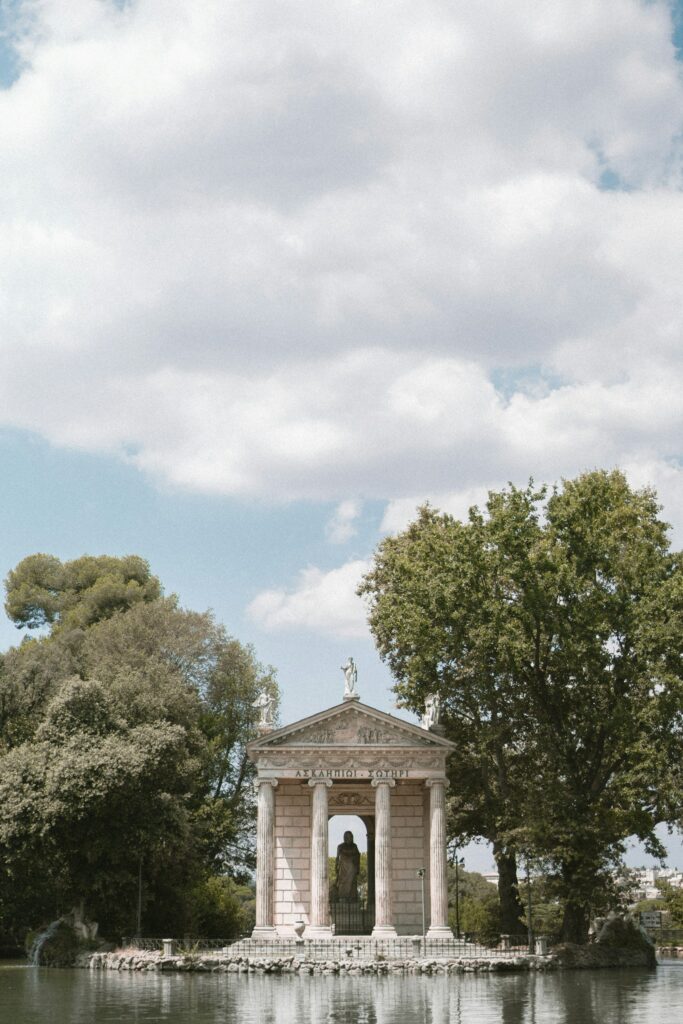
The museum sits inside Villa Borghese, one of Rome’s largest public parks. The park has paths, gardens, viewpoints and other cultural attractions, but the museum’s two-hour admission limit applies only to the gallery visit.
You can spend additional time outside afterward without purchasing another gallery ticket.
If you have a morning reservation, a practical arrangement is to visit the museum first, have lunch and explore part of the gardens later.
The Pincio Terrace overlooking Piazza del Popolo is another possible stop, although it is not immediately outside the gallery. Allow for walking across the park.
For information on the surrounding area, see the Italy on Foot guide to Villa Borghese. For wider advice on timed reservations at Rome’s attractions, see how to skip the lines in Rome.
You can also use the Italy on Foot trip planner to organize your gallery reservation alongside transport, meals and nearby sightseeing. Record the admission time and the guide’s earlier meeting time separately so you do not arrive when the tour is already beginning.
What to compare when booking a private guide
Two private-tour quotations can appear similar while including different services. The most useful comparison is the complete cost and arrangement for your actual group.
Check whether the quotation includes:
- Dedicated guide: Will the guide work exclusively with your party?
- Guide’s qualifications: Is the person properly qualified to conduct the advertised guided visit?
- Admission: Are all required museum tickets included and confirmed?
- Reservation fees: Are compulsory booking charges included?
- Earphones: Is any required headset rental included?
- Guiding duration: How much of the admission period involves commentary?
- Language: Will the tour be conducted entirely in your preferred language?
- Route: Which artworks and rooms are expected to be covered?
- Group size: Is the quoted price valid for every member of your party?
- Meeting point: Where will you find the guide before admission?
- Cancellation: Which parts of the payment are refundable, if any?
- Changes: What happens if a guide, room or artwork becomes unavailable?
If you are particularly interested in Bernini, Caravaggio or Renaissance painting, mention that in your first enquiry. A dedicated guide is most useful when the itinerary reflects your interests rather than following exactly the same script as a standard group tour.
Questions to send before reserving a private Borghese Gallery tour
Before paying, give the operator your preferred date, number of adults and children, language and any accessibility requirements. Then ask for written confirmation of the following:
- Will the tour be exclusively for our party?
- Who will be our guide, and what are their professional qualifications?
- Has museum admission already been secured for our date and time?
- Are admission tickets and reservation fees included for every participant?
- How are free or reduced tickets handled?
- Which entry shift will we use, and when must we arrive?
- How much of the session will involve guided commentary?
- Will we have any independent viewing time afterward?
- Are both exhibition floors included?
- Can the guide focus on particular artists or artworks?
- Will required headsets be supplied?
- Where exactly will we meet the guide at Piazzale Scipione Borghese 5?
- Can the route accommodate a wheelchair, stroller or other mobility requirement?
- What happens if a particular artwork is unavailable?
- What is the final price, including all admissions, guiding and equipment?
- What happens if we arrive late?
- Are the museum tickets refundable or changeable?
- What is the separate cancellation policy for the guiding service?
- Will a replacement guide be provided if the original guide is unavailable?
For most first-time visitors, a 90-minute guided tour within the standard two-hour admission window offers a sensible balance between explanation and independent viewing. If you mainly want historical context at a reasonable cost, consider the museum’s €8 scheduled guided tour before paying for private service. A dedicated guide becomes more useful when you have particular artistic interests, need a specific language or want the explanations adapted to your group.
Whatever you choose, confirm the timed admission before paying a non-refundable guide fee. The booking should clearly identify who is responsible for the tickets, what time you must enter and how the guided visit fits within the museum’s strict two-hour limit.