A private boat tour from Venice can cover Murano, Burano and Torcello in approximately six hours, including travel between the islands and time ashore. Four hours is usually more comfortable for visiting Murano and Burano without Torcello. The biggest advantage of a private boat is the ability to arrange your stopping times, but how much flexibility you actually receive depends on the operator, vessel and booking conditions.
When comparing a private Murano Burano tour with a three-island itinerary, ask how many minutes you will spend on each island, whether a guide accompanies you ashore, and whether glassmaking demonstrations, museum admissions and lunch are included. A boat reserved exclusively for your group does not necessarily mean the driver will wait at every stop or that you can change the itinerary without additional charges.
How does a private boat tour of the Venetian islands work?
Most private lagoon tours start from a designated pier in Venice. A boat with a professional skipper takes your group to the islands, where you disembark to explore particular attractions, workshops and historic areas.
The usual itinerary begins with Murano, continues to Burano and finishes with Torcello before returning to Venice. This order follows a practical route across the northern lagoon, although it can sometimes be reversed according to workshop appointments, restaurant reservations and weather conditions.
A typical six-hour experience involves:
- Meeting your skipper or guide at the confirmed Venice boarding point.
- Traveling to Murano for a glassmaking demonstration and a short island visit.
- Continuing to Burano to explore its colorful streets and traditional lace-making heritage.
- Taking a short boat journey to Torcello for a walk toward its early medieval churches.
- Returning by private boat to the agreed Venice drop-off point.
Some experiences include a guide who travels with you and provides explanations on land. Others include only the boat and skipper, with additional visits arranged separately.
The distinction matters if you expect a detailed cultural tour rather than transport between the islands. A skipper may share local information during the journey, but that is not necessarily equivalent to having a dedicated professional tourist guide for the museums, churches and island walks.
Four hours, six hours or a full day?
The number of islands should be chosen according to the time you want to spend ashore. Fitting three islands into a short booking is possible with a carefully controlled schedule, but it may leave little opportunity for museums, a relaxed meal or independent exploring.
Four hours: concentrate on Murano and Burano
A four-hour private excursion usually works well when you want to see a glassmaker at work on Murano and spend some time exploring Burano’s streets.
For example, one operator currently advertises a four-hour private Murano and Burano tour with a glassmaking demonstration and time on Burano to discover its lace tradition and colorful houses.
Four hours still involves a meaningful amount of navigation between Venice and the islands. You may have around an hour on each island, although the actual time varies with the departure point, boat and route.
If you want to browse several glass galleries or spend an hour over lunch, this duration may feel restrictive.
Choose two islands rather than squeezing in Torcello if you particularly want to visit the Murano Glass Museum or Burano Lace Museum.
Six hours: a more practical three-island itinerary
Six hours allows a more balanced visit to Murano, Burano and Torcello. It generally provides enough time for a glassmaking demonstration, a walk around Burano and an introduction to Torcello’s historic center.
However, the full six hours normally include boating time, boarding and disembarking. They should not be interpreted as two hours ashore on each island.
A reasonable planning allowance might be:
- Murano: Approximately 60 to 90 minutes for a glass demonstration and a short walk.
- Burano: Approximately 60 to 90 minutes for the colorful streets, lace shops and photographs.
- Torcello: Approximately 45 to 75 minutes for the walk toward the historic center and a brief visit.
- Boat journeys: The remaining time for transfers, boarding, docking and the return to Venice.
These are suggested allocations, not fixed transfer schedules. The amount of time available depends on where you board in Venice and how long the actual crossings take.
If you want a proper lunch, a museum visit and extended shopping, a six-hour itinerary may still require compromises.
Seven to eight hours: when you want lunch and museums
A longer private excursion is more appropriate when you want to explore all three islands without constantly watching the clock.
You could include the Murano Glass Museum, a leisurely lunch on Burano and the Basilica of Santa Maria Assunta on Torcello, allowing time for photographs and walking between stops.
Ask whether the provider offers a seven- or eight-hour booking and how the additional hours are charged. An advertised six-hour service may not automatically be extendable on the day because the vessel could already have another reservation.
A full-day booking is particularly useful for groups that walk slowly, want substantial historical explanations or prefer not to hurry through artisan workshops.
Murano: plan the glassmaking stop before anything else
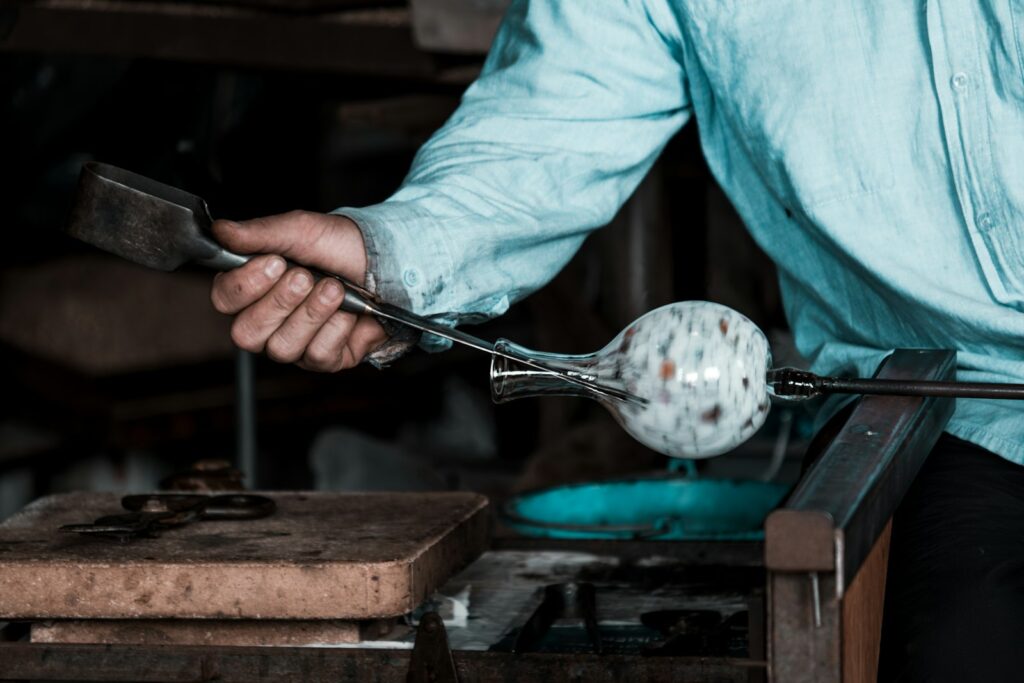
Murano is known for its centuries-old glassmaking industry. The island contains working furnaces, artisan studios, glass galleries, shops and a museum dedicated to the history of Venetian glass.
Many private boat tours include a visit to a glass factory or workshop. This is often the first major stop because demonstrations need to be arranged around the workshop’s opening times and the availability of its glassmakers.
Ask which workshop you will visit and what the demonstration involves. A short presentation may involve watching an artisan shape a decorative object at a furnace, followed by time in a showroom.
Not every demonstration offers the opportunity to make glass yourself. Hands-on workshops are separate activities with their own equipment, supervision and booking arrangements.
How long should you allow on Murano?
If you only want to watch a short glassmaking demonstration and browse a showroom, around an hour may be sufficient, including walking between the boat and workshop.
For a more substantial visit, allow 90 minutes or longer. That gives you time to explore the island beyond the factory and possibly visit additional glass galleries.
The workshop’s location matters. Murano consists of several connected islands, and the boat may dock some distance from the particular factory you are visiting.
Ask whether the skipper or guide will meet you at the dock and accompany you to the workshop, or whether you are expected to follow independent walking instructions.
Is the glassmaking demonstration included?
Many commercial island tours include a demonstration, but the exact arrangement varies.
Some operators have an established relationship with a working glass factory and reserve a presentation for their customers. Others arrange access to demonstrations offered to several visitor groups.
Before paying, ask:
- Which factory or studio will we visit?
- Is the demonstration included in the tour price?
- Will we see glass being worked at a furnace?
- Approximately how long does the demonstration last?
- Is the presentation conducted in English?
- Does the visit include time in a showroom?
- Are purchases optional?
- What happens if the furnace or workshop is closed?
A demonstration followed by an opportunity to browse a showroom is a common arrangement. You should never assume that a workshop visit creates an obligation to purchase a souvenir.
If your main interest is glassmaking technique rather than shopping, tell the operator beforehand and ask for an appropriate experience.
What if you want to buy authentic Murano glass?
If you plan to purchase a substantial glass item, ask about its manufacturer, place of production and any applicable authenticity documentation.
The regional Vetro Artistico Murano trademark is administered by Consorzio Promovetro and identifies products made on Murano under the trademark’s requirements.
The consortium explains the mark and its traceability system on its official authenticity information page.
Not every genuine artisan piece necessarily carries this particular trademark, so its absence alone does not establish that an object is counterfeit. Ask the seller about the actual producer and whether supporting documentation is available.
For expensive or fragile purchases, also confirm packaging, insured shipping, customs charges and the procedure if an item arrives damaged.
Can you visit the Murano Glass Museum?
Yes, but a museum visit is normally separate from a glass factory demonstration.
The Museo del Vetro, at Fondamenta Marco Giustinian 8, displays historical glass objects and explains the development of glassmaking techniques.
Its currently published opening hours are:
- April 1 to October 31: 10 a.m. to 6 p.m., with last admission at 5 p.m.
- November 1 to March 31: 10 a.m. to 5 p.m., with last admission at 4 p.m.
The museum is normally open every day, with occasional special schedules and extended hours.
The published standard adult admission is €15, with reductions and exemptions for eligible visitors. Check the official Glass Museum opening information before arranging a timed island stop.
If you want both a museum visit and a glassmaking demonstration, tell the boat operator in advance. Combining them comfortably may require considerably more time on Murano than the standard itinerary provides.
Burano: allow time beyond the colorful houses
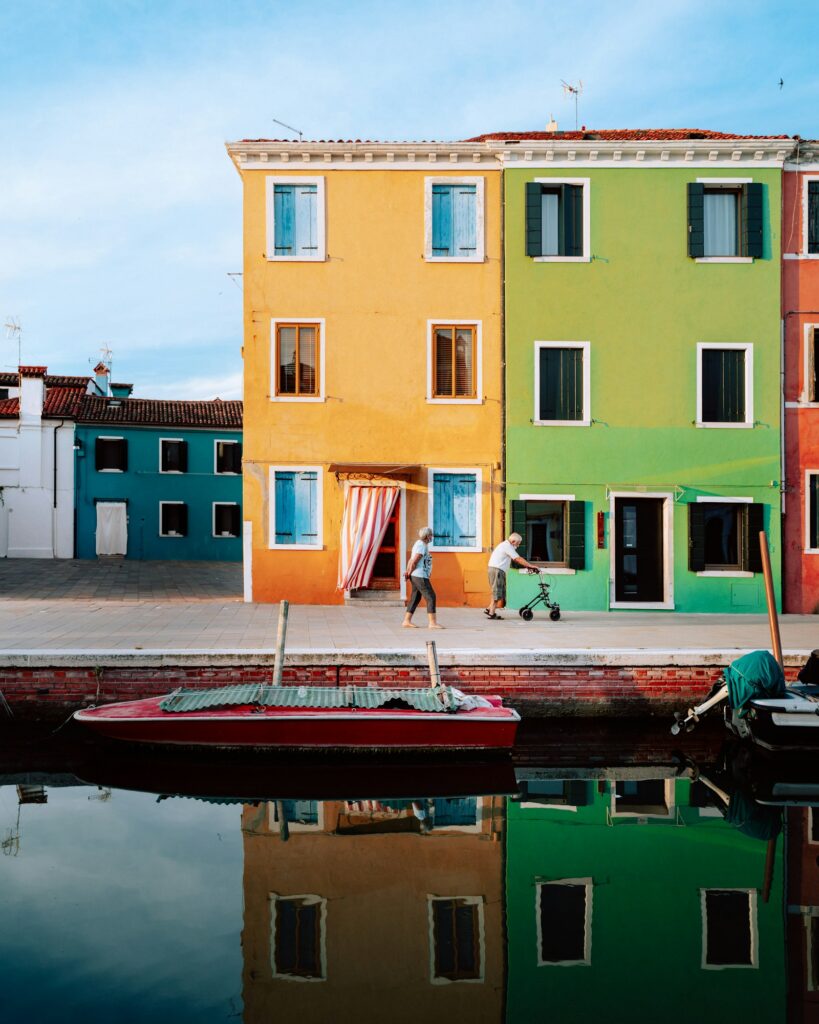
Burano is particularly known for its brightly painted houses and traditional needle lace, called merletto in Italian.
The island is compact and largely pedestrian, so much of the visit involves walking beside canals, crossing small bridges and exploring its main streets and squares.
Many tours provide free time after a brief introduction from the guide. Others include a visit to a lace shop or a demonstration of the craft.
Ask whether someone accompanies your group on Burano. If the experience is primarily a private boat transfer, you may be left to explore independently before returning to the pier at an agreed time.
What can you see in one hour?
An hour can be enough for a short walk along the colorful canals, photographs around the center and a quick visit to a lace shop.
However, it provides limited time for a museum, detailed shopping or a sit-down meal.
If Burano is the main reason for your excursion, consider allowing at least 90 minutes. Two hours is more comfortable when you want a relaxed walk, a lace-related visit and something to eat.
For photographers, a longer stop also allows time to move away from the busiest streets and find different canal views.
Will you see lace being made?
Some tours include a short lace-making demonstration or a visit to a shop where the traditional technique is explained.
However, a stop at a lace shop does not necessarily guarantee that an artisan will be demonstrating needle lace when you arrive.
Ask whether the demonstration is specifically arranged and whether it is included in the price.
Traditional handmade Burano lace requires considerable skill and time. If you are buying lace, ask whether an item is entirely handmade, partly machine-produced or imported.
Being sold on Burano does not automatically mean that a piece was handmade there.
Is the Burano Lace Museum worth including?
The Museo del Merletto explains the history and techniques of Venetian lace-making through historic examples and displays.
The museum is located in Piazza Galuppi, making it convenient to combine with a walk through Burano’s center.
Its current published opening hours are 10 a.m. to 4 p.m., with last admission at 3:30 p.m. It is closed on Mondays.
Standard adult admission is currently €7, with reduced tickets and exemptions for eligible visitors.
Check the official Lace Museum opening information before booking. If your tour reaches Burano late in the afternoon, the museum may already be closed even though the shops and streets remain accessible.
For travelers especially interested in textile history, allow at least 30 to 45 minutes for the museum in addition to walking around the island.
Is Burano a good place to stop for lunch?
Burano has restaurants, cafés and places serving Venetian lagoon cuisine. You may encounter fish dishes, seafood risotto and other regional specialties.
A proper restaurant lunch can take around 60 to 90 minutes once you account for ordering and service. That can consume much of a standard six-hour three-island itinerary.
If lunch matters, reserve a table and coordinate the timing with the boat operator. Ask whether the boat will wait or whether the skipper will return at a scheduled time.
Do not assume a restaurant meal is included simply because the tour advertises a stop on Burano.
If you have dietary restrictions, confirm the restaurant’s suitability independently. Seafood, wheat, milk and other allergens appear frequently in local dishes, and gluten-free options require appropriate preparation procedures for someone with celiac disease.
Torcello: a short boat ride followed by a walk
Torcello is different from Murano and Burano. It has relatively few permanent residents and is known for its early medieval religious buildings, archaeological remains and open lagoon landscape.
The island’s main attraction is the Basilica di Santa Maria Assunta, one of the oldest surviving religious buildings in the Venetian lagoon.
The most important logistical detail is that the basilica is not immediately beside the main visitor landing.
From the boat stop, visitors follow a canal-side path toward the historic center. Allow approximately 10 to 15 minutes each way for the walk, depending on the landing point and your pace.
That means even a brief visit to the basilica requires more time than simply stepping off the boat and taking a photograph.
What can you see in 45 to 75 minutes?
A short stop usually allows you to walk toward the historic center, see the exterior of Santa Maria Assunta and Santa Fosca, and enjoy the surrounding lagoon landscape.
You will also pass the area associated with the Ponte del Diavolo, or Devil’s Bridge, along the canal-side approach.
If you want to enter the basilica and look properly at its mosaics, allow additional time. A stop of 75 to 90 minutes is generally more comfortable, especially when your group includes children or slower walkers.
Visiting the Basilica di Santa Maria Assunta
The basilica is particularly known for its Byzantine mosaics, including the Virgin and Child in the apse and the large Last Judgment composition.
Under the current published schedule, visiting hours are:
- March 1 to October 31: 10:30 a.m. to 6 p.m., with last admission at 5:30 p.m.
- November 1 to the end of February: 10 a.m. to 5 p.m., with last admission at 4:30 p.m.
The published standard admission is €5 for the basilica, or €9 for a combined basilica and bell tower ticket. Reduced admissions and exemptions apply to certain visitors, including free basilica admission for children up to ten years old.
The Patriarchate of Venice requires guided groups entering the basilica to use headsets connected to their guide. Ask the operator whether these are provided if an interior guided visit is part of the itinerary.
Visitors must also dress appropriately for a place of worship, with shoulders and knees covered.
Check the official basilica admission and opening information for your travel date.
Should you climb the Torcello bell tower?
The bell tower provides views across the lagoon, but its ascent requires physical effort and is unsuitable for some travelers with mobility limitations or difficulty with heights.
Its opening and last-admission times differ from those of the basilica. During the March to October period, the published last admission is 5 p.m., with closing at 5:30 p.m. Winter hours are shorter.
A bell tower visit also takes time away from exploring the rest of Torcello.
If you specifically want to climb it, ask the tour operator to allow enough time and confirm that the tower is scheduled to be open.
Do not assume that the bell tower is included simply because the booking mentions Torcello’s basilica.
Should you visit the museums on all three islands?
It is possible, but a standard six-hour boat tour may leave too little time to visit all three museums properly, especially when the itinerary also includes a glassmaking demonstration and lunch.
The Venice Civic Museums Foundation currently offers a combined Island Museums ticket covering:
- Murano Glass Museum.
- Burano Lace Museum.
- Torcello Museum.
The published adult ticket costs €20, with a €10 reduced rate for eligible visitors. It is valid for three months and permits one visit to each museum.
That longer validity can be useful if you return to the islands on another day. You do not have to visit all three museums during a single boat excursion.
Check the official Venice Civic Museums ticket information and individual opening calendars before deciding.
Burano Lace Museum and Torcello Museum are normally closed on Mondays. This makes Monday a less suitable day for a three-island itinerary centered on those collections.
If your priority is the museums rather than a broad lagoon overview, consider choosing one or two islands and allowing more time ashore.
Private boat, private guide or private water taxi?
These descriptions are often used interchangeably in tour advertising, but they can refer to different arrangements.
A private boat means the vessel is reserved for your group. You do not share it with unrelated visitors, but the booking may provide only transport between the islands.
A private guided tour normally includes someone who explains the attractions and may accompany you during the island walks. Confirm whether the guide remains with your group throughout the entire itinerary.
A private water taxi excursion may use a licensed taxi boat to transport you between predetermined stops. The boat might depart while you explore and return at an agreed time.
A small-group tour by private boat can mean that the tour operator uses a chartered vessel for a group of unrelated customers. The boat is privately operated, but the experience is shared.
If you want exclusive use, ask whether anyone outside your party will travel on the boat. Then establish exactly which services the crew and guide provide once you disembark.
Will the boat wait while you explore each island?
This is a particularly useful question because private operators use different arrangements.
Some charter boats remain at your disposal for the entire reserved period, subject to legal docking arrangements. Others operate as private transfers, dropping your group at an island and returning at a scheduled time.
For example, Venice Hospitality currently distinguishes between its Venetian Boat, which remains at the group’s disposal during the booked hours, and its water taxi service, which provides transfers between planned stops without remaining at the guests’ disposal during the visits ashore.
Both formats can provide a private experience, but they allow different levels of flexibility.
Ask whether you can change the length of a stop after arrival and how to contact the skipper. If the boat has departed, the next pickup may need to remain fixed.
Also ask how the group will identify the correct return pier. On Murano and Burano, several landings may be within walking distance of one another.
Where can a private tour collect you in Venice?
Private lagoon excursions may offer several boarding locations, including areas around San Marco, San Zaccaria, Fondamente Nove, Cannaregio and the railway station.
Some operators offer hotel pickup, but this does not always mean directly outside your accommodation.
A hotel with an accessible private water entrance may be able to arrange boarding at its own landing. A property on a narrow canal, a pedestrian street or beside a restricted pier may require you to walk to another location.
Before paying, send your complete accommodation address and ask for the exact boarding point.
Useful details include:
- The name and address of the boarding pier.
- Whether the boat can collect you directly from your hotel.
- How far you must walk from the accommodation.
- Whether bridges or steps are involved.
- Who will meet you at the pier.
- Whether the boat returns to the same location.
- Whether a different drop-off point costs extra.
Venice regulates passenger-boat operations and the use of landing places. Licensed water taxis and chauffeur-operated boats have different authorizations and access arrangements.
The City of Venice’s water-transport guidance explains that chauffeur-operated passenger boats must use authorized boarding facilities.
A private booking does not give the skipper permission to stop at every dock. Ask the provider to confirm that your requested pickup and drop-off points are permitted.
What type of boat should you choose?
Venice operators use several types of vessels, including traditional-style wooden motorboats, enclosed water taxis and larger boats designed for groups.
The type of boat affects seating, shelter, passenger capacity, boarding and comfort during the longer crossings.
Traditional-style private motorboat
These vessels may have an open seating area, a partial canopy or an enclosed section. They can provide a pleasant view across the lagoon, particularly in warm weather.
However, protection from wind, rain and spray varies considerably between boats.
Ask for recent photographs of the actual vessel or the category that will be assigned to you.
Enclosed water taxi
Venetian water taxis commonly have enclosed passenger cabins with windows, although layouts differ.
An enclosed cabin can be more comfortable during cold or windy weather. However, you may have less space for outdoor photography or moving around while underway.
Ask whether passengers are permitted to stand outside during navigation and whether any outdoor seating is available.
Larger private group boat
For larger families or groups of friends, an operator may supply a vessel with more passenger seats.
Confirm its licensed passenger capacity, available seating and whether the quoted price includes everyone in your party.
A boat advertised for ten people may have a different layout from one designed for five. Ask whether every guest has an appropriate seat and what happens if the number of participants changes.
Also check whether the boat has a toilet. Smaller private motorboats often do not, which matters during an excursion lasting six hours.
Accessibility, boarding steps and walking distance
Private boats can reduce the need to change public water buses, but they are not automatically accessible for wheelchair users or people with limited mobility.
Boarding may involve stepping down from a stone quay, crossing a narrow gap or using a movable gangway. The height difference can change with tides and the type of landing.
If anyone has difficulty climbing steps, ask the operator about the exact vessel and planned boarding locations.
Questions should cover:
- Whether step-free boarding is available.
- Whether a wheelchair can remain occupied during the journey.
- Whether the boat has a suitable ramp or lift.
- Whether a wheelchair can be secured safely.
- Whether the passenger must transfer to a boat seat.
- Whether a folding wheelchair or walking frame can be stored.
- Whether assistance is available at every landing.
Venice has specifically authorized accessible water-transport services, including vessels fitted for passengers with reduced mobility. The municipality’s accessible water-transport information explains these arrangements.
The island walking routes require separate consideration.
Murano and Burano have bridges, narrow streets and some uneven paving. On Torcello, the approach from the boat landing to the historic center is a substantial part of the visit.
A boat may be accessible while the planned activities ashore are not. Ask the provider to assess the complete itinerary rather than only the vessel.
Are private lagoon tours suitable for children?
Many private boat experiences welcome families, and the ability to choose your stopping times can be useful when traveling with younger children.
However, suitability depends on the vessel, available safety equipment and the length of the excursion.
Before booking, provide the ages of all children and ask about appropriate life jackets or other required safety equipment. Confirm that the equipment is available in sizes suitable for their weights.
Do not assume that ordinary adult life jackets can be adjusted safely for a toddler.
For families bringing a stroller, ask whether it can remain folded and secured on board. Some smaller boats have very limited luggage space.
A six-hour excursion may be too long for a toddler who needs a nap or frequent opportunities to move around. A shorter two-island tour can be easier to manage.
If you want to visit a working glass furnace, keep children at the distance specified by the staff. Hot glass, furnaces and workshop equipment require close supervision.
On Torcello, children should also be supervised around canal edges and bridges. The historic Ponte del Diavolo has no conventional protective parapets.
When should you schedule the tour?
Morning departures are often practical because they leave more time for artisan demonstrations, museum visits and lunch.
For example, a tour beginning around 9:30 or 10 a.m. can reach Murano during normal workshop hours and continue to Burano and Torcello before the main museums and churches close.
However, the Murano Glass Museum opens at 10 a.m., so a very early arrival will not necessarily help if that is your priority.
Afternoon departures can work well for a shorter Murano and Burano tour, but they may be unsuitable for entering the Lace Museum or Torcello’s basilica late in the day.
The Lace Museum currently closes at 4 p.m., while the basilica on Torcello has seasonal last-admission times.
When booking, give the operator a list of the attractions you actually want to enter. The itinerary should be built around those opening hours rather than simply assigning equal time to each island.
What happens on Sundays, Mondays and public holidays?
Individual workshops and museums follow different schedules.
Some Murano glass studios may be closed on Sundays or certain holidays, while others arrange demonstrations for visitors. You should never assume that every working furnace operates every day.
The Murano Glass Museum normally opens daily, but the Burano Lace Museum and Torcello Museum are closed on Mondays under their published standard schedules.
The Basilica of Santa Maria Assunta on Torcello follows its own religious and visitor calendar. Special services or events may affect access.
If your excursion falls on a public holiday or if you are traveling in 2027, ask the provider to reconfirm the actual workshop and attraction schedules. The currently published 2026 visiting arrangements should not be treated as guaranteed for every future date.
Wind, fog, rain and high water
Weather across the Venetian Lagoon can differ from conditions in central Venice. Even when the sky is clear, wind can make exposed crossings uncomfortable.
Fog can reduce visibility and affect navigation. Strong wind, storms and other adverse conditions may require a route change, delayed departure or cancellation.
Rain does not necessarily prevent a tour, especially when the boat has a protected cabin. However, a covered vessel will not automatically solve problems with slippery landings or outdoor island walks.
High tides, known as acqua alta, can also affect some boarding points and pedestrian routes, depending on the water level and location.
Before booking, ask:
- Is the boat enclosed or protected from rain?
- How does the operator decide whether navigation is safe?
- Can the route change because of wind or fog?
- What happens if one island cannot be reached?
- Can the tour move to another time or day?
- Is a refund offered if the operator cancels?
- What happens if you personally prefer not to travel in conditions the operator considers safe?
A general promise that tours operate in all weather should prompt questions about the actual safety and cancellation policy.
If an island cannot be reached, confirm whether you will receive an alternative stop, a shorter excursion or a refund according to the agreement.
How much does a private Murano, Burano and Torcello boat tour cost?
Private boat prices vary by vessel type, group size, duration and whether a professional guide is included.
As a current published example, Venice Hospitality advertises a four-hour private Murano and Burano excursion starting at €500 for a traditional-style boat accommodating up to five passengers. Its six-hour Murano, Burano and Torcello experience starts at €650 for the same boat category.
For these particular packages, a dedicated guide is listed as an optional extra of €150 for the four-hour experience and €200 for the six-hour experience.
The company’s larger water taxi option uses a different pricing structure, includes a guide and accommodates more passengers. Its tour descriptions also distinguish between boats remaining at guests’ disposal and water taxis making scheduled island transfers.
These are individual operator prices, not standard tariffs for Venice. Obtain a current quotation for your travel date and exact group size.
Some operators charge by the hour, while others quote a complete itinerary. A lower hourly price may become more expensive once you add the return journey, guide and several stops.
Before comparing prices, ask for the total amount in euros, including applicable taxes, fuel, docking charges and any booking fees.
What should the quoted price include?
The written quote should make clear which services are included and which need separate payment.
- Private vessel: Exclusive boat use for the stated group size.
- Skipper: A properly authorized professional responsible for navigation.
- Duration: The exact number of hours, including travel and island stops.
- Boarding: The agreed Venice pickup point and any additional charge for hotel collection.
- Return: The location where the boat will drop you off.
- Island stops: Murano, Burano and Torcello, with any minimum time ashore specified.
- Professional guiding: Whether a guide accompanies your party on the boat and during island walks.
- Glass demonstration: Whether the workshop visit and presentation are included.
- Lace demonstration: Whether one is arranged or merely suggested.
- Admission tickets: Any museum or church fees included in the package.
- Food and drinks: Water, refreshments or meals if specifically provided.
- Additional costs: Overtime, additional stops or alternative pickup locations.
Ask whether the guide and skipper are different people. A tour listing that says “English-speaking captain” may provide commentary during navigation without a separate guide for the attractions ashore.
Also confirm how overtime is calculated. A restaurant taking longer than expected or extended shopping on Murano could increase the bill if the boat is hired by the hour.
What if you want to change the itinerary during the tour?
A private booking may allow adjustments, but flexibility should be agreed before departure.
For example, you might decide to spend additional time at a glass workshop and shorten the stop on Torcello. That may be possible if the boat remains at your disposal and the skipper can adjust the route safely.
Other changes may be more complicated. A booked restaurant, museum admission or separate local guide might have a fixed time.
Ask whether you can:
- Reverse the island order.
- Skip Torcello and spend longer on Burano.
- Change the glass workshop.
- Add a restaurant lunch.
- Extend the tour by an hour.
- Finish at a different Venice pier.
- Return early if someone becomes tired or unwell.
The skipper also needs to consider permitted docking locations and navigation conditions. An agreed private itinerary cannot override those restrictions.
Is a private tour better than taking the vaporetto?
For travelers who are comfortable organizing their own day, public water buses provide a much less expensive way to visit the islands.
ACTV Line 12 connects Venice’s Fondamente Nove with Murano, Mazzorbo, Burano and onward northern-lagoon destinations. Line 9 operates between Burano and Torcello.
Check the official ACTV navigation timetables for the specific service pattern, departure pier and date.
Some Line 12 services also serve Torcello under particular arrangements, but for most visitors the straightforward connection is to travel via Burano and use Line 9.
Public boats allow you to spend as long as you wish on each island, provided you plan around the return timetable.
They do, however, involve boarding with other passengers, possible queues and transfers between services. During busy periods, boats can be crowded.
A private tour becomes more useful when you want exclusive transport, coordinated workshop appointments, help with the route or an itinerary customized to your group.
For independent planning, see the Italy on Foot guides to visiting Murano from Venice and getting to Burano by water bus.
If you mainly want to walk around Burano, photograph the colorful houses and visit Murano’s shops, you may not need a private vessel at all.
Planning the island excursion around the rest of Venice
A six-hour island tour usually occupies much of the day once you include the journey to the boarding point and time afterward returning to your accommodation.
If the tour begins in the morning, avoid scheduling a tightly timed museum appointment immediately after the expected return.
Boat journeys may take longer because of navigation conditions or temporary restrictions, and a private group may spend more time ashore than originally planned.
If you want to organize the excursion alongside St. Mark’s Basilica, the Doge’s Palace or other Venice activities, the Italy on Foot trip planner can help you arrange the day and keep the important booking times together.
Record the exact pier and return location. A booking that finishes at Fondamente Nove may require a different journey back to your accommodation than one returning near San Marco.
For travelers staying outside Venice’s historic center, also account for the public transport needed to reach the tour’s starting point.
Deposits, cancellation terms and missed departures
Private boat tours often require full payment or a deposit before departure. The cancellation deadline may be stricter than for a shared excursion because the boat and crew are reserved for your party.
As one current example, Venice Hospitality’s published private-island-tour policy allows cancellation at least 48 hours before departure for a full refund. Cancellations within 48 hours incur a charge of 100% of the booking price.
This is that operator’s policy and does not apply automatically to other services.
Ask how the booking is handled if:
- Your train or flight arrives late.
- You cannot find the boarding pier.
- The skipper is delayed.
- The weather prevents departure.
- An island or attraction becomes inaccessible.
- The booked glassmaking demonstration is cancelled.
- Your group size changes.
- You need to shorten the tour.
- You want to move the excursion to another date.
Find out whether the cancellation deadline is based on the local Italian time of the departure.
For an early-morning booking, confirm the skipper’s contact details and the correct meeting location the previous evening.
Do not expect the operator to wait indefinitely if you are late. Another scheduled charter or a reserved docking slot may limit the available flexibility.
Questions to ask before booking a private island boat tour
Send the operator your preferred date, number of passengers, accommodation address and the activities you want to prioritize. Then obtain clear answers to the following:
- Is the boat exclusively reserved for our group?
- What is the exact vessel type and maximum passenger capacity?
- Does the price include a skipper and a separate professional guide?
- Will the guide accompany us during the island visits?
- What is the exact boarding point in Venice?
- Can the boat collect us from our hotel or its nearest authorized pier?
- Does the quoted duration include all boat journeys and time ashore?
- How many minutes are planned for Murano, Burano and Torcello?
- Can we spend longer on one island and shorten another stop?
- Does the boat remain at our disposal throughout the tour?
- Which Murano glass factory will we visit, and is the demonstration confirmed?
- Are purchases at the glass showroom entirely optional?
- Is a Burano lace-making demonstration included?
- Can we visit the Glass Museum, Lace Museum or Torcello basilica within the planned schedule?
- Are museum and church admission fees included?
- Is lunch included, or should we reserve a restaurant separately?
- Are there toilets on the boat or at the planned stops?
- Are suitable life jackets available for every passenger, including children?
- Can the boat accommodate a stroller, wheelchair or walking aid?
- Are all proposed boarding and landing points accessible for our group?
- What protection does the vessel offer against wind and rain?
- What happens if bad weather prevents navigation?
- Can we finish at a different pier from the starting point?
- What is the total price, including fuel, docking, guiding, taxes and any extra fees?
- What is the overtime rate if we extend the visit?
- What are the cancellation, rescheduling and late-arrival conditions?
For a half-day outing, concentrating on Murano and Burano generally provides more useful time ashore than rushing through all three islands. If Torcello’s basilica and early Venetian history are important to you, allow approximately six hours or more and confirm that the visit fits its opening times.
Before paying, ask for an itinerary showing the intended minutes ashore at each stop, rather than only a list of island names. Confirm the vessel, boarding pier, guide arrangements and admissions in writing. Those details determine whether your private excursion includes the visits you actually want or becomes a series of short stops separated by boat journeys.