Guided kayaking in Venice usually lasts between 60 minutes and two and a half hours, with an instructor leading a small group through permitted canals or parts of the Venetian Lagoon. Some experiences welcome complete beginners, while others require previous paddling experience and the ability to swim. The main difference between tours is the route: sheltered neighborhood canals involve different conditions from longer excursions across open lagoon water.
Before booking a Venice kayak tour, check the actual distance, whether you will use a single or double kayak, the guide’s safety qualifications and the cancellation policy. Venice has specific regulations restricting where and when kayaks may navigate, including prohibitions on the Grand Canal and other busy waterways. A guided booking does not automatically permit access to every canal shown in promotional photographs.
What happens during a guided kayak tour in Venice?

Most guided experiences begin at a kayak base or rowing club rather than a public waterbus stop. Participants meet the instructor, receive equipment and complete a safety briefing before launching.
A typical tour follows this sequence:
- Check in: Arrive at the agreed location, confirm the reservation and complete any required participation forms.
- Receive equipment: The operator provides a kayak, paddle and personal flotation device, commonly called a life vest or buoyancy aid.
- Learn the basic controls: The instructor demonstrates how to paddle forward, stop, reverse and turn.
- Launch from the base: Participants enter the water under supervision and practice controlling their kayaks.
- Follow the guide: The group travels along a route selected according to navigation restrictions, tides, traffic and weather.
- Stop for explanations: The instructor may pause at suitable locations to discuss historic buildings, canals and Venetian life.
- Return to the starting point: Most ordinary canal tours finish where they began, followed by equipment return and changing if facilities are available.
Some operators photograph participants during the activity, while others expect you to arrange your own photographs when it is safe to do so.
Do not expect a conventional guided sightseeing experience with continuous historical commentary. You will spend much of the time paddling and concentrating on your surroundings. Explanations generally happen when the group can stop safely without obstructing water traffic.
How long should you book?
Tour length matters because kayaking requires continuous physical effort. A two-hour walking tour and two hours of paddling are very different experiences, particularly if you are unfamiliar with the technique.
60-minute beginner or introductory tour
A one-hour activity is a practical starting point for travelers who want to try kayaking without committing to a longer outing.
Some experiences include a brief introduction followed by a short canal route. Others are structured more like lessons, spending additional time developing basic paddling skills.
Real Venetian Kayak, for example, advertises a 60-minute introductory experience. Separately, Cao Rio offers beginner kayaking lessons that focus on learning the necessary technique before moving to more demanding tours.
If you have never paddled before, ask how much instruction is provided and whether the route is specifically designed for first-time participants.
A short tour can give you a sense of being on Venice’s waterways, although it will cover fewer locations than a longer excursion.
80- to 100-minute canal tour
Approximately 90 to 100 minutes is a common format for guided sightseeing by kayak.
This allows time for basic instruction, paddling through several connected waterways and stopping for short historical explanations.
Some tours concentrate on Cannaregio and neighboring areas, passing traditional buildings, small bridges and sections of Venice that receive less sightseeing traffic.
For someone who is reasonably active and comfortable around water, this can be a manageable duration.
Ask whether the advertised 100 minutes include the safety briefing, changing time and equipment preparation. The amount of actual paddling may be shorter than the total experience.
Two- to two-and-a-half-hour tours
Longer canal tours may cover approximately four to five kilometres, although distance varies considerably by itinerary.
For example, Cao Rio’s cultural kayaking experience covers approximately five kilometres. Venice Kayak advertises a two-and-a-half-hour canal tour that includes a tutorial and at least two hours of kayaking.
These experiences require more sustained paddling. They may also encounter working boat traffic, waves and conditions that are more demanding than those found in a sheltered practice area.
Check whether you will have opportunities to rest. A longer route may be comfortable for someone who regularly kayaks but tiring for a person whose main exercise is walking.
Half-day and longer lagoon excursions
Some operators arrange longer paddling experiences into the northern lagoon, including areas near Certosa, Vignole and Sant’Erasmo.
These excursions can involve considerably greater distances and more exposure to wind, tides and boat wakes.
Venice Kayak has published a historic lagoon itinerary lasting approximately five to six hours, with stops near lagoon landmarks and a lunch opportunity. The operator’s published information also refers to its Certosa meeting point, so the present availability and departure arrangements should be reconfirmed.
A longer excursion should be chosen according to your kayaking ability rather than the number of islands named in the description.
Where will you actually paddle?
Venice has several distinct paddling environments. The canals of the historic center are narrow, regulated waterways used by residents and working boats. The outer lagoon is a larger natural environment with open water, channels, marshes and islands.
These areas require different skills, and not every tour visits both.
Cannaregio: neighborhood canals and historic buildings
Cannaregio is a common starting area for guided kayaking. Several operators use facilities around the district’s northern edge, where they can access suitable waterways.
Potential scenery includes canal-side buildings, small bridges, historic churches and the surroundings of Madonna dell’Orto.
Some operators discuss the Jewish Ghetto and Cannaregio’s history during the outing. However, that does not mean the kayak enters every canal within the neighborhood.
Venice’s waterways have different navigation restrictions, and the guide must choose an appropriate legal route for the time of day.
Ask which sections of Cannaregio the group expects to use and whether the route stays in sheltered canals or reaches more exposed water near the northern lagoon.
Castello: waterways near the historic Arsenal
Some cultural kayaking tours operate in parts of Castello, including waterways associated with Venice’s maritime history.
The Arsenale, or Venetian Arsenal, was once a major shipbuilding complex. Its exterior and surrounding historic structures can provide an interesting background for explanations about the Venetian Republic.
However, sections of the Arsenal complex and nearby waterways have access restrictions. A tour mentioning the Arsenal should not be interpreted as permission to paddle through its working or controlled areas.
Ask which canal or viewpoint the guide uses and whether the stop involves seeing the Arsenal from the water rather than entering the complex.
The northern lagoon: Certosa, Vignole and Sant’Erasmo
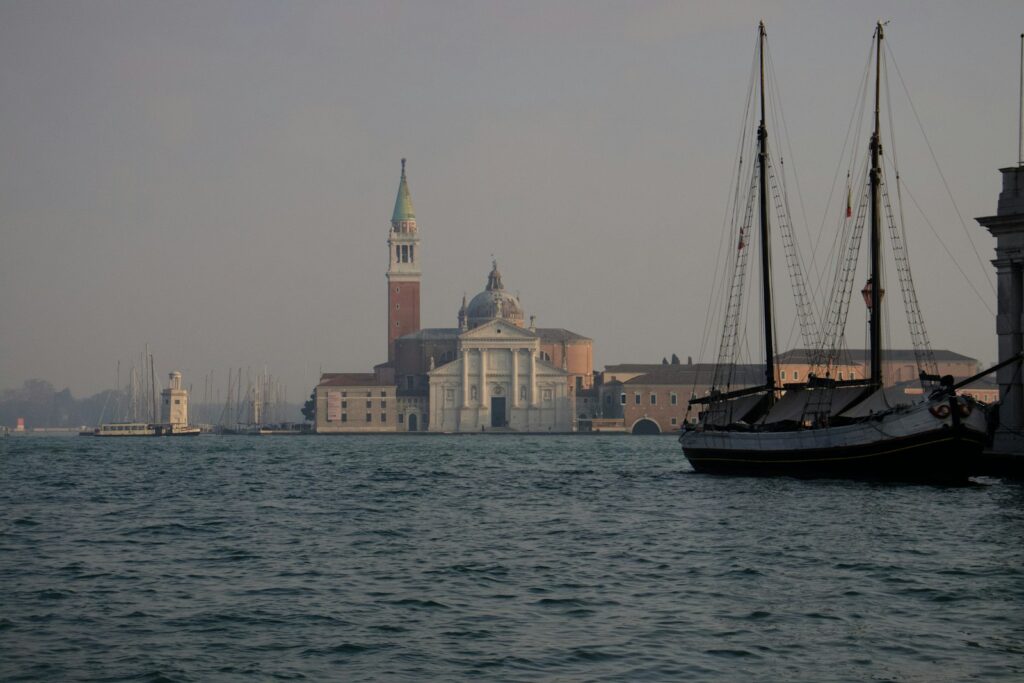
Lagoon-focused kayaking experiences offer a different view of Venice. Instead of concentrating on closely spaced buildings and bridges, the route may pass natural shorelines, historic fortifications and islands with agricultural or maritime traditions.
The northern lagoon includes areas around Certosa, Vignole and Sant’Erasmo, as well as channels used by commercial vessels and local boats.
These routes can be more physically demanding because paddlers may encounter wind, currents and larger stretches of open water.
For a lagoon tour, ask for the approximate distance in kilometres and the longest continuous paddling section.
Also establish whether the route includes a landing on an island or whether the named locations are seen from the kayak.
Can you kayak along the Grand Canal?
Ordinary kayak navigation is prohibited on the Grand Canal. This is an important distinction because some third-party tour descriptions still advertise paddling along the Grand Canal or passing the Rialto Bridge by kayak.
Venice’s water-navigation regulations restrict kayaks, canoes, pedal boats and similar craft from the Grand Canal, the Cannaregio Canal, canals in the San Marco district and other waterways used by authorized scheduled public boat services.
The relevant municipal rules include Ordinance 274/2015 as amended by Ordinance 390/2019.
Other canals within the regulated lagoon traffic zone have time-of-day restrictions, particularly on weekdays and Saturdays. The precise rule depends on the waterway and the applicable ordinance.
The existence of guided kayak tours does not mean kayaks have unrestricted access throughout Venice.
Before booking, ask the operator:
- Which canals will the tour use?
- Are those canals open to kayaking at the scheduled departure time?
- Does the route require any specific authorization or exemption?
- Are any advertised waterways prohibited to ordinary kayak traffic?
- How does the route change according to weekday, time and local navigation restrictions?
Do not assume that a marketplace description mentioning the Grand Canal establishes that the advertised kayak route is permitted. The operator should be able to explain the actual lawful itinerary.
The same caution applies to independently renting a kayak. Venice is a regulated working-waterway environment, and you cannot simply launch anywhere and follow a sightseeing map through the canals.
Do you need previous kayaking experience?
Experience requirements vary significantly between operators.
Some guided experiences welcome people who have never paddled before, provided they can follow instructions and meet the physical and safety requirements.
Other tours require participants to have previously used a kayak, canoe or similar small boat.
For example, Real Venetian Kayak states that beginners can join its standard experiences after receiving instructions. Venice Kayak’s published FAQ, however, says participants should already have basic paddling experience, although it may accommodate less experienced guests in a double kayak with a more experienced partner.
The distinction matters because a guide providing a ten-minute introduction does not necessarily mean the tour is an appropriate first kayaking lesson.
What skills should you already have?
For an ordinary guided canal tour, useful skills include:
- Paddling forward without losing control of your direction.
- Stopping the kayak reasonably quickly.
- Turning within a limited space.
- Reversing when necessary.
- Maintaining balance when another boat creates a wake.
- Following instructions promptly.
- Remaining calm around other boats and unfamiliar water conditions.
A beginner-specific session should teach these movements in a suitable practice area before introducing more complicated navigation.
If you have never kayaked and feel uncertain about being on the water, ask for an introductory lesson rather than immediately choosing a longer cultural or lagoon tour.
How physically demanding is kayaking in Venice?
Paddling uses the shoulders, arms, back and core muscles. You also need sufficient balance and flexibility to enter the kayak and sit in the required position.
The effort depends on your technique, kayak type, route length, wind and water conditions.
A slow 60-minute tour in relatively sheltered water is different from a two-hour route encountering boat wakes and open lagoon conditions.
Some published guided experiences cover around five kilometres in two hours. That distance can be manageable for active participants, but it requires sustained movement rather than simply drifting while sightseeing.
Before booking, ask whether there are stopping opportunities and whether the group can adjust its pace.
If you have difficulty using your shoulders, wrists or back, discuss the physical demands with the operator. A double kayak may reduce the individual effort in some circumstances, but both passengers still need to follow safety instructions.
A tour described as beginner-friendly may still involve significant exertion.
Single kayak or double kayak?
Many operators provide both single and double kayaks. The choice affects handling, effort and the way your group participates.
Single kayaks
A single kayak gives you independent control over paddling, steering and speed.
This can be suitable for adults with basic kayaking experience who feel comfortable following a guide.
However, if you become tired, you must still be able to control your kayak until the instructor arranges assistance or the group reaches a suitable stopping point.
Ask whether the operator allows complete beginners in single kayaks or requires them to share with someone more experienced.
Double kayaks
A double kayak carries two people, usually seated one behind the other.
This can work well for couples or a parent traveling with a child. It may also suit a beginner accompanying a more confident paddler.
However, the passengers need to coordinate their movements. A double kayak is not automatically easier to steer through tight spaces, particularly when both occupants are unfamiliar with the technique.
Some operators assign double kayaks according to group composition, experience and participant sizes rather than allowing everyone to choose independently.
If you are booking as a couple, confirm whether you will share one double kayak or each use a single.
For a family, check whether children are required to ride in a double kayak with a parent or instructor.
Can you kayak in Venice if you cannot swim?
Do not assume that wearing a life vest removes the need for swimming ability.
Some operators explicitly require participants to know how to swim and to remain calm if they enter the water unexpectedly.
Venice Kayak’s published safety information states that participants should be comfortable in the water and capable of swimming. It also warns that capsizing, while uncommon during its tours, remains possible.
Other operators may use different participation policies.
Before booking, tell the provider if anyone in your group cannot swim or has a strong fear of deep water. Ask whether the tour is suitable under its safety procedures.
A personal flotation device helps support a person in the water, but it does not prevent all risks associated with currents, boat traffic, cold water or a capsize.
If the operator requires swimming ability and you do not meet that requirement, choose another activity.
What happens if your kayak capsizes?
Capsizing should be treated as a possible emergency scenario, even when the likelihood is low on a carefully chosen guided route.
Before departure, the instructor should explain how to respond if the kayak overturns, how to leave the cockpit if necessary and how the guide will help you recover.
Venice Kayak describes regular guide training covering capsize rescues, towing and other safety procedures.
Ask whether the instructor is trained to recover a capsized kayak and assist a person who has entered the water.
In an emergency, follow the guide’s directions and use the flotation equipment provided. Do not try to retrieve a phone, camera or other dropped belonging before dealing with personal safety.
Swimming in Venice’s urban canals is prohibited as a recreational activity. An accidental fall into the water is a safety incident and should be handled according to the guide’s rescue procedures.
After a capsize, the operator should assess whether the participant can safely continue or needs to return to the launch point.
Life jackets, guide qualifications and rescue equipment
A guided kayaking experience should supply suitable flotation equipment for every participant.
Ask whether the vest is appropriately sized, fastens securely and is suitable for the specific activity. A vest that rides up or cannot be adjusted correctly should be replaced before launching.
Guide qualifications deserve attention as well. Experience navigating Venice is useful, but you should also ask about formal paddling instruction, first aid and rescue training.
For example, Venice Kayak describes guide qualifications associated with the Italian Canoe and Kayak Federation, known as Federazione Italiana Canoa Kayak or FICK. It also describes first-aid training and regular practice with towing and rescue techniques.
This is one operator’s stated arrangement, not a guarantee that every commercial kayak tour follows the same training program.
Before booking, ask:
- What kayaking or paddling qualifications does the instructor hold?
- Are the qualifications current and appropriate for the proposed route?
- Has the instructor completed first-aid and water-rescue training?
- What equipment is available if someone capsizes?
- Does the guide carry a working phone or other communication device?
- How does the operator arrange assistance if a participant cannot continue?
- What insurance covers the guided activity and participants?
The operator should be able to explain its safety arrangements in practical terms. A general statement that kayaking is safe is less useful than information about the equipment, route and rescue procedures.
Are kayak tours suitable for children?
Some operators accept children, but there is no single age or size requirement across Venice kayaking tours.
For example, Venice Kayak’s published policy accepts children from six years old who weigh at least 30 kg. It requires minors to travel in a double kayak with a parent or guardian and states that they must know how to swim.
Real Venetian Kayak also permits children aged six to seventeen to participate in double kayaks with a parent or instructor.
Cao Rio uses different age rules for different experiences. Its beginner and family kayaking classes can accommodate certain children from age five, while its more demanding cultural and sunset group tours generally require participants to be at least thirteen.
These are provider-specific policies and should not be treated as rules applying to every tour.
For family bookings, send the operator each child’s age, height, approximate weight and previous paddling experience.
Ask whether the child can paddle independently, must share a double kayak or can participate as a passenger while an adult controls most of the movement.
Also check whether an instructor can accompany a child whose parent is inexperienced.
If your child cannot swim, is uncomfortable in deep water or finds it difficult to follow immediate safety instructions, an ordinary canal tour may not be appropriate.
Weight limits, pregnancy and mobility restrictions
Kayaks have limits related to load capacity, stability and cockpit dimensions. Some operators also impose additional participation requirements.
Real Venetian Kayak, for example, publishes a maximum participant weight of approximately 130 kg for its standard experiences. Cao Rio uses different published limits according to its kayak equipment and requires participants to fit into the cockpit.
Do not assume that a kayak’s advertised maximum load is the same as the operator’s permitted participant weight.
If you are near a published limit, ask about the actual kayak model and whether suitable equipment is available.
Some providers exclude participants after the third month of pregnancy, and certain tours may be unsuitable for people with significant balance or mobility difficulties.
Kayaking involves entering and leaving a low boat, sitting in a restricted position and using both arms repeatedly. A person who cannot transfer safely into the kayak or respond to a capsize may need a different activity.
If a disability or health condition affects your ability to paddle, discuss the practical requirements with the operator before paying.
Do not rely on a booking platform’s general fitness label. Ask what the actual equipment and route require.
How do boat traffic and waves affect the tour?
Venice’s canals are working waterways. Gondolas, delivery boats, water taxis and other vessels may operate near the route.
When a motorboat passes, its wake can cause the kayak to move unexpectedly. This is particularly noticeable in narrow canals where waves reflect from stone walls.
Some guided experiences warn that participants may encounter waves of approximately 30 to 40 cm.
That is enough to make an inexperienced paddler uncomfortable, particularly when turning or passing close to another vessel.
The guide should explain how to maintain a safe position in the waterway, handle wakes and avoid obstructing working boats.
Ask whether the planned route crosses busy navigation areas or remains in relatively sheltered waterways.
Do not assume that small canals are entirely free of traffic. Residents and service operators still use many of them for ordinary transportation and deliveries.
Are sunset and nighttime kayak tours safe?
Several operators advertise evening kayaking, including departures around sunset or after dark.
These can provide a different atmosphere, but darkness changes the practical requirements.
Watercraft must be visible to other vessels, and the navigation rules specify lighting requirements for small craft operating during darkness.
Venice’s relevant kayak ordinance requires a continuously visible white light with 360-degree visibility during the prescribed nighttime period. The route must also comply with the restrictions that apply to the particular canals.
Before booking an evening experience, ask whether the kayaks have the required lights, whether the guide carries additional visibility and communication equipment, and how participants are kept together.
Some travelers may find night kayaking more demanding because it is harder to judge distances, identify obstacles and follow the route visually.
If you have never kayaked before, consider whether a daylight session would be a more comfortable introduction.
How do tides and weather affect the route?
Venice’s water levels change throughout the day. The tides can influence clearance beneath low bridges, the ease of launching and the conditions in different canals.
Strong wind can also make paddling much more demanding, especially near the lagoon’s open water.
The guide may need to change the route according to the combination of tide, wind, traffic and visibility.
Real Venetian Kayak, for example, states that its guides monitor municipal tide information and select routes according to the conditions rather than guaranteeing one fixed path.
You can check tide predictions through the City of Venice’s official tide forecasting service.
However, visitors should not try to determine whether a kayaking route is safe using tide predictions alone. The instructor must evaluate the local conditions and applicable navigation restrictions.
Ask whether the tour may change its route or departure time and whether a materially different itinerary gives you any rescheduling option.
What happens if it rains?
Light rain does not necessarily make kayaking impossible, but strong wind, thunderstorms, poor visibility and unfavorable water conditions can prevent a tour from operating safely.
Summer thunderstorms can develop quickly, while spring and autumn may bring more frequent unsettled weather.
Before booking, ask which conditions cause a cancellation and whether the operator contacts participants before the scheduled meeting time.
The cancellation decision generally belongs to the instructor or operator responsible for the activity.
If the provider determines that conditions are unsafe, do not expect the tour to proceed simply because the rain has temporarily stopped.
Booking earlier in your Venice stay gives you another possible date if weather prevents the original departure.
What should you wear for kayaking in Venice?
Wear clothes you can move in and that you would not mind getting wet. Even when the kayak remains upright, splashes from the paddle and surrounding water are normal.
Quick-drying sports clothing is generally more practical than jeans or heavy cotton garments.
Closed-toe water shoes or lightweight trainers with a secure fit can be useful for boarding. Ask the operator whether it has particular footwear requirements.
Consider bringing:
- A lightweight synthetic sports top.
- Comfortable shorts or quick-drying trousers.
- Secure footwear suitable for wet surfaces.
- A spare set of clothes and socks.
- A towel.
- Sunscreen and a hat during warm weather.
- Water for drinking.
- A light waterproof or windproof layer when appropriate.
- Any necessary medication, with an agreed safe storage arrangement.
During cooler months, getting wet can be uncomfortable even when the air temperature seems mild. Ask whether the operator supplies a spray skirt or other protective equipment and whether additional clothing is needed.
Some providers have changing rooms, showers and lockers at the base. These facilities are not universal, so confirm before arriving.
Can you bring your phone or camera?
Kayaking and handheld photography are difficult to combine safely, particularly in narrow canals with other boat traffic.
Some operators prohibit using phones or handheld cameras during the lesson and provide photographs taken by the guide instead.
Cao Rio, for example, requires participants to leave handheld devices in storage during its paddling activities. It permits suitably secured action cameras under its conditions and provides photographs taken by the instructor.
Other operators may allow personal photography during designated stops.
Ask whether a dry bag is supplied, whether valuables can be stored securely and whether photographs are included in the price.
If you bring a camera, use a suitable waterproof and secured arrangement. Do not assume a regular phone case will protect your device if it falls into canal water.
Also ask when the operator sends any included photographs and whether they are high-resolution files or smaller images suitable mainly for social media.
Where do Venice kayak tours begin?
Many guided experiences begin in Cannaregio or around the northern side of the historic city, but meeting points vary even between operators offering similar routes.
Real Venetian Kayak’s published booking instructions identify the area around Calle Brazzo 3347, reached from Fondamenta de la Sensa near Hotel Ai Mori d’Oriente.
Cao Rio uses the Reale Società Canottieri Querini rowing club at Fondamente Nove 6576.
These are different locations. Do not assume that every Cannaregio kayaking experience departs from the same landing.
Some older operator information still refers to launch points on Certosa or another previous base. Where different pages show different addresses, request a current map pin from the provider rather than choosing one yourself.
Most experiences do not include hotel pickup. You normally need to walk or use public transport to reach the base.
Ask whether the tour ends at the same location. If you are planning a meal or attraction afterward, the finishing point matters.
What should you check about the guide?
The instructor’s role extends beyond describing buildings. They are responsible for choosing a suitable route, explaining navigation procedures and managing the group around other water traffic.
A knowledgeable local guide should understand the canal restrictions, tides, boat movements and safe stopping locations.
Ask about relevant kayaking instruction, first-aid training and experience leading groups in Venice’s canals or lagoon.
Also establish the maximum number of participants per guide.
For example, Cao Rio advertises a maximum of six participants on its ordinary group kayaking activities. Other operators use different group limits and may provide additional instructors for larger bookings.
A small group can be useful when participants have different skill levels because the instructor has fewer kayaks to monitor.
If the experience is described as a cultural tour, ask whether the guide provides historical explanations in English and how much time is allocated to them.
How much do guided kayak tours in Venice cost?
Prices depend on the duration, group size, route and whether the booking is private or shared.
Current published examples from October 2026 illustrate the different formats:
- Real Venetian Kayak: Advertises a 60-minute introductory tour at €70 per person and a standard 100-minute guided tour at €85 per person.
- Real Venetian Kayak evening experience: Lists a 100-minute sunset or night tour at €95 per person.
- Real Venetian Kayak private tour: Advertises approximately €150 per person for a 100-minute private experience, with a minimum of three participants.
- Venice Kayak: Lists its two-and-a-half-hour canal tour from €110 per person.
- Cao Rio: Offers a beginner kayaking lesson through Manawa from approximately €59 per person and a two-hour cultural kayaking tour from €75 per person.
These are examples of individual published prices, not a standard Venice tariff. Some listings are sold through third-party booking platforms, so the price and applicable conditions may differ from a direct reservation.
For 2027 travel, obtain an updated quote rather than assuming the published 2026 rates will remain unchanged.
When comparing prices, remember that a one-hour lesson concentrating on technique is different from a two-hour guided sightseeing route. The longer experience may also require more previous kayaking ability.
What should be included in the booking price?
Most guided tours provide the essential kayaking equipment, but additional services vary.
Ask whether the quotation includes:
- A properly maintained single or double kayak.
- An appropriate paddle.
- A correctly fitted personal flotation device.
- A qualified instructor or guide.
- The initial safety briefing and any basic paddling instruction.
- Required lighting or other navigation equipment for evening sessions.
- Insurance applicable to the activity.
- Changing rooms, showers or lockers if advertised.
- Any photographs taken by the guide.
- A dry bag or suitable storage for small belongings.
- All applicable taxes and booking fees.
Hotel pickup, meals, specialist waterproof clothing and private guiding should not be assumed to be included.
If you book through a marketplace, confirm the exact tour option selected. A provider may sell a short introductory lesson, longer cultural paddle and evening excursion under similar names.
Private kayak tour or shared group?
A shared tour is usually less expensive and suitable for participants who meet the advertised skill requirements and are happy to follow a standard route.
The group may include people with different experience levels, so the instructor will choose a pace and route suitable for everyone.
A private booking gives your party more individual attention and may allow the activity to be adapted to your abilities.
It can be useful for families with younger children, couples with different paddling experience or travelers who want more time learning basic techniques.
However, a private booking does not override navigation restrictions or make unsafe conditions acceptable.
Ask whether the operator will provide a dedicated instructor and whether the itinerary can be adjusted to suit your group.
Also check the minimum charge. Some providers require at least three paying participants for a private session, even when only two people intend to paddle.
Cancellation policies vary considerably
Do not assume that kayaking operators use the same cancellation rules.
Real Venetian Kayak’s current tour pages advertise a full refund when the customer cancels at least 24 hours before departure. Its booking terms should still be checked for the particular reservation, especially where a deposit or private arrangement is involved.
Venice Kayak publishes a different policy. Its FAQ says ordinary customer cancellation may not be refunded without purchased booking protection, while operator cancellation because of unsafe weather can lead to rescheduling or a partial administrative deduction if no alternative is available.
Cao Rio’s published terms require a 50% advance payment and state that the deposit is retained when the participant cancels.
These examples demonstrate why cancellation conditions matter as much as the advertised price.
Before paying, ask:
- Can I cancel without charge, and until when?
- Is a deposit required?
- What happens if I become ill before the tour?
- Can I move the booking to another day?
- Who decides whether the weather is unsafe?
- Will the operator offer a refund if it cancels?
- What happens if no alternative date is available during my stay?
- Does a late arrival count as a no-show?
- What happens if I cannot meet the paddling requirements on arrival?
Some operators reserve the right to refuse participation when a guest is intoxicated or cannot safely control the kayak. Find out whether a refund is offered in those circumstances.
What if you arrive late or cannot find the launch point?
A kayak tour usually begins with a safety briefing and equipment fitting. Arriving after the group has launched may mean you cannot join.
Some operators specifically ask participants to arrive at least 15 minutes before the advertised start time.
Before leaving your hotel, save the exact meeting point and the operator’s telephone or WhatsApp number.
Venice’s pedestrian routes can be confusing because a destination may be only a short distance away across a canal but require a longer walk around several bridges.
When navigating to the base, use the provided entrance instructions rather than relying only on the name of the neighborhood.
For example, Real Venetian Kayak describes reaching its location from Fondamenta de la Sensa through a small side street. Cao Rio’s meeting point is at a rowing club on Fondamente Nove.
If you cannot locate the instructor, remain at the agreed meeting point and contact the operator. Do not enter a private rowing club or marina without permission.
Also ask whether the session can begin without you and whether late arrival results in loss of the booking fee.
When a kayak tour may not be the right choice
Kayaking is most useful when you specifically want an active experience on the water and are comfortable controlling a small craft.
It may be unsuitable if you cannot swim and the operator requires swimming ability, have significant balance problems or are uncomfortable around boat traffic.
If you want to travel along the Grand Canal and see major waterfront landmarks without paddling, take a vaporetto or arrange an appropriate boat tour instead.
ACTV Line 1 provides a regular journey along the Grand Canal, while licensed water taxis and gondolas offer different private or small-group experiences.
Our guide to getting around Venice explains the main water-transport options and how to choose between them.
If you are interested in a hands-on Venetian tradition but would rather stand and learn to use a traditional wooden oar, consider a Venetian rowing lesson instead. That teaches voga alla veneta, which is a different technique and often uses a broader traditional boat.
Both activities require following an instructor’s directions, but the equipment, posture and physical demands differ.
How to fit kayaking into your Venice itinerary
A guided kayak tour works best when you leave enough time before and afterward for changing clothes and reaching the meeting point.
A 100-minute booking can occupy two and a half hours or more once you account for the walk to the base, check-in and returning to your accommodation.
If you are taking a longer tour, avoid scheduling a timed museum admission immediately afterward. Paddling can be tiring, and weather or water-traffic conditions may affect the finishing time.
For a tour departing from Cannaregio, consider arranging other activities in the same neighborhood rather than traveling immediately across the city.
You can use the Italy on Foot trip planner to organize the activity alongside sightseeing, meals and transport. Record the exact launch point and the earlier arrival time requested by the operator, rather than only the advertised time on the water.
If you are staying in Venice for several days, schedule the kayaking experience early enough to leave a possible alternative date if the weather prevents it.
Questions to ask before booking a guided kayak tour
Send the operator your preferred date, number of participants, ages, approximate weights and any previous kayaking experience. Before making payment, confirm the practical details that determine whether the activity is suitable.
- Is the tour specifically designed for complete beginners, or is previous kayaking experience required?
- What is the actual paddling distance in kilometres?
- How long will we be on the water, excluding equipment preparation?
- Will we use single or double kayaks?
- Can a beginner share a double kayak with an experienced participant or instructor?
- Which canals or lagoon areas are included?
- Are all the proposed waterways legally open to kayaking at the scheduled time?
- Does the itinerary avoid waterways where kayaks are prohibited, including the Grand Canal?
- How does the route change according to tides, weather and boat traffic?
- What are the swimming-ability requirements?
- What are the minimum ages and weights for children?
- Must minors travel in a double kayak with a parent or instructor?
- Are there maximum participant weights or cockpit-size restrictions?
- Are properly fitted life vests included?
- What kayaking, first-aid and rescue qualifications does the guide hold?
- What happens if someone capsizes or cannot continue paddling?
- What is the maximum number of guests per guide?
- Is the tour private or shared with other participants?
- Are there any pregnancy, mobility or health-related participation restrictions?
- For sunset or nighttime departures, what lighting and visibility equipment is supplied?
- Where exactly is the meeting and finishing point?
- Are lockers, changing rooms and showers available?
- Can we bring a phone or camera, or are photographs provided by the instructor?
- What insurance applies to participants and equipment?
- What is the total price, including equipment, guiding, taxes and any booking fees?
- What happens if the guide determines that conditions are unsafe?
- What are the cancellation, rescheduling and late-arrival policies?
For someone new to kayaking, a 60-minute introductory lesson or short guided route is a reasonable starting point. Travelers with previous paddling experience may prefer a 100-minute canal tour or a longer excursion into the lagoon.
Before paying, obtain confirmation of the actual route, participation requirements, safety equipment and weather policy. The most important distinction is between a short beginner activity in suitable sheltered water and a longer tour requiring confident boat handling. Venice’s navigation rules and working boat traffic make that difference especially important, regardless of how calm the canals look in photographs.