Cooking classes in Venice usually last between two and five hours and involve preparing fresh pasta, risotto, cicchetti or other Italian dishes before sitting down to eat what you have made. Some take place in private Venetian homes with four to six guests, while dedicated cooking schools may accommodate eight to ten participants. Longer experiences sometimes begin with a visit to Rialto Market to select ingredients before returning to the kitchen.
Before booking a Venice cooking class, check the actual menu, kitchen address, maximum group size and how much cooking each participant will do. A class advertising three courses may involve preparing everything from scratch or simply finishing ingredients the chef has already prepared. Also confirm whether lunch or dinner, wine, recipes and any market visit are included in the price.
What happens during a Venetian cooking class?
Most beginner classes start with an introduction to the dishes you will prepare. The chef explains the ingredients, demonstrates essential techniques and assigns practical tasks to participants.
Depending on the menu, you might knead pasta dough, roll fresh pasta, prepare a vegetable filling, cook risotto or assemble traditional Venetian appetizers.
A typical three- or four-hour experience follows this sequence:
- Meet the chef: Arrive at the agreed kitchen or market meeting point.
- Discuss the menu: Learn about the ingredients, recipes and cooking methods.
- Prepare the ingredients: Wash and cut vegetables, measure ingredients or prepare pasta dough.
- Cook the dishes: Work individually or in small groups under the chef’s supervision.
- Plate and serve: Finish the dishes and prepare them for the table.
- Eat together: Enjoy the meal you helped prepare, often with local wine or non-alcoholic drinks.
- Receive the recipes: Some schools provide printed instructions or send recipes afterward.
The amount of hands-on work varies. A pasta class may involve every participant making their own dough, while a seafood lesson might require several people to share tasks at one workstation.
Ask whether the advertised duration includes the final meal. A three-hour experience may provide approximately two hours of cooking followed by an hour at the table, leaving less practical instruction time than expected.
Which Venetian dishes can you learn to cook?
Venetian cuisine reflects the city’s maritime history, the produce of the Veneto region and centuries of trade with other parts of Europe and the Mediterranean.
Fish, seafood, rice, polenta and seasonal vegetables are important ingredients. However, many workshops also teach familiar Italian dishes such as fresh pasta and tiramisù because they are approachable for visitors.
There is nothing wrong with booking a general Italian cooking class in Venice. The distinction matters when your main reason for attending is to learn recipes that are particularly associated with the city and its lagoon.
Cicchetti: Venetian small plates
Cicchetti are small savory dishes traditionally served in Venetian wine bars, known as bacari.
A class focused on cicchetti might teach you to prepare several different toppings, spreads and small portions that can be served together.
Possible dishes include:
- Baccalà mantecato: Salt cod prepared into a creamy spread, often served on polenta or bread.
- Sarde in saor: Sardines combined with sweet-and-sour onions, usually with vinegar, raisins and pine nuts.
- Polpette: Small meat, fish or vegetable patties and balls.
- Vegetable cicchetti: Seasonal vegetables served on bread, polenta or as small individual dishes.
- Seafood appetizers: Small preparations using fish, shrimp, squid or other available ingredients.
Cicchetti workshops can be particularly useful for travelers who already know how to make pasta and want to learn something more specific to Venice.
However, some traditional recipes involve substantial advance preparation. Salt cod needs soaking before it can be cooked, while sarde in saor benefits from resting so the flavors develop.
Ask which stages participants complete themselves and which ingredients will already be prepared. A three-hour class is unlikely to demonstrate a multi-day soaking or resting process from beginning to end.
Seafood and lagoon cooking
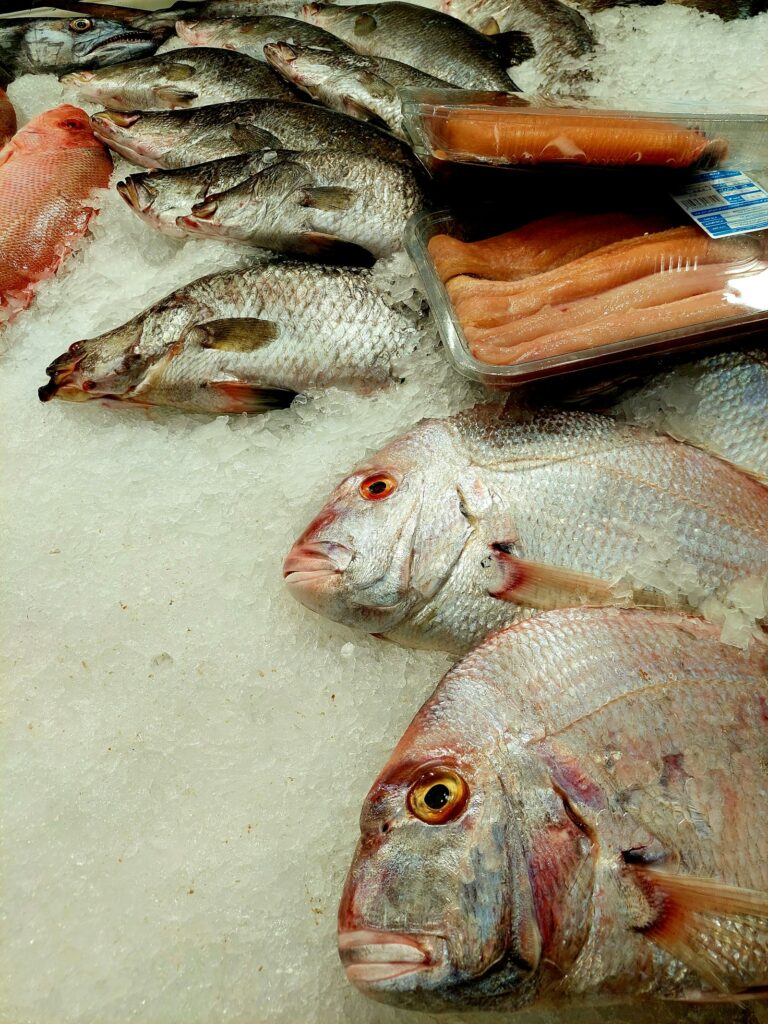
Seafood appears frequently in Venetian cooking, and some classes concentrate on fish purchased from Rialto Market.
You might encounter seppie al nero, cuttlefish cooked with its ink, or pasta dressed with a sauce made from cuttlefish ink.
Other possible recipes include fish risotto, seafood antipasti or preparations involving salt cod.
If you want to learn how to clean and prepare whole fish, ask whether that is included. Some cooking classes purchase cleaned seafood or use ingredients prepared by the chef before guests arrive.
This can be sensible for a short lesson, but it means you may learn the cooking method without practicing the fish preparation yourself.
Seafood menus also depend on seasonal availability. A chef may substitute another suitable fish or shellfish when the originally planned ingredient is unavailable.
Ask whether the menu is fixed or selected according to the market’s daily offerings.
Venetian risotto and rice dishes
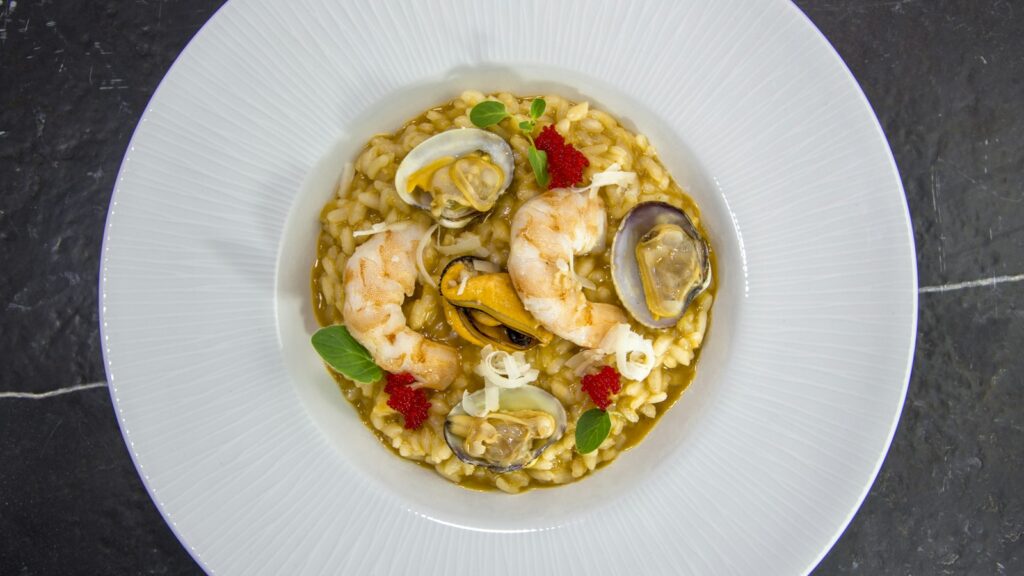
Rice plays an important role in Veneto cooking, and risotto workshops can provide useful skills that are difficult to learn simply by reading a recipe.
A beginner lesson may cover selecting rice, preparing stock, adding liquid gradually and judging the consistency of the finished dish.
Venetian and Veneto specialties include risi e bisi, a preparation of rice and peas, and seafood risottos made with seasonal ingredients.
Some classes teach cuttlefish-ink risotto, while others use vegetables or another ingredient appropriate to the season.
For example, Ca’ delle Spezie currently offers a three-and-a-half-hour Venetian risotto workshop using seasonal ingredients, followed by a dessert and tasting.
If risotto is your main interest, a dedicated lesson may provide more useful time for discussing rice varieties, stock and cooking technique than a general three-course class.
Fresh pasta and traditional sauces
Fresh pasta is one of the most common workshop subjects in Venice. Participants may prepare dough, roll it and form shapes such as tagliatelle, ravioli or other regional variations.
Some lessons concentrate on egg pasta, while others teach dough made with flour and water.
Veneto also has its own pasta traditions, including bigoli, a thick pasta often served with onion and salted fish in the dish known as bigoli in salsa.
Ask which pasta shapes you will make and whether the chef teaches the dough and sauce from scratch.
A class advertising “homemade pasta” might use a pasta machine, a rolling pin or another method. If you specifically want to learn hand-rolling techniques, mention that before booking.
Also check whether each guest makes their own dough or whether the entire group prepares one batch.
For travelers who cook regularly, learning to judge the dough’s texture, hydration and thickness may be more useful than simply following a premeasured recipe.
Venetian desserts and biscuits
Some studios offer dedicated pastry workshops or include dessert as part of a longer meal.
Traditional local sweets include zaeti or zaleti, biscuits made with cornmeal and typically raisins, and bussolà, the rich biscuits associated with Burano.
During Carnival, you may encounter frittelle, fried sweet pastries commonly filled or flavored in different ways.
Tiramisù is another frequent workshop recipe. It is a familiar Veneto dessert, although it is not exclusive to Venice.
Ca’ delle Spezie currently advertises a three-hour Venetian desserts and biscuits class that includes zaeti, tiramisù and frittelle.
If you are interested in traditional Venetian pastry rather than generic Italian desserts, ask the chef which regional recipes will actually be prepared.
How much of the meal will you make yourself?
The phrase “hands-on cooking class” can cover several different teaching formats.
In one kitchen, every participant may have a separate workstation and prepare their own pasta. In another, the group may divide the menu between several smaller teams.
Some schools use the demonstration model: the chef performs the more technical stages while participants assist with simpler preparation tasks.
Others expect participants to handle almost every stage under supervision, including cutting ingredients, rolling pasta, operating equipment and plating dishes.
Before booking, ask:
- Will we prepare every dish from scratch?
- Are ingredients measured and prepared before we arrive?
- Does every guest have a workstation?
- Will we cook individually, in pairs or as one group?
- Who handles the hot stove, oven and sharp knives?
- Will we learn the complete recipes or only selected techniques?
- Can we ask questions and practice particular skills?
There is a practical reason some ingredients are prepared in advance. Fresh pasta dough may need resting time, seafood may require cleaning, and certain traditional dishes take several hours or days to prepare fully.
The important detail is whether the operator accurately explains what will happen during your paid session.
What kinds of kitchens host cooking classes in Venice?
Cooking classes take place in several types of venues, from private apartments to dedicated professional kitchens. The setting affects group size, available equipment and how the lesson operates.
Private home kitchens
Some hosts welcome guests into their own Venetian apartments and teach family recipes in a domestic kitchen.
These experiences often involve smaller groups because counter space, dining tables and cooking appliances are limited.
For example, Ca’ delle Spezie operates in a home in Cannaregio and caps its advertised workshops at four participants.
Accademia di Cucina Italiana also advertises private classes in a central Venice apartment, with a minimum of two and maximum of six guests.
A home setting can be particularly interesting if you want to understand how the dishes are prepared using ordinary household equipment.
However, private apartments can have narrow stairs, small kitchens and limited space for mobility aids or strollers.
Ask whether the address has step-free access and whether there is enough seating for everyone. A private home should be treated as a specific venue with its own practical limitations.
Dedicated cooking-school kitchens
Other experiences take place in purpose-equipped kitchens with workstations arranged for teaching.
These may have additional burners, large preparation tables, professional ovens or other equipment that allows several participants to cook together.
For example, Venice Cooking School operates in Cannaregio and advertises a Rialto Market and cooking experience with a group of up to ten participants.
The benefit of a teaching kitchen is that the space may be organized for instruction. However, the number of workstations and instructors still matters.
Ask whether there is a cooking station for each participant or whether several guests share one table and stove.
Restaurant and hospitality kitchens
Some Venetian restaurants and hotels offer cooking lessons led by their chefs.
These experiences may concentrate on professional techniques and use ingredients and equipment associated with a working restaurant.
As one example, Spazio Botteri, near Rialto Market, runs cooking classes for small groups and introduces participants to ingredients purchased at the market.
Luxury hotels also offer longer programs. The Gritti Palace’s Epicurean School advertises a half-day experience combining the Rialto Market, cicchetti tasting and a three-course cooking lesson.
Ask whether you will cook in the restaurant’s working kitchen, a separate teaching room or another designated space. The advertised association with a restaurant does not always mean visitors enter its main professional kitchen.
Cooking in your holiday apartment
Private chefs may be available to lead a cooking lesson in a rented apartment, although this is a separate arrangement from booking an established cooking school.
This can be useful for families or groups that want privacy, have young children or prefer not to travel across Venice for the session.
Before arranging it, obtain permission from the property owner or manager and confirm that the apartment has sufficient space and equipment.
A Venetian holiday apartment may have only a small hob, compact oven and limited counter space. That can be enough for preparing fresh pasta, but a more complicated menu may need additional equipment.
Ask whether the chef brings ingredients, tools and any necessary serving items, and whether cleanup is included.
Do not assume that hiring a private instructor gives permission to use a rental property for a group event. The accommodation’s rules still apply.
How many people should be in a cooking class?
Group size is one of the most useful booking details because it affects how much individual attention you receive and how long you spend waiting for equipment.
A small class is not automatically private, and a large kitchen does not necessarily provide enough cooking stations for every participant.
Two to four participants
Classes with two to four guests can provide substantial opportunities to work directly with the chef.
These are particularly suitable when you want to ask detailed questions, practice specific skills or adjust the pace around your interests.
Ca’ delle Spezie, for example, limits its cooking classes to four participants, including its pasta, risotto, dessert and market experiences.
In a small home kitchen, guests may still share an oven or stovetop, but the instructor has fewer people to supervise.
Ask whether the experience is exclusively reserved for your group or whether other guests can join until the maximum capacity is reached.
Four to six participants
This is a common format for small-group cooking classes in Venice.
Spazio Botteri, for example, advertises classes for a minimum of four and maximum of six participants. Certain home-cooking experiences sold through Cesarine also limit attendance to six.
A class of this size can work well when participants are comfortable sharing tasks and preparing a meal together.
However, one person may make the pasta while another prepares the sauce and someone else works on dessert.
If you want every participant to practice the same technique, ask how the cooking tasks are organized.
Eight to ten participants
Larger classes may provide more of a group cooking experience, particularly when the kitchen has enough preparation space.
Venice Cooking School currently advertises a maximum of ten participants for its market and cooking class.
Istituto Venezia’s Thursday cooking sessions are capped at eight participants.
These arrangements can be enjoyable for couples, friends and solo travelers who like meeting others.
However, ask about the number of chefs and cooking stations. A class of ten people supervised by one instructor using a single hob will operate differently from a kitchen with several work areas.
Private groups and minimum booking numbers
Some workshops require a minimum number of paying participants even when the class is advertised as suitable for individuals.
Atelier Cuisine Venice, for example, currently requires at least four travelers for its standard experience to operate. If the minimum is not reached, it offers another date or experience, or a full refund.
Other providers may allow a solo guest to join an existing group or charge a higher minimum fee for a private session.
If you are traveling alone or as a couple, ask whether your reservation is guaranteed or depends on additional participants booking.
How long do Venice cooking classes last?
The scheduled duration usually includes introductions, food preparation, cooking and eating. Market visits can add another hour or more.
- Two to three hours: Often suitable for a focused pasta, cicchetti or dessert lesson followed by a tasting or simple meal.
- Three to four hours: Allows more time to prepare several dishes and sit down for lunch or dinner.
- Four to five hours: Common for longer home-cooking experiences or classes that combine shopping at Rialto Market with meal preparation.
- Half-day or longer: Useful for more involved menus, professional cooking techniques or private experiences incorporating several activities.
These are general planning categories rather than fixed standards. A three-hour class may provide more practical cooking time than a five-hour experience if the longer booking includes shopping, walking and an extended meal.
Ask how much time will be spent preparing food and how much is allocated to eating.
For an evening session, check the actual finishing time. A class beginning at 5 p.m. may run until 8 or 9 p.m., depending on the provider.
Is a Rialto Market visit worth including?
A market visit is useful when you want to understand the ingredients used in Venetian cooking and how local chefs choose fish, vegetables and seasonal produce.
It can also help you recognize Italian food terminology and learn how to shop independently during the rest of your trip.
However, market visits reduce the amount of time available for cooking unless the overall experience is longer.
Some classes involve walking through the market while the chef explains the stalls. Others actually purchase ingredients that will be used during the lesson.
Ask which format applies.
Rialto Market opening days matter
Rialto Market is divided into different trading areas, including fresh produce and the fish market, commonly called the Pescheria di Rialto.
According to Venice’s official market information, the fish market normally operates Tuesday through Saturday from 7 a.m. to 2 p.m. It is closed on Sundays and Mondays.
Fruit and vegetable stalls normally operate Monday through Saturday, with Sunday as their regular closing day.
The City of Venice also approved changes to the layout of permanent market stalls in September 2026, so the precise arrangement of individual sellers may change as the market is reorganized.
If you are booking for a Monday, Sunday or public holiday, ask exactly what the advertised market tour includes.
A walking introduction to the Rialto neighborhood may still be possible when the fish stalls are closed. However, it is a different experience from seeing the working fish market and shopping for fresh ingredients.
For a fish-focused class, Tuesday through Saturday morning is the more appropriate starting point.
Where do market classes meet?
Some operators meet guests beside the Rialto fish market, while others use a nearby square.
Atelier Cuisine Venice, for example, currently meets morning participants at Campo Beccarie, close to the fish market entrance. Its evening class meets at Campo San Tomà before walking to the kitchen.
These are different meeting locations, even though both experiences take place in Venice’s historic center.
Ask whether you should go directly to the kitchen or wait for the chef at the market. Arriving at the cooking studio when everyone else is meeting at Rialto may mean missing the first part of the experience.
Check the actual kitchen address before paying
The word Venice in a listing does not always establish that the class takes place in the historic island city.
Some experiences are organized in Mestre, Mira or another mainland location. Others begin in Venice and travel to an outside teaching kitchen.
This can be perfectly acceptable when transport arrangements are clear, but it changes the time and cost of the activity.
Ask whether the kitchen is in Cannaregio, San Polo, Dorsoduro, Castello or another part of the historic center, or whether a transfer is necessary.
Some private home classes provide the full address only after the booking is confirmed. In that case, request the neighborhood and nearest vaporetto stop before paying so you can assess the journey.
For a Rialto-area class, be careful with the public waterbus stops. Rialto Mercato is on the San Polo side of the Grand Canal, while the Rialto stops marked A, B, C and D are on the opposite side.
The Italy on Foot guide to Rialto vaporetto stops explains the differences and which boarding points serve the market area.
Allow extra time when walking to an unfamiliar address. Venice’s buildings use district-based numbering, and the route may involve several bridges even when the kitchen appears close on a map.
Dietary requirements: what can a cooking class accommodate?
Many cooking schools can change ingredients or prepare alternative menus when informed before the booking. However, dietary preferences and medically necessary restrictions require different levels of care.
Traditional Venetian recipes can contain fish, molluscs, crustaceans, wheat, eggs, milk and nuts. A shared cooking class also involves several participants handling ingredients and equipment in the same space.
Under European Union food-information rules, food businesses must provide information about specified allergens present in non-prepacked foods.
That requirement does not guarantee that an individual teaching kitchen can safely prevent allergen cross-contact.
Vegetarian and vegan menus
Vegetarian cooking can be practical in Venice, particularly with seasonal vegetables, pasta, risotto and desserts.
However, some traditional recipes use anchovies, fish stock, cured meat or animal-derived cheese.
Bigoli in salsa, for example, traditionally contains salted fish. Risi e bisi may include pancetta or a meat-based stock, depending on the recipe.
Ask whether the entire menu is vegetarian rather than assuming individual dishes are suitable based on their names.
Vegan menus require additional adjustments because fresh egg pasta, butter, cheese and cream are common in Italian cooking.
Some private home instructors advertise vegan menus, but substitutions should be confirmed for each course.
If a particular traditional technique is your reason for booking, ask whether the substitute recipe still teaches it.
Gluten-free and celiac requirements
A class may offer gluten-free pasta without being suitable for someone with celiac disease.
Ordinary pasta lessons often involve wheat flour being handled directly on shared worktops. Rolling pins, pasta machines, utensils and other surfaces can become contaminated.
Atelier Cuisine Venice, for example, currently states that it can provide gluten-free alternatives by prior request but cannot accommodate celiac disease.
This is a useful distinction that should be checked with every provider.
For celiac disease, ask whether the kitchen can control cross-contact throughout the activity, including ingredient storage, preparation surfaces, cookware and the finished meal.
A private class may provide greater control over the menu and workstations, but it does not automatically make a kitchen safe. The provider must confirm its actual procedures.
Fish, shellfish and other food allergies
Seafood-focused Venetian classes may handle fish, shrimp, squid, cuttlefish, clams and other ingredients at several workstations.
Fish, crustaceans and molluscs are separate allergen categories. Make sure the chef understands exactly which ingredients must be avoided.
Other ingredients requiring attention include wheat, eggs, milk, pine nuts, other tree nuts and sulphites.
For a serious allergy, send the provider the specific medical requirement before paying and ask whether the complete class and meal can be managed safely.
Important questions include:
- Which allergens will be handled during the session?
- Will other participants prepare dishes containing the allergen?
- Can separate ingredients, utensils and workstations be arranged?
- How will the chef prevent cross-contact?
- Are suitable alternatives available for every course?
- Can the arrangements be confirmed in writing?
If the provider cannot adequately explain how the restriction will be handled, choose another class. A menu substitution alone may be insufficient.
Are cooking classes suitable for children?
Many Venetian cooking experiences welcome families, but minimum ages vary. Some home kitchens accept young children with parental supervision, while others recommend school-age participants who can follow instructions and work safely around kitchen equipment.
Atelier Cuisine Venice, for example, recommends its classes for children over seven years old.
Other family-focused operators adapt activities for younger children, providing tasks such as shaping dough, assembling simple dishes or preparing dessert.
For a family booking, ask:
- What is the minimum age for the specific experience?
- Can a parent work beside a younger child?
- Does every child prepare their own dish?
- Are child-sized aprons or suitable work surfaces available?
- Who handles hot pans, ovens and sharp knives?
- Are non-alcoholic drinks included?
- Can the menu be adapted for a child who dislikes seafood?
- Does an accompanying adult pay if they only supervise?
For children aged five to eight, a shorter pasta or dessert class may be easier than a long market-and-seafood experience.
Older children and teenagers may enjoy more technical lessons, particularly when they can prepare dishes independently under the chef’s supervision.
Children under eighteen cannot be served alcohol in Italy, so any wine tasting or pairing should have an appropriate non-alcoholic alternative for minors.
Accessibility, standing and kitchen space
Cooking classes generally involve standing at a worktop for extended periods. Participants may need to move between preparation tables, sinks, cookers and dining areas.
For someone with reduced mobility, the accessibility of the kitchen matters as much as the walking route to the venue.
Venice’s older buildings may have narrow doors, entrance steps or kitchens reached by stairs without a lift.
Before booking, ask whether the venue has step-free entry, an accessible restroom and enough room for a wheelchair or walking aid.
If someone cannot stand for several hours, check whether a stable chair and suitable seated workstation can be provided.
For participants with limited grip strength, ask whether the chef can assist with cutting, kneading or operating a pasta machine.
A private or very small class may allow more adjustments, provided the kitchen itself is suitable.
How much do Venetian cooking classes cost?
Prices depend on the menu, duration, location, group size and whether the experience includes a market visit or a private chef.
Current published examples from October 2026 show several different formats:
- Istituto Venezia: Its Thursday cooking class runs from 5 p.m. to 9 p.m. and costs €60 for participants who are not enrolled in the school’s Italian-language courses. The maximum group size is eight.
- Venice Cooking School: Advertises a Rialto Market and cooking experience at €90 per person, with a group capped at ten.
- Ca’ delle Spezie: Lists a three-hour Venetian dessert workshop at €90, a three-and-a-half-hour risotto class at €110, a four-hour pasta class at €120 and a four-and-a-half-hour market-and-pasta experience at €140 per person. Each is capped at four guests.
- Spazio Botteri: Advertises three-hour classes near Rialto Market for €120 per participant, with a minimum of four and maximum of six people.
- Cesarine: One five-hour Rialto Market and home-cooking experience is advertised at €245 per adult, with a maximum of six guests and a separately published child rate.
- The Gritti Palace Epicurean School: Its published 2026 half-day market-and-cooking program costs €395 per person and includes a market visit, cicchetti tasting and a three-course meal.
These are individual advertised prices, not a standard rate for cooking classes throughout Venice. Some experiences are available only on particular weekdays or require minimum participant numbers.
For 2027 travel, request the updated schedule and price rather than assuming these 2026 rates will continue unchanged.
When comparing prices, check the total cost for your group. A class costing €120 per person for four participants totals €480, while a private experience may use a fixed group fee instead of an individual rate.
That distinction can make a significant difference for families and groups of friends.
What should be included in the price?
A clear cooking-class quotation should specify the complete meal and services provided.
- Ingredients: All food required for the agreed recipes.
- Instruction: The chef’s services throughout the advertised cooking period.
- Equipment: Use of utensils, cookware, aprons and kitchen facilities.
- Market visit: Guided shopping or orientation, if advertised.
- Meal: Lunch or dinner prepared during the class.
- Drinks: Wine, water and non-alcoholic options, according to the package.
- Recipes: Printed or digital instructions if included.
- Additional charges: Booking fees, taxes, menu supplements or private-group charges.
Ask whether the meal includes a starter, main course and dessert or whether you will eat only the particular dishes prepared during the lesson.
Also confirm whether additional wine and other drinks are included or charged separately.
Do not assume you can take leftover food away. The kitchen may have specific storage and food-safety policies, and some prepared dishes are intended to be eaten during the session.
Will you receive recipes to use at home?
Many cooking classes provide recipes, but the format and detail vary.
Some instructors give participants a printed booklet with ingredient quantities and step-by-step instructions. Others send recipes by email after the class.
In a more informal home-cooking session, the chef may demonstrate techniques without following precisely measured written recipes.
If reproducing the dishes at home is your main reason for attending, ask whether written quantities and cooking temperatures will be provided.
Also check whether the recipes are in English and whether they use metric measurements.
For seafood classes, it can be particularly useful to learn which ingredients may be substituted when the exact Venetian fish or shellfish is unavailable in your home country.
If you want to explore more local dishes before choosing a menu, the Italy on Foot guide to traditional Venetian foods explains specialties such as cicchetti, baccalà mantecato, sarde in saor and local desserts.
Should you book a morning or evening class?
A morning class is usually preferable when the experience includes Rialto Market. It allows you to see the trading activity and select ingredients before returning to the kitchen.
The finished meal generally becomes lunch, so you may not need another restaurant reservation afterward.
An evening class can be convenient after sightseeing, especially if it includes dinner.
However, a three- or four-hour evening session may finish late for young children. It can also be tiring after a full day of walking around Venice.
If cooking is the main activity you want to enjoy that day, consider leaving the morning or afternoon relatively flexible.
You can use the Italy on Foot trip planner to coordinate the class with nearby sightseeing, transport and other reservations. Save the actual kitchen or market meeting point and allow enough time to reach it without rushing.
For an early morning market class, confirm the meeting instructions before leaving your accommodation. If you are visiting Venice for one day, also allow time to return to the railway station or bus terminal afterward.
What happens if you arrive late or your plans change?
Cooking classes usually begin with an introduction to the ingredients and safety arrangements. Arriving late may mean missing the first part of the lesson.
If a market visit is included, the group may already have left the meeting point and moved toward the kitchen.
Ask whether late participants can join the group later and how to contact the chef.
Cancellation policies vary. Atelier Cuisine Venice currently asks guests to provide at least five days’ notice when requesting cancellation or rescheduling. Other providers may offer a shorter cancellation window or impose stricter terms for private classes.
Before paying, establish what happens if:
- Your train or flight is delayed.
- You cannot find the kitchen or meeting point.
- The minimum number of participants is not reached.
- The assigned instructor becomes unavailable.
- A market closure prevents the planned shopping visit.
- A seasonal ingredient is unavailable.
- You become ill before the appointment.
- Your party size changes.
- The provider cannot accommodate an agreed dietary requirement.
Also distinguish an availability enquiry from a confirmed booking. Some small studios respond manually and only reserve the date after sending a separate confirmation.
If you are booking a private class, request written confirmation of the menu, instructor, date, time and total group price.
When you may not need a cooking class
A paid class is most useful when you want to learn techniques, prepare dishes yourself and ask questions while working with an experienced cook.
If your main interest is tasting Venetian food, visiting a traditional bacaro or having a good restaurant meal may be more practical.
You can explore Rialto Market independently, choose seasonal produce and eat local specialties without reserving several hours for a cooking lesson.
If you are staying in an apartment with a suitable kitchen, another option is to purchase ingredients and prepare a simple meal yourself.
A cooking class becomes more valuable when you want to learn something you can reproduce at home. For example, a risotto workshop may teach you how to judge the consistency of the rice, while a cicchetti class can introduce several preparations suitable for making at home.
Choose the activity according to the skill or experience you want, rather than simply the number of courses on the menu.
Questions to ask before booking a Venetian cooking class
When contacting the provider, give your preferred date, group size, children’s ages if applicable and any dietary or mobility requirements. Then confirm the practical details before paying.
- Where exactly is the kitchen located?
- Is the experience held in a private home, teaching kitchen or restaurant?
- Does the booking include a visit to Rialto Market?
- If the market is included, which stalls will be open on our date?
- Where do we meet, and where will the experience finish?
- Which dishes will we actually prepare?
- Are the recipes specifically Venetian or general Italian dishes?
- Will we make the dishes from scratch, or will some ingredients be prepared in advance?
- Does every participant have their own workstation?
- What is the minimum and maximum group size?
- Will there be one chef or several instructors?
- Is the class private or shared with other visitors?
- How much time is spent cooking, and how much is spent shopping or eating?
- Is the finished meal included?
- Are wine, water and non-alcoholic drinks included?
- Can you provide the full ingredient list for our menu?
- Can you safely accommodate our specific dietary restrictions or food allergies?
- What is the minimum participation age for children?
- Do adults need to pay if they are only supervising a child?
- Is the kitchen accessible for someone with reduced mobility?
- Can you provide a chair or suitable seated workstation if needed?
- Will we receive written recipes after the class?
- Can we take home any food prepared during the session?
- What is the total price, including ingredients, guiding, food, drinks, taxes and booking fees?
- Does the booking require a minimum number of participants to proceed?
- What happens if the market visit or a planned dish becomes unavailable?
- What are the deposit, cancellation, rescheduling and late-arrival conditions?
For a first cooking experience in Venice, a three- or four-hour small-group class offers enough time to prepare several dishes and enjoy the meal without occupying the entire day. Choose a market-and-cooking experience if selecting ingredients and understanding local food traditions are priorities. A private home kitchen with four to six guests can be useful when you want more individual instruction, while a larger school kitchen may suit travelers who enjoy group activities.
Before making a non-refundable payment, get the exact menu, kitchen location, participant numbers and included meal confirmed in writing. If the class is advertised as hands-on, ask how much of each recipe you will actually prepare. That is the detail most likely to determine whether you finish with practical cooking skills or mainly memories of watching someone else cook dinner.