A private guide can help you understand the Venice Biennale’s contemporary art or architecture exhibitions without spending hours deciding which installations and national pavilions to visit. For the 2026 Art Biennale, the organizer offers private guided tours from €90 for one exhibition venue or €150 for both, with admission tickets charged separately. Each guided visit lasts approximately one hour and 45 minutes per venue.
A Venice Biennale private guide is particularly useful when you have limited time, want explanations tailored to your interests or prefer someone who can connect the artworks to the exhibition’s central themes. Before booking, confirm whether the guide is provided by La Biennale di Venezia or an independent company, which exhibition areas are included, how admission tickets are handled and whether the guide accompanies you into individual national pavilions.
First, check which Venice Biennale you are visiting
The Venice Biennale is not one continuous exhibition with the same program every year. La Biennale di Venezia organizes major international exhibitions of contemporary art and architecture, alongside festivals dedicated to cinema, music, dance and theatre.
The Art and Architecture Biennales take place in alternating years. This matters when booking a guide because the exhibits, themes and relevant areas of expertise change.
Biennale Arte 2026
The 61st International Art Exhibition, titled In Minor Keys, runs from May 9 to November 22, 2026.
The exhibition was developed by curator Koyo Kouoh, who died in May 2025. La Biennale decided to realize the exhibition according to the curatorial project she had established.
The main venues are the Giardini and Arsenale, with additional national participations and projects in other parts of Venice.
The 2026 exhibition includes 100 national participations, with 29 located at the Giardini, 25 at the Arsenale and 46 in other locations around the historic city.
If you are visiting before November 22, 2026, ask for a guide with detailed knowledge of the current exhibition, its artists and the national pavilions you particularly want to see.
Biennale Architettura 2027
The next major Architecture Biennale is scheduled for May 8 to November 21, 2027, with pre-opening days on May 6 and 7.
The 20th International Architecture Exhibition is curated by architects Wang Shu and Lu Wenyu. Its announced title is Do Architecture: For the Possibility of Coexistence Facing a Real Reality.
The main exhibition venues will again be the Giardini and Arsenale, with additional national presentations around Venice.
As of October 2026, the organizer has confirmed the dates and general opening hours, but ticket prices and detailed guided-tour booking arrangements for 2027 have not yet been published.
Check the official Architecture Biennale 2027 information before paying for a future tour. A company’s advertised 2027 guide reservation does not necessarily mean official admission tickets have already been issued.
What does a private Biennale guide actually do?
A private guide helps you understand the exhibition’s themes, individual artworks and wider cultural context. Instead of attempting to see everything, the guide selects a manageable route and explains why particular works matter.
The amount of customization depends on the service.
Official Biennale guided tours generally introduce the main exhibition and selected national participations. Independent private guides may offer more specialized approaches, including art history, contemporary politics, architecture, particular artists or individual national pavilions.
A typical private guided visit includes:
- An introduction to the current exhibition’s curatorial theme.
- An explanation of the Biennale’s history and organization.
- A guided route through part of the main exhibition.
- Discussion of selected artists, installations and artistic techniques.
- Context for national pavilions and their curatorial approaches.
- Opportunities to ask questions and discuss individual works.
- Practical guidance for continuing the visit independently afterward.
However, a private guide does not automatically provide access to every artwork or pavilion. Some installations have capacity limits, performances operate at specific times and certain venues have their own entry arrangements.
Ask whether the itinerary is fixed or can be adjusted according to your interests.
Three ways to arrange a guided Biennale visit
You do not necessarily need to hire an independent guide. La Biennale di Venezia has its own educational department, which organizes private tours, scheduled group visits and specialized activities.
1. Book an official private guided tour
La Biennale’s education department arranges guided visits led by professional educators selected and trained for the exhibition.
For Biennale Arte 2026, the official private-guiding rates are:
- One venue: €90 per group.
- Both Giardini and Arsenale: €150 per group.
These amounts include VAT but exclude admission tickets.
Each guide may accompany up to 25 participants. Groups larger than this are divided and require additional guides.
Official private tours can be arranged in English and several other languages, subject to availability.
The organizer also offers customized itineraries and thematic lectures. If you have a particular interest in contemporary sculpture, national pavilions or the history of the exhibition, mention it when requesting the tour.
For the 2026 edition, the normal guided portion lasts approximately one hour and 45 minutes per venue. A customized itinerary or lecture may have different timing or pricing.
The official adult and family tour information explains the current formats and rates.
2. Hire an independent licensed tourist guide
Independent guides may offer private experiences through their own websites, travel agencies or booking platforms.
This arrangement can be useful when you want a guide with particular expertise or prefer a longer, more personalized discussion.
For example, you might want someone who specializes in contemporary art and can explain how the exhibition relates to recent developments in painting, installation, performance and digital media.
For an Architecture Biennale, you may prefer a guide with knowledge of architecture, urban planning, building materials or design history.
Before booking, ask whether the guide has actually studied the current edition. Experience guiding visitors through Venice’s historic churches does not automatically establish expertise in contemporary art or architecture.
Also verify the person’s professional credentials. Italy maintains an official national register of tourist guides under the country’s professional guiding legislation.
Ask the guide to explain their qualification and whether they are authorized to conduct the proposed service at the Biennale venues.
Independent guiding is normally priced separately from admission unless the package explicitly includes tickets.
3. Join a scheduled official guided tour
If you are traveling alone or as a couple and do not require a customized itinerary, the organizer’s scheduled guided tours may provide better value.
For the autumn 2026 Art Biennale, these cost €10 per person, per venue, excluding admission. A small advance-sales fee applies to online bookings.
The published autumn departure schedule is:
- Arsenale: 11:15 a.m. on Saturdays and Sundays.
- Giardini: 2:15 p.m. on Saturdays and Sundays.
Scheduled tours are offered in Italian and English. You must reserve a place in advance, and the availability shown during booking determines which sessions you can attend.
The tour is shared with other visitors and follows a set itinerary. If your main goal is understanding the exhibition’s principal themes, this can be enough without paying for a private guide.
The 2027 Architecture Biennale may publish different prices and schedules, so do not treat the 2026 arrangements as confirmed for that edition.
Should you focus on the Giardini or the Arsenale?
These are the Biennale’s two principal exhibition venues. They are relatively close geographically, but each contains enough material to occupy several hours.
If you have limited time, selecting one venue may be more satisfying than rushing through both.
Giardini: national pavilions and the Central Pavilion
The Giardini della Biennale is the historic exhibition garden created for the first Venice Biennale in 1895.
It contains permanent national pavilion buildings created at different stages of the Biennale’s history, alongside the Central Pavilion used for the curator’s main exhibition.
A guided visit can explain how the national pavilion system developed and why the buildings differ so much in architectural style.
For Biennale Arte 2026, the Central Pavilion presents part of In Minor Keys, while national participants organize their own exhibitions within their respective pavilions.
For visitors interested in the history of the Biennale, the relationship between national identity and artistic representation, or the architecture of the pavilion buildings, the Giardini is particularly relevant.
Ask whether your guide will enter several national pavilions or mainly explain the Central Pavilion and introduce the others from outside.
Some national pavilions may have queues or timed performances. A private guide cannot guarantee immediate admission.
Arsenale: larger installations and former shipbuilding spaces
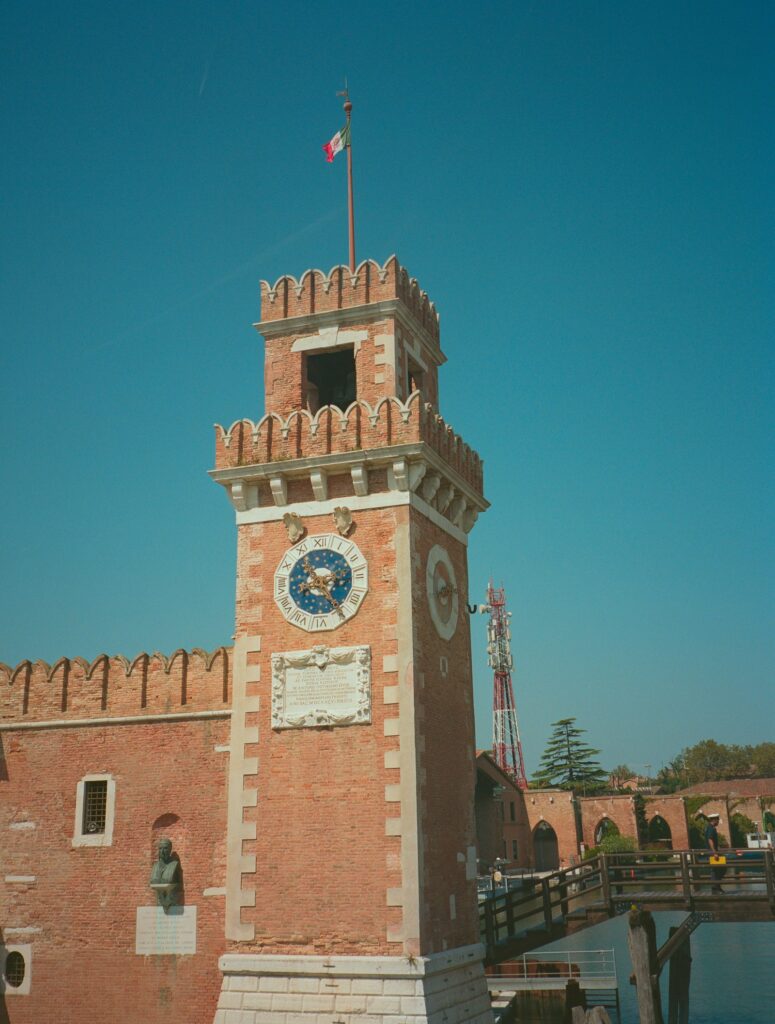
The Arsenale is part of Venice’s historic shipbuilding complex, once central to the maritime power of the Venetian Republic.
The Biennale uses large former industrial buildings, including the Corderie and Artiglierie, for contemporary installations and national presentations.
The spaces can accommodate large-scale artworks and installations that would be difficult to display in smaller galleries.
A guide can explain the relationship between the artworks and the unusual architecture of the exhibition venue.
For the 2026 Art Biennale, the official guided route covers important parts of the Corderie and Artiglierie and includes an introduction to national participations.
The Arsenale is particularly suitable when you are interested in large installations, immersive environments and how artists use space.
However, some installations may involve sound, video, darkness or performances. Ask about these features if anyone in your group has sensory sensitivities.
How much time do you need?
The organizer estimates that an independent visit usually takes approximately three hours per main venue.
That is a useful planning reference. A private guide may help you understand selected works more efficiently, but moving through two very large exhibition sites still requires time.
A two-hour visit
A two-hour appointment is best used for one venue.
You could focus on the Central Pavilion at Giardini and selected national pavilions, or explore the main exhibition installations at Arsenale.
This is appropriate when you have limited time or want an introduction before continuing independently.
Ask the guide to select a manageable number of stops. Attempting to see every major pavilion in two hours can turn the experience into a rushed walk.
A three- to four-hour visit
Three to four hours allows a more detailed exploration of one venue, or a selective introduction to both if your guide offers that format.
For example, you might spend two hours with the guide and another hour independently revisiting installations you found particularly interesting.
If the guided itinerary covers both venues, allow time for walking between them and for the required entry procedures.
Do not assume the guide can deliver a substantial visit to both sites within the same two-hour appointment.
A half-day covering both venues
A guided visit to both Giardini and Arsenale can occupy approximately four hours or more once you include commentary, the walk between the venues and any breaks.
The official 2026 guided format is approximately one hour and 45 minutes per venue.
For a two-venue booking, ask the organizer whether the appointments run consecutively and exactly how the transfer and any break are scheduled.
If you want to enter additional national pavilions independently, allow more time afterward.
Two separate days
For visitors particularly interested in contemporary art or architecture, visiting the two main venues on different days is often more comfortable.
You might book a private guide for Giardini on the first day, then visit Arsenale independently or with another guide the following day.
This gives you more time to consider the artworks and avoids spending an entire day indoors or moving between installations.
It can also make it easier to visit exhibitions outside the two main venues.
How much are Biennale admission tickets?
Admission prices are separate from the fee for a private guide.
For Biennale Arte 2026, the published ticket prices include:
- Standard admission: €30.
- Over-65 visitors and Venice residents: €20, subject to the eligibility rules.
- Students and visitors under 26: €16, with the required identification.
- Three-day multiple-entry ticket: €40.
- Weekly multiple-entry ticket: €50.
- Children aged six and under: Free admission under the published conditions.
For the ordinary one-access ticket, a €0.50 advance-sales commission applies when purchasing online.
A single standard ticket covers one entry to Giardini and one entry to Arsenale. You can use those entries on the same day or on different days, provided the exhibition is open.
The ticket does not allow you to leave one venue and then re-enter it later. Multiple-entry passes have different rules.
That distinction is important if you plan to leave the Arsenale for lunch and return in the afternoon. With an ordinary one-access ticket, re-entry to the same venue is not included.
Check the official Biennale Arte 2026 ticket information before purchasing.
The 2027 Architecture Biennale has not yet published its ticket prices. The amounts above are confirmed for the 2026 Art Biennale and should not be presented as 2027 rates.
How much does a private Biennale guide cost?
The cost depends on whether you use the official organizer’s educational service or an independently arranged guide.
The official 2026 rates of €90 for one venue and €150 for both are charged per group, excluding admission.
For example, two adults buying standard admission tickets and an official one-venue private guided tour would pay approximately €150 before the applicable online ticket charges: €90 for guiding and €60 for two admission tickets.
The same two adults booking the official two-venue private guided service would pay approximately €210 before those small ticketing charges: €150 for guiding and €60 for admissions covering both venues.
These examples assume availability, standard adult tickets and the published 2026 rates. Customized activities may have different charges.
Independent guides use their own pricing structures. As one published 2026 example, a private two-hour Art Biennale tour marketed through an independent Venice tour website is listed at €387. Whether admission and other services are included must be checked before comparing that price with the official educational service.
A higher quote may cover additional planning, an art specialist, a longer itinerary or other arrangements, but do not assume those benefits are included.
Ask for a written quotation separating:
- The private guiding fee.
- Admission tickets for each participant.
- Any booking or administrative charges.
- Additional guide time.
- Guiding at a second venue.
- Visits to exhibitions outside Giardini and Arsenale.
- Any additional lectures or specialist activities.
- Taxes and other expenses.
For larger groups, the official per-group price can become relatively economical. However, the maximum of 25 participants per guide still applies, and admission must be arranged for everyone.
How to reserve an official private guided tour
The Biennale’s 2026 booking procedure requires visitors to request a private tour through the organizer’s online reservation form.
According to the current official FAQ, requests should be submitted at least 15 days before the intended visit.
The education department responds within seven working days to confirm or decline the selected date according to availability.
Once the reservation has been confirmed, prepayment is required within 48 hours. The organizer’s detailed tour conditions also specify advance-payment deadlines, so follow the payment instructions included with your actual confirmation.
The practical booking sequence is:
- Choose the correct Biennale edition and date.
- Decide whether you want Giardini, Arsenale or both venues.
- Select the preferred language and number of participants.
- Provide your interests and any special requirements.
- Submit the official private-tour request.
- Wait for confirmation of the guide and available time.
- Complete the required payment within the stated deadline.
- Confirm the admission tickets and meeting instructions.
The online form is an enquiry until the organizer confirms the reservation. Do not assume that submitting a preferred date guarantees a guide.
If you need a particular language, customized theme or accessible route, mention it in the initial request rather than waiting until the day of the tour.
Choosing an independent guide: what to check
An independent guide can be worth considering when you want a particular kind of expertise or a more flexible program than the organizer’s standard educational itinerary.
However, familiarity with contemporary art in general is different from knowledge of the current Biennale.
Ask whether the guide has visited the present exhibition and whether they can identify the installations and national pavilions they intend to cover.
A useful guide should be able to explain the exhibition’s theme clearly and discuss the artists without relying entirely on the labels beside the works.
For an Architecture Biennale, ask about experience with architectural history, contemporary design or urbanism.
For an Art Biennale, ask whether the guide’s main interests include contemporary installation, painting, sculpture, performance or another relevant field.
It can also be helpful to request an example itinerary.
A strong itinerary identifies specific exhibition sections and explains the intended focus. A description that simply promises all the highlights of Venice may refer to a general city tour rather than a knowledgeable Biennale visit.
Can a guide take you into every national pavilion?
No guide can guarantee that every pavilion will be immediately accessible.
The national pavilions have their own exhibitions, capacity limits and sometimes specific visiting arrangements.
Some installations require visitors to wait, while performances take place at scheduled times.
For example, the 2026 Austrian Pavilion has a more limited visiting schedule than the main exhibition venues during the autumn period. It operates Wednesday through Sunday from 10 a.m. to 5 p.m., with last admission at 4:45 p.m.
Other pavilions include time-specific performances or activities.
The organizer advises visitors that waiting times are indicative and access remains subject to pavilion capacity.
Ask the guide which pavilions they expect to enter and what alternatives they will use if a queue is too long or an installation is temporarily unavailable.
A private tour should have realistic priorities rather than promising every national pavilion within a few hours.
What about exhibitions outside Giardini and Arsenale?
The Art and Architecture Biennales also include national participations, officially recognized collateral events and other exhibitions in different parts of Venice.
These may be hosted in palaces, churches, former industrial buildings and other temporary exhibition spaces.
Some are free to enter, while others have separate tickets, booking procedures or opening hours.
The main Biennale admission ticket should not be assumed to cover every independent exhibition around the city.
If you want a guide to include several off-site pavilions, ask for an itinerary showing the exact locations and transport arrangements.
The time required can be substantial. A pavilion near the Rialto Bridge and another in Dorsoduro may appear close on a map but involve several bridges and a long walk between them.
Some independent exhibitions also close earlier or on different days from the main Biennale venues.
For a tour focusing on off-site exhibitions, ask whether the guiding fee includes the time needed to walk between locations.
Giardini and Arsenale meeting points
The two main venues are in Castello, toward the eastern part of Venice’s historic center.
They are not the same entrance, and a booking stating only “meet at the Biennale” is insufficient.
Giardini entrances
For the 2026 exhibition, the organizer identifies two main Giardini entrance locations:
- Viale Trento 1260.
- Sant’Elena, Viale IV Novembre.
The admission entrance is not necessarily the place where a scheduled official guided tour begins.
For the 2026 scheduled tours, the official meeting point is near the Giardini exhibition exit on Viale Trieste, at the White Box beside the meeting-point sign.
If you hire an independent guide, they may arrange to meet elsewhere.
Get the precise location, including a map pin or photograph of the meeting area.
Arsenale entrances
The principal 2026 Arsenale entrances include:
- Campo della Tana 2169/F.
- Ponte dei Pensieri, on Salizada Streta.
For official scheduled tours, the published meeting point is outside the Campo della Tana entrance, before the access ramp beside the meeting-point sign.
If a private guide is meeting you inside the venue, check whether admission is required before reaching them.
Also confirm whether the tour finishes at the same entrance. The Arsenale complex is extensive, and different exits can affect your journey afterward.
How far apart are Giardini and Arsenale?
La Biennale states that the two principal venues are approximately a ten-minute walk apart.
However, the actual journey depends on which entrance or exit you use and whether you have mobility limitations.
You must also account for walking inside the venues, especially at Arsenale, where the exhibition extends through large former industrial buildings.
If your guided visit includes both, ask where the first session ends and how the second begins.
The walk through Castello can be straightforward, but a guide may choose a different route depending on the entrance arrangements.
For detailed directions, see the Italy on Foot guide to walking between Giardini and Arsenale.
If you use a wheelchair, walking aid or stroller, ask whether the route includes bridges or other obstacles and whether an accessible alternative is available.
Getting to the Biennale by vaporetto
Public water buses provide convenient connections to the eastern part of Venice.
For the 2026 exhibition, the organizer identifies the following connections from the Piazzale Roma and railway-station areas:
- Arsenale: ACTV Lines 1 and 4.1.
- Giardini: ACTV Lines 1, 2, 4.1 and 5.1, with Line 6 operating from Piazzale Roma under its applicable schedule.
Individual lines may have different operating hours and seasonal arrangements.
Check the current ACTV transport information before travel, especially if your tour begins shortly after the exhibition opens.
Do not confuse the Arsenale exhibition entrance with the ACTV Arsenale waterbus stop. There is still some walking between the boat landing and the admission area.
If you are arriving from Mestre, you must first reach Venice’s historic center by train, bus or tram, then continue on foot or by vaporetto.
Accessibility and reduced mobility
The Biennale’s two principal venues are large, and visiting both can involve several hours of walking and standing.
If someone in your group uses a wheelchair, walking frame or cane, tell the guide before the itinerary is finalized.
La Biennale provides an accessibility map covering the venues and individual national pavilions.
The organizer also offers a courtesy electric-vehicle transport service for visitors with reduced mobility. Wheelchairs, walkers and strollers may be requested from on-site staff, subject to availability.
However, not every pavilion or installation has the same accessibility arrangement.
The organizer’s official accessibility information includes accessible routes, sensory resources and practical visitor facilities.
Ask the guide to plan a realistic itinerary based on the visitor’s walking and standing ability.
For someone who becomes tired after approximately 30 minutes on their feet, a private guide should identify opportunities to sit and reduce unnecessary movement.
Do not assume that hiring a private guide automatically includes a wheelchair, mobility assistant or vehicle transfer. These are separate arrangements.
Guided visits for visitors with sensory or cognitive needs
The 2026 Art Biennale includes accessibility resources designed for visitors with a range of needs.
These include sensory maps identifying environments with strong sound, lighting or other stimuli, along with accessible explanatory materials.
The organizer also provides Calm Spaces at both Giardini and Arsenale. These are designed for visitors who need a quieter environment, including neurodivergent individuals and families.
Specialized guided activities are available for visitors with visual or hearing disabilities, including tours using Italian Sign Language.
If anyone in your group experiences sensory overload, ask the guide whether the planned route includes dark rooms, loud sound installations, flashing images or crowded enclosed spaces.
You can request a route with shorter explanations, quieter sections and planned breaks.
However, an ordinary private tour does not guarantee exclusive access or complete control over the sensory environment inside an installation.
Are private Biennale tours suitable for children?
Children can visit the Biennale, and the organizer offers family-focused guided activities.
For the 2026 Art Biennale, private family tours can be adapted according to children’s ages, with interactive activities focused on selected artworks.
These may involve questions, observation exercises and explanations designed to make contemporary art more accessible to younger visitors.
Some scheduled family tours are recommended for children aged approximately five to twelve.
For the standard 2026 admission arrangements, children aged six and under enter free. Visitors aged seven and above qualify for the relevant reduced ticket conditions.
There is a specific exception for scheduled family-friendly guided tours: the organizer permits free exhibition admission for participating children up to age twelve under that booking arrangement, while the guided activity itself carries its stated fee.
Check which option you are booking. A family private tour and a scheduled family-friendly tour do not necessarily provide the same ticket concessions.
If you are visiting with children, tell the guide their ages and whether they have previously enjoyed contemporary art exhibitions.
For younger children, a guided visit to one venue with time for breaks may be more manageable than a full-day itinerary.
What should you bring?
The Biennale’s main venues have visitor facilities, but their size and luggage restrictions are worth planning around.
For 2026, both Giardini and Arsenale provide restaurants or refreshment stands, restrooms, bookshops and visitor information points.
However, large bags, suitcases and luggage are prohibited. Small items can be left at the available unattended cloakroom service, but suitcases cannot be stored there.
If you are visiting between hotel checkout and a train departure, arrange luggage storage elsewhere before arriving.
Useful items to carry include:
- Your admission ticket and guided-tour confirmation.
- Identification required for any reduced admission.
- A small bag for essential belongings.
- Comfortable walking shoes.
- A charged phone with the venue map saved.
- Water for use where permitted.
- Any required medication.
- A light layer suitable for changing indoor and outdoor temperatures.
Some installations have their own photography restrictions. Ask before photographing individual artworks, particularly where performance, video or sensitive material is involved.
Do not assume that professional photography equipment, tripods or commercial filming are permitted under an ordinary visitor ticket.
Best times to visit in 2026
For the 2026 Art Biennale, the published autumn opening hours from September 29 to November 22 are 10 a.m. to 6 p.m., with last admission at 5:45 p.m.
The exhibition is normally closed on Mondays, with a special opening on November 16.
Some individual national pavilions have different schedules.
The organizer advises that weekends tend to be busier, while weekdays can provide a calmer experience.
For a private guided visit, midweek morning may be a practical preference when availability allows.
However, quieter hours cannot be guaranteed, and temporary exhibitions or performances may attract visitors at particular times.
If the guide wants to show you a specific performance or installation, ask whether it operates continuously or only at scheduled times.
For 2027, the published Architecture Biennale opening hours are 10 a.m. to 6 p.m., with Monday closures. Confirm any special openings or individual pavilion schedules as the exhibition approaches.
How to plan your Biennale day without rushing
The most practical arrangement depends on whether you want a brief introduction or a more extensive contemporary art or architecture visit.
For a first-time visitor with one day available, one option is to book a guide at Giardini in the morning, take a break and explore Arsenale independently in the afternoon.
Another is to arrange official guided visits at both venues, allowing enough time for the walk and a meal.
If the ticket permits only one entry to each venue, avoid leaving for lunch before you have finished exploring the first site.
Both venues have places to eat, so you may be able to take a break without leaving the controlled exhibition area.
For a longer Venice stay, consider visiting Giardini and Arsenale on separate days. You can use the remaining time to explore selected national exhibitions in other parts of the city.
The Italy on Foot first-time Venice Biennale guide explains how the two venues work and how to plan a visit without losing time to unnecessary travel.
You can also use the Italy on Foot trip planner to coordinate the guided appointment, vaporetto connections, meals and other Venice activities. Record the exact meeting point and admission arrangements, especially if your guide expects you to enter the venue before joining the group.
If your guided tour includes off-site pavilions, leave enough time between appointments for the walk or waterbus journey.
Can a private guide help you avoid queues?
A guide can help you choose an efficient route and explain which exhibitions may be worth prioritizing.
However, private guiding does not automatically include priority admission or permission to bypass capacity limits.
The Biennale’s national pavilions and installations may have queues, especially during weekends and special performances.
Some installations admit only a limited number of people at once, and the guide must respect those arrangements.
Ask whether the operator has any officially confirmed priority-entry provision for the particular visit.
Be cautious about advertisements promising to skip every queue or enter all the national pavilions without waiting.
For a realistic itinerary, ask the guide to identify alternative installations if the waiting time at a particular pavilion becomes excessive.
What if a planned exhibition or pavilion is closed?
Individual installations can be temporarily unavailable because of technical issues, performance schedules or capacity restrictions.
The main exhibition venues may remain open even when a particular pavilion has different hours.
For example, the 2026 Netherlands Pavilion includes scheduled performances and has special visiting arrangements that differ from the main Giardini schedule.
If you are especially interested in one pavilion, ask the guide to verify its expected availability before the visit.
Also establish what happens if that pavilion cannot be entered on the day.
Will the guide substitute another installation? Can the itinerary be adjusted to return later? Is a refund possible if the unavailable pavilion was an essential part of a specifically agreed tour?
These questions matter most when paying for an independent specialist guide or a customized itinerary.
A standard guided visit may permit the guide to adjust its route without providing a refund for one unavailable artwork.
Cancellation, deposits and payment terms
Cancellation rules differ between official Biennale educational activities and independent private tours.
For the 2026 Art Biennale, the organizer states that admission tickets and official guided tours are non-refundable.
Private official tours require advance booking and payment according to the reservation confirmation.
Independent providers may offer different conditions, including deposits, free cancellation until a particular deadline or non-refundable specialist arrangements.
Before paying, ask what happens if:
- You cancel because your travel plans change.
- Your train or flight is delayed.
- You arrive late at the meeting point.
- The assigned guide becomes unavailable.
- The organizer changes the visiting arrangements.
- A particular national pavilion is closed.
- Your group size changes after booking.
- You need to change the language of the tour.
- You want to shorten the tour.
- You need to reschedule because someone becomes ill.
For an independent guide, request a written policy covering replacement guides.
If a particular person’s expertise is central to your decision, ask whether you can review and approve any substitute rather than automatically accepting another guide from the company.
Also confirm whether admission tickets are purchased immediately after payment or closer to the tour date.
Is hiring a private guide actually necessary?
You can visit the Biennale independently. The organizer provides maps, exhibition information and explanatory materials, and staff are available at various locations to assist visitors.
The exhibitions are designed for public access, so you do not need an accompanying guide to enter the main venues with a valid ticket.
If you enjoy exploring contemporary art at your own pace, an independent visit may be entirely suitable.
You can read the exhibition information, select the pavilions that interest you and spend longer with particular works without following a fixed schedule.
A private guide becomes more useful when you want someone to explain difficult or unfamiliar works, connect the themes across several installations or help you choose from a very large program.
For visitors with a strong interest in a particular artistic or architectural subject, a specialist guide may offer more relevant discussion than the standard explanatory material.
If you mainly want an introduction to the current exhibition, consider the organizer’s €10 scheduled guided tour before paying for a private service.
Questions to ask before hiring a Venice Biennale guide
Send the guide or organizer your travel date, the correct Biennale edition, number of participants, preferred language and any particular interests. Then obtain clear answers to the following questions:
- Is the tour for Biennale Arte 2026 or Biennale Architettura 2027?
- Will the visit be completely private for our party?
- Is the guide provided by La Biennale di Venezia or an independent company?
- Who will lead the tour, and what are their professional qualifications?
- Has the guide studied the current exhibition and its main installations?
- Can the itinerary be adapted to our interests?
- Does the tour cover Giardini, Arsenale or both?
- Which national pavilions or exhibition sections are planned?
- Will the guide accompany us inside national pavilions or provide explanations outside?
- Can we request particular artists, installations or themes?
- What happens if a requested pavilion is closed or has a long queue?
- How long is the guided portion at each venue?
- Does the booking include walking time between Giardini and Arsenale?
- Are admission tickets included for every participant?
- If admission is separate, who is responsible for purchasing it?
- Does the tour offer any confirmed priority-entry arrangements?
- Where exactly do we meet the guide?
- Must we enter the venue before meeting, or will we meet outside?
- Where does the tour finish?
- Can the route accommodate a wheelchair, stroller or visitor with limited mobility?
- Can the guide adapt the itinerary for children or visitors with sensory needs?
- Are breaks and suitable rest areas included?
- How many participants are permitted per guide?
- Is the quoted price per person or per group?
- Does the total include admissions, guiding, taxes and booking fees?
- What happens if the guide becomes unavailable?
- Can we approve a replacement guide?
- Are the tickets or guide fees refundable?
- What is the deadline for cancellation or rescheduling?
- How far in advance must we book and complete payment?
For most first-time visitors, a guided introduction lasting approximately one hour and 45 minutes at one venue is a useful starting point. The official private-tour service provides a structured option at a published group price, while independent guides may be more appropriate when you want specialist knowledge or a customized itinerary.
Before paying, confirm the correct Biennale edition, the actual exhibition areas covered and the admission arrangements. If you want to visit both Giardini and Arsenale, ask for a schedule that separates guiding time, travel between venues and independent viewing. The most important booking detail is whether the proposed guide and itinerary address what you actually want to see within the time available, rather than simply promising to show you the highlights of the entire Biennale.