A surprise proposal photoshoot in Venice works best when the photographer knows your exact location, the direction you will approach and the moment you intend to propose. Most photography sessions last between one and two hours, allowing time to capture the proposal and take portraits afterward. If you want to propose on a gondola, the boat route and photographer’s position must be arranged in advance because the gondola will keep moving.
When hiring a proposal photographer Venice visitors should confirm the meeting plan, photography duration, number of edited images, delivery deadline and bad-weather arrangements before paying. A package that includes a gondola or private boat may cost considerably more than photography alone. Crowds around Rialto Bridge and St. Mark’s Square, changing tides and unexpected rain can also affect the location you originally planned.
How does a surprise proposal photoshoot work?
A surprise proposal requires more preparation than an ordinary couple’s photography session. Your photographer needs to know where you will stand, how you will arrive and when the proposal is likely to happen.
Most photographers arrange a planning call or exchange messages beforehand. You discuss possible locations, timing, clothing, weather arrangements and how the photographer will recognize you without revealing the surprise.
A typical booking follows this sequence:
- Choose the location: Agree on a bridge, square, waterfront or boat route suitable for the proposal.
- Confirm the photographer: Review their previous surprise-proposal photographs and agree on the coverage package.
- Plan the approach: Decide how you will bring your partner to the correct location naturally.
- Agree on the signal: Establish a discreet way to tell the photographer you are ready.
- Arrange the photographer’s position: They arrive early and prepare to photograph the moment without attracting attention.
- Propose: The photographer captures the question and your partner’s immediate reaction.
- Continue with portraits: After the surprise, you can take additional photographs around nearby canals and streets.
The last part is worth planning. After the proposal, you may want a few minutes together before beginning formal photographs. Ask whether that time is included in the booked session or whether the photographer expects to begin posing immediately.
For most couples, a location requiring only a few simple instructions works better than an elaborate arrangement involving several strangers, multiple boats and precise movements through a crowded square.
Where should you propose in Venice?
The location should suit your partner’s personality and the kind of photographs you want. Venice offers famous landmarks, quieter neighborhood canals and broad lagoon views, but each comes with different challenges.
St. Mark’s Square: recognizable architecture and early-morning light
Piazza San Marco is one of Venice’s most recognizable settings. Its surrounding arcades, the Basilica di San Marco and the Campanile provide several photographic backgrounds within a relatively small area.
The main difficulty is the crowd. During the busiest parts of the day, people move constantly through the square, and it can be difficult to find a clear view without other visitors entering the photographs.
Early morning is often a better choice when your priority is a cleaner architectural background and fewer distractions. However, you should still expect workers, deliveries, photographers and other early visitors.
Ask the photographer to choose one exact position rather than simply agreeing to meet somewhere in the square. The best position may depend on the light and on which areas are accessible that morning.
St. Mark’s Square is suitable for someone comfortable with a public proposal. If your partner dislikes strangers watching, consider a quieter location.
Rialto Bridge: a Grand Canal background with difficult crowding
The Rialto Bridge provides a distinctive setting overlooking the Grand Canal, with boats moving beneath it and historic buildings along the waterfront.
It is also one of the busiest pedestrian crossings in Venice.
Stopping in the middle of the bridge to propose can obstruct other people, particularly where the walkway narrows or visitors gather against the parapet.
Ask whether the photographer recommends a position on the bridge itself or another nearby viewpoint with Rialto in the background.
A nearby waterfront location may offer more room and a better chance of capturing both faces clearly.
If the photographer proposes an early-morning session, agree on the exact side of the bridge and how you will recognize the position. The two approaches are different, and navigating to the wrong one can create unnecessary delays.
Ponte dell’Accademia: panoramic views along the Grand Canal
The Accademia Bridge offers a broad view along the Grand Canal toward the Basilica di Santa Maria della Salute. It is a popular location for engagement photography because the background includes recognizable Venetian architecture and water traffic.
However, the bridge is also a busy pedestrian route. Its stepped approaches and relatively narrow viewing areas can make a surprise difficult to coordinate during peak hours.
Ask the photographer whether a bridge-top proposal is realistic at your preferred time or whether a nearby canal-side location would be more suitable.
The position of the sun matters because strong backlighting can make facial expressions difficult to photograph without careful preparation.
For someone who wants a recognizable Venice background without standing directly in St. Mark’s Square, the Accademia area is worth considering.
Punta della Dogana: open waterfront and the Venetian Lagoon
Punta della Dogana is the triangular waterfront point where the Grand Canal meets the Giudecca Canal and St. Mark’s Basin.
The location offers views toward San Giorgio Maggiore, the Doge’s Palace and the wider waterfront.
There is more open space than on many of Venice’s bridges, although the promenade remains public and can attract visitors throughout the day.
Wind can be stronger here because the location is exposed to the water. That matters for clothing, hair, flowers and any decorations planned for the proposal.
Ask the photographer to identify a position that keeps the desired background visible without blocking the pedestrian route.
Punta della Dogana can also be combined with a short portrait walk through Dorsoduro afterward.
Dorsoduro: smaller canals and a more intimate setting
Dorsoduro has narrow streets, small bridges and canal-side walkways that can provide attractive backgrounds without placing the proposal directly in one of Venice’s busiest squares.
Areas around Rio di San Trovaso and other smaller waterways offer opportunities for photographs featuring old buildings, wooden doors, bridges and traditional boats.
Some streets are quieter in the morning, although conditions change throughout the day.
The main advantage is flexibility. If one bridge is crowded, the photographer may be able to use another nearby street or waterfront position.
However, the location should be checked in advance. Not every canal is wide enough to provide a good photographic angle, and some bridges have steep steps or parapets that interfere with the composition.
Cannaregio: neighborhood canals away from the main landmarks
Cannaregio can be a suitable choice for couples who prefer a more residential atmosphere.
The district includes canal-side walkways, small bridges and streets where everyday Venetian life provides the background.
Areas around Madonna dell’Orto or quieter canal sections may be worth considering, depending on the photographer’s knowledge and your accommodation location.
A proposal here may be easier to keep discreet because the photographer can appear to be taking ordinary street photographs.
However, quiet does not mean private. Local residents, deliveries and passing pedestrians still use these streets.
If you want a particular canal view, ask the photographer for a photograph of the exact intended position before agreeing on it.
San Giorgio Maggiore: Venice viewed from across the water
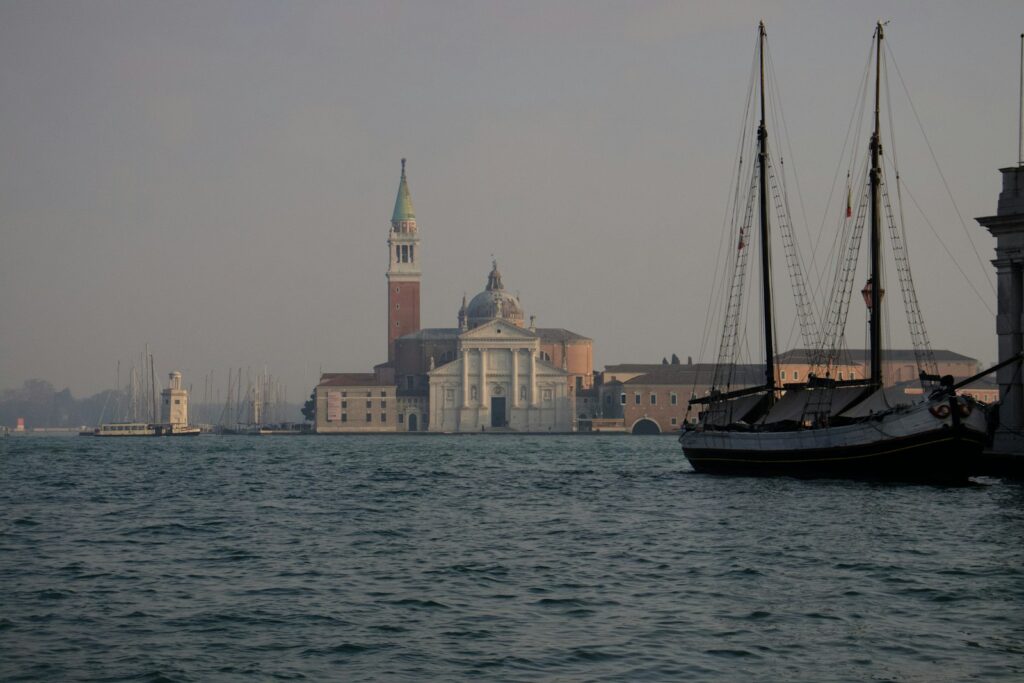
San Giorgio Maggiore is an island directly across St. Mark’s Basin from the main waterfront.
Its views back toward Venice can provide a different setting from the familiar central squares.
However, getting there requires a boat journey, and the location has its own access arrangements. If you are planning to use the church, bell tower or another interior space, check the relevant opening and photography permissions.
For a simple outdoor proposal, the photographer should choose a suitable public position and coordinate your arrival by water transport.
This is less convenient for a spontaneous change of plans than a location in central Venice. A delayed boat connection or missed departure can affect the whole schedule.
How to choose a location based on your priorities
- For an iconic Venice background: Consider St. Mark’s Square, Rialto or the Accademia area, preferably at a quieter time.
- For greater privacy: Consider a smaller canal in Dorsoduro or Cannaregio, with a backup position nearby.
- For broad waterfront views: Punta della Dogana or San Giorgio Maggiore may suit the photographs you want.
- For a gondola proposal: Choose the boarding station and canal route before deciding where the photographer will stand.
- For a controlled setting: Consider a privately reserved terrace or another venue where access and photography have been authorized.
Do not choose a location based only on photographs taken when it was empty. Ask what the area is normally like at your intended time, how much space there is for the proposal and whether the photographer has a workable alternative if other people are standing in the planned position.
Should you propose on a gondola?
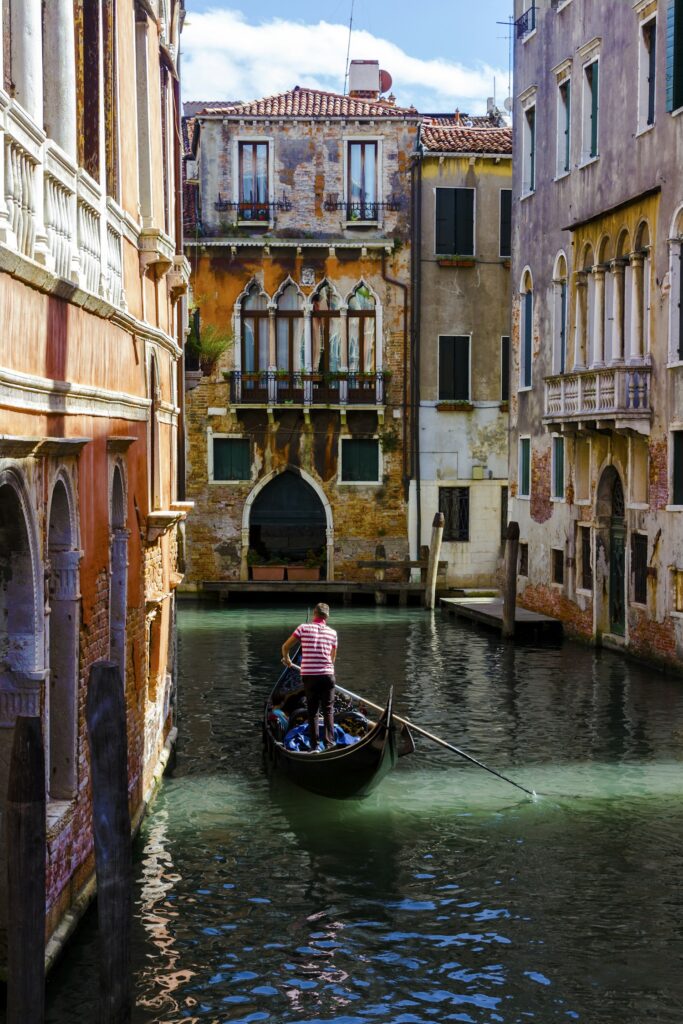
A gondola proposal can be memorable, but it requires more coordination than proposing on land. The boat is moving, your partner will be seated and the photographer needs a clear view at the exact moment you ask the question.
There are several ways to arrange the photography. Each offers a different balance between keeping the photographer hidden and obtaining close-up photographs.
Option 1: The photographer waits on a bridge
In this arrangement, you book a private gondola and agree on a particular canal and bridge with the photographer.
The photographer arrives before your gondola passes and waits at the planned position. You propose as the gondola approaches or passes the bridge.
This can keep the photographer completely hidden from your partner.
However, the timing is difficult. The gondola may arrive sooner or later than expected, another boat could obstruct the view, or pedestrians may be standing exactly where the photographer needs to work.
The photographer should coordinate directly with the gondolier beforehand. Both need to know the proposed route, the intended bridge and the signal that indicates you are ready.
A gondola normally makes one pass along the agreed route. Do not assume it can circle back for another attempt without extending the ride or changing the booking.
Option 2: The photographer rides in the gondola
Another arrangement is to have the photographer aboard the gondola with you.
This gives them a closer position for capturing expressions, the ring and the moments immediately after the proposal.
The challenge is keeping their presence from revealing the surprise.
Some couples arrange an ordinary vacation photoshoot and propose during the scheduled gondola ride. Others use an agreed explanation for why a photographer or additional person is aboard.
Ask whether the photographer will be visible from the start and where they will sit. The position of the gondolier, passengers and photographer affects the available camera angles.
A standard gondola can carry up to five passengers. The photographer counts toward that passenger total if they ride with you.
Do not assume the photographer can move freely around the gondola while it is underway. The gondolier must control seating and passenger movement for safety.
Option 3: The photographer follows in another boat
A photographer may be able to use a separate boat to photograph the gondola from another angle.
This arrangement requires more planning and can add substantially to the cost because a second vessel and skipper may be needed.
Boat traffic, the width of the canal, navigation rules and the availability of suitable landing places can limit the route.
It is also harder to guarantee an unobstructed view when both boats are moving.
If a second boat is part of the proposed package, ask for the exact arrangement and whether the price includes the additional vessel, skipper, photographer and coordination time.
How much does a gondola proposal cost?
Venice has official tariffs for ordinary private gondola rides. As currently published by the city’s tourism service:
- Daytime: €90 for 30 minutes.
- Evening and night, after 7 p.m.: €110 for 35 minutes.
- Capacity: A maximum of five passengers per gondola.
These are per-boat fares rather than per-person fares. The official Venezia Unica visitor information publishes the applicable rates.
The ordinary fare covers the gondola ride, not a professional photographer, flowers, decorations, musicians or special proposal coordination.
If a photographer arranges the gondola, the package price may include an additional charge for reservations and planning.
Ask whether the gondola is included in your photography quote or must be paid separately.
Also confirm the boarding station, intended route and whether the gondolier has agreed to the proposal arrangements. A general reservation for a 30-minute gondola ride does not guarantee passage beneath a particular bridge at a particular moment.
Can you stand or kneel on a gondola to propose?
A gondola is a moving boat, and sudden movements can affect its balance.
Remaining seated is generally the safer arrangement. If you want to stand or kneel, discuss the idea with the gondolier in advance and follow their instructions.
Do not attempt to stand unexpectedly, lean over the side or change positions while the boat is moving.
For a seated proposal, the photographer can still capture the ring and your partner’s reaction if the position and camera angle have been planned.
Think carefully about how you will retrieve and open the ring box. A ring dropped into a Venetian canal may be extremely difficult to recover.
Choose a pocket or bag compartment that closes securely, and avoid handling the ring while boarding or disembarking.
If you are uncomfortable with the idea of proposing while the boat moves, consider using the gondola for photographs after proposing on land. You can still include the Venetian waterway setting without needing to coordinate the actual question from a moving vessel.
What about a private water taxi or luxury boat?
A private motorboat can offer more flexibility than a standard gondola, particularly when you want a longer cruise or several photographic locations.
Some boats have an enclosed cabin and an outdoor seating area, while others are open luxury motorboats with a different layout.
However, a water taxi does not automatically provide more privacy. The skipper remains aboard, other vessels use the waterways and the boat must comply with navigation restrictions.
Ask whether the photographer will travel with you or photograph the boat from another position.
Also clarify whether the proposal will happen while the boat is moving or at a permitted stopping place.
Venice’s licensed water taxis and private chauffeur-operated boats use authorized routes and landing facilities. They cannot simply stop anywhere along the Grand Canal or block a waterway for photographs.
Before paying, establish:
- The exact vessel and passenger capacity.
- Whether the skipper is included.
- Whether the photographer will travel aboard.
- The planned route and photography positions.
- How long the boat is reserved.
- Whether fuel and landing charges are included.
- Whether the vessel has weather protection.
- What happens if the boat cannot use the intended route.
If you want a particular boat, such as a Riva, ask for the manufacturer and actual model. A traditional wooden Venetian water taxi may look attractive in photographs without being a genuine Riva.
Can a boat collect you directly from your hotel?
Sometimes. Some Venice hotels have private water entrances that can be used by suitable licensed boats.
Others are reached through pedestrian streets and do not have a usable boat landing.
Even when a hotel faces a canal, its landing may be inaccessible because of canal width, low bridges, water levels or the type of vessel being used.
If hotel pickup is part of the proposal, obtain the exact arrangement in writing.
Ask whether you will board at the hotel’s own landing or walk to another pier. Also find out whether the photographer will meet you at reception, at the dock or elsewhere.
A surprise can become awkward if you tell your partner that a boat will arrive at the hotel and then have to search for an unfamiliar boarding point several bridges away.
Sunrise or sunset: which is better for a Venice proposal?
Both can work, but each presents different practical challenges.
Sunrise proposals
Early morning is often useful around St. Mark’s Square, Rialto and other major landmarks because there are generally fewer visitors than during the busiest daytime periods.
The light can be relatively soft, and a photographer may have more freedom to choose a position without constantly moving around other people.
However, the exact sunrise time changes significantly throughout the year.
Summer sunrise can be very early, which may require leaving your accommodation before most cafés and public activities begin.
Ask whether your partner would naturally agree to an early walk. If getting up before dawn would be unusual, you may need a simple reason for visiting the location at that hour.
Also check the transport arrangements. Not every public waterbus route operates at the frequency you need in the early morning.
Sunset proposals
Late-afternoon and sunset light can work well along the waterfront, particularly when the photographer selects a position with suitable lighting.
A sunset proposal can also fit naturally into an afternoon walk followed by dinner.
The disadvantage is that some viewpoints become crowded precisely because visitors gather to watch the light change.
Do not assume that sunset automatically provides the best light at every canal. Buildings may block the sun well before the official sunset time.
Ask the photographer to suggest a specific arrival and proposal time for your date and chosen position.
Evening and blue-hour photography
Blue hour is the period around twilight when the sky retains some color while lights begin appearing on buildings and boats.
It can produce attractive photographs along Venice’s canals and waterfronts.
However, low light makes moving subjects more difficult to photograph. A gondola traveling through a dark canal may be harder to capture sharply than a couple standing on a bridge.
Ask the photographer whether their portfolio includes successful evening proposal photographs at similar locations.
If photographs of the actual proposal are particularly important, consider asking the question while there is sufficient natural light and taking additional evening portraits afterward.
How do you avoid crowds?
There is no reliable way to guarantee an empty public square or bridge in Venice.
Even early in the morning, deliveries, maintenance work, other photographers and residents may be present.
The most practical approach is to choose a location with alternatives nearby and a photographer who can adjust quickly.
Before booking, ask the photographer to identify:
- A preferred proposal position.
- A second position nearby if the first is occupied.
- Whether passing pedestrians are likely to obstruct the camera.
- Where the photographer can stand without blocking the walkway.
- How the plan changes if a bridge becomes crowded.
- Whether the intended location is particularly busy during events or weekends.
For a bridge proposal, the photographer should consider the space available on both sides of the canal.
A visually attractive location can become unsuitable if tourists repeatedly stop between the camera and the couple.
On narrow bridges, you also need to avoid obstructing pedestrians. Do not ask strangers to leave a public space or assume the photographer can reserve a section of a bridge.
How should you handle rain?
Rain is a normal possibility throughout the year in Venice. It can be particularly disruptive when the plan involves a gondola, an exposed waterfront or several outdoor photography locations.
Discuss the weather policy before paying.
Some photographers continue working in light rain and may suggest covered walkways or suitable sheltered streets. Others permit rescheduling under agreed conditions.
A covered arcade does not necessarily provide a private location. Pedestrians still use these spaces, and professional photography may be subject to relevant permissions.
Ask for a realistic backup location, preferably near the original proposal position.
For a gondola proposal, obtain the boat operator’s weather policy separately. The photographer may be willing to work in rain even when the gondolier decides that the conditions are unsuitable.
A useful written arrangement should explain what happens if:
- It rains lightly, but the photographer can continue.
- Heavy rain makes the planned location impractical.
- The gondola or private boat cannot operate safely.
- Strong wind prevents the photographer from using the original position.
- You want to move the proposal to another time.
- No suitable alternative is available during your stay.
Do not assume that rain automatically entitles you to a full refund. The photographer, boat operator and any private venue may have different cancellation rules.
What about acqua alta and high tides?
Venice’s seasonal high-water phenomenon is called acqua alta. It can affect low-lying areas, walking routes and access to certain boat landings.
St. Mark’s Square is particularly vulnerable because of its low elevation.
High water can make a carefully chosen photography position difficult to reach or require the couple to walk along temporary elevated platforms.
However, flooding is not guaranteed every time the tide is high. The MOSE flood-barrier system can be activated during qualifying tidal conditions, and the effects depend on the actual water levels and local circumstances.
The City of Venice’s Tide Monitoring and Forecast Centre publishes forecasts, observed levels and information about affected pedestrian routes.
If your proposal is planned for autumn or winter, ask the photographer to check both the weather forecast and expected tide.
For a boat proposal, high or low water may affect whether the gondola or motorboat can pass beneath certain bridges or use a planned landing.
A backup location should therefore account for both rain and tides. A sheltered position is not necessarily useful if the route to reach it is flooded.
Do you need permission for professional photography in Venice?
Permission requirements depend on the type of photography, equipment, location and whether the activity affects public space.
Venice’s municipal Sportello Cinema manages procedures for photographic and video productions.
Under the city’s published framework, light professional productions involving up to six people, minimal equipment and no interference with circulation generally fall under a prior-communication procedure requiring at least ten days’ notice.
Larger productions, activities affecting pedestrian or boat traffic, and setups using more substantial equipment may require formal authorization, generally requested at least thirty days ahead.
The exact classification of a commissioned personal proposal photoshoot should be checked with the relevant municipal office. Ordinary personal tourist photography and organized professional productions are not necessarily treated in the same way.
Ask the photographer whether the planned session needs a notification, permit or location authorization, and who will handle it.
Pay particular attention if you intend to add:
- A large floral arrangement or decorative structure.
- A banner suspended from a public bridge.
- Tripods, lighting stands or substantial video equipment.
- A film crew or several assistants.
- Furniture or other temporary installations.
- An activity that occupies part of a walkway.
- Photography inside a privately operated building or venue.
Do not assume these arrangements are permitted merely because similar photographs appear online.
Drone photography also requires separate consideration. Italy’s aviation authority, ENAC, requires drone operators to check the applicable flight restrictions, registration, qualifications and insurance through the relevant systems, including the D-Flight airspace map.
For an ordinary proposal, handheld photography in a suitable public location is generally simpler to coordinate than a production involving decorations, specialist equipment or aircraft.
How long should you hire the photographer?
The appropriate duration depends on whether you only want the proposal captured or also want an engagement portrait session afterward.
Thirty to sixty minutes
A short session can work when the photographer has one agreed proposal location and you only want portraits nearby.
However, a 30-minute booking leaves little room for late arrival, changing positions or a lengthy surprise arrangement.
One hour is often more practical because it allows the photographer to prepare, capture the proposal and take additional photographs afterward.
If you want a gondola, confirm whether the boat ride fits inside the hour or whether extra photography coverage is needed.
Ninety minutes
A 90-minute session can provide more flexibility for a surprise proposal followed by a walk through nearby streets.
For example, you might propose near Ponte dell’Accademia and then take portraits around Dorsoduro.
It gives the photographer time to vary the backgrounds without requiring a long journey across the city.
Ask whether the session includes time for moving between locations and whether there is a limit to the number of stops.
Two hours
A two-hour booking is useful when you want the proposal, several portrait locations and perhaps a gondola or short water-taxi experience.
However, Venice’s bridges and canals make traveling between distant locations more complicated than a simple map distance suggests.
A proposal at St. Mark’s Square followed by photographs near Rialto and Dorsoduro may involve a considerable amount of walking.
Ask for a route that fits the time without turning the session into a hurried sightseeing itinerary.
Longer sessions
Three-hour or longer bookings may suit couples planning several distinct locations, an island visit or a more elaborate celebration.
They may also include additional time for a boat, changing clothes or coordinating flowers and other suppliers.
For a simple surprise proposal, this much coverage is rarely necessary unless you specifically want an extensive engagement photoshoot afterward.
How much does a proposal photographer in Venice cost?
Prices vary with session duration, experience, planning support, image delivery and whether a boat is included.
Current published examples from October 2026 illustrate the differences.
- One-hour photography: Olga Mufel advertises a €300 proposal session including a planning chat, 40 edited photographs and delivery within five days.
- One-hour photography with faster delivery: Laure Jacquemin advertises a €400 package including 70 photographs, written planning, a short video reel and delivery within five days.
- Longer photography: Laure Jacquemin currently advertises 90-minute and two-hour proposal packages at €550 and €700 respectively.
- Gondola-inclusive photography: Olga Mufel advertises a €530 proposal package including one hour of photography, a 30-minute gondola ride, 50 edited photographs delivered within 24 hours and a short video reel.
These are examples of individual providers’ published prices, not a standard Venice market rate. Different photographers have different experience, deliverables and booking policies.
A lower price may be entirely suitable for a short, straightforward proposal. A higher quote may cover longer photography, more detailed coordination or additional services.
For travel in 2027, obtain an updated quotation rather than assuming the published 2026 prices will remain unchanged.
When comparing packages, look at the complete arrangement rather than simply the hourly rate or number of photographs.
What should the photography package include?
A clear quotation should describe what the photographer will do before, during and after the proposal.
- Planning: Location advice, timing and an agreed surprise plan.
- Coverage: The exact number of minutes or hours of photography.
- Proposal photographs: Coverage of the moment itself and immediate reactions.
- Portraits: Additional photographs after the surprise.
- Edited photographs: The minimum number of finished images included.
- Delivery: The deadline and method for receiving the files.
- High-resolution files: Whether full-quality downloads are included.
- Personal printing rights: Whether you may print photographs for personal use.
- Online gallery: Whether access is private and how long the gallery remains available.
- Video: Whether a short reel or longer recording is included.
- Additional services: Any gondola, private boat, flowers or other arrangements.
- Taxes and fees: The final amount payable for the complete booking.
Some packages promise a specific number of edited photographs, while others describe unlimited photographs or all usable images.
Ask exactly what those terms mean. The number of pictures taken during the session is usually much larger than the number ultimately delivered.
If you want a photograph suitable for a large framed print, request the full-resolution file and clarify the personal printing rights.
How quickly will you receive the photographs?
Delivery times vary between photographers.
Some provide a small preview within 24 hours and deliver the full edited gallery several days later. Others take one or two weeks, depending on their workload and editing process.
If you want to announce the engagement to family or friends while still in Venice, ask whether a few edited photographs can be supplied promptly.
Some photographers offer express delivery for an additional charge.
For example, Olga Mufel’s published packages distinguish between standard five-day delivery and certain proposal options with 24-hour delivery. Her ordinary package also lists an express-delivery supplement.
Before booking, establish whether the promised delivery period refers to the whole gallery or only the preview selection.
Also ask whether photographs will be selected by the photographer or whether you can choose favorites from a proof gallery.
How can you tell whether a photographer is experienced with proposals?
Review photographs from actual surprise proposals rather than relying only on a portfolio of posed couples.
Capturing a proposal requires anticipation. The photographer has little opportunity to repeat the moment if a pedestrian blocks the camera or one partner turns away unexpectedly.
Look for examples showing the complete sequence:
- The couple approaching the location.
- The person proposing and presenting the ring.
- The other partner’s facial expression.
- The immediate reaction after the question.
- Natural photographs following the proposal.
- Additional portraits in nearby locations.
Pay attention to whether both faces are visible. A photograph dominated by the back of one person’s head may not capture the reaction you most want to remember.
Also examine photographs taken in conditions similar to those you are planning. A photographer experienced with daylight portraits may have a different portfolio from someone regularly photographing evening gondola proposals.
Ask to see an example from the actual location or boat arrangement you intend to use.
How to keep the proposal secret
The simplest approach is usually to build the proposal into an activity that would naturally fit your Venice holiday.
You might suggest an early walk before the main crowds arrive, an afternoon visit to a waterfront viewpoint or a gondola ride before dinner.
A complicated cover story is rarely necessary.
If you have already arranged a couple’s photoshoot, proposing during that session can make the photographer’s presence less surprising.
However, if your partner has no idea that professional photographs are planned, the photographer needs a discreet position and an agreed method of recognizing you.
Before the day, send a recent photograph of yourself and describe the clothes you expect to wear.
Agree on a simple signal that does not require taking out your phone repeatedly.
A signal might involve moving to a particular side of a bridge or standing beside a recognizable feature. The photographer should explain where you need to face so both expressions remain visible.
Keep the instructions short. You should not need to memorize a complicated sequence of movements while preparing to propose.
What if your partner stops or changes the route?
One of the difficulties with a surprise proposal is that only one person knows the planned schedule.
Your partner may want to stop for coffee, visit a shop or walk across a different bridge.
Agree with the photographer on how much delay the booking can accommodate.
For an ordinary street proposal, moving the appointment by ten or fifteen minutes may be possible if the photographer is available.
For a gondola, the situation is more complicated because a boat may have a fixed departure time or another booking afterward.
If you are delayed, contact the photographer and boat operator according to the agreed plan.
Do not rush your partner through the city to recover lost time. A missed photograph is less serious than creating a stressful situation or taking an unsafe shortcut.
A good backup might involve proposing at a nearby alternative location rather than attempting to recreate the original plan exactly.
What about flowers, music and proposal decorations?
Additional services can be arranged through some photographers or specialist event planners.
These may include flowers, a musician, a private rooftop, a gondola or a short video recording.
However, a more elaborate setup introduces additional costs and logistical requirements.
Ask whether the photographer personally coordinates the suppliers or whether you need to book them separately.
For public locations, do not assume you can attach a banner to a bridge, install floral structures or reserve space without authorization.
Venice’s bridges, waterfronts and historic monuments are public spaces with circulation and conservation rules.
If you want substantial decorations, a privately reserved venue may be easier to manage, provided the property permits the arrangements.
Before paying, ask for an itemized quotation showing the cost of each supplier and what happens if bad weather prevents the original setup.
Privacy: can the photographer publish your engagement photographs?
Some photographers use images from past sessions on their websites, social media accounts and promotional portfolios.
If you want the engagement kept private, discuss image publication before booking.
Ask whether your package gives the photographer permission to use the photographs publicly and whether you can decline promotional use.
Also clarify whether the online gallery is password-protected or accessible to anyone with the link.
If you plan to surprise family members with the announcement, request that the photographer does not publish photographs before you have shared the news yourself.
Obtain the arrangement in writing rather than relying on an informal assumption that all private sessions remain confidential.
What if one person has limited mobility?
Venice’s narrow streets and stepped bridges can make some proposal locations difficult to access.
If either person uses a wheelchair, walking aid or has difficulty climbing steps, tell the photographer before selecting the location.
The photographer should assess the complete route from your accommodation or transport stop to the proposal position.
A waterfront location may look accessible in photographs but still require crossing several stepped bridges.
Boarding a gondola or private boat may also involve stepping down into the vessel. The height difference between a landing and boat can change with the tide.
If a wheelchair-accessible gondola or suitable private boat is required, arrange that separately and confirm the exact boarding facilities.
You can still have a Venice proposal photoshoot without using a boat or standing on a bridge. A suitable level waterfront route or private accessible venue may be more comfortable.
How to plan the proposal around your Venice itinerary
Choose a proposal day when you have enough flexibility to accommodate the photoshoot without rushing between other reservations.
If the photographer recommends an early-morning location, plan a relaxed breakfast or another activity afterward rather than arranging an immediate train or museum appointment.
For a sunset proposal, leave enough time before dinner for the photography session and the journey to the restaurant.
Venice’s walking routes can be deceptive. Two places may be close geographically but separated by canals requiring an indirect walk or a public waterbus journey.
If you plan a gondola proposal, the Italy on Foot guide to gondola rides in Venice explains the standard prices, boarding arrangements and differences between routes.
For a private boat pickup, our guide to water taxi hotel access explains why a canal-side hotel does not always have a usable direct landing.
You can also use the Italy on Foot trip planner to coordinate sightseeing, transport and dinner around the photoshoot. Keep confidential proposal instructions, contact details and the ring’s location in a private note that your partner cannot accidentally access.
When arranging a restaurant afterward, ask whether the photographer can finish the session near the chosen dining location. This may save another long walk across Venice.
How far ahead should you book?
For a straightforward street proposal, beginning enquiries several weeks ahead gives you time to compare photographers and agree on the location.
If you want a particular photographer, a sunset session or a gondola coordinated with the photography, earlier planning may provide more flexibility.
Special occasions involving a private terrace, decorations or additional suppliers can require more preparation.
Venice’s municipal procedures for certain professional photography setups also have advance-notice requirements. If the planned session falls under those procedures, they need to be addressed before the date.
Do not assume availability based on a photographer’s website calendar alone. Request confirmation of the actual photographer, date, start time and location.
For travel in 2027, ask for updated package prices and the current rules affecting your selected venue or photography setup.
Deposits, cancellations and rescheduling
Photographers use different payment arrangements. Some require full payment when booking, while others request a deposit and collect the balance closer to the date.
Boat operators and private venues may have their own cancellation terms.
For example, some Venice photography packages allow rescheduling when weather makes the planned outdoor session unsuitable, but the conditions and availability vary. A privately reserved gondola or venue may have a stricter refund deadline.
Before paying, obtain written confirmation of what happens if:
- Your travel dates change.
- Your flight or train is delayed.
- You arrive late at the agreed meeting point.
- The photographer becomes unavailable.
- The planned location is crowded or inaccessible.
- Rain or high water prevents the outdoor session.
- A gondola or private boat cannot operate.
- The originally booked boat must be replaced.
- You need to shorten or extend the session.
- You decide not to proceed with the proposal.
If a replacement photographer is offered, ask whether you can review their portfolio and approve the change.
Also distinguish the photography deposit from any payment made for flowers, boats or other suppliers.
A photography booking that permits rescheduling does not necessarily make every additional service refundable.
What to confirm the day before
One final check can prevent most practical mistakes.
Contact the photographer according to the agreed procedure and confirm the location, time and communication method.
If you have booked a gondola or private boat, confirm that the skipper or gondolier knows the plan.
Check the weather and tide forecasts, particularly if your intended position is near St. Mark’s Square or another low waterfront area.
Save the essential information somewhere you can access without mobile data.
You should have:
- The photographer’s contact number.
- The exact proposal position.
- The time you should arrive.
- The discreet signal.
- The photographer’s intended position.
- The nearest agreed backup location.
- The boat’s boarding point, if applicable.
- The backup plan for bad weather.
- The restaurant address, if you have booked dinner afterward.
Also check that the ring is safely stored and can be retrieved without searching through several bags in front of your partner.
Questions to ask before booking a proposal photographer in Venice
Send the photographer your preferred date, approximate location, whether you want to use a boat and how important keeping the photographer hidden is to you.
Then confirm the practical details before paying:
- Have you photographed real surprise proposals in Venice before?
- Can you share examples of complete surprise-proposal sequences?
- Which location would you suggest for our preferred time and why?
- Can you identify the exact position where I should propose?
- How will you remain unnoticed until the proposal?
- How will you recognize us, and what signal should I use?
- What happens if the original location is crowded?
- Do we have a nearby backup location?
- Is the session on foot, on a gondola or on a private motorboat?
- If a gondola is included, which boarding station and route will we use?
- Will you photograph from the gondola, from a bridge or from another boat?
- Have you coordinated the plan directly with the gondolier or skipper?
- Does the quoted price include the gondola or boat and all related charges?
- Can we remain safely seated during the proposal?
- How long is the photography coverage before and after the question?
- Will we have time for engagement portraits at nearby locations?
- How many edited photographs are guaranteed?
- Are high-resolution files and personal printing rights included?
- When will we receive preview photographs and the complete gallery?
- Can we request express delivery?
- Will the photographer use our photographs publicly, and can we decline that?
- Are any municipal photography notifications, permits or venue permissions required?
- Who is responsible for obtaining those permissions?
- What happens if rain, wind or high tides affect the proposed location?
- Can the session move to another time or location?
- What if the gondola or private boat cannot operate?
- What is the complete price, including photography, transport, planning and any additional services?
- What deposit is required, and when is the balance due?
- What are the cancellation, refund and rescheduling conditions?
- What happens if the assigned photographer becomes unavailable?
For most couples, a one-hour photography session at one carefully chosen location, followed by portraits nearby, is a practical starting point. If you want a gondola proposal, prioritize a photographer who can explain exactly how the boat, camera position and timing will work together.
Before making a non-refundable payment, get the proposal location, photography duration, deliverables and weather backup confirmed in writing. For a boat proposal, add the agreed gondola route, boarding point and photographer’s position. Those arrangements are what determine whether the actual question can be captured clearly, even when Venice’s crowds, tides and weather do not follow the original plan.