The easiest way to see the Dolomites without a car is to choose one well-connected valley and stay near its main bus hub. For a first trip, Ortisei is the strongest all-round base. Dobbiaco is better for Tre Cime and Lago di Braies, Corvara works beautifully for Alta Badia, and Canazei is useful for Val di Fassa and the Sella passes. Cortina is also workable, but its transport is less integrated and requires closer attention to operators, stops and seasonal timetables.
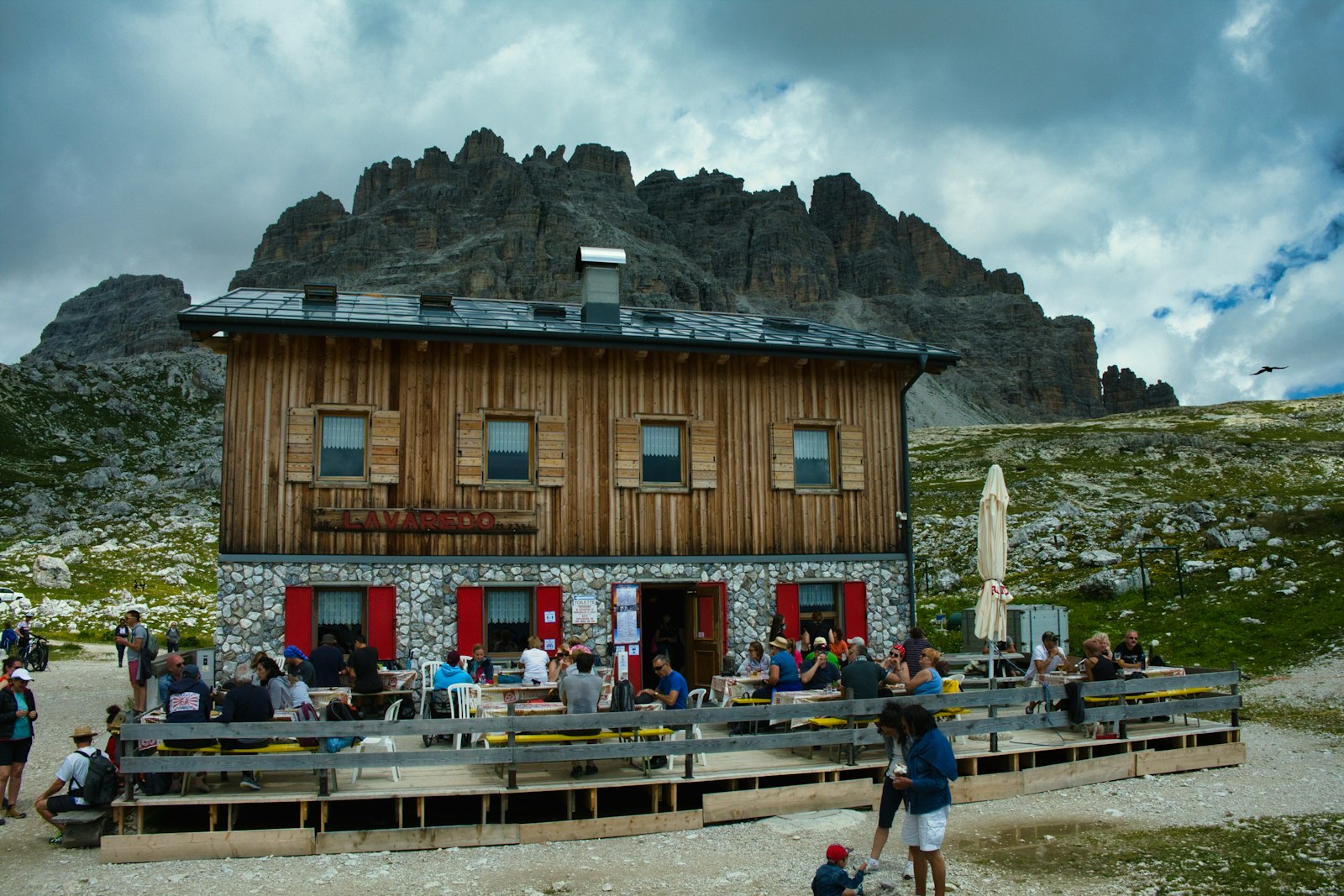
The good news: the Dolomites are one of the easiest mountain regions in Europe to explore without a car. Regional trains reach the edge of the range, buses climb into almost every valley, and cable cars and lifts do the rest. The catch is that the network is split between operators and provinces, and the best services are seasonal. Pick the right base and the right months, and a car is more of a burden than a help: parking at famous spots is limited and expensive, and some roads close to private traffic during the day.
Dolomites without a car: best bases at a glance
| Base | Best for | Rail approach | Main drawback |
|---|---|---|---|
| Ortisei | Seceda, Alpe di Siusi, Val Gardena | Ponte Gardena, Bolzano or Bressanone, then bus | Poor base for eastern Dolomites day trips |
| Dobbiaco | Tre Cime, Lago di Braies, Misurina, Cortina, Sesto | Direct regional railway | Famous mountain shuttles can require separate bookings and fares |
| Corvara | Alta Badia, Passo Gardena, Sella area | Brunico, then bus | No railway and slow for destinations outside Alta Badia |
| Canazei or Pozza/Vigo | Val di Fassa, Passo Pordoi, Catinaccio, Sella | Trento, Ora or Bolzano, then bus | High-pass services are strongly seasonal |
| Cortina d’Ampezzo | Cinque Torri, Falzarego, Passo Giau, eastern Dolomites | Calalzo or Dobbiaco, then bus, or coach from Venice area | No railway and several transport systems to keep straight |
No single bus network covers the Dolomites
This is the detail that causes many otherwise sensible itineraries to fall apart. The Dolomites cross several provinces, and public transport changes as you move between them.
- South Tyrol/Alto Adige: Val Gardena, Alta Badia and Dobbiaco use the integrated südtirolmobil network. Regional trains and buses work together particularly well here.
- Trentino: Val di Fassa relies mainly on Trentino Trasporti plus seasonal local and mountain-pass services.
- Belluno province: Cortina and much of the eastern Dolomites use Dolomiti Bus, alongside services from other operators.
There is no universal tourist pass that automatically covers every bus in all three areas. A hotel guest card that is excellent inside one valley may not cover the special shuttle you need the next morning. Treat each change of valley as a transport boundary until you have checked otherwise.
Getting to the Dolomites without a car
Most car-free trips start with a train to a gateway town at the edge of the mountains and finish with a bus. The nearest major airports are Venice, Verona, Innsbruck and Munich, and Bolzano has a small airport with limited flights. From any of them, you can reach a Dolomites base the same day if you land before mid-afternoon.
By rail to Bolzano, Bressanone and Brunico
The Brenner railway between Verona and Innsbruck is the main way in for the western Dolomites. Regional and fast trains stop at Bolzano and Bressanone, and Eurocity trains from Munich and Innsbruck call at both. From there, buses take you up into the valleys:
- Val Gardena: bus 350 from Bolzano, or 360 from Bressanone and Chiusa, to Ortisei, Santa Cristina and Selva.
- Alpe di Siusi: buses from Bolzano and Ponte Gardena to Siusi allo Sciliar, then the cable car up to the plateau.
- Alta Badia: train to Brunico on the Pusteria line, then bus 460.
- Val di Fassa: train to Trento, Ora or Bolzano, then a Trentino Trasporti bus.
- Dobbiaco and San Candido: direct regional trains along the Pusteria line, changing from the Brenner line.
From Venice to Cortina and the eastern Dolomites
For Cortina, the simplest route from Venice is a direct coach. Cortina Express and ATVO run from Venice Marco Polo airport and Venice Mestre station, taking a little over two hours, with more departures in summer and the ski season. The alternative is a train from Venice to Calalzo, then Dolomiti Bus line 30 up to Cortina. From Cortina, line 445 continues to Dobbiaco and the South Tyrol rail network, which lets you build a trip that enters from Venice and leaves from Bolzano or Innsbruck.
Plan the last leg before you book flights
The final bus is the weak link of any car-free arrival. Check the last departure from your gateway station before you choose flights, and look at the exact stop for your hotel. If you are flying into Venice, Munich or Milan late in the day, plan a night in Bolzano, Bressanone or Mestre and travel up in the morning.
Ortisei: the best all-round base for a first car-free trip
Ortisei, also shown as St. Ulrich in German and Urtijëi in Ladin, is hard to beat if your priority is classic western Dolomites scenery without spending half the day on buses.
The town has no railway station, but that is less inconvenient than it sounds. Current Val Gardena services connect the valley with Ponte Gardena/Waidbruck, Bolzano, Bressanone and Chiusa. Lines 350, 360 and 351 are the important regional links to recognize when looking at schedules. Once you are in the valley, frequent buses connect Ortisei, Santa Cristina and Selva.
Ortisei’s biggest advantage is that several major mountain access points are effectively built into the town. The Seceda lifts, Rasciesa funicular and the Ortisei-Alpe di Siusi gondola can all be reached without arranging a separate taxi to a remote trailhead. If Seceda is high on your list, the Italy on Foot guide to the Seceda cableways from Ortisei explains that access in more detail.
Where to stay in Ortisei
Choose accommodation in or close to the center rather than simply choosing the hotel that looks closest on a map. Ortisei climbs steeply away from the valley floor. A property described as a short walk from the center can involve a serious uphill pull with a suitcase.
Piazza S. Antonio, also shown as Antoniusplatz, is a useful central reference point. Before booking, open the walking route from your hotel to the exact bus stop and check the elevation as well as the distance. A level five-minute walk is much more useful than a shorter staircase or steep lane when you are carrying luggage.
The Val Gardena Guest Pass matters
Guests at participating accommodation providers receive the digital Val Gardena Guest Pass. It covers public buses in the valley and most of the South Tyrol public transport network, and it is valid on both arrival and departure days. The QR code must still be validated for each journey.
Do not read “public transport included” as “every moving vehicle is free.” The Nightbus, Monte Pana-Saltria service and certain Alpe di Siusi routes are among the exclusions. Check the current Guest Pass conditions before relying on it for a specific excursion.
Choose Ortisei when: Seceda, Alpe di Siusi and Val Gardena make up most of your wish list. Do not choose it as a single base if you also expect easy day trips to Tre Cime, Braies and Cortina.
Dobbiaco: the strongest base for the eastern Dolomites
Dobbiaco/Toblach has something most famous Dolomites resorts do not: a railway station. That changes the whole trip.
Regional trains connect the Pusteria/Pustertal corridor with Fortezza, where you can continue toward Bolzano, Verona, Innsbruck and the wider Italian rail network. Buses fan out from the Dobbiaco station area toward Cortina, Misurina, Sesto and major hiking destinations.
When reading schedules, pay attention to Dobbiaco, Stazione/Toblach, Bahnhof and Dobbiaco, Autostazione/Toblach, Busbahnhof. They refer to the rail and bus hubs in the station area, but a journey planner may list them separately. Do not assume two similarly named stops are literally the same platform.
The summer 445 service links Dobbiaco with Cortina and also serves the Misurina corridor on selected journeys. This makes Dobbiaco unusually useful if you want to combine South Tyrol with the Cortina side without changing hotels every night.
Tre Cime and Braies have special rules
The famous excursions are where the normal South Tyrol system stops being completely straightforward.
For summer 2026, line 444 between Dobbiaco and Rifugio Auronzo at Tre Cime requires an online reservation, including the return journey. The regular South Tyrol Guest Pass and Mobilcard are not valid for this special service. Having a regional transport pass therefore does not guarantee that you can simply turn up and board.
Lago di Braies has similar seasonal controls. During the main summer restriction period, the 439 and 442 services use special booking and fare arrangements, and ordinary tourist Guest Passes and Mobilcards should not be assumed to cover them. Check the journey several days in advance rather than at breakfast on the morning you want to go.
Choose Dobbiaco when: Tre Cime, Braies, Val Fiscalina, Misurina and perhaps a day in Cortina matter more than Seceda or the Sella group. San Candido is a pleasant alternative, especially for Sesto and Val Fiscalina, but Dobbiaco is usually the more useful transport hub for a mixed eastern-Dolomites itinerary.
Corvara: best if you want to stay inside Alta Badia
Corvara is one of the better mountain-village choices for travelers who want to wake up inside dramatic scenery rather than commute up from a railway town.
The main transport spine is bus line 460, which runs through the Val Badia corridor and connects Corvara with Brunico. Corvara’s main stop appears as Corvara, Autostazione or Corvara, Busbahnhof. Current schedules also serve La Villa, Badia and other villages at regular intervals.
Within the upper valley, local services make short hops much easier. The Corvara-Colfosco Express, for example, operates every 30 minutes in its summer service period and connects accommodation areas with lift access.
Participating Alta Badia accommodation providers issue the South Tyrol Guest Pass, which covers the regular local bus network and South Tyrol regional trains. Special excursion lines remain a separate matter, so check exclusions if your day involves Braies or Tre Cime.
Corvara is particularly strong if your hiking plans revolve around Alta Badia, Passo Gardena, Colfosco and the Sella massif. It is less convincing if you intend to cross repeatedly into Val Gardena, Cortina and Val di Fassa. A line on the map may connect two valleys, but mountain-pass buses are slower and less frequent than an urban transit network.
Choose Corvara when: you want Alta Badia itself, rather than using Alta Badia as a stepping stone to half the Dolomites.
Canazei, Pozza or Vigo: which Val di Fassa base is better?
Val di Fassa can work very well by bus in the main hiking season. The local tourism authority says the Dolomite passes are served by regular buses from June through September, which is exactly the type of service a car-free hiker needs.
There is still no railway in the valley. Access is by road, with bus connections from railheads including Trento, Ora/Auer and Bolzano. Check the complete connection rather than searching only for a train to “the Dolomites,” because your final leg is likely to be a bus.
Canazei
Pick Canazei if your priorities are the upper valley, Passo Pordoi, the Sella group, Campitello and the large lift network around the head of Val di Fassa. It gives you excellent mountain access but puts you at one end of the valley.
Pozza di Fassa or Vigo di Fassa
These can be smarter if you want to divide your days between different parts of the valley. Their more central position reduces repeated backtracking and gives good access to Catinaccio/Rosengarten and Buffaure as well as buses running up and down Val di Fassa.
The Val di Fassa Guest Card is available through participating accommodation providers. Transport benefits are handled digitally through the Mio Trentino app. For covered journeys, open the transport section and validate the ride in the app. Some South Tyrol services are included, but the official instructions specifically tell users to check which lines qualify.
Choose Canazei when: your trip concentrates on the Sella and upper Fassa. Choose Pozza or Vigo if you want a more balanced valley base and expect to travel in both directions most days.
Cortina: very possible, but pay attention to the stop name
Cortina is often described as difficult without a rental car because it has no railway station. That is only half the story. It has useful buses toward Calalzo, Dobbiaco, Misurina, Passo Giau and other eastern-Dolomites destinations. The real complication is that several companies operate there and they do not all use one simple terminal.
Official local transport information distinguishes, among others:
- Piazza Roma for services such as ATVO and Cortina Express;
- Via dei Campi for Dolomiti Bus and South Tyrol regional connections;
- Cortina d’Ampezzo, Scuole, a stop name that appears in current regional timetables including the Dobbiaco route.
So if your phone says “walk to the bus station,” do not stop there. Match the exact stop name on the ticket or timetable. Ten minutes spent walking to the wrong departure point is enough to lose a mountain bus with a long gap until the next one.
Dolomiti Bus line 30 provides the important road link toward Calalzo FS, where rail journeys continue south. Line 445 connects toward Dobbiaco. Seasonal 2026 services also include the Passo Giau corridor. For local movements, consult Cortina’s official urban transport information.
Dolomiti Bus itself advises passengers to use the timetables published on its website as the main reference because third-party journey planners may not reflect the latest changes. That advice is particularly sensible in summer, when road works, events and temporary stop relocations are common.
Choose Cortina when: your priority list is Cinque Torri, Lagazuoi, Falzarego, Passo Giau, Misurina and the Cortina valley. For those sights, the transport puzzle is manageable. It is a poor choice for repeated trips to Ortisei or western Val Gardena.
Cable cars and lifts replace the car on the mountain
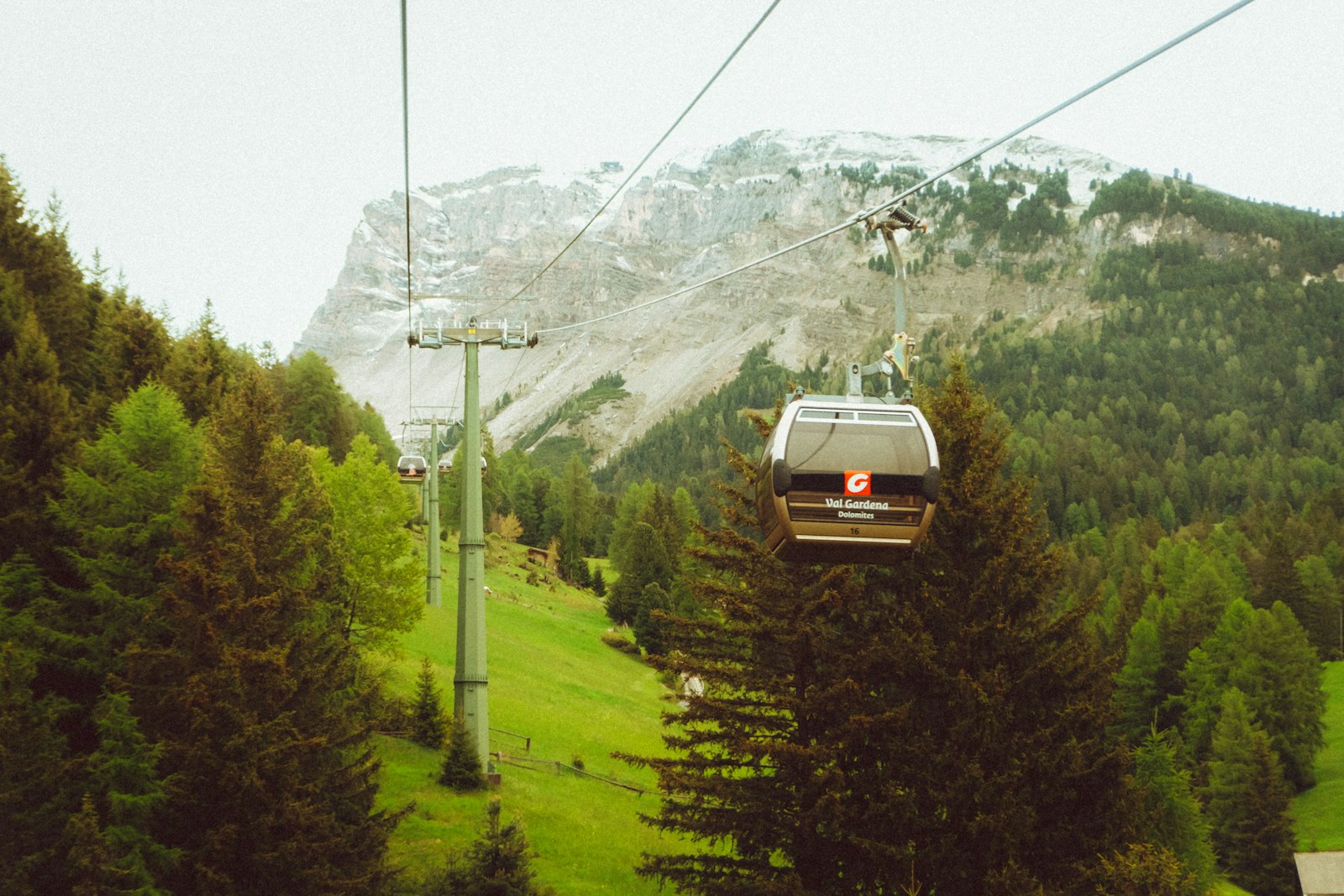
Buses get you to the valley floor, but the scenery that makes the Dolomites famous usually starts higher up. That is where cable cars, gondolas and chairlifts do the work a car would do elsewhere, and in many places they are faster than any road. A few of the most useful:
- Ortisei to Seceda: gondola and cable car from the town center to the Seceda ridge.
- Ortisei or Siusi to Alpe di Siusi: gondola from Ortisei, or the cable car from Siusi allo Sciliar to Compatsch. The road up to the Alpe di Siusi is closed to most private cars during the day in summer, so the lifts are the normal way up.
- Passo Falzarego to Lagazuoi: cable car reached by Dolomiti Bus from Cortina.
- Passo Pordoi to Sass Pordoi: cable car above the pass, reached by bus from Canazei and Arabba.
- Cortina to Tofana and Cinque Torri: lifts close to the town and along the Falzarego road.
Most lifts run from early or mid-June to mid or late September, with a few staying open into October. If you plan several days of lifts, a regional summer pass such as the Gardena Card or Dolomiti Supersummer can work out cheaper than single tickets. Always check the last descent time: missing it can mean a long walk down.
Car-free hikes and day trips by bus
Many of the best hikes in the Dolomites start right at a bus stop or a lift station, so you can walk point to point without returning to a parked car. That is one real advantage of traveling without one.
Alpe di Siusi
Europe’s largest high alpine meadow is easy to reach from Ortisei or Siusi by lift, and local buses cross the plateau in summer. Gentle trails link huts and viewpoints toward the Sassolungo and Sciliar, making the Alpe di Siusi ideal for families and for a first day of hiking.
Tre Cime and Lago di Braies
Both are reached by seasonal buses from Dobbiaco, with online booking in high summer. Driving does not make them easier: the toll road to Rifugio Auronzo costs around €40 per car, and in high summer cars can reach Lago di Braies during the day only with a booked parking slot. A bus seat and an early start are the smart choice.
Lago di Carezza and Val di Funes
Lago di Carezza, a small lake below the Latemar peaks, is on the bus route between Bolzano and Val di Fassa, which makes it an easy stop on a transfer day. Val di Funes, with the famous view of the church of Santa Maddalena below the Odle peaks, is reached by bus from Chiusa or Bressanone. Both are good half-day trips from a base in the western Dolomites.
Split the trip if you want both sides of the Dolomites
The most common planning mistake is choosing one beautiful village and assuming every famous mountain can be visited from there.
If your list includes both Seceda and Tre Cime, two bases are usually better than one. Good combinations include:
- Ortisei + Dobbiaco: the cleanest west-and-east combination for public transport users;
- Ortisei + Cortina: useful if Cortina itself and its nearby hikes are priorities;
- Corvara + Dobbiaco or Cortina: good for Alta Badia plus the eastern Dolomites;
- Val di Fassa + Ortisei: sensible for travelers concentrating on the Sella, Catinaccio, Seceda and Alpe di Siusi.
Use a transfer day for the valley change instead of trying to turn it into a sightseeing marathon. If this Dolomites section is part of a longer trip, you can build your Italy itinerary around the rail gateways so the mountain transfer sits naturally between your Venice, Verona, Bolzano or Innsbruck legs.
Summer transport is not the same all season
“Summer timetable” is too vague for the Dolomites. Services can begin or end weeks apart.
For 2026, Val di Fassa advertises regular pass connections from June through September. Val Gardena’s seasonal services have individual operating windows: for example, Express line 352 runs only during part of July, August and early September, while another valley service continues into October. Dolomiti Bus labels its principal 2026 summer timetable as running from 8 June to 9 September.
This matters if you travel in late May, early June, mid-September or October. A cable car may be operating while the bus you expected is not, or the bus may run only a handful of times instead of every half hour.
For spring trips, the practical strategy changes enough that it is worth reading the separate Italy on Foot guide to planning the Dolomites in May.
Winter needs its own timetable check too. Ski areas often add extensive skibus networks, but those buses may have different fares and Guest Card rules from the ordinary regional service.
Dolomites transport passes and prices
| Pass | Price | What it covers |
|---|---|---|
| South Tyrol Guest Pass | Free with participating accommodation | Regular buses and regional trains in South Tyrol for your stay |
| Mobilcard (1, 3 or 7 days) | €20 / €30 / €50 | The integrated South Tyrol network, excluding some special excursion buses |
| Val di Fassa Guest Card | Free with participating accommodation | Local buses in Val di Fassa, validated in the Mio Trentino app |
| Gardena Card | €124 (3 days) / €160 (6 days) | Most Val Gardena lifts and cable cars, plus some across the region |
| Dolomiti Supersummer | Varies by length | Summer lifts across the Dolomiti Superski area |
Prices are those published for summer 2026; check the official sites before you travel. The Guest Pass and Mobilcard do not cover the booked Tre Cime and Braies shuttles or most lifts, so budget for those separately.
Guest Card does not mean you can skip validation
Ticket validation is one of the easiest ways to create an unnecessary problem.
On the South Tyrol network, a valid ticket or pass must be checked in correctly. Digital Guest Passes use a QR code, while contactless tickets use the blue validators. On train journeys, validation happens before boarding where required. Wait for the green confirmation or the audible signal rather than waving the card vaguely near the machine and walking away.
If you do not receive a hotel Guest Pass, South Tyrol also sells Mobilcards for one, three or seven consecutive calendar days. They cover the regular integrated network but have exclusions for certain seasonal excursion buses.
In Val di Fassa, Guest Card transport journeys are validated through the Mio Trentino app. Belluno and Cortina use a different ticketing system again. Never copy the validation procedure from yesterday’s valley unless you know you are still traveling with the same operator and ticket type.
Visiting the Dolomites without a car in autumn and winter
Car-free travel gets harder once the summer season ends. In mid-October most pass buses and many lifts stop, and services drop to the basic year-round lines between valley towns and railway stations. Winter brings back a dense network of ski buses, often free with a lift pass or Guest Pass, once the ski season starts in late November or December. If you are visiting between mid-October and early December, choose a base on a railway line, such as Dobbiaco or Bressanone, or a town with year-round buses, such as Ortisei or Cortina.
Luggage changes which hotel is a good hotel
For a no-car mountain trip, accommodation location can matter more than an extra star or a better view.
South Tyrol’s public transport rules allow suitcases, bags, strollers and wheelchairs free of charge when there is enough room. Luggage must not occupy seats or block doors and aisles. Crowded mountain buses can have far less usable space than an intercity coach, so one manageable suitcase or backpack is considerably easier than several large cases.
When comparing hotels, check three things:
- The walk from the exact arrival stop, not from the town’s generic map pin.
- The elevation profile. Mountain villages can turn 400 meters of horizontal distance into a miserable luggage haul.
- Whether you need another local bus to reach the main interchange every morning.
Travelers with wheelchairs, strollers or limited mobility should also ask the accommodation directly about the route between the stop and reception. A hotel can be “central” yet sit above the pedestrian center via steps or a steep lane.
Late arrivals are where car-free itineraries become expensive
Mountain transport is designed around daytime movement, not flights landing near midnight. Frequencies generally thin in the evening, and a missed final connection can leave a taxi as the only realistic option.
If your rail or air arrival is late, a gateway overnight is often the safer plan:
- Bolzano or Bressanone before continuing to Val Gardena;
- Brunico before Alta Badia;
- Trento or Bolzano before Val di Fassa;
- Venice/Mestre or Calalzo if your Cortina connection no longer works that evening.
A mountain taxi covering what looked like “just the last bus leg” can become an expensive ending to a cheap flight.
For important connections, do not plan the last bus from a trailhead as though it were a metro train. Road traffic, storms and summer congestion can delay mountain services. Give yourself a backup departure, especially when the next connection is a reserved train or coach.
Italian and German timetable words worth recognizing
- Autostazione / Busbahnhof: bus station
- Stazione / Bahnhof: railway station
- Fermata / Haltestelle: bus stop
- Capolinea: terminus
- Corsa: a scheduled bus run or journey
- Coincidenza: connection
- Convalida / obliterazione: ticket validation
- Feriale: working-day service; check the operator’s legend rather than automatically assuming Monday to Friday
- Festivo: Sundays and public holidays
- Scolastico: school days
- Non scolastico: non-school days
- Täglich: daily
- Werktage: working days
The small letters at the bottom of a timetable can matter as much as the departure time itself. A journey marked for school days, weekdays or only part of the summer season may disappear from the schedule on the exact Sunday you need it.
Which Dolomites base should you book?
- Book Ortisei for the simplest first trip built around Seceda, Alpe di Siusi and Val Gardena.
- Book Dobbiaco if Tre Cime, Braies, Sesto, Misurina and eastern Dolomites transport are the priority.
- Book Corvara if you want to spend most days hiking and riding lifts inside Alta Badia.
- Book Canazei for the upper Val di Fassa and Sella area, or Pozza/Vigo for a more central valley position.
- Book Cortina if the Cortina mountains are the main event and you are comfortable checking several operators and exact departure stops.
For six nights or more covering both western and eastern highlights, use two bases. For a short trip, resist the urge to collect famous peaks from opposite sides of the range. Staying close to the right bus hub gives you more time on the mountain, fewer fragile connections and a much better chance of getting back for dinner without studying a timetable on the roadside in the dark.
Dolomites without a car: FAQ
Can you visit the Dolomites without a car?
Yes. From June to September, buses, trains and cable cars reach almost all the famous sights, and in winter ski buses serve the resorts. Choosing a base near a main bus stop is the key.
What is the best base for public transport?
Ortisei for the western Dolomites and Dobbiaco for the eastern side. Both have frequent buses, and Dobbiaco also has a railway station.
How do I get from Venice to the Dolomites by public transport?
Take a Cortina Express or ATVO coach from Venice airport or Mestre to Cortina, or a train to Calalzo and a bus from there. For the western valleys, take a train to Bolzano via Verona.
Do I need to book buses in advance?
Most regular buses do not need a booking. The exceptions are the summer shuttles to Tre Cime and Lago di Braies, which need an online reservation.
When do the summer buses stop running?
Most pass lines and seasonal shuttles run from about early June to mid-September, with some continuing into October. Check each operator’s timetable for exact dates.