No, the Colosseum is not free on a normal day. You can walk around the outside and look at it from the street at no cost, but going inside requires a ticket, which costs €18 for a standard adult ticket bought on the official site. The exceptions are real, though: children and teens under 18 enter free all year in Rome, EU citizens aged 18 to 24 pay just €2, and entry is free for everyone on the first Sunday of every month and on a few national holidays in Italy.
Below is exactly who pays, what each of the Colosseum tickets covers, how the free days work in practice and whether they are worth the crowds.
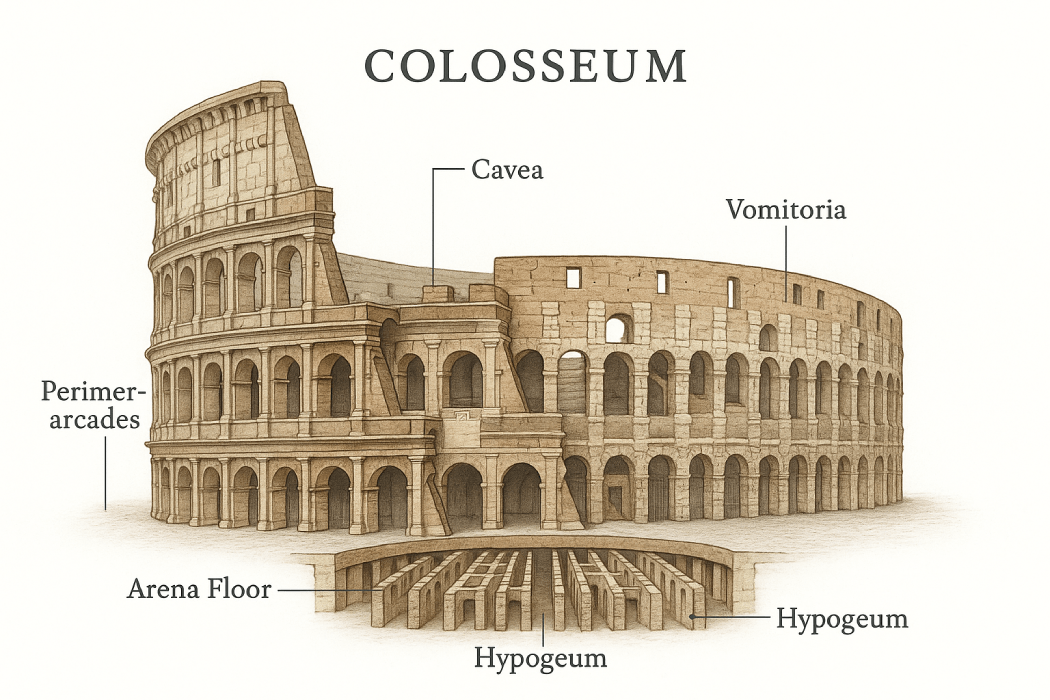
In this guide:
- Seeing the Colosseum from the outside
- When you pay to enter the Colosseum
- Colosseum tickets and prices
- Free Sundays and holidays
- How booking works
- Common mistakes
- FAQ
Seeing it from the outside for free
The Colosseum stands in the open in the middle of the city, so anyone can see the outer walls without a ticket, day or night. The best viewpoints in this part of Rome cost nothing:
- Piazza del Colosseo: the square right around the amphitheater, next to the Colosseo metro stations.
- Via dei Fori Imperiali: the long avenue from Piazza Venezia, partly pedestrian, with views over the Imperial Forums on the way.
- Largo Gaetana Agnesi: a small terrace above the Colosseo metro exit with a classic elevated view.
- Parco del Colle Oppio: the park on the hill to the north-east, quieter and shady.
- After dark: the walls are lit at night, and the area is calmer once the day tours have gone.
If you only have an hour in Rome, a walk around the outside of the Colosseum plus the view from Via dei Fori Imperiali gives you a strong sense of ancient Rome for free.
When you pay to enter the Colosseum
The Colosseum is run by the Parco archeologico del Colosseo, part of the Italian Ministry of Culture, together with the Roman Forum and Palatine Hill. Any visit inside the walls of the amphitheater needs a ticket, even on the monthly free days, when you still collect a zero-price entry ticket at the ticket office.
You pay full price if you are 25 or older, or if you are 18 or older and not an EU citizen. Who gets in at no charge or at a reduced price:
- Under 18s: no charge, whatever their nationality. You still book a zero-price ticket online for a timed slot.
- EU citizens aged 18 to 24: €2, with ID.
- Visitors with a disability and one companion: free, with priority access.
- Licensed tour guides and some teachers and researchers: no charge with proof, under the national rules.
These categories apply to state museums across Italy, so the same rules you meet at the Colosseum in Rome also work at the Pantheon, the Uffizi in Florence and Pompeii near Naples. Bring a passport or ID card to Rome, as a photo on your phone is not always accepted at entry.
Official Colosseum tickets and what they include
| Ticket | Price | What it covers |
|---|---|---|
| 24h ticket | €18 | Colosseum (standard route) plus one entry each to the Roman Forum and Palatine Hill within 24 hours |
| Full Experience | €24 (€32 with guided tour) | Adds access to restricted areas such as the arena floor or underground, plus the Forum and Palatine Hill |
| Reduced (EU 18 to 24) | €2 | Same access as the ticket chosen |
| Under 18 | Free | Timed slot still required |
Prices are those published on the official ticketing site for 2026; a small online fee may apply. Tickets are named, staff can check ID at the entrance, and you get a fixed entry time for the Colosseum itself. The Forum and Palatine Hill have no set time within the validity period.
Is the Colosseum arena or underground worth the extra?
For a first visit, the standard ticket is enough: you walk the upper and middle levels and see the whole bowl. The Full Experience is worth it if you want to stand on the reconstructed arena floor and look up at the seating as a gladiator would have, or see the underground passages where animals and fighters waited. Those areas have limited places, and tickets for them sell out first.
Guided tours of the Colosseum
Official tours of the arena and underground run by the park are booked on the same ticket website and cost €8 more than the Full Experience ticket alone. Private tours from licensed agencies cost more again, typically €50 to €90, but include the ticket, a guide and often the restricted areas. A tour makes most sense for the underground, where the story of the games is much easier to follow with someone explaining it. Audio guides and the official app are cheaper options if you prefer to tour at your own pace. Whichever Rome tour you choose, check that it includes the entry ticket and which areas it covers, as many Rome tours sold online only cover the standard route, and the tour price alone can hide a separate ticket cost.
Free Sundays and national holidays
Admission is free for everyone on:
- The first Sunday of every month (Domenica al Museo, the national scheme for state museums in Italy)
- 25 April (Liberation Day)
- 2 June (Republic Day)
- 4 November (National Unity and Armed Forces Day)
On these days you cannot book online. Free tickets are handed out first come, first served at the ticket offices, and once the day’s capacity is reached, entry stops. There is no weekly free entry, despite what some older blog posts say.
Is the first Sunday worth it?
Only if you arrive early and have patience. Lines for the Colosseum start forming before opening time and can stretch for well over an hour, and inside, the walkways are packed. Restricted areas like the underground are usually not available on free days, and tours do not run as normal. For most people with limited time in Rome, €18 for a booked slot on another day is a better use of the morning. If you are on a tight budget, combine the monthly free day with the Forum and Palatine Hill, which are also open at no cost that day.
Roman Forum and Palatine Hill
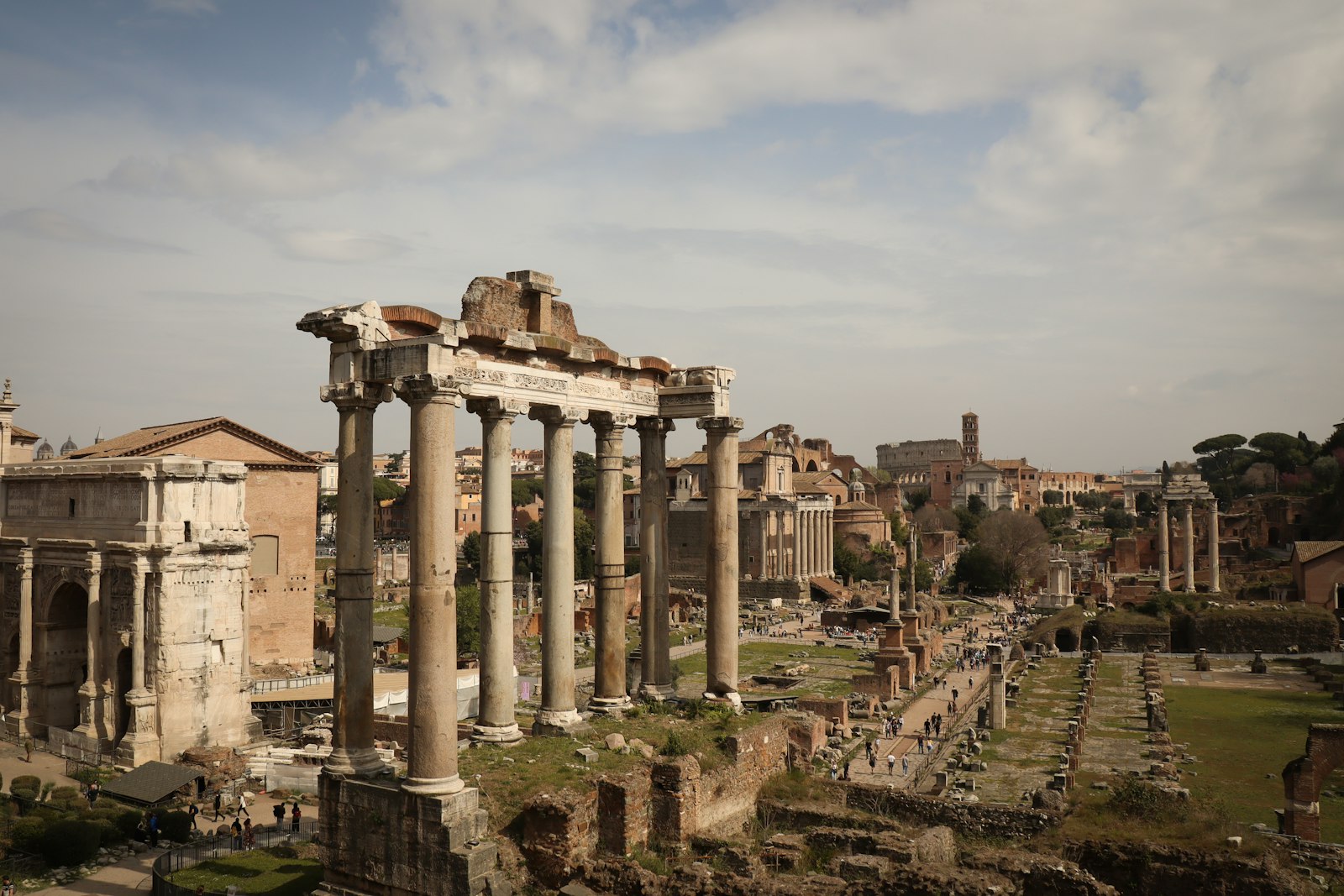
Every paid Colosseum ticket includes entry to the Roman Forum and Palatine Hill next door, and many visitors find them as rewarding as the Colosseum itself. The Forum was the political and religious heart of ancient Rome, with temples, law courts and the Senate house, while Palatine Hill holds the ruins of the imperial palaces and a terrace overlooking the Circus Maximus. Allow at least two hours for both, wear sturdy shoes and bring water, as shade is scarce. The two areas share one entrance on Via della Salara Vecchia and another on Via di San Gregorio, so you can start at either end. Most people visit the Colosseum first, then walk across to the Roman Forum and up Palatine Hill, but in summer going to the Forum early and the Colosseum later can mean fewer people in the arena.
How booking Colosseum tickets works
Entry tickets go on sale about 30 days in advance on the official ticket website and often sell out within days for spring and summer dates. A few tips that save trouble:
- Buy the moment your dates in Rome are fixed. New dates are released on a rolling basis, and early-morning tickets go fastest.
- Use the official ticketing website. Resellers charge more for the same entry, and tickets are named, so secondhand ones may be refused.
- Get the names right. Name changes are allowed only up to seven days before your visit, so check spelling before paying.
- Arrive 15 to 30 minutes early. Everyone goes through airport-style security at the entrance.
Roma Pass holders get entry to the Colosseum as one of their first included sights, but still need to reserve a time slot in advance. If you plan several paid sights in the city, the pass, which also covers public transport in Rome, can work out cheaper than separate tickets.
Colosseum opening hours
Hours follow the sunset. From 25 October 2026 to the end of February, the Colosseum closes at 16:30 with last entry at 15:30; in spring and summer it stays open until about 19:00. Check the official ticket website for the current season before you go, as closures for events and holidays happen. Inside, visits are timed with a set maximum stay, so you will not be able to linger for half a day.
Getting to the Colosseum
Two metro lines stop at the Colosseum: Line B at Colosseo, and Line C at Colosseo-Fori Imperiali, which opened in December 2025. Buses 51, 75, 85 and 87 stop nearby, and the walk from Piazza Venezia takes about 15 minutes along Via dei Fori Imperiali. Taxis can drop you on Via Celio Vibenna or Via di San Gregorio, close to the entrance.
Visiting with kids
Families do well here because under-18s pay nothing, which makes the Colosseum one of the cheaper major sights in Italy for a family. Strollers can follow the standard route, and there is a lift for anyone who cannot manage the stairs. With younger children, a short visit to the Colosseum followed by a picnic in the Colle Oppio park beats a long trudge through every ruin. Many Rome tours offer family versions with gladiator stories that keep children interested.
Other ancient Rome sights that cost less
If your budget is tight, plenty of Roman history in the city costs little or nothing. The Pantheon costs €5 and is one of the best preserved buildings of ancient Rome. The Circus Maximus, the Imperial Forums seen from Via dei Fori Imperiali, and the Appian Way can all be visited without a ticket. The Baths of Caracalla and the Ostia Antica ruins are far quieter than the Colosseum, and they also open their gates at no cost on the first Sunday of each month.
Tips for a smoother Colosseum visit
A little planning makes a big difference at one of the busiest sights in Italy. Pick the first entry of the day or one of the last two slots, when tour groups thin out. Download your tickets to your phone before you leave the hotel, as mobile signal around the entry can be weak when crowds are heavy. Eat before you go, as food options right by the Colosseum are limited and the kiosks in the square charge tourist prices, and carry a refillable bottle: Rome’s public fountains, the nasoni, give free drinking water all over the city.
Plan the rest of the day around your slot rather than the other way round. The Colosseum entry time is the one fixed point; the Forum, Palatine Hill and the walk to the Capitoline Hill or the Roman Circus Maximus can flex around it. If you want help fitting it into a longer Rome or Italy itinerary, our trip planner can build the day for you, with realistic walking times between each stop.
Common mistakes travelers make
- Turning up without tickets in high season: on-site sales are limited and often sold out.
- Buying from a reseller by accident: many sites look official; the real one is ticketing.colosseo.it.
- Assuming free days mean no line: they are the busiest days of the month for the Colosseum.
- Forgetting ID: reduced and zero-price tickets need proof of age or nationality.
- Bringing a large bag: large backpacks and suitcases are not allowed through security, so leave them at your hotel.
Is paying to enter the Colosseum worth it?
For most people, yes. The inside view of the arena, the tiers of seating and the exposed underground give you a real sense of how around 50,000 spectators filled the place nearly 2,000 years ago, something the outside alone cannot show. Since the ticket also covers the Forum and Palatine Hill, €18 buys a full morning or afternoon among the best Roman ruins in the city. If you are planning several days in Rome or a longer trip around Italy, our three-day Rome itinerary shows how to fit the Colosseum in with the other major sights.
FAQ
Do kids pay to enter the Colosseum?
No. Everyone under 18 gets in at no charge, from any country, but they still need a booked zero-price ticket for a time slot.
When can everyone visit the Colosseum without paying?
On the first Sunday of every month and on 25 April, 2 June and 4 November. These tickets cannot be booked and are given out at the ticket offices on the day.
How much is a Colosseum ticket?
€18 for the standard 24-hour ticket, including the Roman Forum and Palatine Hill, or €24 for the Full Experience with restricted areas.
Can I see the Colosseum without a ticket?
Yes, from the outside. The surrounding square, Via dei Fori Imperiali and the Colle Oppio park all give good views at no cost.
Can I buy tickets at the Colosseum on the day?
Sometimes, but availability is limited and the line can be long. Buying online in advance is far more reliable.