Florence is often described as one of the easiest Italian cities to explore, and for good reason. If you are wondering whether Florence is a walkable city, the answer is a strong yes, especially for travelers who want to see major sights without relying on buses, taxis, or rental cars. The historic center is compact, mostly flat, and designed long before modern traffic existed. That makes walking not just possible but the most practical way to experience the city. For first-time visitors, this is a huge advantage. You can step out of your hotel and reach world-famous landmarks, museums, restaurants, and cafés within minutes. Many travelers are surprised by how little planning is needed to move around Florence compared to other large European cities.
Walking Florence also allows you to experience the city at the right pace. Instead of rushing between attractions, you naturally discover hidden streets, small bakeries, quiet squares, and artisan workshops. The city rewards slow exploration. If you are planning a short stay, a well-structured walking plan makes a big difference. This is why many travelers choose to follow a clear route like the Two Days in Florence walking itinerary, which is built around realistic distances and natural walking flow. Florence works best when you let walking guide your day instead of transport schedules.
Another reason Florence feels so walkable is its layout. Major attractions are grouped close together rather than spread across distant neighborhoods. This means you can enjoy a full day of sightseeing without feeling like you are constantly moving from one side of the city to the other. For travelers who value simplicity, Florence is one of the most stress-free cities in Italy. Understanding how walkability works here helps you plan smarter days, choose the right accommodation, and pack properly.
Planning Florence? Grab the step-by-step digital guide
Why Florence Is One of the Most Walkable Cities in Italy
Florence was built for walking centuries before cars existed. Streets are narrow, distances are short, and the historic center follows a human scale rather than a modern urban grid. This structure plays a major role in why Florence consistently ranks as one of the most walkable destinations in Italy. Most visitors spend their time within the historic center, where walking is not only easy but often faster than any form of transport. You can cross the core of the city in about 25 to 30 minutes on foot, and most major attractions are much closer than that.
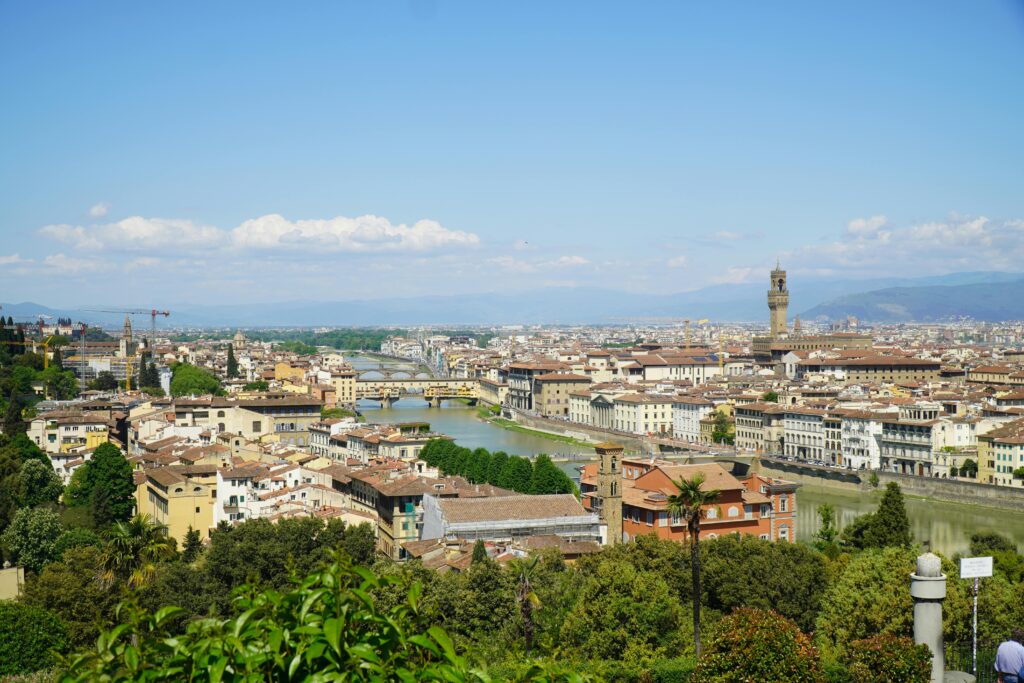
Another major factor is the flat terrain. Unlike cities such as Rome or Naples, Florence does not require constant uphill walking. This makes it easier for travelers of all ages, including families and older visitors. You can maintain a steady pace throughout the day without sudden climbs that break your rhythm. The only noticeable hills appear when you leave the center toward panoramic viewpoints, which are optional rather than essential for most itineraries.
Traffic restrictions also improve walkability. Large parts of central Florence are limited traffic zones, meaning cars are restricted or heavily controlled. This results in calmer streets, fewer aggressive drivers, and more space for pedestrians. Many streets function as shared spaces where walking feels natural and safe. While sidewalks are sometimes narrow or nonexistent, traffic moves slowly and drivers are accustomed to pedestrians. After a short adjustment period, most visitors feel comfortable walking almost anywhere within the center.
Compact Distances Between Major Attractions
One of the most common questions travelers ask is how far apart Florence attractions really are. The answer surprises many people. Landmarks that look far apart on a map are often only a few minutes away on foot. This closeness changes how you plan your days. Instead of grouping attractions by neighborhood, you can move naturally from one sight to the next.
| Route | Average Walking Time |
|---|---|
| Duomo to Uffizi Gallery | 7 minutes |
| Duomo to Accademia Gallery | 6 minutes |
| Uffizi Gallery to Ponte Vecchio | 5 minutes |
| Ponte Vecchio to Pitti Palace | 10 minutes |
| Santa Croce to Piazza della Signoria | 8 minutes |
Because these walks pass through lively streets filled with shops, churches, and cafés, they rarely feel long. Walking becomes part of the experience rather than a task between stops.
What Walking in Florence Is Really Like Day to Day
Walking in Florence is easy, but it is important to understand what daily walking actually feels like. Streets are paved with stone and cobblestones rather than smooth asphalt. This gives Florence its charm, but it also means footwear matters more than in many other cities. Comfortable shoes with good support are essential, especially if you plan to spend full days exploring. Visitors who underestimate this often feel tired sooner than expected.
Sidewalks in Florence are often narrow, and in some areas they disappear completely. Instead of wide pedestrian lanes, people walk directly on the street. This may feel unusual at first, but traffic moves slowly and drivers are used to it. After your first day, it becomes second nature. The benefit of this setup is that streets feel more open and integrated rather than divided by rigid infrastructure.
Another thing travelers notice is how intuitive navigation becomes. Florence has clear visual landmarks, with the Duomo acting as a constant reference point. Even without a map, you can often orient yourself just by looking up. This reduces stress and allows for spontaneous exploration. Getting lost in Florence is rarely a problem because you are never far from something familiar.
Is Florence Walkable for Families, Seniors, and Slower Travelers?
Florence works well for many types of travelers, but each group should plan slightly differently. Families benefit from short distances and frequent breaks. Squares provide space for kids to pause, and food stops are everywhere. Strollers are usable but can be bumpy on cobblestones, so lighter models are easier to manage.
Seniors and slower walkers often find Florence more manageable than other Italian cities. The flat layout helps conserve energy, and benches are available in major squares. Planning shorter days and avoiding peak heat hours makes walking much more comfortable. Travelers with mobility challenges can still explore Florence on foot, but cobblestones and uneven surfaces require extra planning. Some museums and churches offer ramps or accessible entrances, which are worth checking in advance on official websites.
Do You Need Public Transport in Florence?
Most visitors staying in or near the historic center do not need public transport for daily sightseeing. Walking covers nearly all major attractions, restaurants, and shopping areas. Many travelers complete their entire stay without using a bus even once. This is one of Florence’s biggest advantages compared to larger cities.
Public transport becomes useful in specific situations. Arriving or departing with luggage is one. Reaching viewpoints outside the center is another. Florence’s bus system is reliable and affordable, but it is not essential for most itineraries. Tickets can be purchased through official channels such as the local transport authority’s website or at authorized ticket machines.
Because walking is so effective, overusing transport can actually slow you down. Waiting for buses, navigating routes, and dealing with crowds often takes longer than simply walking. Understanding this helps travelers plan more efficient days and avoid unnecessary stress.
Common Walking Mistakes Visitors Make in Florence
Even in a highly walkable city, small mistakes can affect your experience. One of the most common is overplanning. Because distances are short, travelers often try to fit too much into a single day. This leads to fatigue and less enjoyment. Florence rewards slower pacing and flexibility.
Another frequent issue is footwear. Fashion shoes may look good, but they quickly become uncomfortable on stone streets. Packing the right shoes is one of the simplest ways to improve your trip. Ignoring heat during warmer months is also a problem. Walking is easiest early in the morning and later in the afternoon, with midday breaks built in.
Finally, staying far outside the historic center reduces walkability. Choosing accommodation within or just outside the center saves time and energy. It also allows you to enjoy Florence at night, when walking becomes even more pleasant and the city feels calmer.
Why Florence Is Best Experienced on Foot
Florence is not just walkable in a practical sense. It is emotionally and culturally designed for walking. Many of the city’s most memorable moments happen between major sights. A quiet street in Oltrarno, the sound of church bells echoing through narrow alleys, or a small café discovered by chance often leave stronger impressions than famous landmarks.
Walking allows you to connect these moments naturally. You are not isolated behind glass or distracted by schedules. Instead, you move at the city’s pace. This is why structured walking itineraries work so well in Florence. They provide guidance without removing freedom. You know where you are going, but you remain open to what you find along the way.
For travelers who value simplicity, Florence is close to ideal. You can see a remarkable amount of history, art, and daily life without complex logistics. Walking is not just a way to get around here. It is the core of the experience.
