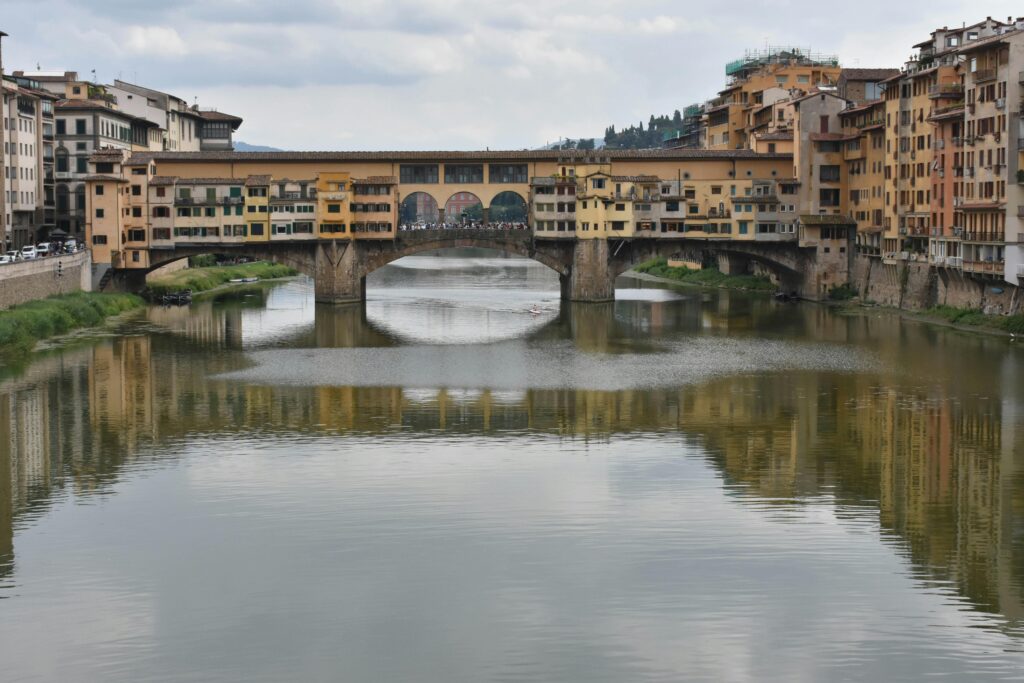
Ponte Vecchio is one of those places in Florence that almost every traveler has seen in photos long before arriving, yet many people cross it without really understanding what makes it special. This historic bridge is far more than a scenic crossing over the Arno River. It is a living piece of Florence’s past that blends architecture, trade, politics, and daily life into a single structure. Located between the historic center and the Oltrarno district, Ponte Vecchio sits on the narrowest natural crossing of the river, a spot that has been used since Roman times. This strategic location is one reason why a bridge has existed here for centuries, even as floods and wars reshaped the city around it. Today, the bridge functions as a pedestrian street lined with small shops, many of them gold and jewelry stores, making it feel more like an open-air market than a bridge.
For first-time visitors, Ponte Vecchio often becomes part of a larger walking route that includes the Duomo, Piazza della Signoria, and Palazzo Pitti. If you are planning a short stay, it fits naturally into a compact itinerary like this two days in Florence walking guide, where everything is designed to be explored on foot. Ponte Vecchio works so well in a walking plan because it is not something you rush through. The narrow passageways slow you down, the shop windows catch your attention, and the open terrace in the middle invites you to stop and look out over the river. Understanding what you are seeing as you cross makes the experience far richer and helps you appreciate why this bridge has become one of the strongest symbols of Florence.
The Long History Behind Ponte Vecchio
The story of Ponte Vecchio stretches back to ancient times, starting with a Roman bridge that once stood at this same crossing point. Romans were practical engineers, and they chose this spot because the riverbanks were stable and the distance across the Arno was shorter here than in other areas. Over the centuries, that original bridge was destroyed several times by floods, which were common and often devastating in Florence. The structure you see today dates to the medieval period and was completed in the mid-14th century using stone rather than wood, a decision that greatly improved its durability. Its design includes three shallow arches instead of the traditional semicircular arches used in earlier bridges. This was an advanced choice for the time, as it allowed floodwaters to pass more easily and reduced pressure on the structure.
Planning Florence? Grab the step-by-step digital guide
Ponte Vecchio’s survival through history is one of its most remarkable features. While many other bridges in Florence were destroyed during wars or rebuilt multiple times, Ponte Vecchio managed to remain standing even during World War II, when retreating forces destroyed nearly every bridge across the Arno. The surrounding medieval buildings were heavily damaged, yet the bridge itself was spared. This moment cemented its status not just as an architectural landmark, but as a symbol of continuity and resilience for the city. When you walk across Ponte Vecchio today, you are walking on a structure that has witnessed centuries of daily life, political change, and cultural evolution, all without losing its original purpose as a working bridge.
Why Ponte Vecchio Is Lined With Shops
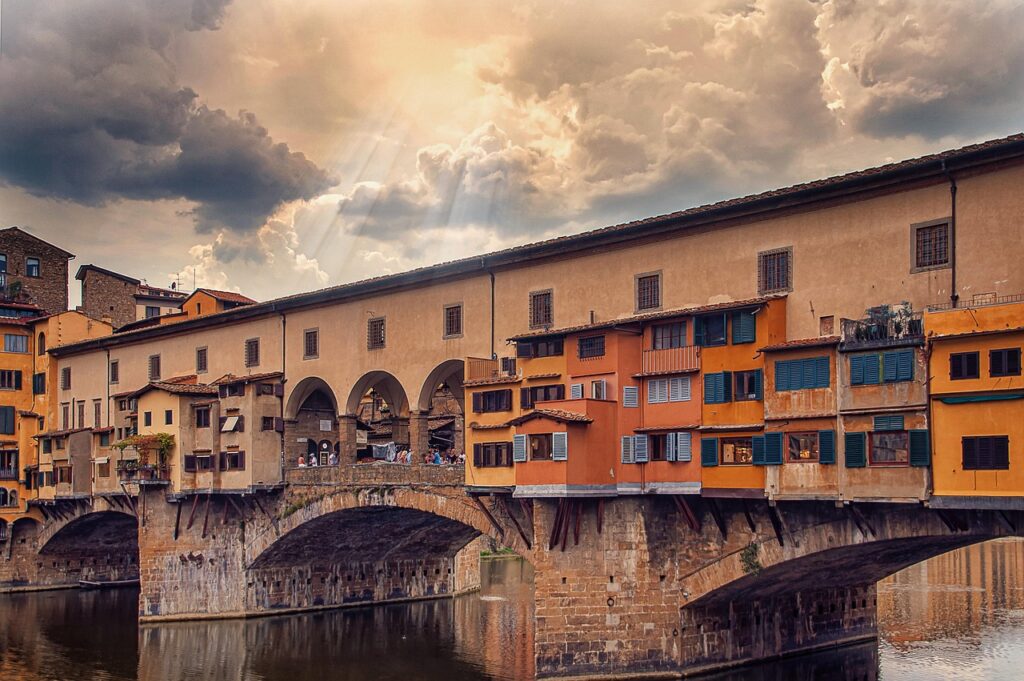
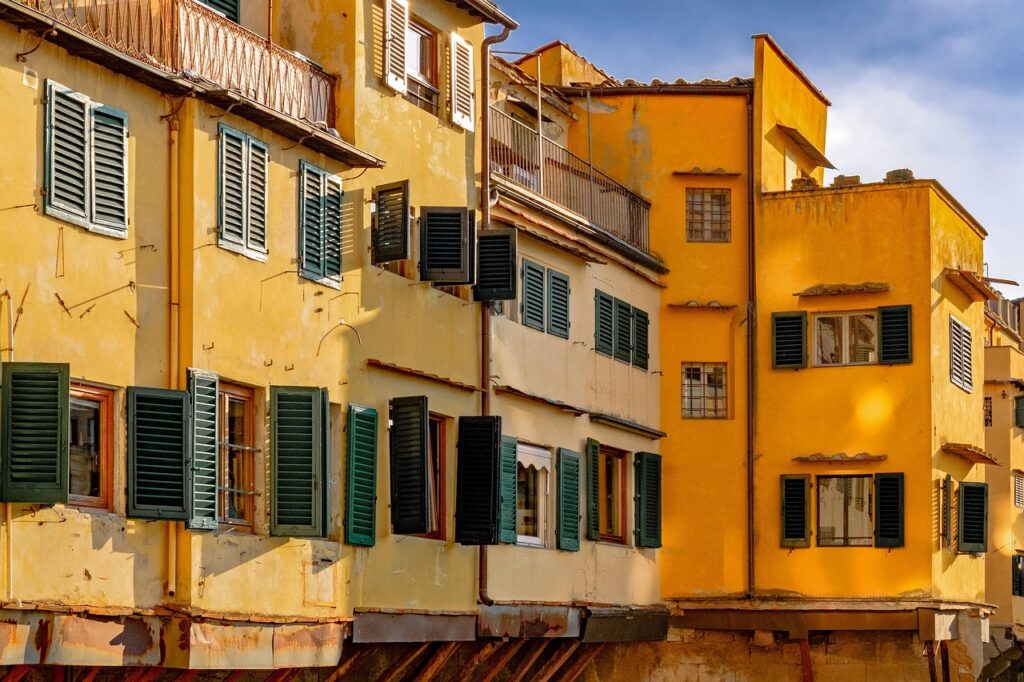
One of the first things travelers notice about Ponte Vecchio is that it does not look like a typical bridge. Instead of open views along the entire crossing, you find yourself surrounded by small buildings that house shops. This feature is not decorative; it is deeply rooted in the bridge’s history. In medieval Florence, bridges were valuable commercial spaces. They were busy, central, and protected, making them ideal locations for trade. Originally, Ponte Vecchio was home to butchers, fishmongers, and other trades that needed constant access to customers. While this made economic sense, it also created problems with hygiene, as waste was often thrown directly into the river below.
Everything changed when the ruling Medici family decided that the bridge needed an upgrade in both function and appearance. The butchers were removed, and goldsmiths and jewelers were brought in instead. This move transformed Ponte Vecchio into a luxury marketplace and improved the overall image of the area. That decision still shapes what you see today. The shops lining the bridge continue to sell gold, jewelry, watches, and fine craftsmanship, often displayed in small, glittering windows. Many of these businesses are independently owned, and some families have operated here for generations. While prices can be higher than in other parts of Florence, the tradition of craftsmanship is real, and the bridge remains one of the oldest continuously operating commercial areas in Europe.
What You Will See in the Shops
| Type of Shop | What to Expect |
|---|---|
| Gold jewelry | Traditional Florentine designs and modern pieces |
| Watches | Luxury brands and fine mechanical watches |
| Artisan items | Handcrafted pieces made by local goldsmiths |
The Vasari Corridor Above the Bridge
Many visitors walk across Ponte Vecchio without realizing that there is a hidden passage running directly above their heads. This elevated walkway, known as the Vasari Corridor, was built for the Medici family so they could move across the city without mixing with the public. It connects key political and residential buildings, allowing the rulers of Florence to travel safely and privately. From the outside, you can spot the corridor by looking for the row of small windows above the shop roofs. Inside, the passage offers views of the Arno through carefully placed openings, some of which were enlarged later to provide better panoramic views.
Access to the Vasari Corridor is limited and controlled, and tickets must be purchased through official museum channels when available. It is important to rely only on official sources for access information. The primary place to check for tickets and updates is the official Uffizi Galleries website, where entry options and availability are published: https://www.uffizi.it. Even if you never step inside the corridor, knowing it is there adds another layer to your understanding of Ponte Vecchio. It explains why the bridge was considered such an important and prestigious location and highlights how architecture was used as a tool of power in Florence.
Architecture and Design Details Worth Noticing
Ponte Vecchio rewards travelers who slow down and look closely. Beyond the shops, the stonework and structure reveal thoughtful engineering choices made centuries ago. The bridge’s three arches are not identical, a result of adjustments made to better handle the river’s flow. At the center of the bridge, the buildings open up into a small terrace with unobstructed views of the Arno. This spot is one of the best places to stop, especially in the early morning or evening, when the light reflects softly on the water and the crowds thin out.
Also located near the center is a monument dedicated to Benvenuto Cellini, a famous Florentine goldsmith and sculptor. This detail ties the bridge’s current identity back to its history as a place of craftsmanship and artistic skill. Flood markers nearby quietly remind visitors of the power of the river and the events the bridge has survived. These small details are easy to miss if you rush across, but they are what turn a simple walk into a meaningful experience.
Best Times to Visit Ponte Vecchio
Timing makes a big difference when visiting Ponte Vecchio. Because it is one of Florence’s most popular sights, the bridge can feel crowded during peak hours. Early mornings offer a calmer experience, with fewer people and a chance to see shop owners opening their doors. Midday tends to be the busiest, especially during high travel seasons, when tour groups pass through continuously. While the bridge is always accessible, the experience can feel very different depending on the time of day.
Evenings are especially popular for photography and relaxed strolling. As the sun lowers, the warm light reflects off the buildings and the river, creating one of the most iconic views in Florence. Late at night, after the shops have closed, Ponte Vecchio becomes quieter and more atmospheric. It is a favorite time for locals and couples, offering a completely different mood from the daytime bustle.
Quick Timing Guide
- Morning: quieter, better for walking and photos
- Midday: lively but crowded
- Evening: scenic and romantic
- Night: peaceful and local
Practical Tips for Visiting
Ponte Vecchio is fully pedestrian, but it is narrow, which means it can feel congested. Comfortable shoes are essential, as you will likely approach it as part of a longer walk. There is no seating on the bridge except near the central terrace, so plan short stops rather than long breaks. While wheelchair access is possible, navigating through crowds may be challenging at busy times. If shopping is your goal, take time to compare a few stores rather than buying from the first window that catches your eye.
Most importantly, treat Ponte Vecchio as more than a photo stop. Give yourself time to observe, read the details, and enjoy the views. When approached with curiosity rather than haste, the bridge reveals why it has held such a central place in Florence for centuries.
