Florence is one of the world’s most beautiful cities, full of dazzling art, famous architecture, and charming piazzas. If you’re planning a trip and want to understand Florence’s heart, you cannot overlook its river, an essential part of its story, scenery, and daily life. So, what river flows through Florence, Italy? It’s the Arno. This guide will walk you through everything a traveler should know about the Arno River: its route, history, daily sights, helpful safety advice, and how to truly experience its beauty. For more travel inspiration and tips about Florence itself, check out Italy On Foot’s Florence Guide.
Quick Facts: The Arno River in Florence
To start, the Arno River (Italian: Fiume Arno) is the largest river in Tuscany and the second most important river in central Italy after the Tiber. It runs about 241 kilometers, about 150 miles, across the scenic Tuscan region. The source of the Arno is in the Casentino area of the Tuscan Apennines, high on Monte Falterona at almost 1,400 meters elevation. From there, it flows through Florence, Empoli, Pisa, and finally reaches the Ligurian Sea at Marina di Pisa.
| Feature | Detail |
|---|---|
| Local Name | Fiume Arno |
| Length | 241 km / 150 miles |
| Source | Monte Falterona, Casentino, Tuscan Apennines |
| Mouth | Ligurian/Tyrrhenian Sea at Marina di Pisa |
| Drainage basin | Approx. 8,200–8,300 km² |
For Florence, the Arno is more than a river. It literally slices through the middle of the historic center, separating the main city area (where you’ll find the Duomo and the Uffizi Gallery) from Oltrarno, a neighborhood whose name means “across the Arno.” As you wander Florence’s beautiful embankments, called the “lungarni”, you’ll get ever-changing river views that have inspired poets and painters for centuries. The river’s presence has also shaped everything from Florence’s trade to its urban planning.
Planning Florence? Grab the step-by-step digital guide
Florence and the Arno: Geography, Lungarni, and River Life
How the Arno River Passes Through Florence
Walking through Florence, it quickly becomes clear the Arno is at the city’s core. It runs roughly east to west and forms a natural line dividing the city’s north and south. On the north bank, you’ll find Florence’s most celebrated sites, the Duomo cathedral, Uffizi Gallery, shopping streets, and elegant palazzi. On the south bank, the Oltrarno is famous for artisan workshops, neighborhood trattorias, music venues, and quiet plazas. Viewpoints like Piazzale Michelangelo and the centuries-old church of San Miniato al Monte rise above this southern area, offering unbeatable panoramic looks over the city and river.
Throughout the historic center, the Arno passes under a series of bridges. The river’s edges are lined with “lungarni”, these are the beautiful boulevards and promenades running along both sides of the Arno. The concept of lungarni came out of 19th-century urban planning, when Florence was briefly Italy’s capital. Now, these riverside roads are favorite places for a local evening walk, a tradition called the “passeggiata”, as well as a highlight for travelers looking for that perfect Florence sunset. The buildings light up at night and the bridges reflect in the water, making for unforgettable photos.
What Makes the Arno Special in Florence’s Daily Life?
The river is so much more than scenery. For centuries, the Arno supplied Florence with drinking water, powered its early wool mills, and made Florence one of the most important cities in Europe. Today, the riverbanks are spots where people jog, socialize, picnic, and soak in everyday city life. Boat cruises and river activities give you an up-close look at Florence’s bridges and palazzi that you just can’t get from the street. When you walk along the water’s edge, you see both the grandeur of history and the little joys of modern Florentine life coming together.
The Arno’s Most Famous Bridges in Florence
No discussion of the Arno River is complete without mentioning its bridges, each with its own stories and style. Crossing the Arno on foot or simply watching the sunlight play on the arches is a true Florence moment. Let’s look at the most important bridges:
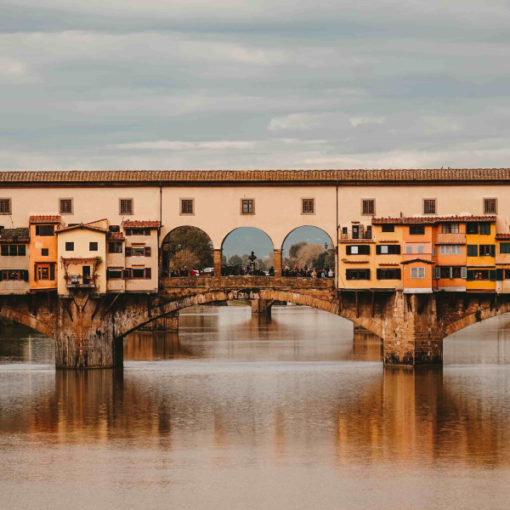
- Ponte Vecchio: The most famous bridge in Florence, the Ponte Vecchio, or “Old Bridge”, is a striking medieval stone arch lined with shops. First built in Roman times but reconstructed after a flood in the 1300s, it shines as Florence’s postcard icon. The bridge was saved during World War II when all others were blown up, making it a symbol of survival.
- Ponte Santa Trinita: Known for its elegant Renaissance arches, Ponte Santa Trinita is considered one of the world’s most beautiful bridges. It was rebuilt after World War II with many original stones pulled from the Arno.
- Ponte alla Carraia: This five-arched bridge has also seen centuries of change, with rebuilds after floods and war. It’s a link between the historic core and busier west end neighborhoods.
- Vasari Corridor: Not a bridge, but a covered passageway that runs atop the Ponte Vecchio, linking the Uffizi with Palazzo Pitti. Now open for guided visits, it offers unique city and river views through dozens of small windows, and a direct walk in the footsteps of the powerful Medici family.
Each bridge has a unique style, history, and viewpoint. Strolling from bridge to bridge along the lungarni or viewing the cityscape from the water is one of the best ways to get to know Florence, whether you love photography, art, or simply people-watching. If you would like to visit famous Florence monuments or special places like the Vasari Corridor, it is smart to book official tickets here.
The Arno’s Floods, History, Tragedy, and Today’s Caution
Understanding the River’s “Mood Swings”
The Arno River is beautiful, but it can also be dangerous. The river’s flow is called “torrent-like.” This means it can change quickly from low and gentle to fast and mighty, all depending on the mountain rainfall high upstream. The risk is highest in spring and autumn, when storms hit the Apennines and send water racing toward the plains.
One Florence disaster stands out, the flood of November 4, 1966. In just a single day, enormous rainfall upstream caused the Arno to overflow its embankments and sweep through the city. Water levels in some neighborhoods rose over six meters, and streets, churches, museums, and libraries were covered in thick mud and oily water. Thousands of locals lost homes and businesses, and irreplaceable art and books were damaged or destroyed. Volunteers known as the “Mud Angels” (angeli del fango) came from around the world to help save Florence’s treasures, leading to new ways of protecting art and books that changed museum work everywhere.
Since those devastating days, Florence has built dams, improved embankments, and closely monitors river levels, especially when storms are forecast. Visitors today do not have to worry as they stroll the riverbanks, but locals respectfully keep an eye on weather alerts, just in case.
Table: The 1966 Arno Flood Impact
| Impact | Details |
|---|---|
| Water Height | Over 6.5 meters in central city |
| Homeless Residents | About 5,000 families |
| Businesses Affected | Roughly 6,000 |
| Damaged Artworks | 14,000 works of art and 3-4 million books |
Why the Arno River Matters to Florence’s History
Trade, Culture, and a Lifeline Across Centuries
Florence’s greatness as a Renaissance city depended on the Arno. In medieval times, the river was the best way for wool, grain, timber, and textiles to reach Pisa and then the Mediterranean. The bridges didn’t just bring neighborhoods together, they helped local rulers control and tax movement and goods in and out of Florence. The city’s mills and workshops lined up along the river, using water power for everything from wheat grinding to cloth finishing.
Throughout history, creative figures like Leonardo da Vinci studied the Arno. Leonardo even designed big canal projects to improve navigation and bypass rival Pisa. The Arno shows up time and again in Florence’s art and literature, including Dante’s “Divine Comedy” and paintings by Botticelli.
Modern Florence still values the Arno’s role, though today, big barges are gone. You’ll find locals fishing, celebrating river festivals, or simply enjoying reflections of history and daily life in its waters. Its story is woven deep into Florence’s identity.
The Arno Today: What Travelers Should Know
Water Levels and River Activity
The Arno changes its mood with the seasons. In summer, the water is often shallow, slow, and reveals gravel banks, making strolling along the edges feel peaceful and safe. In rainy spring or wet autumn, the river looks full and fast, with strong currents that remind everyone of its power. Swimming in the Arno is not allowed within Florence, and this is enforced for safety. But while you can’t take a dip, you do have other ways to experience the river up close.
The Arno’s banks support city parks, sports fields, and bike trails. A favorite is the Parco delle Cascine, west of downtown Florence, where joggers, cyclists, kids, and families mix with lively weekend events. It’s a green lung right along the water, loved by Florence residents for generations.
Some stretches outside the main city now support light, eco-friendly boat traffic and guided tours. Around Pisa, new efforts have opened lower sections of the Arno to river cruises, mixing wildlife, history, and Tuscany’s rural beauty. For a truly local experience, try walking or cycling a section of the Arno’s banks outside the busiest areas, the views and local flavor are well worth it.
How to Experience the Arno in Florence
Classic Walks and Viewpoints
Florence’s “lungarni” may be the city’s best-kept open secret. Walking these riverfront roads, you can see all kinds of life, artists painting by the water, couples sharing gelato, friends riding bikes, and visitors lined up for that perfect photo. The lungarno sections near Ponte Vecchio and the Uffizi are lively in the daytime, while the stretch west toward Lungarno Vespucci is a bit quieter, ideal for those who want peace and fewer crowds.
For views, it’s hard to beat Piazzale Michelangelo, a large terrace on a hillside south of the river. From here, Florence’s old town, the Arno’s bend, the Duomo, and all the bridges can be seen in one sweeping glance. Go an hour before sunset, and you’ll see the city turn to gold. The climb isn’t steep, but you can also take a bus or taxi. For more info on Florence’s best walks and routes to Piazzale Michelangelo, check this helpful guide.
On the Water: River Cruises and Activities
A highlight for many visitors is viewing Florence from the Arno itself. Several companies offer “barchetto” rides, small, wooden Florentine boats a bit like Venetian gondolas, that glide beneath the famous bridges and give you a new viewpoint of the city skyline. These often run from late spring through early fall, are guided by locals, and some trips include a little aperitivo to sip as you float. For more interactive adventures, you’ll find gentle rafting, guided kayak outings, and even stand-up paddleboarding under the bridges. These activities depend on water flow and run mainly in warm weather. Be sure to book tickets for official Arno river activities here.
- Barchetto/gondola rides (including at sunset)
- Group rafting tours (daytime and evening)
- Stand-up paddleboarding (April–October, with guides)
These experiences are family-friendly and safe for most ages, with expert guides focused on safety and enjoyment. They’re a top choice for anyone who wants unique stories and photos beyond standard sightseeing.
Parks, Trails, and Local Life
Beyond the bridges and main lungarni, the Arno’s green spaces let you blend in with everyday Florence life. The Parco delle Cascine, for example, is Florence’s largest park and is perfect for picnics, jogging, or just relaxing by the river. Away from the city center, trails along the east-bound riverbank attract bikers and runners looking for quiet, leafy escapes from busy streets. It’s a lovely way to spend an afternoon if you crave a slower, more local pace before returning to the main sights.
- Jogging and biking on riverside trails from Ponte San Niccolò eastward
- Picnics and outdoor cafes in Parco delle Cascine
- Evening strolls with locals on any lungarno
You don’t have to be an athlete to enjoy these areas, stop, sit, and simply admire the flow of Florence’s daily life beside the Arno.
Safety Tips for Enjoying the Arno
Florence is generally safe, and the river is part of what makes the city so attractive. Still, as you explore the Arno, it helps to keep a few things in mind to ensure your visit is enjoyable and worry-free:
- Don’t underestimate river currents: Even when the Arno looks low or slow, currents can be surprisingly strong, especially near bridges or after rain. Swimming is not safe.
- Be careful at the water’s edge: Some lungarni have low stone walls or none at all. On wet days (or if you’re using a tripod for photography), it’s best to avoid being right at the edge, especially with children.
- Follow local weather alerts: If a big storm is forecast, you’ll see police and volunteers monitoring the river. Flooding is now very rare, but if you hear sirens or see warning signs, it’s smart to move away from the water.
- Take night walks with care: The riverbanks are romantic after dark but can be a little slippery. Main stretches near the Ponte Vecchio are well-lit, but venture further west or east with a friend or in a group for calm evenings.
Common Traveler Questions About the Arno River
Travelers often have questions about the Arno, Florence’s neighborhoods, and what you can do with kids and family. Here are brief answers to some of the most common:
- What river flows through Florence? The Arno River. It’s Tuscany’s main river and essential to Florence’s story.
- Where does the Arno start and end? Its source is Monte Falterona in the Tuscan Apennines, and it flows to the Ligurian Sea at Marina di Pisa.
- What is Oltrarno? It’s the area “beyond the Arno,” on the river’s south bank in Florence. Known for artisan shops, cozy trattorias, and the best views.
- Can tourists go on the river? Yes. There are scenic boat rides, gentle raft and kayak trips, and paddleboarding on the Arno, mostly in warm months, always with guides. Check official tickets here.
- What are the best places to walk? Start with Lungarno degli Acciaiuoli, near Ponte Vecchio and the Uffizi, or Lungarno Vespucci for quieter riverside views. Don’t miss the view from Piazzale Michelangelo at sunset.
How to See the Arno’s Best Bridges and Sights
If you’re a first-time visitor or planning a self-guided adventure, here’s a simple walking itinerary to see Florence and the Arno at their finest:
- Start at the Piazza del Duomo. Visit the Duomo, the Baptistery, and the Campanile.
- Walk down via Calzaiuoli to Piazza della Signoria and the Uffizi Gallery. You can buy Uffizi tickets here.
- Take Lungarno degli Archibusieri to the Ponte Vecchio, cross the bridge, explore the jewelry shops, and look through the Vasari Corridor’s upper windows if open.
- Walk west to Ponte Santa Trinita for some of the best bridge and river views back toward Ponte Vecchio.
- Head south into Oltrarno to Piazza Santo Spirito for a local-style bite, then loop back east, up to Piazzale Michelangelo for a sunset panorama.
Along the way, you’ll see Florence’s layered history unfold, all connected by the steady flow of the Arno. Stopping for picnic supplies to enjoy by the river is easy, look for local bakeries and markets. And if you want a more in-depth or themed visit, many local guides offer official walking tours, sometimes focused on Florence’s river history and artists. Book those at the official Florence tourism page.
The Arno shapes Florence’s geography, economy, art, and daily life. It is a place for quiet sunsets, bustling daily life, and lessons from centuries past. Spend time walking its banks, exploring its bridges, or gliding on its surface. The river’s presence ties together everything that makes Florence unforgettable, and when you leave, odds are your camera roll and your memories will be full of Arno reflections and golden hour light.
