Sometimes you can buy a bus ticket from the driver in Italy, but you should never assume it. The rule is set by the local transport operator, not nationally. Driver sales may be limited to certain routes, require cash, carry a surcharge, or be unavailable altogether. In many cities, the intended onboard payment method is now a contactless validator rather than the driver. For that reason, buying an Italian bus ticket from the driver should be treated as a backup option only after checking the operator’s rules.
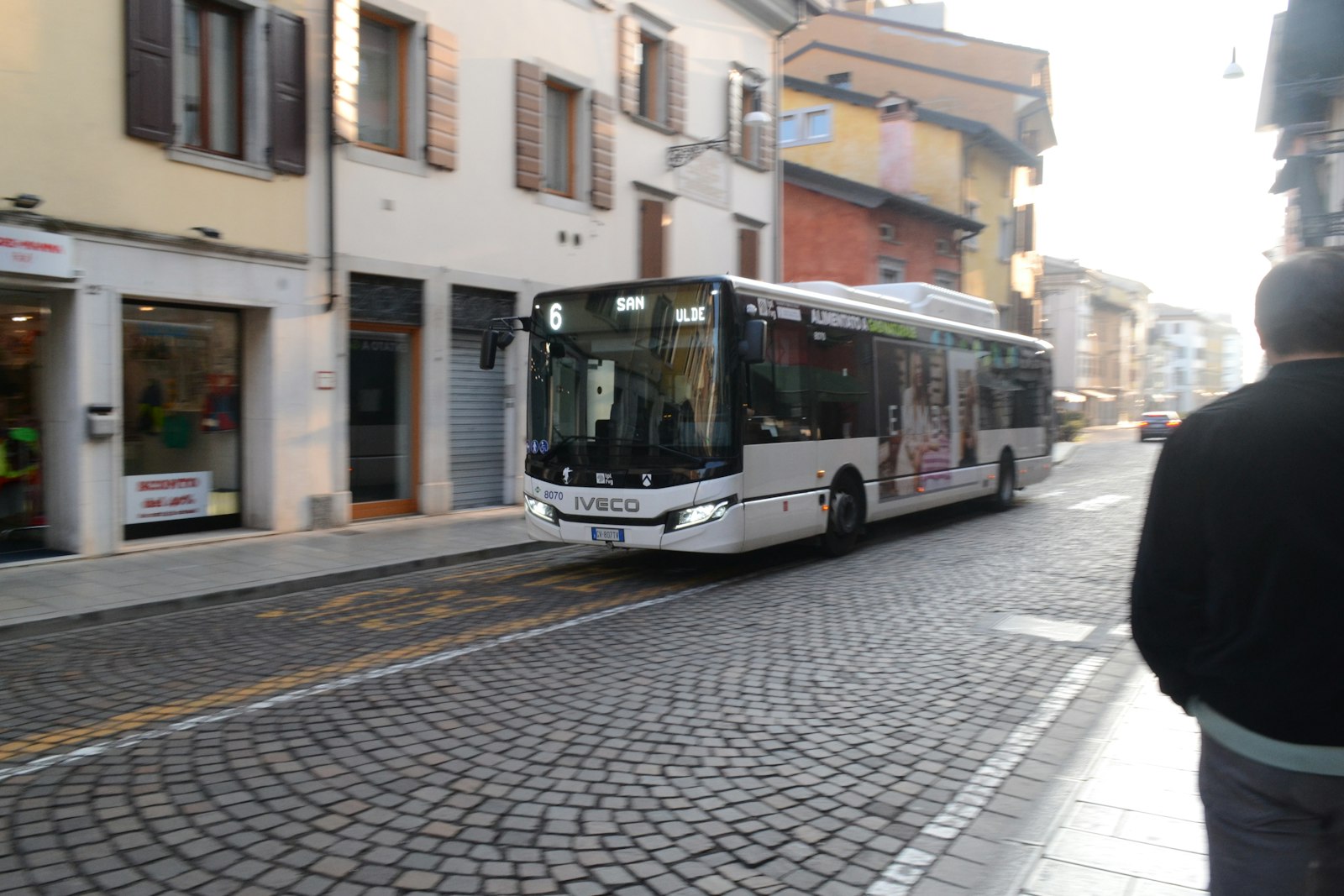
There is no single rule for bus tickets across Italy
Italian local transport is run by regional and municipal operators, and their ticket systems differ considerably. A practice that works on a regional bus in Tuscany may not work on a city bus in Rome, Milan, or Bologna.
The most useful distinction is between three different things that travelers often call “buying from the driver”:
- Driver sales: you actually ask the autista or conducente for a ticket.
- Onboard ticket machine: you buy from an emettitrice a bordo inside the bus, usually without involving the driver.
- Contactless payment: you tap a bank card, phone, or watch on a validator. The validator creates your travel entitlement electronically.
Only the first is genuinely a ticket bought from the driver. Seeing a card reader or ticket machine on a bus does not mean the driver personally sells tickets.
Why tickets bought onboard can cost more
The surcharge is deliberate. Many operators want passengers to buy before boarding so the driver can concentrate on operating the service and buses do not lose time at stops. You may see the phrases vendita a bordo, meaning onboard sale, and con sovrapprezzo, meaning with a surcharge.
Tuscany gives a particularly clear example. As of August 2026, Autolinee Toscane charges €2 for a standard urban ticket in provincial capitals, including Florence, while its ticket purchased from the driver costs €3. In smaller towns covered by the regional urban network, the ordinary fare is €1.50 but the driver ticket is still €3.
On Tuscan extraurban services the difference can be larger. An ordinary short-distance ticket starts at €2, while the corresponding ticket bought from the driver starts at €3, with higher onboard fares in subsequent distance bands.
Examples of how the rule changes from city to city
Florence and other Tuscan cities
Autolinee Toscane explicitly allows tickets to be purchased from the driver on many urban and extraurban services. For urban trips, the onboard driver ticket currently costs €3.
There are several catches. The operator says onboard sales are subject to safe and regular operating conditions and may be suspended while ticket inspections are taking place. Drivers are also not required to provide change, so carrying a €20 or €50 note is a poor plan.
Most importantly, the ticket handed to you is not necessarily ready to forget about. Autolinee Toscane instructs passengers to validate the ticket after purchasing it. The urban ticket then lasts 90 minutes in Florence and 70 minutes in the other covered cities.
So the sequence is:
- Board and ask the driver for the correct ticket.
- Pay using suitable small cash if required.
- Take the ticket.
- Immediately find the validator, usually called the validatrice or obliteratrice.
- Validate it and keep it until the journey is finished.
Bologna
Bologna is a useful example of why “I’ll just pay the driver” can go wrong. On TPER’s urban routes, the usual onboard cash option is an automatic ticket machine rather than a sale by the driver. The current ordinary Bologna fare is €2.30, while the ticket bought with coins from the onboard machine costs €2.50. Paying onboard at the contactless validator costs the ordinary fare instead. TPER publishes the current details here.
On many extraurban TPER routes in the Bologna and Ferrara areas, driver sales do exist and carry a surcharge. Cash restrictions apply: the operator says onboard purchases on these services use coins or banknotes no larger than €5. There are exceptions, including lines where driver sales are not available.
There are even Bologna-area suburban services, such as lines 89 and 90, where TPER says neither a driver sale nor an onboard ticket machine is provided. Contactless payment is available instead.
Rome
Do not board an ordinary Rome city bus expecting the ATAC driver to function as a ticket seller. Rome’s official sales system directs passengers toward ticket machines, authorized retailers, digital tickets, and Tap & Go.
Contactless validators are installed across ATAC’s surface network, so a visitor without a paper ticket can normally tap a supported bank card, phone, or watch after boarding. That is an electronic ticket purchase through the validator, not a cash transaction with the driver.
For more detail on choosing between buses, trams, metro, and walking, see our guide to getting around Rome.
Milan
Milan follows a similar modern approach. On ATM buses, trams, and trolleybuses, passengers can pay by tapping a contactless bank card or device on the onboard reader. ATM tells passengers to validate immediately when beginning the journey, with additional tap-out requirements on certain routes and for journeys outside central fare zones.
There is little reason for a visitor to approach the driver with cash. Use the validator, an ATM digital ticket, or another official sales channel instead. Our Milan transport guide explains how the city’s metro, buses, and trams fit together.
How to tell whether your bus permits driver sales
Check the transport operator rather than relying on a general Italy travel tip. Search its ticket page for these Italian terms:
- biglietto a bordo: onboard ticket
- vendita a bordo: onboard sales
- biglietto dall’autista: ticket from the driver
- biglietto dal conducente: ticket from the driver
- con sovrapprezzo: with a surcharge
- emettitrice a bordo: onboard ticket machine
- pagamento contactless: contactless payment
- munirsi di titolo di viaggio prima di salire: obtain a ticket before boarding
A sticker on the bus can also tell you more than the driver’s cab does. Look near the entrance for contactless logos, instructions mentioning carte bancarie, or signs pointing to an onboard machine.
What to say to the driver
If the operator does permit sales but you are unsure about that particular route, keep the question short. Posso comprare il biglietto a bordo? means “Can I buy the ticket onboard?” More specifically, Posso comprare il biglietto dall’autista? asks whether you can buy it from the driver.
For a regional trip where the fare depends on the destination, say the destination clearly: Un biglietto per Siena, per favore. If you receive a paper ticket, ask Devo convalidarlo?, meaning “Do I need to validate it?”
Do this as soon as you board. Walking to a seat and deciding to buy a ticket later can look exactly like traveling without one if inspectors enter at the next stop.
Do not confuse buying with validating
This is one of the easiest ways to receive a fine. Purchasing a paper ticket and validating it can be two separate steps.
A ticket bought at a tabaccheria, newsstand, station, or onboard may need to be inserted into or tapped against a validator when the journey starts. Some digital tickets instead need to be activated in an app before boarding. Contactless systems usually register the journey when you tap the payment card itself.
Never assume that a receipt in your hand is automatically valid for travel. Read the ticket and look for convalidare, obliterare, attivare, or instructions beside the validator.
What if the driver cannot sell you a ticket?
A closed ticket shop does not automatically create a right to ride without paying. This is particularly important in systems such as Autolinee Toscane, whose rules explicitly warn that inability to buy from the driver does not exempt a passenger from penalties for traveling without a valid ticket.
If the driver says no, check the bus immediately for a contactless reader or self-service machine. If neither exists and you cannot legally obtain a ticket onboard, the safe choice is to get off and use an authorized retailer, machine, or approved mobile ticketing method.
This matters most on Sundays, holidays, early mornings, and late evenings, when a nearby tabacchi or edicola may be closed. Before a journey at those times, check whether the operator accepts contactless payment or digital tickets. If you are connecting buses and trains across several cities, you can also organize the rest of your Italy route in advance, then verify each local operator’s payment method before the day of travel.
Cash can be the weak point
Where drivers do accept cash, small denominations matter. Some operators explicitly state that the driver is not obliged to provide change. Others impose a maximum banknote value.
Carry coins and €5 notes if you know you will be using a bus where driver sales are permitted. Do not count on the driver accepting a large note, a foreign bank card directly at the cab, or a phone payment unless the operator specifically advertises those methods.
Also distinguish the driver from the contactless machine. A driver saying they do not accept cards does not necessarily mean the bus itself cannot accept cards. Look for the dedicated validator.
The safest rule for travelers
Buy before boarding when practical. If the operator advertises contactless onboard payment, that is usually easier than approaching the driver. Use driver sales only where the operator clearly says they are available, and expect that the fare may be higher.
If you do buy onboard, act immediately, carry suitable payment, check whether the ticket needs validation, and keep it for the entire journey. The sentence to avoid is “I thought every bus in Italy sold tickets.” They do not, and the ticket inspector will apply the rules of that particular network rather than the custom of the city you visited yesterday.