The easiest place to get everyday bread is a neighborhood panificio, panetteria, or forno. Go in the morning for the widest choice, wait for your turn, point to the loaf or rolls you want, and let the staff handle and weigh them. For most travelers, buying bread in Italy does not require knowing regional bread names. “Una pagnotta piccola, per favore” or simply pointing and saying “quello, per favore” works perfectly well.
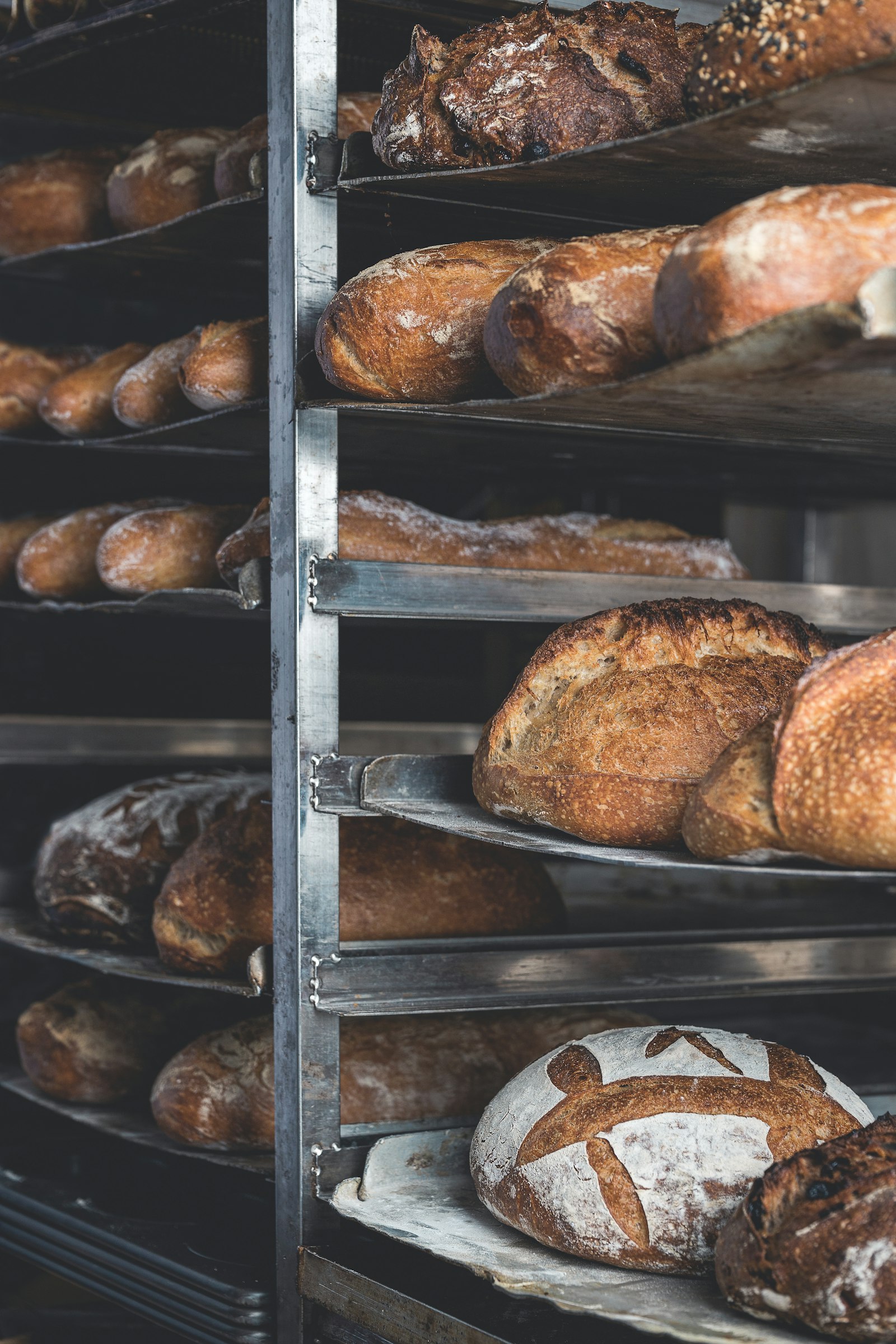
Supermarkets, small alimentari, covered markets, and some delicatessens are useful alternatives, especially later in the day. The main thing to understand is that bread may be priced by weight even when you order it by the loaf or by the piece.
Where to Look for Bread
For the traditional daily stop, search for one of these words on shop signs or maps:
- Panificio: a bread producer. Under Italian national rules, the term refers to a business carrying out the complete bread-making cycle from raw ingredients through baking.
- Panetteria: a bread shop or bakery. It may also sell crackers, biscuits, cakes, sandwiches, milk, and other groceries.
- Forno: literally “oven,” but commonly used on bakery signs, particularly in parts of central Italy.
- Alimentari: a small neighborhood grocery shop that may stock bread from a local bakery.
- Supermercato: the reliable fallback for long opening hours, packaged bread, rolls, and often a fresh or bake-off bread section.
A specialist bakery is the better choice when you want to ask what was made that day, choose a regional loaf, or buy only a small quantity. A supermarket is more useful after traditional shop hours or when you need bread together with the rest of your groceries.
What Happens When You Walk Into a Bakery
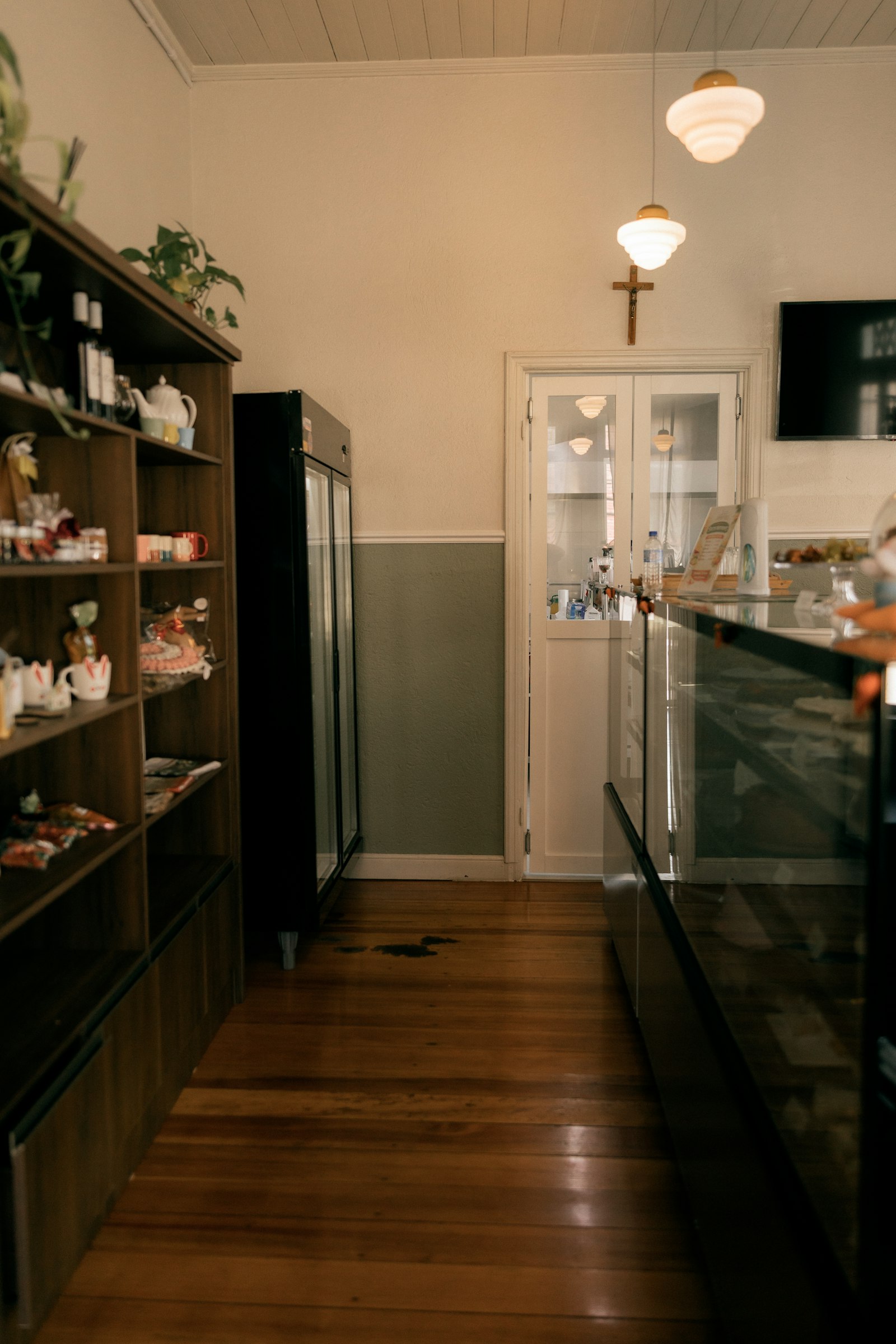
First, check whether the shop uses a queue system. A busy bakery may have a small ticket dispenser near the entrance marked numeri, prendi il numero, or simply a row of numbered tickets. Take one before browsing if everyone else is holding a number. Other shops use an ordinary informal queue.
When it is your turn, greet the person serving you with buongiorno or buonasera. Bread is normally behind the counter, so do not reach for it yourself unless the display is clearly self-service.
You can order in several easy ways:
- Una pagnotta, per favore. A loaf, please.
- Una pagnotta piccola. A small loaf.
- Due panini, per favore. Two bread rolls, please.
- Mezzo chilo di questo, per favore. Half a kilo of this, please.
- Un pezzo di questo. A piece of this.
- Quello, per favore. That one, please.
Pointing is completely normal when the counter contains six breads whose names you have never seen before.
Do You Order Bread by Weight or by the Piece?
Both systems are common. Look at the price card before ordering. €/kg means the bread is priced per kilogram, while al pezzo means per piece.
A large rustic loaf may be weighed after you choose it. You can also ask for part of one if the bakery is willing to cut it. Small rolls may be ordered simply as uno, due, or tre, even if the final price is calculated by weight.
If you do not know how much you need, avoid trying to convert everything into unfamiliar measurements. Ask for una pagnotta piccola or indicate roughly how large a piece you want. The person behind the counter will usually show it to you before wrapping it.
How to Ask for Half a Loaf
Try “Me ne dà metà?”, meaning “Can you give me half?” Some breads are routinely cut; others are normally sold whole. If cutting is not practical, the staff will simply suggest a smaller loaf.
If you want slices, ask “Me lo può tagliare a fette?” Not every bakery has a slicer, and very fresh or crusty breads may not be suitable for machine slicing.
Useful Bread Words You Will See
Italian bread changes dramatically from region to region, so there is no single standard loaf. These words are useful without treating them as nationally identical products:
- Pagnotta: generally a round or rustic loaf.
- Filone: an elongated loaf.
- Ciabatta: a flatter, elongated bread with an open crumb.
- Rosetta: a flower-shaped roll found especially around Rome.
- Michetta: a related roll strongly associated with Milan and Lombardy.
- Integrale: wholemeal.
- Ai cereali: made with or topped with mixed cereals or grains.
- Di semola: made with semolina, particularly common in southern bread traditions.
- Lievito madre: sourdough or natural starter.
- Senza sale: without salt. Unsalted breads are particularly associated with Tuscany and parts of central Italy.
Focaccia and schiacciata are baked bread products too, but they are usually richer than an everyday table loaf because they commonly contain or are topped with olive oil. They can also be priced by weight, especially when cut from a large tray.
What “Pane Fresco” Actually Means
Pane fresco is more than a marketing phrase in Italy. National rules define fresh bread according to how it is produced: the process must be continuous, without freezing or deep-freezing interruptions apart from techniques used only to slow fermentation, and without preservative treatments. The rules define a continuous process as one in which no more than 72 hours pass between the start of production and sale.
This means “fresh” should not be interpreted simply as “still warm” or “baked in this shop ten minutes ago.” Bread produced using conservation methods is subject to different labeling and display requirements. Travelers who want the legal detail can check Decree No. 131/2018 in the Gazzetta Ufficiale.
How Supermarket Bread Sections Work
Supermarkets are less predictable because the procedure depends on the chain and individual store. You may find a staffed bakery counter, packaged bread on shelves, or a self-service area with loose rolls and loaves.
At self-service displays, follow the equipment and instructions provided. You may see guanti (gloves), pinze (tongs), and sacchetti (bags). Some stores expect you to bag the bread and take it directly to the checkout. Others have a scale or labeling procedure. Do not assume the system is the same as the fruit and vegetable section.
If there is a staffed counter, treat it like a bakery: tell the employee what you want and let them handle the bread.
Paying: At the Counter or at the Cassa?
Small bakeries usually have one of two systems. You either pay the person serving you, or you take your wrapped bread to a separate cassa, the cash desk.
Occasionally the order and payment sequence is reversed, particularly in busy food shops with separate counters. If someone says “prima alla cassa”, pay at the cash register first and keep the receipt or ticket they give you.
When uncertain, simply ask “Pago qui?”, meaning “Do I pay here?”
Morning Is Safest, but Do Not Assume Every Bakery Keeps the Same Hours
Independent bakeries often start early because much of their trade happens before lunch. Going in the morning also gives you the best chance of finding the full selection rather than whichever loaves remain at the end of the day.
After lunch, schedules vary. One shop may remain open continuously, another may close for several hours, and another may reopen in the late afternoon. Weekly closing days also differ locally.
Sundays and public holidays are particularly unreliable. Some bakeries open for the morning rush, others close completely, while supermarkets may operate reduced or normal hours depending on the individual branch. If fresh bread matters for breakfast, buy it the previous day rather than assuming a Sunday shop will be open. The Italy on Foot guide to Sunday grocery shopping in Italy explains how to plan around these variable openings.
What to Buy If You Need the Bread Tomorrow Too
Small crisp rolls are excellent on the day you buy them but may lose their appeal quickly. A substantial rustic loaf often holds up better overnight. If you need something for tomorrow’s breakfast or a train picnic, ask:
“Quale pane dura bene fino a domani?”
Which bread keeps well until tomorrow?
For same-day use, the bakery’s paper bag is practical. If you are keeping bread longer, protect it from drying out once you return to your apartment. If you have a freezer, freezing part of a loaf is usually more effective than repeatedly buying too much and letting it go stale.
For Sandwiches and Picnics
If you want bread specifically for filled sandwiches, ask for panini or explain “per fare dei panini”, meaning “to make sandwiches.” The baker may point you toward softer rolls rather than a dense table loaf.
For a picnic, buying the bread and fillings separately often gives you more flexibility than looking for prepared sandwiches. A bakery plus a nearby salumeria or supermarket can cover bread, cheese, cured meat, fruit, and water in a few minutes. To fit those food stops around trains, sights, and walking routes, you can organize the rest of your Italy route before setting out.
If You Need Gluten-Free or Have a Serious Allergy
Do not assume that an ordinary bakery can safely provide gluten-free bread simply because one product is made without wheat. Flour is handled throughout traditional bakeries, so cross-contact can be significant. For medically necessary gluten avoidance, look for a dedicated senza glutine bakery or properly packaged products with clear labeling rather than relying on appearance.
For other ingredients, ask “Cosa contiene?” (What does it contain?) or name the allergen directly. A staffed bakery is usually a better place to ask questions than an unattended loose-bread display.
What to Do When the Bakery Is Closed
If you arrive after closing time, do not waste an hour walking from one traditional bakery to another. Switch quickly to a supermarket, Carrefour Express-style convenience store, neighborhood alimentari, or another grocery shop showing current opening hours.
For a very late arrival, packaged bread, pane in cassetta (sliced sandwich bread), crackers, or packaged rolls may be the realistic option until morning. If your accommodation is in a small town, buy breakfast supplies before leaving the last larger town or railway station rather than counting on a village shop after dinner.
And if the counter is full of unfamiliar loaves when you finally get there, there is no need for a vocabulary test. Take a number if there is one, wait your turn, point to the bread that looks right, and say “uno di questi, per favore.”