Italian aperitivo sounds simple until you try to do it like a local. One city hands you vermouth, another expects a spritz, and a third assumes you know the difference between a light pre-dinner drink and a full apericena. This guide covers the parts travelers actually need: timing, regional styles, what to order, what food to expect, and how to avoid the overpriced tourist version.
The Short Version
Plan aperitivo for roughly 6:00 to 8:00 PM and budget 60 to 90 minutes, not the whole night. In Turin, order vermouth; in Milan, start with an Americano, Negroni, or Negroni Sbagliato; in Venice, go for a spritz with cicchetti in a bacaro. Expect small snacks, not a full dinner, unless the place clearly says apericena. Standing at the bar is usually faster, more local, and often cheaper than sitting down in the historic center.
Italian aperitivo 101: what it is, and what it is not
The fastest way to get aperitivo right is to forget the phrase “Italian happy hour.” It sounds close, but it points you the wrong way. Aperitivo is a pre-dinner ritual, not a race to find the biggest buffet. You order something bitter, bubbly, herbal, or wine-based, pick at a few salty bites, and reset before dinner. That is why it works so well on a trip. It gives shape to the hour between sightseeing and the evening meal.
Timing matters more than people think. In most of Italy, aperitivo starts around 6:00 PM and runs until dinner, usually about 8:00 PM. Show up at 5:00 PM and you may still be in coffee mode. Show up after 8:30 PM and you are drifting into dinner time. If you are building your evenings around walking rather than taxis, this is exactly where aperitivo shines. It works best as a pause in the middle of an evening stroll, which is one reason the route ideas on Italy on Foot pair so naturally with it.
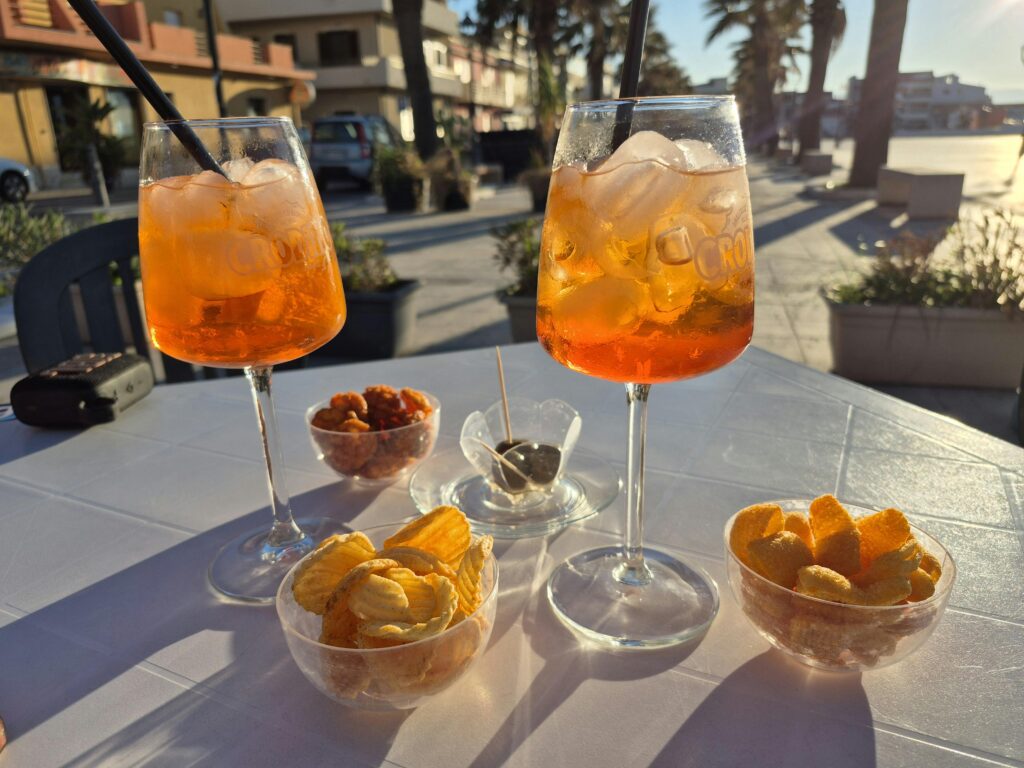
The part that trips up first-time visitors is the food. A classic aperitivo usually comes with olives, chips, nuts, or a few small bites. Some bars add tramezzini, focaccia, or a little snack counter. That does not automatically make it dinner. The snacks are there to open your appetite, not bury it. If you expect a full meal every time, you will either overpay for a mediocre buffet or ruin dinner later.
The key word is apericena. That means a richer, more meal-like version of aperitivo. If a bar advertises apericena, expect enough food to replace dinner. If it simply says aperitivo, assume the opposite. Aperitivo is for one drink and a pause. Apericena is for one drink and “we are probably staying here.” Know which one you want before you sit down, and the whole thing gets easier.
| Format | Typical time | What you get | Best use |
|---|---|---|---|
| Aperitivo | 6:00 PM to 8:00 PM | One drink plus small snacks | A pause before dinner |
| Apericena | 7:00 PM onward | A larger spread that can replace dinner | An easy, informal dinner |
| Cena | 8:00 PM onward | A full sit-down meal | A traditional dinner plan |
Once you see aperitivo as a rhythm instead of a menu category, it clicks fast. Show up in the right time window, order with a bit of local logic, and let the hour slow you down.
What to order, and what food actually comes with it
Aperitivo drinks usually live in the bitter, herbal, sparkling, and wine-based part of the spectrum. This is not the moment for a heavy dessert cocktail or a giant drink built for photos. You want something that sharpens appetite. That is why vermouth, bitter liqueurs, soda, sparkling wine, and citrus show up so often. If you want a quick rule, order something that sounds like it belongs before dinner, not after it.
The safest first move is to match the drink to the city. In Turin, go for vermouth. In Milan, an Americano or Negroni is a smart order. In Venice and the Veneto, spritz is the obvious choice. Ordering the house specialty is not just about taste. It is the easiest way to step into the local routine without making it complicated.
Do not let the spritz swallow the whole conversation. It is important, but it is only one part of the aperitivo world. In Venice, the base may be Aperol, Campari, Select, or something else entirely. If you want something softer and citrusy, Aperol is the easy entry point. If you like a drier, more bitter drink, move toward Campari or Select. In Turin, the most local order may be much simpler: just vermouth, cold, with ice or citrus.
Non-alcoholic aperitivo is completely normal. Order a Crodino or ask for an analcolico. You still get the ritual, the snacks, and the social part of the hour. Aperitivo is not a test of drinking stamina. One good drink is enough, and sometimes one alcohol-free drink is even smarter.
| Drink | Style | Best city match | Who it suits |
|---|---|---|---|
| Vermouth di Torino | Herbal, wine-based, lightly bitter or sweet | Turin | Travelers who want the classic old-school order |
| Aperol Spritz | Bright, bubbly, gently bitter | Venice and the Veneto | Anyone new to aperitivo |
| Americano | Bitter, sparkling, lighter than a Negroni | Milan | People who want elegance without too much strength |
| Negroni | Bold, bitter, spirit-forward | Milan and other big cities | People who like stronger classics |
| Negroni Sbagliato | Bitter, sparkling, softer than a Negroni | Milan | Anyone torn between a spritz and a Negroni |
| Crodino or analcolico | Bittersweet and alcohol-free | Anywhere | Travelers skipping alcohol |
The food should be simple, salty, and easy to eat standing up or in a few quick bites. You are not looking for a full meal, just the sort of snacks that make one drink feel complete.
- Olives and nuts: the standard opening move in many bars.
- Chips or taralli: basic, but very common.
- Tramezzini: crustless sandwiches, especially classic in Turin.
- Grissini with prosciutto: a Piedmont favorite that feels local fast.
- Focaccia or pizza squares: common in more generous city bars.
- Cicchetti: Venetian small bites, often on bread or polenta.
This is also where the tourist traps show up. A huge buffet near a major sight can look like a bargain, but it is often the worst version of aperitivo: tired food, weak drinks, and a room full of people chasing quantity over quality. A shorter snack list is often a better sign. If you want the official reference version of a couple of classics, the Aperol Spritz and Americano recipe pages are useful. On the road, though, order what that city already does well.
How aperitivo changes in Turin, Milan, and Venice
The broad rules of aperitivo travel well across Italy, but the mood does not. One evening can feel polished and old-school, the next can feel stylish and urban, and the next can feel like a moving snack crawl through back lanes and little bars. The local version is not a side note. It is the main event.
Turin is where you should stop pretending you always wanted a spritz. The city’s link to vermouth still shapes aperitivo there, and it makes Turin one of the easiest places to have a simple pre-dinner drink without any fuss. Order vermouth, let the bar guide the style, and expect the snacks to stay classic too. Tramezzini, grissini, and tidy savory bites fit the tone. Turin aperitivo usually feels calm and a little elegant. If you want a quick primer before you go, the Vermouth di Torino site is worth a look.
Milan takes the same ritual and turns up the volume. This is the city most associated with the after-work aperitivo crowd, and it often leans harder into Campari classics, city bars, and the modern buffet format. The upside is energy. The downside is that you can pay a lot for atmosphere and get a fairly average drink in return. If the place feels built only for giant glasses, group photos, and “all you can eat” bait, keep walking. A smaller, sharper bar often gives a much better experience.
Venice and the wider Veneto do aperitivo in the most fluid way. Here the classic move is a spritz plus one or two cicchetti in a bacaro, then on to the next stop. Venice works better when you do not settle too heavily. A bacaro is a place to stop, eat a bite, have a drink, and move on through the lanes before dinner. Sitting for hours near the busiest postcard views is usually the expensive mistake. For a basic overview of bacari and cicchetti, the official Venezia Unica page is useful before your first evening out.
| City | Best first order | Typical snack | Best approach | Common mistake |
|---|---|---|---|---|
| Turin | Vermouth | Tramezzini, grissini, small savory bites | Settle into one good bar | Ignoring the city’s real specialty |
| Milan | Americano or Negroni Sbagliato | Snacks or a buffet | Choose quality over scene | Paying for hype instead of the drink |
| Venice | Spritz | Cicchetti | Do a short bacaro hop | Camping out in tourist-heavy areas |
No one is going to arrest you for ordering outside the local script. But if this is your first serious pass at aperitivo in Italy, city-matching is the easiest cheat code you have. It makes ordering easier and improves the odds that you get the version locals actually enjoy.
How to do aperitivo like a local
The smartest way to handle aperitivo is to keep it simple. You do not need deep cocktail knowledge, and you do not need to turn it into a big event every night. What makes someone look comfortable in an Italian bar is timing, pace, and restraint. Show up in the right window, order something that makes sense for the city, and read the room before you commit to a table.
First, decide whether this stop is leading into dinner or replacing it. If you already have a restaurant reservation, keep aperitivo light. One drink and a few bites are enough. If you want a more casual evening, look for a place that clearly leans into apericena. Making that decision up front saves money and appetite.
Second, pay attention to how the bar works. In many city centers, especially Venice and busy parts of Milan, drinking at the counter is the most local move and often the better value. Sitting down is fine, especially after a long day on foot, but table service can cost more. If the difference matters to you, check before you order.
Third, know when to leave. Aperitivo works best when it keeps its shape. Stay for the drink, the chat, the snacks, and the short pause. Then move on. One careful stop in Turin, one selective stop in Milan, or two quick bacari in Venice often beats a long, shapeless evening at the first place you see.
A simple game plan
- Aim for 6:00 PM to 8:00 PM: that is the safest window.
- Order the local classic first: it is usually the right call.
- Check whether it is aperitivo or apericena: the food level is not the same.
- Choose bar or table on purpose: the counter is often cheaper and more local.
- Leave room for dinner: do not let snacks hijack the night.
Mistakes to avoid
- Chasing the biggest buffet: quantity rarely wins.
- Showing up too late: after 8:30 PM, you are blurring into dinner.
- Ordering the same thing in every city: local logic matters.
- Ignoring table prices: some of the highest bills hide there.
- Staying too long in one bad spot: one smart stop beats one long mediocre one.
What time is aperitivo in Italy?
Think 6:00 PM to 8:00 PM, with 6:30 PM as a very safe target. In summer and in big cities, it can stretch later, but once you are well past 8:30 PM the mood starts to tip into dinner.
Is aperitivo free with your drink?
Sometimes the snacks are simply included, and sometimes the higher drink price quietly reflects the food spread. Either way, look around before you order so you understand whether you are paying for olives, a few bites, or a full apericena setup.
Can you do aperitivo without alcohol?
Yes, absolutely. Ask for an analcolico or a Crodino and you will still get the ritual and the snacks. It is a smart move before a train day or on a night when you want the atmosphere without the fog.
Do you need to book aperitivo?
Usually no. The exception is a sit-down place with a fashionable scene or a clearly food-heavy apericena format. For most travelers, aperitivo is one of the easiest parts of an Italy trip to do spontaneously.
The best way to get Italian aperitivo right is to build it into your walk, go in the right time window, choose the local order, and keep your expectations in line with the bar in front of you. Do that once in Turin, Milan, or Venice, and Italian aperitivo stops feeling mysterious very quickly.