This Italian gelato guide is for the moment you are standing in front of two gelaterie in Rome, Florence, Venice, or Bologna, and one looks charming while the other looks suspiciously neon. Real gelato is not hard to spot once you know the signs. The trick is to judge the whole shop, not just one pretty scoop.
Gelato Cheat Sheet
Use a 60-second check: muted colors, low trays or covered pozzetti, visible ingredients, seasonal flavors, and a dense texture that melts cleanly. Walk away from neon pistachio, bright yellow banana, green mint, giant fluffy mounds, and staff who cannot explain what is in the gelato. Ask “Posso vedere la lista degli ingredienti?” and test the shop with fior di latte, pistachio, lemon, or hazelnut.
Italian Gelato Guide: The 60-Second Street Test
The best gelato decisions in Italy usually happen fast. You are walking from a train station to a piazza, or you have twenty minutes before a church reopens after lunch, and suddenly everyone wants a cone. This is exactly when tourist-trap gelato wins. It is loud, colorful, easy to see from the street, and designed to make you stop before you think.
Slow down for one minute. You do not need to be a food expert. You only need to check five things: color, height, ingredients, seasonality, and texture. One weak signal does not make a shop terrible. A gelateria with open trays can still be excellent. A shop with covered pozzetti can still be average. What matters is the pattern. If three or four red flags show up together, keep walking.
This is the same street-level judgment that helps with most Italy travel: do not follow the biggest sign, follow the details. When planning an ItalyOnFoot style trip, gelato is part of the rhythm of the day. It is the small pause between churches, markets, train rides, and evening walks. Getting it right makes the whole day better.
| What to Check | Good Sign | Warning Sign | What I’d Do |
|---|---|---|---|
| Color | Soft, natural, slightly muted | Neon green, electric yellow, glowing pink | Check pistachio, banana, mint, and lemon first |
| Display | Low trays or covered metal tubs | Huge sculpted mounds above the tray | Prefer modest displays over dramatic ones |
| Ingredients | List available and staff can explain it | No list, vague answers, annoyed staff | Ask before ordering |
| Flavors | Seasonal fruit and a focused menu | Every fruit flavor all year, all very bright | Pick milk, nut, or citrus test flavors |
| Texture | Dense, creamy, clean finish | Foamy, gummy, icy, oily, or sticky | Do not go back for a second scoop |
My rule is simple: if the gelato looks like it was made to photograph better than it tastes, be careful. Real gelato can be beautiful, but it usually looks calm. Fake gelato tries too hard.
Color, Texture, and Display: What Real Gelato Looks Like
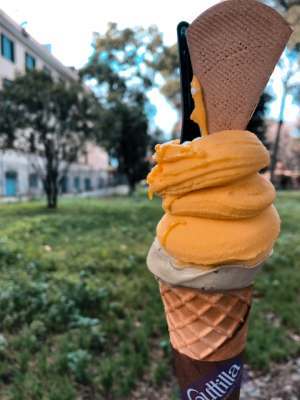
Color is the fastest clue. Real gelato usually looks softer and less dramatic than the versions made for tourist streets. Pistachio should lean beige-green, olive, or light brown-green. Banana should be pale cream or greyish beige. Mint is often white or very pale, not bright green. Lemon should look pale, not like a highlighter.
That does not mean every colorful gelato is bad. Mango can be vivid. Strawberry can be red. Blood orange can look rich. The question is whether the color matches the ingredient. If a flavor looks more like candy than fruit, it probably tastes that way too.
Display height matters just as much. Tall mountains of gelato look fun, but they are a bad sign when they rise far above the cold line of the case. Good gelato is soft. It should not sit in a giant fluffy peak for hours without collapsing. Those mounds often suggest too much air, too much stabilizing, or a recipe built for display instead of flavor.
Covered metal tubs, called pozzetti or carapine, are usually a positive sign because they protect gelato from air, light, and temperature swings. Still, do not treat pozzetti like a magic password. A lazy shop can hide mediocre gelato under a lid. A serious gelateria can use open trays and still make excellent gelato. Judge the whole place.
| Flavor | Real Gelato Usually Looks Like | Red Flag Color |
|---|---|---|
| Pistachio | Muted green, beige-green, olive, or light brown-green | Neon green |
| Banana | Cream, beige, or slightly grey | Bright yellow |
| Mint | White or very pale green | Marker green |
| Lemon | Pale cream, white, or soft yellow | Electric yellow |
| Strawberry | Soft pink or natural red | Glowing red |
| Hazelnut | Beige, tan, or light brown | Flat grey-brown with no aroma |
Texture tells the truth once you taste it. Real gelato should feel dense, not foamy. It should melt smoothly, not stretch like glue. It should leave your mouth clean, not coated in oil or syrup. If you feel thirsty after two spoonfuls, the balance is probably off. The flavor should finish like milk, fruit, nuts, chocolate, or citrus, not like perfume.
- Good texture: compact, creamy, smooth, easy to scoop.
- Bad texture: icy, gummy, spongy, sticky, or oily.
- Good finish: clean flavor that fades naturally.
- Bad finish: heavy sweetness that sits on your tongue.
How to Read Gelato Ingredients Without Overthinking It
The ingredient list is where many travelers get shy. Do not. In Italy, asking to see ingredients is normal, especially if you have allergies or dietary needs. You are not being difficult. You are buying food, and a serious gelateria should be able to tell you what is in it.
For non-prepacked foods, allergen information must be available to customers under EU food information rules. You can read the official overview on mandatory food information from the European Commission. In real life, this may mean a printed binder, a chart near the counter, a QR code, or a staff member who can show you the list. If nobody can answer basic ingredient questions, that is not a good sign.
The word artigianale deserves special care. It sounds reassuring, and in many cases it is. Italy has also tightened rules around how businesses can use references to artisan identity, with official legal text published by the Gazzetta Ufficiale. But here is the traveler version: artigianale is a clue, not proof. A sign outside the door does not tell you how much real fruit, nut paste, milk, or chocolate is inside the tub.
Do not panic if you see stabilizers or thickeners. Gelato is a frozen structure, and some professional recipes use ingredients that help it stay smooth. The problem is not one technical ingredient. The problem is when the named flavor feels secondary to sugar, color, aroma, and fat. A pistachio gelato should taste like pistachio. Lemon should taste like lemon. Fior di latte should taste like fresh milk, not vanilla powder.
Use these phrases at the counter:
- Posso vedere la lista degli ingredienti? Can I see the ingredient list?
- È fatto qui? Is it made here?
- Usate basi pronte? Do you use ready-made bases?
- Il sorbetto contiene latte? Does the sorbet contain milk?
- Qual è il gusto più fresco oggi? Which flavor is freshest today?
The last question is my favorite. Good staff usually answer quickly. They might point you to peach because it was made that morning, hazelnut because the batch just came out, or lemon because it is sharp and fresh. Bad shops tend to shrug.
Seasonal Flavors and the Best Test Scoops
Seasonality is one of the easiest ways to spot authentic Italian gelato. Italy has strong fruit seasons, and good gelaterie usually work with them. Strawberry in spring can make sense. Peach, apricot, melon, watermelon, and fig feel right in summer. Persimmon, pear, apple, grape, pomegranate, and kiwi fit better in autumn and winter.
This does not mean every out-of-season fruit flavor is fake. A careful gelatiere may buy ripe fruit in season, process it, and freeze it for later. That can be excellent. The warning sign is a shop with every fruit flavor, every month, all in bright colors, with nobody able to explain the ingredients. That usually means the calendar is not driving the menu. The supplier catalog is.
For a quick seasonal sense before your trip, the European Commission fruit and vegetable calendar is useful. You do not need to memorize it. Just remember that a serious gelateria in August should not feel identical to one in January. The best shops change.
When I test a new gelateria, I rarely start with the wildest flavor. I go simple. Plain milk, lemon, hazelnut, pistachio, chocolate, and seasonal fruit are harder to fake well because there is less decoration to hide behind. A flashy flavor with cookies, syrup, cream, and candy can be fun, but it tells you less about the base.
| Test Flavor | Why It Works | Good Sign | Bad Sign |
|---|---|---|---|
| Fior di latte | Tests the milk base | Clean, fresh, lightly sweet | Powdery, flat, or too sugary |
| Pistachio | Expensive and often faked | Nutty, roasted or natural, not candy-like | Neon color or almond extract taste |
| Hazelnut | Shows nut quality fast | Aromatic, round, real hazelnut finish | Sweet fat with little nut flavor |
| Lemon | Tests freshness and balance | Bright, tart, clean | Candy lemon or harsh perfume |
| Strawberry | Reveals fruit quality | Tastes like ripe fruit | Syrupy, glowing red, too sweet |
| Dark chocolate | Hard to hide poor ingredients | Deep cocoa, smooth melt | Greasy, dull, or grainy |
If the shop passes one of these simple flavors, go back for the fun scoop. That is when I order zabaglione, ricotta and fig, coffee, crema, or a local flavor tied to the region. In Sicily, I pay attention to pistachio, almond, mulberry, and citrus. In Piedmont, hazelnut matters. In Naples, look for coffee, chocolate, and classic creamy flavors done with confidence.
Tourist-Trap Gelato Mistakes I’d Avoid in Italy
The easiest mistake is assuming the busiest gelateria near a monument is the best one. Sometimes it is good. Often it is just visible. Around major squares, train stations, and landmark-heavy streets, gelato is sold to people who will never return. That changes the incentives. A shop does not need loyal locals if a fresh wave of visitors arrives every ten minutes.
Another mistake is choosing by decoration. Piles of fruit, cookies, wafers, syrup, whipped cream, and signs in five languages can be fun to look at, but they often distract from the gelato itself. Real gelato does not need to shout. The best shops often look calmer. They may have fewer flavors, simpler labels, and staff who move quickly because the product sells on taste, not theatre.
Price alone is not a reliable test either. A cheap scoop can be good in a small town. An expensive scoop can be bad near a famous piazza. What matters more is whether the gelato tastes fresh and balanced. Still, always check the menu board before ordering. In tourist centers, some places make the size names confusing, or push large cones with extras you did not ask for.
Here are the mistakes I would skip:
- Ordering from the street window too fast: Step inside and look at the trays first.
- Choosing by color: The brightest flavor is rarely the best one.
- Ignoring the ingredient list: A good shop should not hide it.
- Assuming pozzetti prove quality: Covered tubs help, but they do not guarantee anything.
- Buying giant cones near monuments: They often cost more and melt before you enjoy them.
- Letting toppings lead: Taste the gelato before adding whipped cream or syrup.
- Skipping local flavors: Try pistachio in Sicily, hazelnut in Piedmont, and citrus in the south.
A smart walking rule is to move one or two streets away from the most crowded square before choosing. Not far. Just enough to escape the shop designed for people taking photos of the landmark behind them. In Rome, that might mean leaving the direct path between the Trevi Fountain and the Pantheon. In Florence, it means looking beyond the densest blocks around the Duomo. In Venice, avoid grabbing the first cone you see on the Rialto route.
One more practical tip: order a cup if you are unsure. Cones can be great, but a cup lets you judge texture and flavor without the cone sweetness getting in the way. If the gelato is excellent, you will remember it. If it is fake gelato dressed up for tourists, you will be glad you only ordered a small.
Real Gelato FAQ
These are the questions travelers ask once they start paying attention. Gelato is simple to enjoy, but the labels and shop signs can be confusing. Use these quick answers while you are planning, then trust your eyes and taste when you are standing at the counter.
Is gelato artigianale always real gelato?
No. Gelato artigianale is a useful sign, but it is not a full guarantee of quality. Look for ingredient transparency, natural colors, good texture, and staff who can explain the flavors. The word on the sign should match the experience inside the shop.
Are pozzetti always better than open trays?
No, but they are often a good clue. Pozzetti protect gelato from light, air, and temperature swings. Still, excellent gelato can be served from open trays if it is fresh, low in the case, and well made.
What should pistachio gelato look like?
Pistachio should usually be muted green, beige-green, olive, or light brown-green. Neon green is a warning sign. Very dark pistachio is not automatically better, since color can vary by nut, roasting, skin, and paste.
Is sorbet always dairy-free?
Not always. In Italy, sorbetto is usually water-based, but you should ask if you avoid milk or have allergies. Use the phrase “Il sorbetto contiene latte?” before ordering.
How many flavors should a good gelateria have?
There is no perfect number. A small shop with 12 flavors can be excellent. A busy, serious gelateria can manage more. Be cautious when you see a huge wall of flavors, all bright, all available in every season, with no clear ingredient information.
What is the best first scoop to test a gelateria?
Choose fior di latte if you want to test the milk base. Choose pistachio or hazelnut if you want to test ingredient quality. Choose lemon or strawberry if you want to test fruit, freshness, and balance.
Keep this Italian gelato guide in your pocket and use it before your next cone: check the colors, ignore the giant mounds, ask for ingredients, choose one simple test flavor, and trust a clean finish over a flashy display. The best gelato in Italy usually does not beg for attention. It quietly earns a second visit.