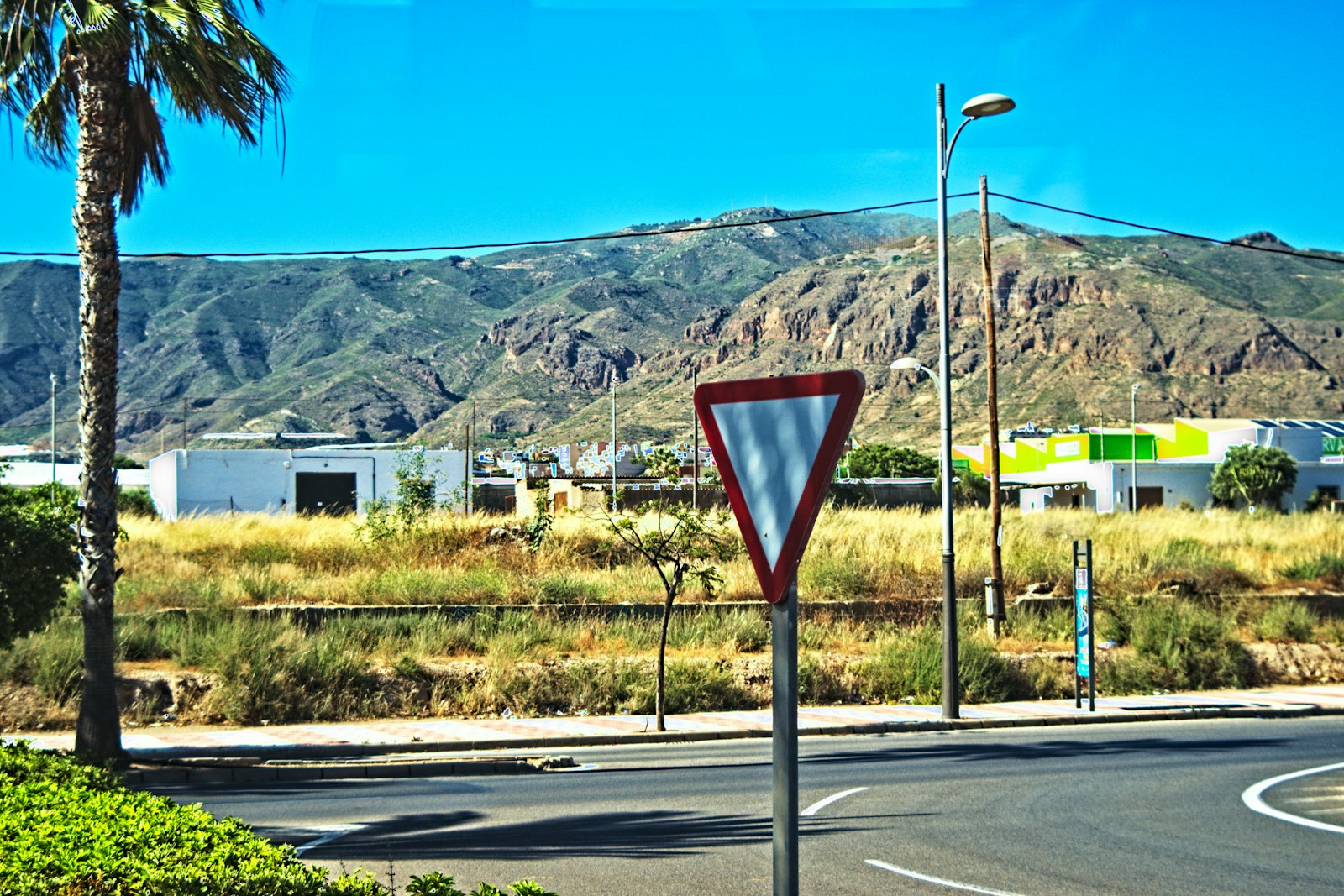
On most modern roundabouts in Italy, traffic already on the circle has priority because drivers entering face a DARE PRECEDENZA sign. But do not assume that rule from the roundabout symbol alone: where no yield or STOP sign controls the entrance, normal right-hand priority can apply, which may give priority to the vehicle entering. For Italian roundabouts, the safest habit is simple: read the signs at your entrance first, choose your lane before joining, and signal right before leaving.
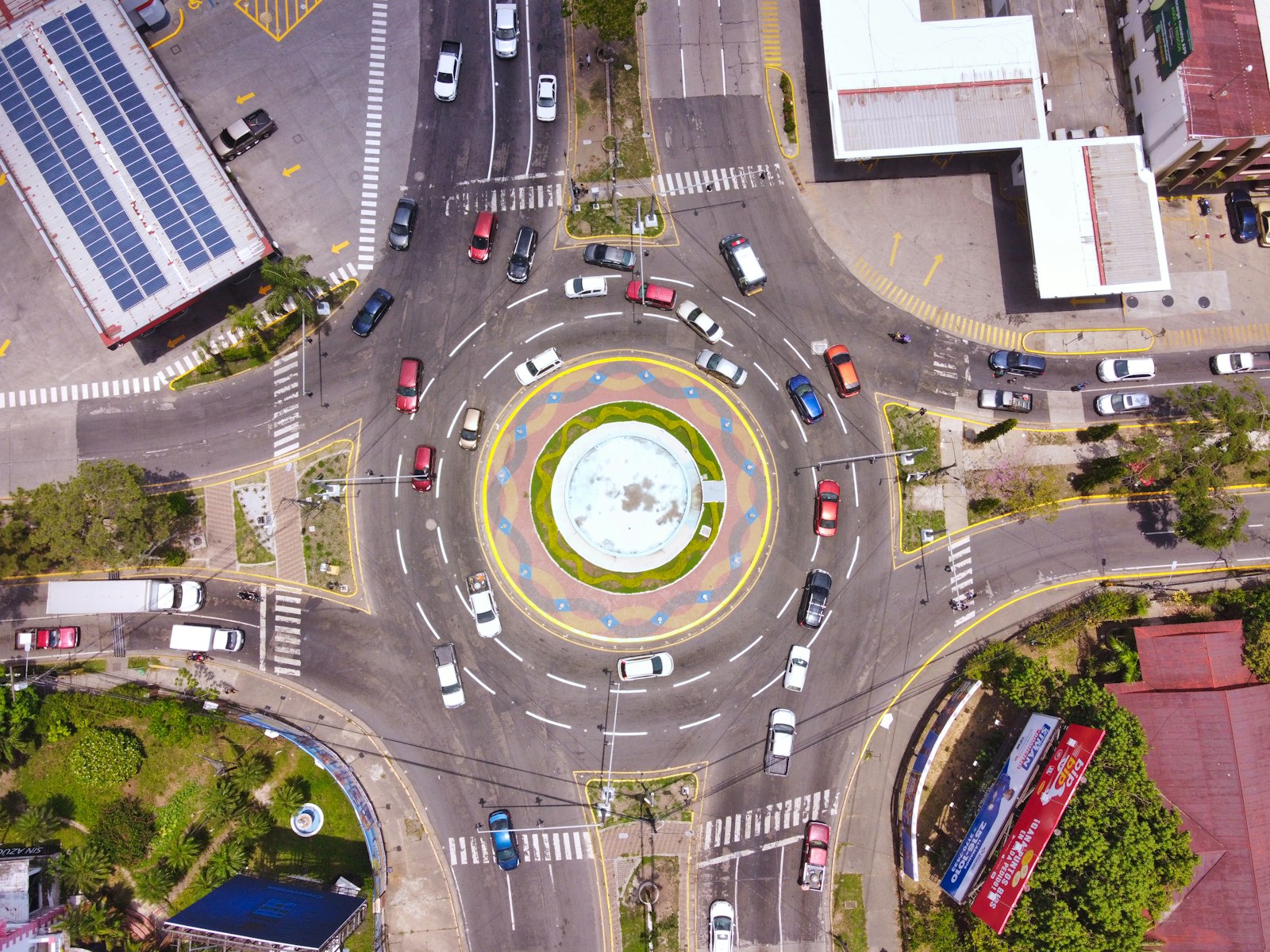
Italy drives on the right, so you enter a standard roundabout to the right and circulate counterclockwise around the central island. The roundabout itself is legally treated as an intersection. The current Italian Highway Code provides the general rules on priority, lane changes and signalling; Ministry guidance then explains how those rules should be applied in roundabouts.
Who has priority at an Italian roundabout?
Look at the signs on your approach, not at what drivers on another entrance are doing.
- If you see DARE PRECEDENZA: give way to traffic already circulating. This is the layout used at most modern roundabouts.
- If you see STOP: come to a complete stop at the stop line, then give way as required.
- If there is no priority sign: the normal rule of giving way to traffic from the right applies. In the usual roundabout geometry, Ministry guidance states that this can mean the vehicle entering has priority over a vehicle already on the circle.
- If there are traffic lights or lane-specific signals: follow them. They override the general assumptions above.
This is the detail that catches foreign drivers. A blue circular sign with white arrows tells you that traffic must circulate around the island in the indicated direction. It does not, by itself, mean that cars already on the circle have priority. The triangular DARE PRECEDENZA sign is what usually creates that familiar “traffic on the roundabout goes first” rule.
Choose your lane before you enter
On a simple one-lane roundabout there is little to decide: approach on the right, enter when permitted, stay in the single circulating lane and prepare to signal for your exit.
On a multi-lane approach, read the arrows painted on the road first. If signs or lane arrows assign particular exits to particular lanes, those markings take priority over any rule of thumb. Where there is no special lane assignment, the Ministry’s driving-test guidance gives a useful practical pattern:
- Taking an exit on the right side of the roundabout: approach in the right lane and circulate in the outer lane.
- Going roughly straight ahead: in light traffic, use the right lane. In heavy traffic, more than one lane may be used if the layout permits, but keep a predictable lane position and prepare your move to the right before exiting.
- Taking an exit on the left side or making a near U-turn: on a multi-lane approach, use the left lane and then the inner circulating lane when signs and markings allow it. Move back toward the right before your exit.
The official guidance is set out in the Ministry of Infrastructure and Transport’s roundabout section of Circular 7262/2017. It was written for consistent driving-test assessment, so it is best understood as the Ministry’s practical application of the Highway Code’s general intersection, signalling and lane-change rules rather than as a separate “roundabout law.”
How to use your indicators
The simplest rule is that your right indicator tells other road users that you are about to leave the circle. Do not wait until the steering wheel is already turning into the exit.
If you are taking the first exit
Signal right as you approach the roundabout and keep the signal on through the exit, provided the road layout makes your intention unambiguous.
If you are going straight or taking a later exit on a single-lane roundabout
You normally do not need a left indicator simply to enter. Continue around without signalling, then switch on the right indicator after passing the exit immediately before the one you want.
If you are using the inner lane for a left-side exit
For a multi-lane roundabout, Ministry driving-test guidance says to approach in the left lane, use the left indicator while entering and circulating in the inner lane, then change to the right indicator before moving outward for your exit. Before crossing into the outer lane, check mirrors and blind spot and make sure the move will not obstruct a vehicle already there.
That last point matters more than the indicator itself. A flashing light announces your intention; it does not give you priority to change lanes.
The outer-lane car does not have to let you cut across
If you are in the inner lane and your exit is coming up, you must not simply sweep across the outer lane. A lane change is a manoeuvre, and the driver changing lanes must make sure it can be completed safely without creating danger or obstruction.
Use this sequence:
- Pass the exit before yours.
- Signal right.
- Check the right mirror and blind spot, especially for scooters and motorcycles.
- Move into the outer lane only when there is a safe gap and the lane markings permit it.
- Take your exit from the appropriate lane.
If you cannot move outward safely, do not stop on the circle and do not force another driver to brake. Where the lane layout allows you to continue around, make another circuit and try again. On a spiral or “turbo” roundabout, however, solid lane lines may commit you to a particular exit. In that case, follow the lane, take the exit you are given and reroute.
Spiral and turbo roundabouts: follow the paint, not the shortcut
Some newer junctions channel traffic with arrows, solid lines and physically separated lanes. You may have to select the correct lane before entering, and once inside you may not be allowed to cross into another lane.
A sat-nav instruction such as “take the third exit” is less important than a solid white line directly in front of you. If your lane is marked for a different destination, take the legal route and let the navigation recalculate. Cutting across a solid line to rescue a missed exit turns a small routing error into a dangerous manoeuvre.
If you are linking several driving days, mountain roads and city stops, it helps to build your Italy itinerary before you collect the car so you can identify where driving is useful and where it is better to park outside a centre and continue on foot or by public transport.
Watch for pedestrian and cycle crossings at the exits
A common mistake is to spend the whole roundabout watching traffic on the left, then accelerate into the exit without checking what is immediately ahead. Zebra crossings are often placed just beyond an exit, and cycle crossings may also run across the approach or departure road.
Ease off the accelerator before leaving the circle and look through the exit, not just at the car in front. A vehicle ahead may brake sharply for a pedestrian. This is especially important on small urban roundabouts where the crossing can be only a short distance beyond the circulating lane.
What the Italian signs and words mean
- Rotatoria or rotonda: roundabout. Rotatoria is the more formal road-design term; rotonda is common in everyday speech.
- Dare precedenza: give way or yield.
- Precedenza: priority or right of way.
- Corsia: lane.
- Uscita: exit.
- Indicatore di direzione: turn indicator. In everyday speech you may also hear freccia.
What to do when traffic is heavy
Do not wait for a completely empty roundabout if you already have a safe, legal gap. Equally, do not let pressure from a driver behind push you into entering when you cannot judge the circulating traffic clearly.
Once inside, hold a steady lane. Heavy traffic is the worst time to weave between lanes because your exit is approaching. If the lane you want is occupied, continue predictably and miss the exit rather than making a last-second move.
Large vans and buses may need extra room around the central island. Give them space instead of driving alongside through a tight section. Scooters can also sit in a car’s blind spot, so a right-side check before moving outward is particularly important.
The three mistakes rental-car drivers make most often
- Assuming circulating traffic always has priority. Usually it does because of the yield sign, but the sign is the reason. Check each entrance.
- Using the inner lane, then exiting across another car. Move outward first when markings allow, and yield to traffic already occupying the lane you want.
- Forgetting the right indicator. Signal before the exit so drivers waiting to enter, cyclists and pedestrians can better understand what you are about to do.
If you are still arranging the car itself, the Italy on Foot guide to renting a car in Italy covers pickup locations, ZTL risks and other practical road-trip issues. Drivers arriving with a non-Italian licence should also check the separate guide on International Driving Permit requirements before reaching the rental desk.
A safe recovery rule when you are unsure
If the signs, lane arrows and sat-nav seem to disagree, reduce speed without stopping abruptly, stay in your marked lane and follow the road markings. Take an unintended exit if necessary and reroute. Missing a turn costs a few minutes; cutting across a lane, stopping on the circle or reversing can create an immediate collision risk.