Benzina means petrol or gasoline. Gasolio means diesel. Before putting any fuel into an Italian rental car, check the label inside the fuel flap and match it to the symbol on the pump nozzle. The benzina vs diesel in Italy distinction becomes much easier once you know the EU symbols: a circle containing E5 or E10 is petrol, while a square containing B7 is diesel.
Do not choose by nozzle color alone. The written fuel name and standardized compatibility symbol are much safer clues, especially when several premium fuels share the same dispenser.
The Italian fuel words to remember
- Benzina = petrol in British English, gasoline in American English.
- Benzina senza piombo = unleaded petrol.
- Super senza piombo = unleaded petrol, commonly the standard 95-octane grade.
- Gasolio = diesel.
- Diesel = also widely used on Italian pumps and price boards.
- GPL = LPG. This is not ordinary petrol.
- Metano = compressed natural gas, normally marked CNG.
- AdBlue = exhaust-treatment fluid used by some diesel vehicles. It goes into a separate AdBlue tank, not the diesel tank.
Italian fuel companies themselves use these terms. Q8, for example, lists benzina and gasolio as separate road fuels and describes standard unleaded petrol as Euro 95.
The symbols are more reliable than the Italian words
Italy uses the standardized European fuel-compatibility system. Under the EU fuel-labelling rules, compatible-fuel markings appear on pumps and nozzles and, on newer vehicles, beside the fuel filler or in the vehicle documentation.
Circle: petrol
A circular symbol containing an E identifies petrol. Common examples include:
- E5: petrol containing up to 5% ethanol.
- E10: petrol containing up to 10% ethanol.
- E85: high-ethanol fuel intended only for compatible vehicles.
If the rental car’s fuel flap shows E5 and E10 compatibility, choose a petrol nozzle carrying an allowed circular symbol. Do not assume that every petrol car accepts every ethanol blend.
Square: diesel
A square symbol identifies the diesel family. The one travelers are most likely to encounter is B7, diesel containing up to 7% biodiesel.
You may also encounter XTL on renewable or synthetic paraffinic diesel products such as HVO. XTL belongs to the diesel family, but that does not mean every diesel vehicle is automatically approved for it. Use it only if XTL is shown on the vehicle’s fuel-flap label or permitted by its documentation. This matters particularly with rental cars, where experimenting with an alternative fuel is an unnecessary risk.
Diamond: gaseous fuel
A diamond-shaped symbol is used for gaseous fuels such as LPG, CNG, LNG and hydrogen. These are separate systems with their own filling connections. A diamond label is therefore a strong signal to stop if you are holding the keys to an ordinary petrol or diesel rental.
What do 95, 98 and 100 mean?
Numbers such as 95, 98 and 100 are petrol octane ratings. They do not identify diesel and they are not percentages.
The standard petrol sold at many Italian stations is 95 RON. Some stations also sell higher-octane premium petrol, often 98 or 100 RON, under branded product names.
For a normal rental car, use the octane grade specified beside the filler or in the vehicle instructions. Paying extra for 100-octane petrol does not turn it into a different fuel type, but putting petrol of any octane rating into a diesel vehicle is still a serious mistake.
Do not trust the nozzle color
Travelers often arrive with rules such as “green is petrol” or “black is diesel.” That shortcut is not worth using. Handle colors, advertising panels and premium-product branding can differ between operators and dispenser designs.
Read in this order instead:
- Check the fuel flap on the actual car you are driving.
- Determine whether it says petrol/benzina or diesel/gasolio.
- Find the EU compatibility symbol, such as E5, E10 or B7.
- Match that symbol to the label beside the nozzle.
- Only then lift the nozzle and begin fueling.
This takes a few seconds and removes most of the guesswork.
Rental cars: check the actual vehicle, not your reservation
Rental fleets change cars constantly. You might reserve one model and receive another, and the replacement may not even use the same fuel as the example vehicle shown online.
At pickup, open the fuel flap before leaving the rental lot and photograph the label with your phone. Check the rental paperwork too, but treat the marking on the actual vehicle as the most useful reference when you reach a pump.
If you are still arranging the driving portion of your trip, our guide to renting a car in Italy covers other issues that tend to surprise visitors, including ZTLs, toll roads and rental procedures.
Self and servito do not describe the fuel
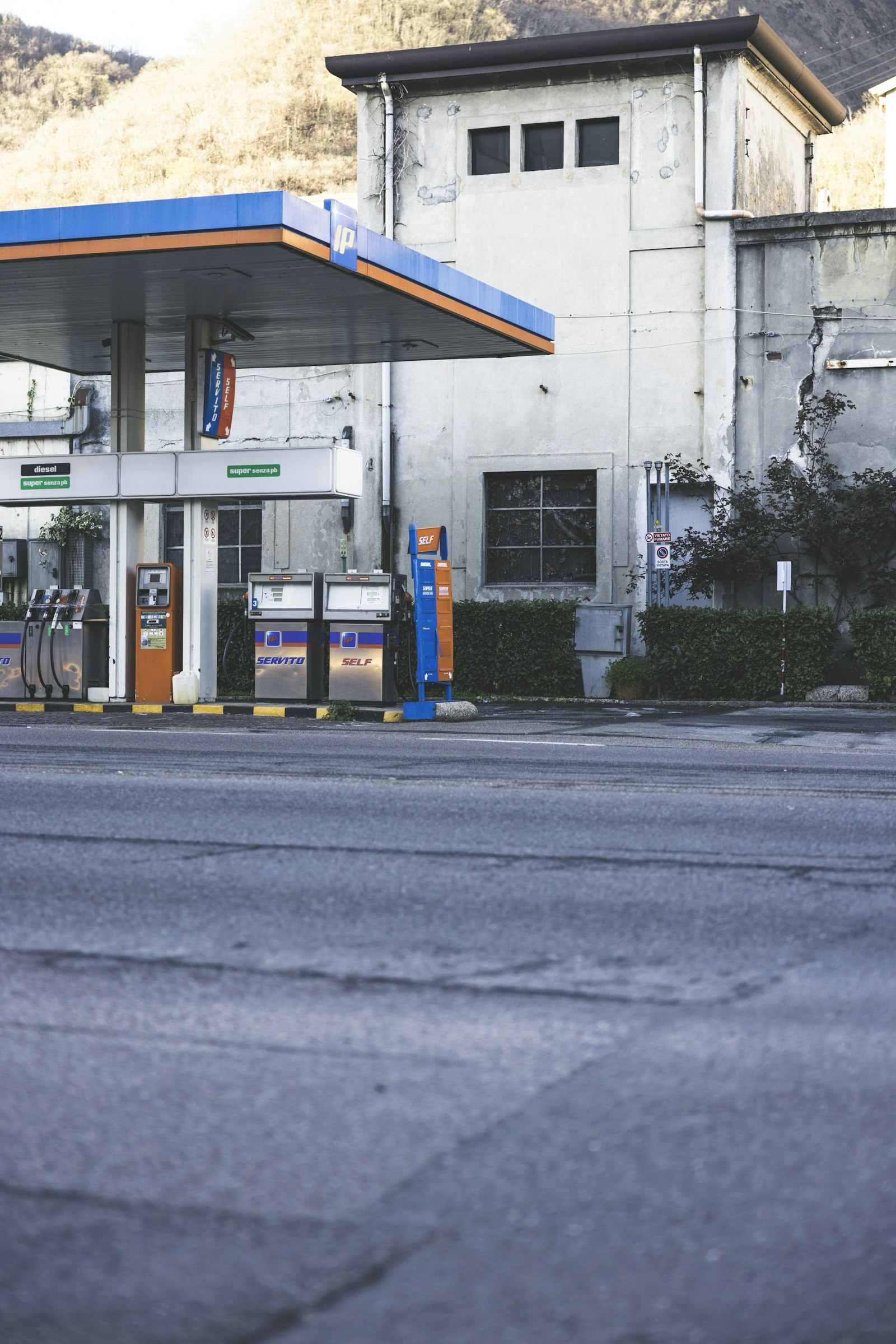
Italian station signs commonly divide prices or lanes into self and servito.
- Self or self-service: you operate the pump yourself.
- Servito: an attendant fills the car for you, usually at a higher displayed price.
These words tell you how the station works, not which fuel to buy. A price board can therefore show both benzina self and benzina servito, plus separate entries for gasolio self and gasolio servito.
At unattended stations, the sequence varies slightly by operator, but it is common to pay or authorize payment at a terminal, select a pump number, and then take the nozzle. Q8’s self-service instructions, for example, tell customers to choose payment, select the pump and then begin refueling.
If a road trip includes several fuel stops, toll roads and rural overnight stays, it can help to organize the rest of your Italy route before setting out so you are not solving every logistical detail from the driver’s seat.
A safe routine at an unfamiliar Italian pump
- Park with the filler beside the pump. The small arrow beside the dashboard fuel-pump icon often indicates which side of the car has the filler.
- Turn the engine off.
- Open the fuel flap and read it. Look for wording and the EU symbol.
- Ignore nearby premium products initially. First find the ordinary fuel family your car needs.
- Match circle to circle or square to square.
- Check the exact code. If the vehicle says B7, choose the compatible B7 diesel nozzle. If it lists E5/E10, use an approved petrol grade.
- Check the pump number before paying at a separate self-service terminal.
- Keep the receipt, particularly when refueling shortly before returning a rental car.
What if an attendant is filling the car?
Saying only “diesel” usually works, but the Italian words remove any ambiguity.
For petrol:
“Benzina, per favore.”
For diesel:
“Gasolio, per favore.”
For a full tank:
“Il pieno, per favore.”
If you are uncertain what the rental uses, ask:
“È benzina o gasolio?” This means “Is it petrol or diesel?”
An attendant can help identify the pump, but you should still check the fuel-flap label yourself. You are the person who knows which car you arrived in, and rental agreements generally make the renter responsible for using the correct fuel.
What to do if you put in the wrong fuel
If you realize the mistake while the car is still at the pump, do not start the engine. Avoid switching the ignition on if possible. Tell the station attendant and contact the rental company’s roadside-assistance number.
Do not try to solve the problem by topping the tank up with the correct fuel. Petrol and diesel systems work differently, and diluting the mistake does not make it safe.
If you have already started the engine or driven away, stop somewhere safe as soon as practical, switch the engine off and call roadside assistance. Tell them exactly what happened, including which fuel went into which vehicle and approximately how much you added.
With a rental car, contact the rental company rather than arranging an improvised repair yourself. Wrong-fuel recovery, draining, towing and any resulting mechanical damage can be charged according to the rental agreement.
One last trap: AdBlue is not diesel
Some modern diesel cars have an AdBlue filler beside the diesel cap or elsewhere on the vehicle. It is often marked clearly and may have a blue cap.
AdBlue is not an upgraded diesel product. It is a separate fluid used by the emissions-control system. Never pour it into the diesel fuel tank, and never put diesel into the AdBlue reservoir.
If several caps are visible and you are not completely certain which one is the fuel filler, check the label or vehicle manual before opening anything. At an Italian pump, five seconds spent reading benzina, gasolio, E5/E10 or B7 is considerably cheaper than discovering the difference after turning the key.