Most airline-cabin-size bags are sensible candidates for the rack above your seat on modern Italian trains; large checked suitcases are not. The important catch with Italian train overhead luggage racks is that there is no single national size standard. Trenitalia does not publish one universal rack measurement for all Frecciarossa, Intercity, and regional trains, while Italo publishes dimensions that currently conflict within its own luggage page. Pack so you have a second storage option rather than counting on a perfect overhead fit.
The practical size rule
There is no airport-style baggage check: you carry your bags onto the train and stow them yourself. The space above the seats is often an open shelf rather than a closed aircraft bin. Think in three categories rather than looking for one magic number:
- Small backpack, tote, or soft duffel: normally the easiest overhead item, provided it sits fully on the shelf and does not hang into the aisle.
- Typical cabin roller, roughly 55 x 40 x 20 to 25 cm: a reasonable Plan A on modern high-speed trains. Do not treat that as a guarantee on every regional or Intercity carriage.
- Medium or large checked suitcase, roughly 65 to 80 cm tall: plan to use a floor-level luggage rack, an end-of-car rack, or another designated space. If it happens to fit overhead safely, consider that a bonus rather than your storage plan.
The dimension that catches travelers out is often not the suitcase’s height while standing upright. It is the width and thickness once you rotate the case onto a shelf. Hard-shell bags with chunky wheels, fixed handles, or a deep expansion zip can be harder to place securely than a slightly larger soft bag. Measure the outside of the packed case, including wheels and handles.
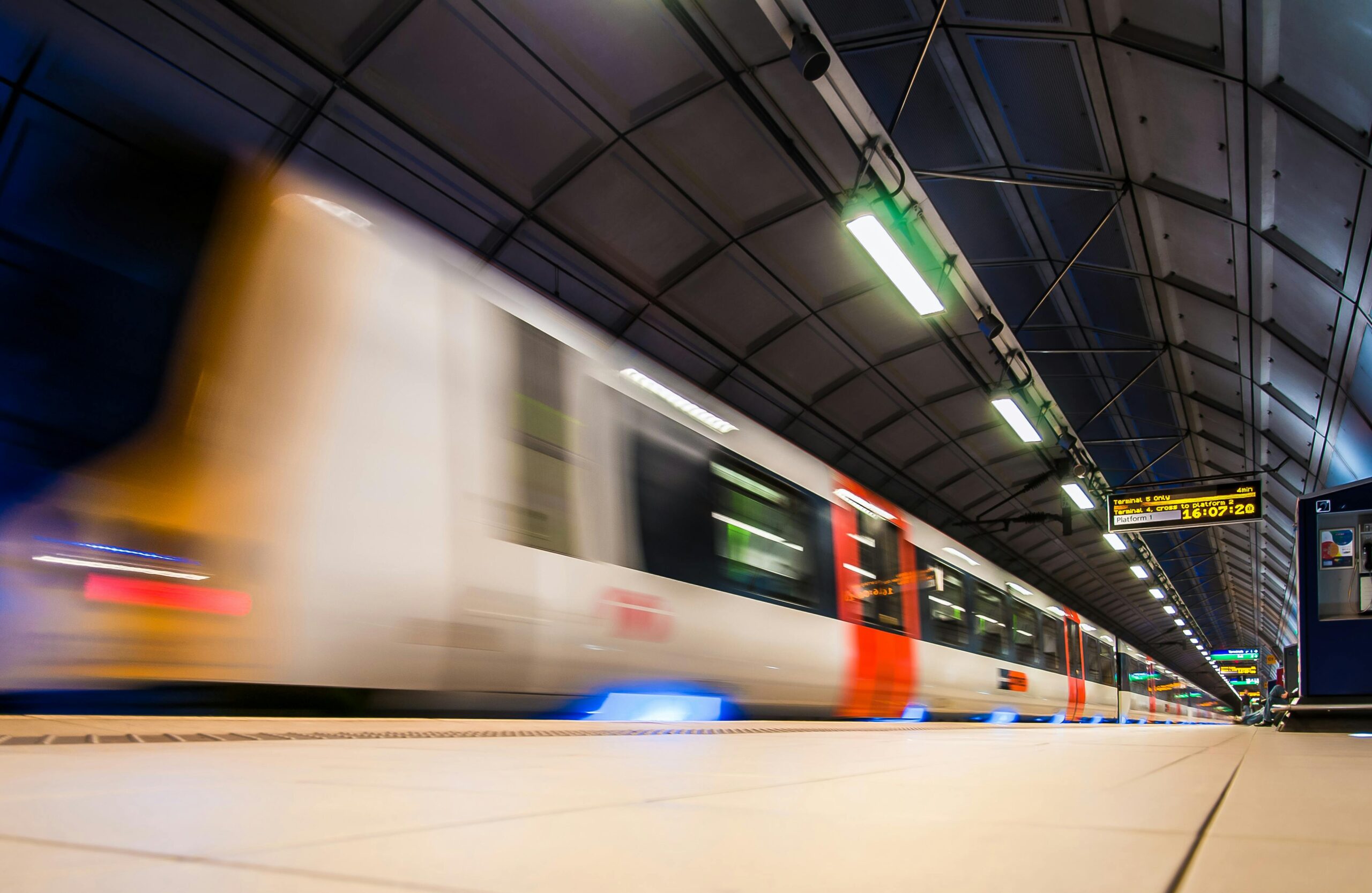
Trenitalia: there is no universal published overhead-rack size
Trenitalia’s current luggage guidance says passengers may carry luggage free of charge when it is placed in the dedicated spaces and does not obstruct passengers, staff, or the train. It does not give one maximum set of dimensions for ordinary luggage across the whole national fleet.
That matters because “Trenitalia” can mean very different trains. A Frecciarossa 1000 has overhead storage, under-seat space, and floor-level racks in parts of the train. Intercity carriages use different layouts. Regional rolling stock varies even more, from newer trains with generous open shelves to older cars where the rack is better suited to backpacks and smaller cases.
For a Frecciarossa trip between cities such as Milan, Florence, Rome, Venice, Bologna, or Naples, a cabin-size case is a sensible overhead choice if you can lift it comfortably. A full-size suitcase should be treated as floor-rack luggage. If you are still sorting out which services you will use, the Italy by train beginner’s guide explains the practical differences between high-speed, Intercity, and regional trains.
Italo: the baggage allowance is not the same as the rack size
Italo is more specific. In Smart, its current contract sets a maximum luggage size of 75 x 53 x 30 cm. That is an overall baggage limit for the travel class, not a promise that a case of that size belongs above your seat.
The current Italo luggage page says medium bags go in the overhead racks and gives a maximum storage height of 53 cm and depth of 42 cm. On the same page, however, the FAQ says 35 cm high and 42 cm deep. Because Italo’s own page is internally inconsistent, do not buy or pack a suitcase to within a few millimeters of either figure and assume it will fit.
The safer reading is simple: smaller and medium bags belong overhead when they sit securely; larger permitted bags belong in the designated luggage racks in the passenger area or vestibule. Italo also requires luggage to be stored so that it does not block doors, circulation, or spaces reserved for passengers with reduced mobility.
How to decide in ten seconds after boarding
- Look at the rack before lifting. Make sure there is enough depth for the whole bag, not just most of it.
- Lift only if you can control the case yourself. A bag that technically fits is still the wrong overhead bag if you cannot raise and lower it safely.
- Place it flat and stable. Nothing should project into the aisle or be balanced on another passenger’s belongings.
- If you have to force it, stop. Use the lower luggage area instead.
- Keep valuables with you. Passport, wallet, medication, phone, and electronics are better in a small personal bag at your seat.
A reserved seat does not reserve the strip of luggage rack directly above it. If the shelf over your row is full, another suitable space in the same carriage may be perfectly normal. What matters is that the bag is stored safely and you remember where you put it.
Where larger bags go
On high-speed trains, look for larger racks near the end of the passenger saloon or close to the vestibule. On some layouts there is also usable space between back-to-back seats, but the size varies and you should never force a suitcase into a gap that interferes with another seat or the aisle.
On regional trains, the answer is more dependent on the exact rolling stock. Newer trains may have obvious luggage towers or low racks. Older trains may offer only overhead shelving and open floor space that must remain clear. If you cannot identify a safe place, ask the capotreno or onboard staff rather than leaving the case beside a door.
If luggage is influencing which connection you choose, it can be worth allowing a little more transfer time and fewer changes. You can organize the rest of your Italy route around simpler train legs, especially when you are moving with a large suitcase, stroller, or children.
The Italian words that help onboard
- Cappelliera: overhead luggage shelf or rack.
- Portabagagli or bagagliera: luggage rack or luggage area.
- Vestibolo: vestibule, the area near carriage doors or between passenger sections.
- Carrozza: coach or carriage.
- Posto: seat.
You may not see all of these printed as signs, but they are useful words if you need to ask, “Dove posso mettere la valigia?” meaning “Where can I put the suitcase?”
What to do when the rack above your seat is full
Do not start rearranging strangers’ cases. First check the next section of rack in your carriage, then the designated floor rack at the end of the seating area. If those are full too, ask staff where they want the bag placed. This is especially important on a crowded regional service, where an improvised suitcase position can block the aisle or doors.
Boarding close to departure makes this harder because the most convenient spaces may already be taken. If you are traveling with a large case, be ready to board as soon as your carriage is accessible. Find your carrozza first, then solve the luggage problem before settling into your posto.
Strollers, children, and travelers who cannot lift a suitcase overhead
Do not make overhead storage your only plan if you are traveling with a child, recovering from an injury, short of reach, or simply carrying a heavy case. A bag you cannot lower safely at your stop should go in a low rack even if it fits above.
Fold strollers before storing them where the operator requires. On Italo, pushchairs are treated as luggage and must be closed for storage. On Trenitalia, folding strollers and similar easily transportable items are allowed as luggage when properly placed. Never use a wheelchair space as overflow luggage storage unless staff specifically directs you there and the space is available for that purpose.
Common mistakes that create luggage problems
- Confusing “allowed on the train” with “fits overhead.” They are separate questions.
- Bringing a suitcase you cannot lift. The difficult part is often getting it down quickly before your stop.
- Expanding a carry-on at the last minute. A few extra centimeters of depth can turn an easy shelf fit into an awkward one.
- Assuming an upgrade guarantees bigger racks. A better seat or quieter carriage does not necessarily change the luggage geometry above your row.
- Leaving a bag in the doorway for “just a minute.” Doors, aisles, and staff working areas must stay clear.
- Putting valuables in the big suitcase. Trenitalia explicitly says luggage remains under the passenger’s custody, and Italo also makes passengers responsible for their belongings.
If your packing list is still flexible, the easiest rail luggage is the case you can lift, carry up one flight of station stairs, and move through a narrow aisle without help. The Italy packing list for train-heavy trips is useful if you are deciding what to cut before departure.
If your suitcase simply will not fit
Do not wedge it into the shelf, leave it half-supported, or block the aisle. Move it to a designated lower rack and keep your small valuables bag with you. If every obvious space is full, ask staff immediately. On Italo Smart, the 75 x 53 x 30 cm maximum is a real carriage condition, so a substantially oversized case is not something to gamble on; the operator’s current Contract of Carriage allows enforcement when luggage does not comply.
For Trenitalia, the more important practical test is safe placement: the case must not obstruct people, train staff, or the carriage. That is why a compact 55 cm roller is much easier to manage than a 75 cm checked suitcase even when both are permitted onboard. Choose the smaller bag if you want the best chance of keeping it close to your seat rather than in a shared luggage area.