For the best chance of keeping a large suitcase in sight, choose an aisle seat at the same end of the carriage as the main luggage rack, ideally within the first few rows. The catch is that rack positions vary by train type, and booking diagrams do not always show them clearly. There is no universal “best seat number” that works on every Frecciarossa, Italo, Intercity, or regional train.
If you are looking for seats near luggage racks on Italian trains, the practical strategy is to choose the end of the coach when seat selection is available, then check the actual layout as soon as you board. A seat that looks perfect on a diagram may still be separated from the suitcase area by a vestibule door or partition.
The best seat is usually at the end of the carriage
Large suitcases that will not fit overhead are commonly placed in floor-level racks either inside the passenger saloon or in the vestibolo, the vestibule beside the carriage entrance.
For visual control, prioritize seats in roughly this order:
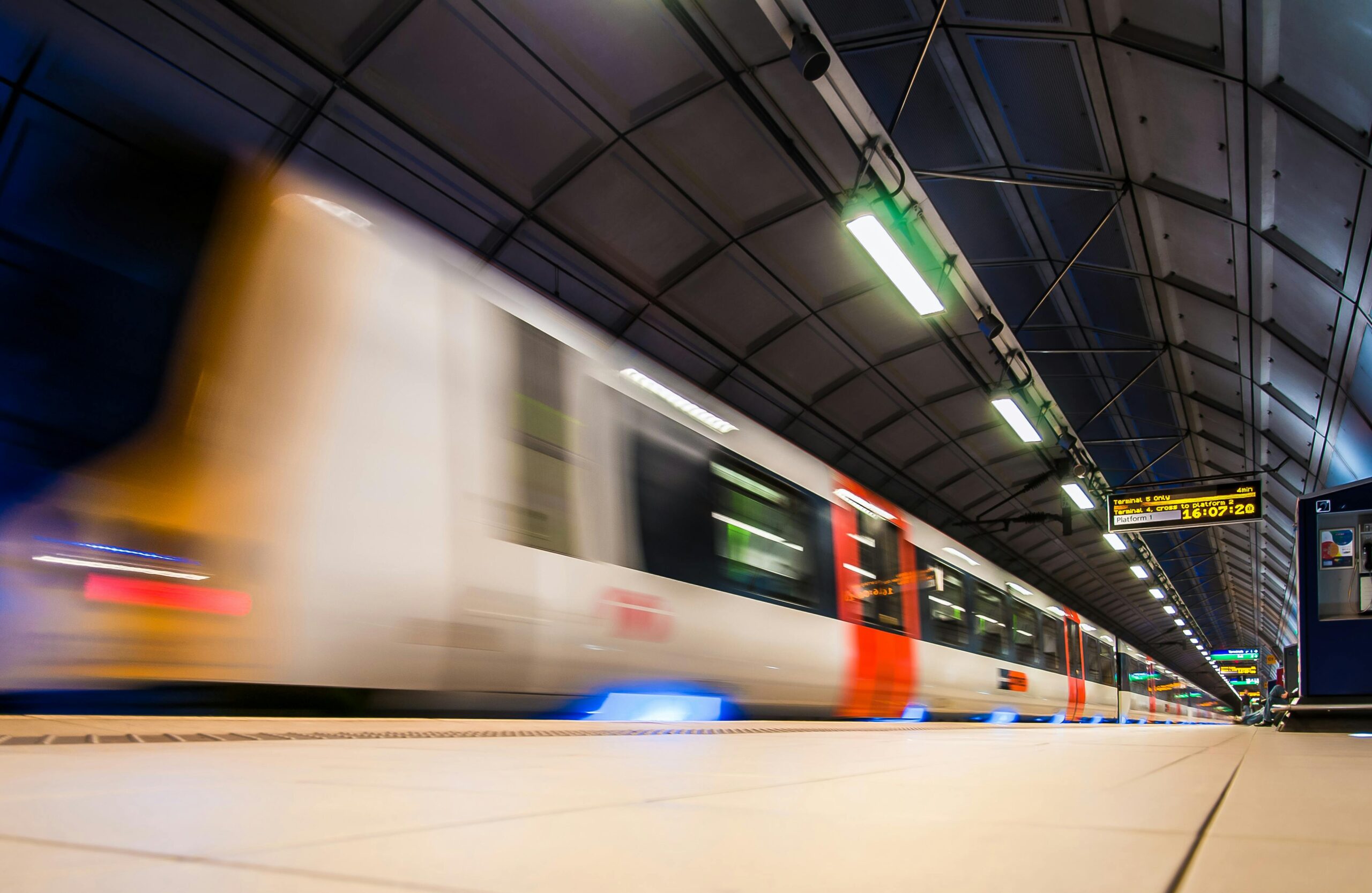
- An aisle seat directly beside an interior luggage rack. This gives you the clearest view and makes it easier to reach the bag without climbing over another passenger.
- An aisle seat in the first or last few rows of the carriage. This is usually the best choice when you know the rack is at that end but cannot identify its exact position on the booking map.
- A window seat near the rack. You may be physically close, but the person beside you, seat backs, or a partition can block your view.
- A seat in the middle of the coach. Fine if your bag fits overhead or underneath, less useful if a large suitcase must stay at one end.
Do not assume that the first seat number means the luggage end you will use. Carriage orientation can vary, and the train may enter the platform facing the opposite direction from what you expected.
Why the booking seat map cannot guarantee a view of your suitcase
Both major high-speed operators allow seat selection, but their online diagrams are primarily designed to show seats, not to promise a particular view of luggage storage.
On Trenitalia’s Frecce services, you can select a carriage and an available seat during booking. Trenitalia currently charges €3 for seat selection on Frecciarossa, Frecciargento, and Frecciabianca in many fare situations, although it is included for certain fares, service levels, and passenger categories. You can check the current rules on the official Trenitalia seat-selection page.
Italo also lets passengers choose seats using its booking seat map, with pricing depending on the fare and travel environment. Its official seat-selection information explains the current options.
The important limitation is physical layout. A diagram may show that you are at the end of a coach without making it obvious whether the large rack is inside the seating area, behind the last row, on the opposite side of the carriage, through a sliding door in the vestibule, or supplemented by additional storage elsewhere.
Train equipment can also change operationally. Treat seat selection as a way to improve your odds, not as a guarantee that your suitcase will sit three metres from your elbow.
What to do as soon as you board
Before walking deep into the carriage with a rolling suitcase, stop for a few seconds and look at the storage layout.
- Confirm the carrozza number on the train exterior or doorway.
- Enter your assigned carriage with the suitcase rather than leaving it in another coach and walking away.
- Look for the large floor-level portabagagli or bagagliera.
- Check whether that rack is visible from your assigned posto.
- If your suitcase fits safely in an overhead rack or permitted space closer to you, that can be preferable to leaving it in a distant vestibule.
- Keep your passport, wallet, phone, medication, keys, and other high-value items in a smaller bag that stays with you.
If you are still getting comfortable with carriage and seat numbering, the broader Italy by train guide explains how the different rail services fit together.
Frecce trains: choose the end, but inspect the real coach
Frecciarossa trains use several trainsets and service layouts, so advice based on one photograph or one seat number is unreliable.
On a reserved Frecciarossa journey, your ticket shows both Carrozza and Posto. If watching a full-size suitcase matters to you, selecting a seat toward either end of your carriage is the sensible starting point. Once aboard, see which end actually has the most useful rack.
There may also be alternatives to the end rack. Trenitalia specifically notes that Frecciarossa 1000 Standard seating provides space for luggage beneath seats. If your bag genuinely fits without blocking anyone, keeping it closer can solve the visibility problem entirely.
Trenitalia’s general luggage rule is that bags must go in the available dedicated spaces without obstructing passengers, staff, doors, or the carriage. The operator also states that luggage remains under the passenger’s custody. Current conditions can be checked on Trenitalia’s luggage information page.
Italo: pay particular attention to the vestibule racks
Italo identifies several possible storage locations: overhead racks, spaces at the ends of coaches, and lockers on suitably equipped trains. Large bags may therefore end up in or near a vestibule rather than directly beside the seats.
A seat at that end of the coach puts you closer, but it may not provide continuous line of sight if a door separates the passenger saloon from the storage area.
There is also an operator-specific rule worth knowing before you pack. In Italo Smart, luggage larger than 75 × 53 × 30 cm is not permitted. Its current luggage rules explain which spaces should be used for small, medium, and larger bags.
Italo states that its vestibule luggage areas are video-surveilled, but passengers remain responsible for their own luggage. Cameras are not the same thing as a staffed baggage check.
Does a higher class make it easier?
Somewhat. On a Frecciarossa the Business and Executive class coaches, and on Italo the Prima and Club ones, carry fewer passengers in the same length of carriage, so the floor racks and overhead shelves are shared among fewer bags, and there is usually more room around the seats themselves. First class on an Intercity works the same way. What a higher class does not do is change where the racks are: they are still at the ends of the coach or in the vestibule, so the advice about choosing an aisle seat toward the end holds in every class. If the price difference on your date is small, the quieter coach is a reasonable way to buy space for luggage; if it is large, a Standard or Smart class seat at the right end of the carriage does the same job.
Regional trains are different because you normally choose your seat after boarding
Most ordinary regional journeys do not work like Frecciarossa or Italo with a specific reserved seat printed on your ticket. That can actually help when carrying a suitcase: board, identify an appropriate luggage area, and take an available seat nearby.
On busy commuter trains, however, the seats closest to luggage space may already be occupied. Your priorities should be to store the suitcase only where it does not obstruct the aisle or doors, to use an overhead or dedicated rack when appropriate, and to sit nearby if an available seat gives you a useful view. Do not create your own luggage space beside an exit.
Trenitalia’s regional rules require hand luggage to be placed in dedicated spaces without obstructing passengers or railway staff. Train designs vary considerably, from older rolling stock to newer regional trains, so the best position is something you determine after boarding rather than from a universal seat chart.
What if the rack beside your seat is already full?
This is common on busy Rome-Florence, Milan-Venice, holiday, and airport-heavy departures. A reserved seat does not reserve a section of the luggage rack.
First check the other legitimate storage spaces in your own carriage. If your bag will safely fit overhead or in another designated area, use that. If the only available space appears to be several coaches away, ask the conductor or onboard staff where they want the suitcase placed rather than abandoning it somewhere convenient.
Do not block the central aisle, the sliding doors between coaches, the external doors, emergency equipment, accessible areas, or spaces specifically reserved for wheelchairs, bicycles, or other designated uses.
If you have several train legs with large bags, you can also organize the rest of your Italy route so tight connections and luggage-heavy transfers are easier to spot before travel day.
If you cannot see the suitcase from your assigned seat
You do not need to spend the journey staring at the rack. A few simple choices matter more.
Remove valuables from the large suitcase. Passports, wallets, electronics and medication belong in a personal bag at your seat, not buried in a roller several rows away.
Make the suitcase identifiable. A luggage tag and distinctive strap help prevent both theft and surprisingly easy accidental bag swaps.
Pay more attention around major stops. A suitcase is more likely to leave the train when passengers are actually getting off. If your rack is close enough, glance toward it as the train arrives at large interchange stations rather than worrying while the train is moving between stops.
Do not move into a different reserved seat without permission. On high-speed and Intercity trains, that apparently empty aisle seat may belong to someone boarding two stops later. If another passenger is willing to swap, fine, but your original reservation does not automatically transfer because the new place is closer to your bag.
Should you sit beside the door?
Close to the door is useful for luggage, but it comes with trade-offs. End seats can have more passenger traffic as people board, leave, visit toilets, or move between coaches. Sliding doors may open repeatedly, and the vestibule can be noisier.
For a short journey with one big suitcase, that trade-off is often worthwhile. For a three-hour trip with luggage that fits overhead, sitting in the middle of the carriage may be much more comfortable.
A useful decision rule is simple: choose an end-of-coach aisle seat when the suitcase must use the large rack; choose for comfort when you can store the bag directly above, beneath, or immediately beside your seat.
Families and groups have an easier option
If two or more people are traveling together, you do not all need seats beside the baggage area. One traveler can choose the seat closest to the rack while the others take nearby seats or a table group.
With children, keep anything you will need during the journey out of the main suitcase before boarding. Opening a large roller in a crowded luggage rack to find snacks, wipes, or a sweater is considerably less pleasant once twelve other bags have been stacked around it.
Folded strollers must also go into appropriate luggage space according to the operator’s rules. Do not assume the empty wheelchair area beside your seats is general stroller parking.
Three luggage mistakes that create most of the stress
Leaving the bag in the first carriage you enter
If your ticket says Carrozza 7, do not dump the suitcase in Carrozza 5 because you entered there and then walk through the train to your seat. Take it to the correct coach first whenever practical.
Boarding at the last possible moment
Large racks are shared space. Boarding calmly gives you time to find your carriage and a legitimate storage position rather than forcing the suitcase into whatever gap remains.
Putting valuables in the large case because the rack looks safe
A luggage rack is storage, not checked baggage. Both Trenitalia and Italo make clear that passengers retain responsibility for their belongings. The same awareness you use in busy stations is useful onboard; the practical precautions in our guide to avoiding theft in Italy apply here too.
If your suitcase disappears
Tell the onboard staff immediately rather than waiting until you reach your hotel. If you discover the loss after leaving the train, go to railway customer assistance or the station ticket office and provide the train number, carriage, seat, journey, suitcase description, and ticket details.
If you believe it was stolen, report it to the Polizia Ferroviaria or another police authority. Trenitalia currently provides a specific theft insurance procedure for luggage placed in designated external luggage areas on eligible Frecce and Intercity services, subject to conditions and reporting deadlines. Its official lost-property and theft page gives the current procedure.
For Italo, use its lost-property service if an item was forgotten, but do not assume vestibule video surveillance makes the operator responsible for stolen luggage.
The most reliable strategy is therefore not finding one mythical perfect seat number. Choose an aisle seat toward the end of the carriage when you have a large suitcase, board the correct coach, inspect the real storage layout, and keep everything genuinely valuable at your seat.
Questions about Italian train luggage and seating
Where are luggage racks on Italian trains?
On high-speed and Intercity trains, large floor-level racks are at one or both ends of each coach, either just inside the seating area or in the vestibule by the doors, with open shelves above the seats along the whole carriage. Regional trains vary by model, with shelves above the seats and floor space near the doors.
How does seating work on Italian trains?
Frecciarossa, Italo and Intercity tickets carry a reserved coach and seat, and you can pick the seat on a map when booking, sometimes for a small fee. Regional trains have no reservations: you sit in any free seat of the class you paid for.
How do I keep my luggage safe on trains in Italy?
Keep documents, money and electronics in a small bag at your seat, put the large case in a rack you can see or reach quickly, make it easy to recognise, and glance at it when the train stops at a big station. Collect it a few minutes before your own stop.
Where do I put a big suitcase on a train?
In the floor-level rack at the end of your own coach. If that is full, try the rack at the other end, then ask the conductor. A large case should not go on the overhead shelf unless you can lift it safely, and never in the aisle or in front of a door.
Which seat numbers are next to the luggage rack?
There is no fixed answer, because the layout changes between train models and the coach can arrive facing either way. Pick an aisle seat in the first or last rows on the booking map, then check the real layout when you board.