The fastest way to open an unfamiliar shutter is to look at the mechanism before pulling anything. A slatted panel that disappears above the window is a tapparella; hinged louvered panels outside are usually persiane; solid hinged panels are generally scuri or scuretti. Italian window shutters can use straps, cranks, switches, catches and old-fashioned metal bars, and forcing the wrong part is an easy way to jam one.

First, identify which type of shutter you have
Italian vocabulary is not perfectly consistent from one region, building or host to another, so trust what you can see more than the name in the check-in instructions.
- Tapparella or avvolgibile: horizontal slats running in vertical tracks. The whole shutter rolls into a cassonetto, the box above the window.
- Persiana: one or two rigid exterior leaves, normally with angled slats or louvers. They swing outward like doors.
- Scuro: a solid exterior shutter without the open louvers of a traditional persiana.
- Scuretto: often a smaller solid shutter, particularly an internal shutter fitted directly to or just inside the window. Regional usage varies.
You may also hear serranda. Italians sometimes use the word loosely, but it commonly refers to the rolling shutter on a shop, garage or other larger opening. A veneziana is a Venetian blind, not the same system as an exterior persiana.
How to open a tapparella with a strap
A manual roller shutter often has a flat fabric strap running vertically beside the window. Italians may call it a cinghia, cintino or occasionally simply the corda. The strap disappears into the wall or a small spring-loaded winder near waist height.
To raise it
- Make sure nothing is sitting on the exterior sill and that the shutter is not visibly crooked in its side tracks.
- Hold the strap where it comes down from the upper guide.
- Pull it straight downward with a smooth, controlled movement.
- Allow the lower winder to take up the loose strap as you reposition your hand.
- Repeat in several strokes until the shutter reaches the height you want.
- Slow down for the final part rather than giving one hard last pull.
The shutter may sound surprisingly substantial while moving. That alone does not mean something is wrong. Grinding, a sudden diagonal tilt, a strap that starts fraying, or a shutter that stops abruptly are better reasons to stop.
To lower it
Draw the strap slightly out from the wall so that it can move freely, then let it travel upward through your hand in a controlled way as the shutter descends. Do not simply release the strap and let the shutter crash to the bottom. Ease it down especially gently for the last part of its travel.
Many tapparelle have small gaps between the slats when they are almost closed. Continuing to lower them brings the slats together and darkens the room fully. This means you can sometimes leave the shutter partly lowered for shade while still admitting some light.
If there is a crank instead of a strap
A manovella is a folding or removable crank, usually beside the window. Unfold or attach it and turn slowly. One direction raises the shutter and the other lowers it, but the direction depends on how the mechanism was installed, so test gently rather than assuming clockwise always means up.
Stop turning when the shutter reaches its end position. If the handle suddenly becomes very difficult to move, do not use extra leverage. A crank system should not require wrestling.
How electric roller shutters work
Look beside the window, near the bed or close to the room’s other switches. A motorized tapparella elettrica usually has:
- an up and down arrow;
- a two-way rocker switch;
- buttons marked su and giù;
- or a small remote control.
Some systems move only while you hold the button. Others continue after one press and stop automatically at the end of their travel. If nothing happens, check that the room has power before deciding the shutter is broken. In a rental, also look for a master electricity switch or key-card system.
If several buttons are grouped together, one may control each individual window while another operates all the shutters at once. Start with a short press before holding down an unfamiliar button.
How to open exterior persiane
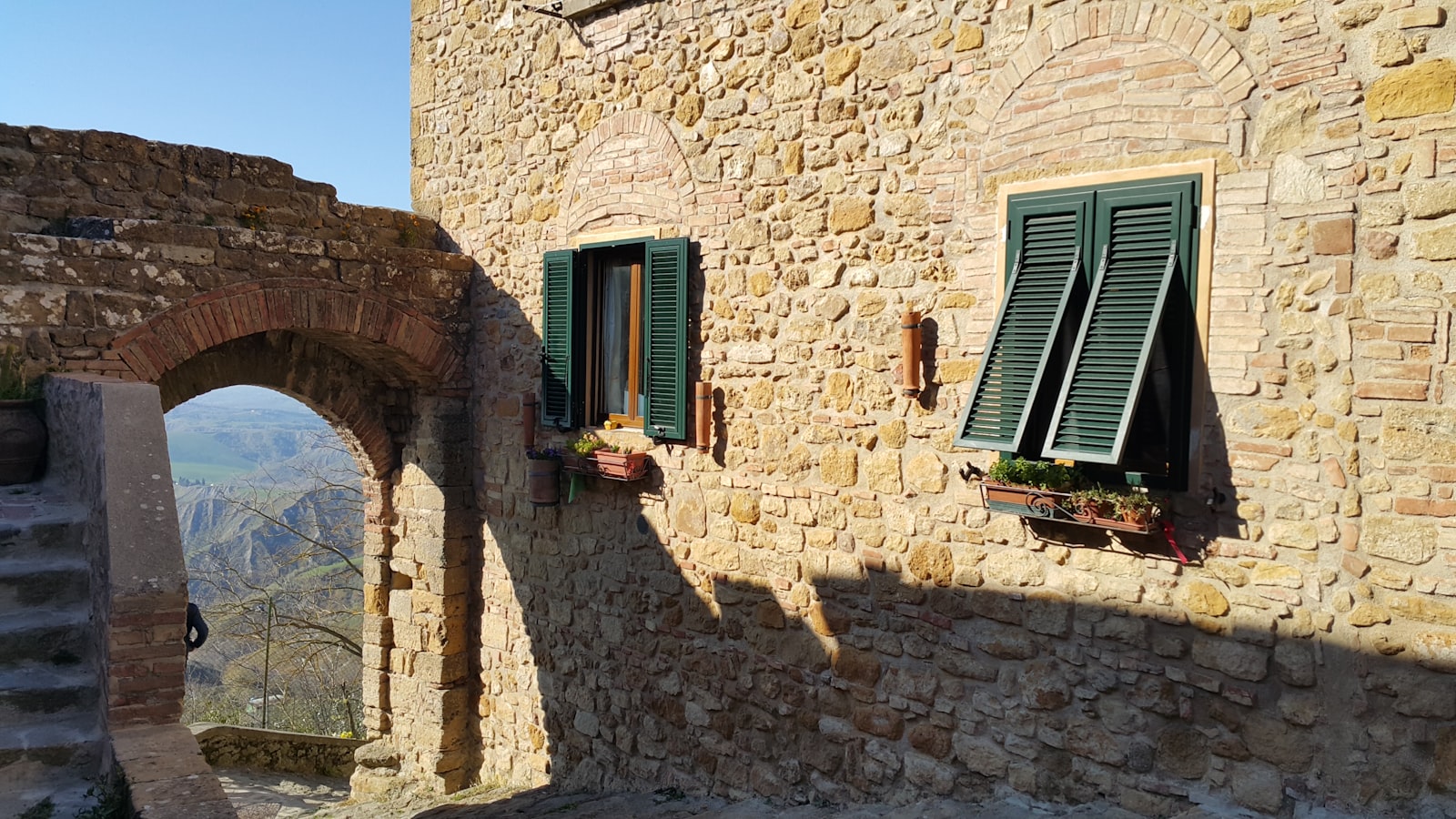
The familiar louvered shutters seen on Italian façades normally open outward. The slightly counterintuitive part for visitors is that you often need to open the glass window first so that you can reach the shutter hardware.
- Unlock and open the interior glass window.
- Find the catch or handle joining the shutter leaves.
- Release the locking mechanism.
- Push each shutter leaf outward toward the façade.
- Secure each leaf in its open position using the exterior shutter holder.
The central locking hardware is often called a spagnoletta. It may look like a rotating handle attached to a vertical metal rod. Turning or lifting the handle releases locking points at the top and bottom of the shutter.
Do not force a spagnoletta that appears locked. Some versions have a small button or catch that must be pressed before the handle rotates.
The little metal catch outside matters
An open persiana should normally be secured against the wall. The retaining hardware is a ferm persiana or, more commonly written as one word, fermapersiana.
Older versions can look like a small hinged piece of iron sticking out of the wall. Decorative ones sometimes resemble a tiny human figure. Newer shutters may have an automatic catch built into the hinge or frame.
Push the shutter fully open until you feel or hear it engage. Do not leave a heavy wooden shutter floating loose in the wind. A sudden gust can slam it against the building or window.
Closing exterior shutters again
Open the glass window, release the exterior retaining catch, and bring each shutter leaf toward you. Depending on the hardware, you may need to press, lift or rotate the fermapersiana before the leaf comes free.
Bring the shutters together without trapping your fingers between the leaves. Then rotate or lower the spagnoletta until the shutter is properly locked.
Be careful about leaning through an upper-floor window
Some old buildings require you to reach outside to release a shutter from its wall catch. If the hardware is well beyond comfortable reach, do not climb onto furniture, sit on the sill or lean your upper body out of the window.
This is particularly relevant in historic apartments where the window may be tall, the sill low, or the exterior shutter unusually wide. Ask the host or hotel staff how the mechanism works. There is often a knack to an old fitting that is obvious once demonstrated.
If your rental’s instructions are already proving cryptic, the same buildings can also have unfamiliar entrance terminology. The guide to Italian apartment addresses and terms such as portone, scala, piano and interno can save a second round of guesswork.
How scuri and scuretti open
Scuri are solid rather than louvered, so a closed pair can make a room extremely dark even in the middle of the day. Exterior versions generally work much like persiane: release the central catch, swing them outward and secure them against the façade.
Scuretti are more variable. In some homes they are small solid leaves attached to the inside of the window itself. You may need to:
- release a small central latch;
- open the two solid leaves toward the room;
- fold them against the larger window frame;
- then operate the glass window normally.
Other properties use the word for exterior solid shutters. Again, the hardware tells you more than the vocabulary.
If the shutter will not move
One failed attempt is a reason to inspect, not to pull harder. For a roller shutter, check whether it is sitting level in both side guides. Stop if one side rises while the other stays put.
With a strap-operated shutter, also stop if the strap:
- is badly frayed;
- comes unusually far out of the wall;
- loses all tension;
- makes the shutter drop unexpectedly;
- or no longer moves the shutter at all.
Do not open the roller box or remove the lower strap winder in a hotel or holiday rental. The winder contains a tensioned spring, and repairs are a job for the property owner or technician.
For hinged shutters, check for a latch you have missed. A painted-over catch, small push button or secondary bolt can make an unlocked-looking shutter feel completely immovable.
What to message the host
A photograph is usually faster than trying to describe the mechanism. Send an image of the shutter and its handle or strap and ask:
Come si apre questa tapparella? means “How do I open this roller shutter?”
Come si aprono le persiane? means “How do I open the shutters?”
La tapparella è bloccata. means “The roller shutter is stuck.”
Non voglio forzarla. means “I don’t want to force it.”
If you are moving between several rentals, keeping entry instructions, host contacts and accommodation notes together with your transport plans can prevent these small puzzles from becoming arrival-day problems. You can organize the rest of your Italy trip in one place rather than hunting through separate booking messages.
Shutters are also part of the room’s temperature control
They are not used only for sleeping. In hot weather, many Italians close or partially lower exterior shutters while the sun is hitting the window, then reopen them when conditions cool. A persiana can filter strong sunlight while its louvers still allow some airflow. A tapparella can be stopped partway down to shade the glass.
If you return to an apartment in the afternoon and find the room surprisingly dark, that does not necessarily mean the host expects you to live in a cave. Raise the tapparella, open the scuretti, or release the persiane and daylight usually returns very quickly.
Do not leave shutters unsecured in wind
Exterior hinged shutters need to be either properly secured open or properly closed. The awkward middle position is the one to avoid. A gust can catch a loose persiana surprisingly hard.
If strong wind develops while exterior shutters are open, close them if you can do so safely. If reaching the exterior retaining catch would require leaning dangerously outside, contact the accommodation rather than improvising.
A useful 20-second check after you arrive
Before the host leaves, or before reception closes for the night, test one window. Work out which piece opens the glass, which operates the shutter, how the exterior leaves are secured, and whether the roller shutter is manual or electric.
That small check is especially worthwhile if you need total darkness for sleeping or expect an early departure. Discovering at midnight that the bedroom’s mysterious fabric strap controls the shutters is amusing for about thirty seconds.