For most rail connections in Italy, 20 minutes is a sensible baseline. Allow 25 to 30 minutes at Roma Termini, Milano Centrale, and Bologna Centrale when you have luggage, children, or an unfamiliar platform change. Florence and Venice are usually easier. For a comfortable change between two trains, treat anything under 15 minutes as a tight connection unless the itinerary was sold together and you know the station layout.
The walking itself is rarely the whole problem. You may need to get off a long train, wait for a crowd to clear, find the next binario, use an underpass or escalator, pass a ticket gate, and walk the length of another platform to your assigned carrozza. A connection that looks generous on a booking screen can shrink quickly. This guide gives station by station buffers, explains the difference between a protected through ticket and two separate tickets, covers regional trains, delays, who to call for help, and answers the questions travelers ask most about train travel in Italy, so your trip is built on realistic travel times rather than hopeful ones.
- Buffers at the main stations
- Why a 10-minute change feels tighter than it looks
- Roma Termini
- Milano Centrale
- Bologna Centrale
- Firenze Santa Maria Novella
- Venezia Santa Lucia
- Napoli Centrale
- Reading the departure board
- Through ticket or separate tickets
- When your first train is late
- Regional trains
- How often Italian trains are delayed
- Luggage, families and reduced mobility
- Late-night changes
- Fiumicino to Termini and other airport legs
- Who to call
- FAQs
Changing Trains in Italy in 2026: How Much Time to Allow at the Main Stations
These are practical planning buffers for your trip, not official minimum connection times. They assume your first train arrives on schedule. Trenitalia’s own booking engine will sell you itineraries with changes of 8 to 12 minutes at these stations, and they are usually achievable, but they leave no margin for a late arrival or a remote platform.
| Station | Comfortable transfer | With luggage or children | Main complication |
|---|---|---|---|
| Firenze Santa Maria Novella | 15 minutes | 20 to 25 minutes | Large terminus, but relatively straightforward platform access |
| Venezia Santa Lucia | 15 minutes | 20 minutes | Terminus layout; crowds can slow movement near the platform ends |
| Milano Centrale | 20 minutes | 25 to 30 minutes | 24 platforms, long trains, busy head concourse and access gates |
| Roma Termini | 25 minutes | 30 minutes or more | 32 platforms, including several unusually distant tracks |
| Bologna Centrale | 20 to 25 minutes | 30 minutes | High-speed station is underground and separate from surface platforms |
| Napoli Centrale | 20 minutes | 25 to 30 minutes | Large terminus; extra time needed for lower-level Piazza Garibaldi connections |
If missing the next train would mean missing the last service of the night, an airport connection, a ferry, or an expensive independently booked train, add another 15 to 30 minutes. The cost of waiting for a coffee is considerably lower than the cost of watching your next train leave, and on a long travel day one relaxed change is worth more than fifteen saved minutes.
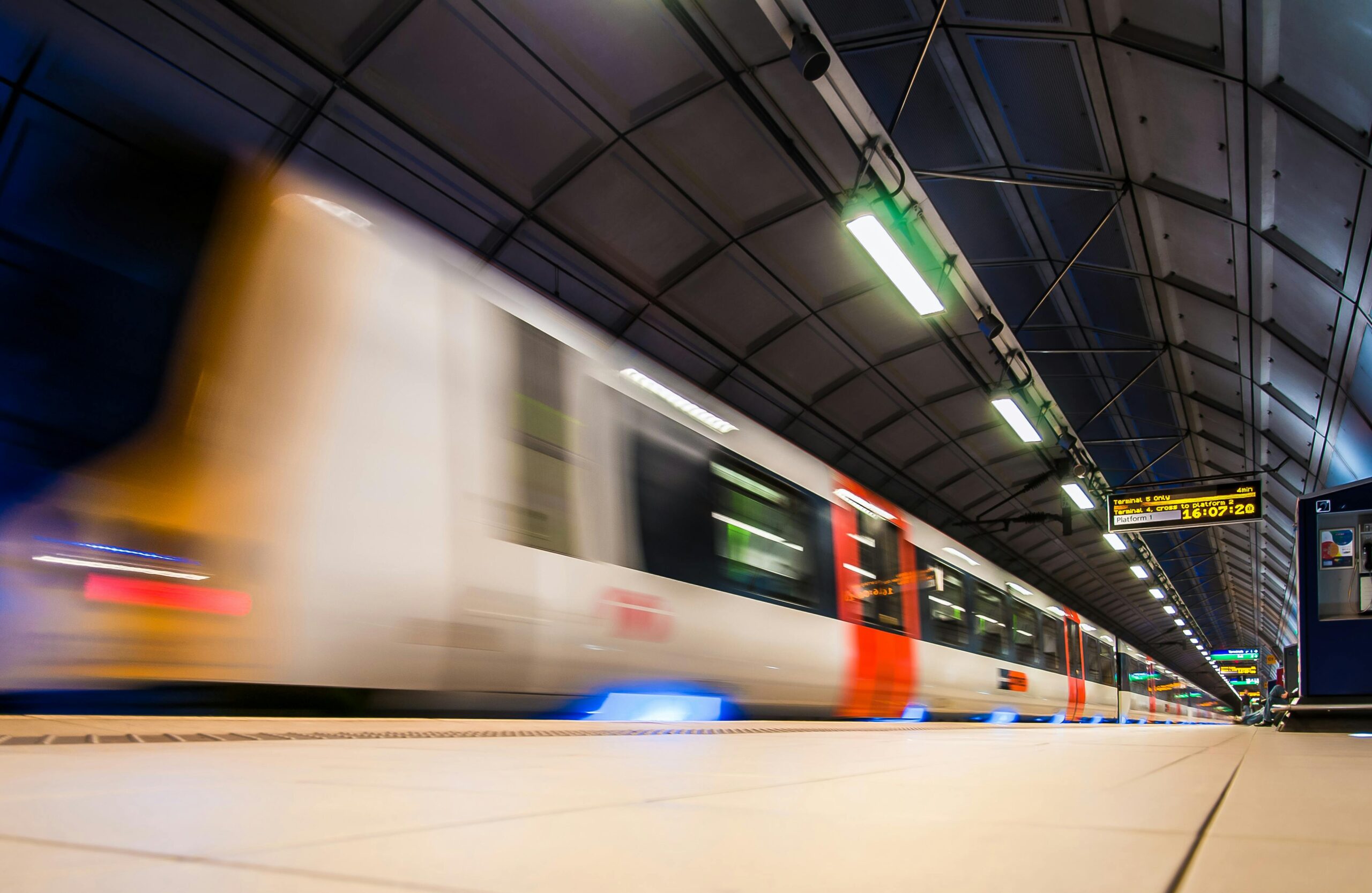
Why a 10-minute change can be fine on paper and stressful in person
A railway booking system thinks primarily in terms of scheduled arrival and departure. You experience the transfer from the moment the doors open until you are standing beside the correct carriage of the next train. Your usable time therefore runs through eight steps: the first train stops and the doors open; you get yourself, your bags, and everyone traveling with you onto the platform; you find a departures screen marked Partenze; you locate the next train by train number and destination; you confirm its binario; you follow signs, stairs, escalators, lifts, or passageways to that platform; you find the correct carrozza if the next train has reserved seating; and you board before departure.
A scheduled 12-minute change is not twelve minutes of relaxed walking. If your arriving train takes several minutes to empty and your next carriage is at the far end of the departure platform, very little margin remains.
Roma Termini: allow extra time because not every platform is really next door
Roma Termini is where travelers are most likely to underestimate the walk. RFI lists 32 passenger tracks. The normal numbered platforms spread across the large terminus, but several have extensions or separate locations that can turn an apparently simple change into a much longer walk.
Most notably, RFI states that binari 1 Est and 2 Est are reached by continuing roughly 500 metres along platform 1. The Laziali platforms 25 to 29 are similarly reached by continuing roughly 500 metres beyond platform 24, although there are also side entrances from Via Marsala and Via Giolitti. This is why 10 or 12 minutes at Termini may be perfectly easy between two ordinary nearby platforms and thoroughly unpleasant when one train uses a remote section.
For a normal long-distance change, aim for about 25 minutes. With suitcases, a stroller, reduced walking speed, or an independently booked onward train, 30 minutes is much more comfortable. If Termini is unfamiliar, the Italy on Foot guide to Rome’s train stations explains the city’s main rail hubs and when Termini is not the only useful option, and our timed routes through Termini with luggage measure the real walks.
Do not follow Uscita during a normal Termini transfer
Uscita means exit. Unless your next departure is from another station or you specifically need to leave the building, follow signs toward Binari or the departure platforms instead. Walking outside onto Piazza dei Cinquecento and then trying to find your way back through the station wastes valuable minutes. You can check RFI’s official Roma Termini platform information before a complicated change.
Milano Centrale: easy layout, but bigger than it looks
Milano Centrale is a terminus with 24 passenger platforms. That makes the basic logic simple: trains finish at the head of the station and the platforms fan out from the main rail area. You generally do not need to descend into an underpass simply to move from one mainline platform to another.
The catch is scale. High-speed trains are long, the station can be crowded, and arriving at the far end of a platform means walking all the way toward the head concourse before crossing to another track. Access to the platform area also uses controlled gates. Allow around 20 minutes for an ordinary change. With a large suitcase or a connection between widely separated platforms, 25 to 30 minutes removes most of the pressure. Do not assume the platform shown well in advance is final. Watch the station screens until your train appears with its current binario, then follow any gate information displayed with it.
Bologna Centrale: the station where same station can mean different levels
Bologna deserves the largest mental adjustment. RFI treats the main station and Bologna Centrale AV as distinct parts of the same rail complex. The underground high-speed section uses platforms 16 to 19, while conventional trains use the surface station, where platform names can also include Est and Ovest. If both trains use underground AV platforms, the change can be straightforward. If you are moving between an underground high-speed train and a regional service at surface level, you need escalators or lifts plus additional corridors and wayfinding.
Allow 25 minutes when you do not know which levels your trains will use. Thirty minutes is preferable with luggage. A 10-minute high-speed-to-regional change here is not something to choose voluntarily just because both tickets say Bologna Centrale. RFI’s Bologna Centrale AV information confirms that platforms 16, 17, 18 and 19 form the high-speed section, and our walk-through of the Bologna Centrale underground platforms shows the route between the levels.
What Est and Ovest mean
Est means east and Ovest means west. Bologna has platform designations such as 2 Est or 6 Ovest. Do not stop reading when you see the number. 6 and 6 Ovest should be treated as different platform instructions; our explainer on what binario, Est and Ovest mean covers every suffix you will meet.
Firenze Santa Maria Novella: usually among the easier major transfers
Firenze SMN is a terminus. RFI lists 19 passenger tracks, and the station’s operating documentation notes that the tracks have direct access because of the terminus layout. That makes Florence considerably friendlier for a quick change than Bologna. You normally walk toward the head of your arriving platform, check the Partenze screens, then move laterally to the departure track.
Fifteen minutes is a reasonable target for an able-bodied traveler with manageable luggage. Give yourself 20 to 25 minutes if you are pulling several suitcases, moving with children, or simply prefer not to sprint past the station café. Watch carefully for platform numbers such as 1A. The letter is part of the platform designation, not decorative Italian enthusiasm.
Venezia Santa Lucia: simple for train-to-train changes
Santa Lucia is another terminus, so an ordinary national or regional train change is normally straightforward. Walk toward the front end of the tracks, find the departure board, and move to the next platform. About 15 minutes is comfortable for a normal rail-to-rail connection, or around 20 minutes with luggage.
The important distinction is between Venezia Santa Lucia and Venezia Mestre. They are different stations. If one ticket arrives at Mestre and another departs from Santa Lucia, that is not a platform change. You need another train across the lagoon, about ten minutes plus the wait, so build the itinerary accordingly; see Mestre and Santa Lucia compared.
Napoli Centrale: check whether your next train in Naples really leaves from Piazza Garibaldi
Mainline Frecciarossa, Italo, Intercity and many regional trains use Napoli Centrale, the main station of the city. A normal mainline-to-mainline change is similar to Florence or Milan: walk toward the platform ends and across the departure area. However, the wider rail complex also includes Napoli Piazza Garibaldi below the main station. RFI’s timetables group the two together, but a platform shown as NA PG is not beside the high-speed platforms upstairs.
Allow about 20 minutes for an ordinary Centrale change. If your connection requires descending to Piazza Garibaldi, changing operator, buying a separate local ticket, or following signs toward local rail lines, 30 minutes or more is much safer. The same applies to the Circumvesuviana for Pompeii and Sorrento, which runs by EAV from its own station under the Garibaldi concourse with separate tickets and no connection guarantee from any mainline arrival; allow 30 minutes and expect queues at the ticket windows in summer.
Match the train, not just the destination
Italian departure boards usually show the final destination of the train. That destination may be somewhere far beyond the city where you plan to get off. Suppose you are traveling from Florence to Bologna and your ticket says Frecciarossa 9400. The station screen may list the train under Venezia S. Lucia, because Venice is its final destination. Looking only for Bologna can make you think your train has vanished.
The useful words are Partenze (departures), Arrivi (arrivals), Binario (platform or track), Ritardo (delay), In partenza (departing), Soppresso or Soppressa (cancelled), Carrozza (coach), Posto (seat), Settore (platform sector), Est (east), Ovest (west), and AV, Alta Velocità, high speed. Match train number first, then departure time and destination. That method works even when you have never heard of the final city shown on the board.
Do not rely only on the app for a last-minute platform change
Once you are inside the station, the physical departure screens and announcements matter most. RFI notes that station information can sometimes appear two or three minutes before the corresponding information is published online. If the app still says platform 8 but the station board now says platform 11, move to 11. Listen for announcements containing your train number and the words cambio binario, meaning platform change; our note on last-minute platform changes explains how they are worded. For a multi-city journey, it helps to keep all of the rail legs, accommodation details, and onward connections in one place. You can organize the rest of your Italy route so a platform change is the only thing you need to think about during the transfer itself.
A through journey and two separate tickets are not the same risk
This distinction matters more than shaving five minutes from your walking time, and it decides how much of the trip is protected when travel does not go to plan.
When the itinerary is sold together
If your journey is covered by the relevant through-ticket, cumulative ticket, or single transport contract, you have rights to rerouting or continuation when a delayed first train causes a missed connection. Trenitalia’s current passenger information specifically covers a missed connection caused by another train when it occurs within a biglietto cumulativo. Depending on the disruption, Trenitalia may reroute passengers or allow continuation on another suitable service. Its official passenger-rights information for delays and missed connections explains the applicable choices. Italo similarly distinguishes missed connections between Italo trains on a single ticket in its passenger-assistance procedures.
When you bought each leg separately
If you manually combine independent tickets, especially ones from different operators, do not assume the second company will treat the first train’s delay as its problem. A classic example is buying a discounted Frecciarossa ticket to Bologna and then, in a separate purchase, an Italo train leaving 12 minutes later. If the Frecciarossa arrives late, the Italo train does not become flexible simply because the two journeys looked like a connection to you. For independently booked fast trains, 30 to 45 minutes is a much healthier buffer. Increase that further if the second ticket is expensive or non-changeable. If Italian rail ticket types themselves are still unfamiliar, the Italy by train beginner’s guide covers the practical differences between fast and Regionale travel.
Do you need to book trains in advance in Italy?
Frecciarossa, Frecciargento, Italo and most Intercity trains carry compulsory seat reservations, so the ticket is for a specific train and the price rises as departure approaches: a Roma Termini to Florence Frecciarossa that costs €19.90 three weeks out can cost €50 or more on the day. That is the honest answer to why Italian trains sometimes feel expensive; walk-up fares on the fast routes are high, while advance fares and Regionale travel are among the cheapest in Europe. Regionale tickets cannot be reserved, never sell out, and cost the same whenever you buy, so for a connection onto one there is nothing to gain by booking early except having the ticket on your phone.
What to do when your first train is running late
Do not wait until you reach the interchange station to start thinking about the problem. First, check the predicted arrival time in the app or on the carriage display and compare it with the scheduled departure of your connection. Second, confirm whether the onward ticket is part of the same journey, because this changes your options considerably. Third, ask the train crew if necessary, using the phrase Perdo la coincidenza?, meaning will I miss my connection. Fourth, keep proof of the delay, which is particularly important when assistance or rerouting depends on showing that the previous service was late. Fifth, if the connection is protected, speak to the relevant operator’s staff rather than automatically buying a replacement ticket before checking your rights. Sixth, if the tickets are completely separate, check the second ticket’s change conditions immediately; changing it before departure may be cheaper than dealing with a missed train afterward.
Do not assume the connecting train will wait. Occasionally railway operations may hold a train, but that is an operational decision, not a transfer strategy. If you lose a protected connection, Trenitalia staff at the ticket office or the Assistenza desk can endorse your ticket for the next service, and for long delays the company pays travel compensation of 25 percent of the fare for a delay of 60 to 119 minutes and 50 percent from 120 minutes on Frecce and Intercity trains.
Regional trains need their own transfer strategy
A Regionale connection is often less financially painful to miss than a reserved high-speed train, but ticket rules still matter. Trenitalia’s current Digital Regional Ticket is automatically validated at the scheduled departure time of the train selected. Before that scheduled departure, its time can be changed according to the ticket conditions, and it is valid only for that train. Paper Regionale tickets still require validation at the green and white machines before the journey begins, after which they are valid for four hours along the printed route. If you are connecting onto a regional train and the incoming service is already late, change the ticket before its scheduled departure rather than assuming you can sort it out afterward. The current rules are explained on Trenitalia’s Digital Regional Ticket page.
Connection reliability on the Regionale network is better than its reputation. Regional services run to a fixed interval timetable on the busy lines, hourly or half-hourly between Florence and Pisa, Milan and Como, Naples and Salerno, so a missed regional connection usually costs you 30 to 60 minutes rather than a new ticket. The exception is the last train of the evening and the Sunday timetable on rural lines, where the next service may be the following morning. They also stop at every platform type: at Bologna they use the surface tracks, at Termini they often use the distant Laziali or Est platforms, and at Milan some leave from the lower-level Passante stations rather than Centrale, so read the full platform name before you walk.
How often are trains delayed?
Less often than forum horror stories suggest, but enough to matter for short changes, and the arrival times on the board are the ones to trust. According to FS Italiane’s monthly punctuality reports, in July 2025 71.3 percent of Frecce arrived within 10 minutes of schedule, 78.2 percent of Intercity trains within 15 minutes, and 89.9 percent of regional trains within 5 minutes, all up on the previous year after a difficult 2024. Put the other way, roughly one fast train in four is more than 10 minutes late on a summer day, which is exactly the margin a 12-minute connection cannot absorb. Delays cluster on the Milan to Rome spine, the busiest travel corridor in the country, where fast, Intercity and freight traffic share the approaches to Florence and Bologna, and on hot afternoons when line speed limits apply.
Strikes are the other reliability factor in Italian travel. National rail strikes are announced at least ten days ahead, and a set of guaranteed services runs in the morning and evening peaks on weekdays; our guide to guaranteed trains during strikes explains which trains those are. Check the strike calendar before fixing any tight itinerary, and prefer the morning for connections that cannot fail.
The story of the disappearing train
Travelers sometimes ask about the Italian train that vanished. The tale concerns a tourist train of the Zanetti company that supposedly entered a tunnel in Lombardy in 1911 with more than a hundred passengers and never came out. It is an urban legend popularized by 1990s television: no railway company by that name existed, no tunnel matches the description, and no contemporary newspaper reported the event. Italian trains do go missing from the departure board, but only because the board lists them under a different final destination, as explained above.
How much extra time luggage really adds
One small wheeled suitcase rarely changes a transfer dramatically. Two large suitcases, a stroller, or a group of four people with bags certainly can. Luggage slows transfers in three places: getting through a crowded train doorway after arrival; using lifts instead of stairs or fast-moving escalators; and walking along the new platform to the correct carriage. On Frecciarossa and Italo trains, your reserved coach may stop well away from the point where you first reach the platform. Arriving at the correct binario with two minutes remaining is therefore not the same as being safely aboard. Add roughly 5 to 10 minutes to your preferred buffer if you have heavy luggage, and more at Bologna when the change alters station levels; our station by station notes on changing trains in Italy with luggage list which stations have lifts on every platform.
Luggage theft is a real but manageable risk during a change on any Italian trip. Keep bags in sight on the platform, never leave a suitcase by the door while you look for your seat, and on busy regional trains keep the small bag with passports and tickets on your body rather than on the rack.
Families, strollers and reduced mobility need a different minimum
Do not use the fastest able-bodied walking estimate if someone in the group needs a lift, walks slowly, uses a wheelchair, or cannot manage stairs. RFI’s Sala Blu network provides station assistance for passengers with disabilities and reduced mobility. For journeys using booked assistance, RFI states that 30 minutes is required for an interchange to manage boarding and alighting procedures, except where a Sala Blu office exceptionally authorizes something different. That 30-minute figure is much more useful than trying to copy a short connection suggested for an unassisted traveler. RFI also asks assisted passengers to report to the agreed meeting point before departure. Check the latest arrangements on the official Sala Blu assistance page.
Late-night changes deserve a bigger buffer
The last useful train of the evening changes the calculation completely. A 15-minute connection at 14:00 may simply mean taking another regional service if something goes wrong. The same connection at 22:30 can leave you without another train until morning. Before choosing a late connection, check whether another train runs afterward, whether the onward ticket is protected or independently booked, whether the station changes level or platform area, and whether you could reasonably stay overnight if the connection fails. For the last practical connection of the day, 30 to 45 minutes is a sensible target even at an easy station. At Bologna or Termini, an hour is not excessive when the consequences of missing the train are serious.
Fiumicino to Termini and other airport legs
Airport connections are where a tight change hurts most, because the next flight does not wait either. From Roma Fiumicino, the Leonardo Express runs non-stop to Roma Termini in 32 minutes, every 15 minutes through the day, for €14; the FL1 regional line serves Trastevere, Ostiense and Tiburtina instead and costs €8. Trains leave from the airport station reached by a covered walkway from Terminal 3, and a ticket from the machines or the Trenitalia app needs no validation if bought for a specific time. For a connection from the Leonardo Express onto a long-distance train at Termini, allow 30 minutes, because the airport train uses the distant platforms 23 and 24 and your onward Frecciarossa may be at the other end of the station. In the other direction, for air travel be at Fiumicino two hours before a European flight and three before an intercontinental one, which means leaving Termini at least two and a half or three and a half hours before departure.
The same logic applies to the Malpensa Express into Milano Centrale or Cadorna (about 50 minutes) and to the bus from Venice Marco Polo to Mestre station. Treat the airport train as a separate ticket with no protection, a piece of travel that stands alone, and never build a 15-minute change onto an airport leg.
How long does it take to cross the whole of Italy by train?
Longer than the map suggests, because the fast network ends at Salerno and travel south of it runs on conventional lines. A direct Frecciarossa from Milano Centrale to Reggio Calabria takes about 9 hours, Turin to Lecce around 9 hours 30 minutes, and Rome to Palermo by Intercity takes 11 to 12 hours including the train ferry across the Strait of Messina, the only place in Europe where a passenger train still boards a ship. For comparison, Milan to Naples by Frecciarossa is about 4 hours 20 minutes and Milan to the capital under 3 hours 10 minutes. Overnight Intercity Notte trains cover the longest distances with sleeping cars, so one traveler crossing the whole country for a single trip can sleep through the slow southern section instead of changing trains at midnight.
Who to call when a change goes wrong
Having the right number saves a long walk to a ticket office on a stressful travel day. Trenitalia’s customer service number is 06 3000 (charged at local rates from an Italian number, 24 hours), Italo’s is 06 07 08, and RFI’s Sala Blu assistance for reduced mobility answers on 02 323232 or the toll-free 800 90 60 60. Inside the station, the Trenitalia Assistenza desk, marked with a blue and white sign, handles missed connections, re-endorsement and compensation forms, and station information points can print a replacement itinerary. The ticket machines also show live train information, including the predicted delay of your arriving train, which is useful when you are standing on a platform deciding whether to wait or rebook.
A simple rule for choosing between two connections
If you are deciding between a 12-minute change and a 35-minute change, choose the short one only when most of these statements are true: both trains were sold as a single journey; you are staying with the same operator; the change is at an easy station such as Firenze SMN or Venezia Santa Lucia; you have light luggage; everyone in your group can move quickly; another suitable train operates soon afterward; and missing the connection would not disrupt an airport, ferry, tour, or hotel check-in. If several of those are false, take the longer connection. Thirty minutes spent sitting in an Italian station is rarely memorable. Thirty seconds watching your reserved train pull away from the platform tends to be.
Frequently asked questions
What is the minimum recommended layover between two trains?
Fifteen minutes at an easy terminus such as Florence or Venice when both trains are on a single ticket, 20 to 25 minutes at Milan, Rome, Bologna and Naples, and 30 to 45 minutes when the tickets were bought separately or the next train is the last of the day.
Is a 10-minute connection sold by Trenitalia safe?
It is achievable on a punctual day at a terminus, and because it is sold as a single journey you are protected if the first train is late. It is not comfortable with luggage, at Bologna between levels, or at Termini when a remote platform is involved.
Will the second train wait for me?
Rarely. Holding a train is an operational decision made for many passengers, not for a single late connection. Plan the buffer as if nothing waits, and plan your travel so that one missed train costs an hour, not the trip.
How do I validate digital tickets?
You do not. High-speed tickets and the Digital Regional Ticket are tied to a specific train and count as validated at its departure time. Only paper regional tickets need stamping in the machine before boarding.
Are the trains more punctual than elsewhere in Europe?
Regional trains, at about 90 percent within 5 minutes, compare well with Germany and France. The Frecce, at roughly 70 to 80 percent within 10 minutes, trail Switzerland and Spain, which is why Swiss-style 5-minute connections are a bad idea on the Milan to Rome line.