A low-emission restriction and a ZTL are not automatically the same thing. A ZTL, or Zona a Traffico Limitato, controls who may enter an area, often by time of day, permit status or vehicle type. Environmental restrictions control vehicles according to pollution standards such as fuel type and Euro emissions class. The confusing part is that Italian cities sometimes combine both systems under the same ZTL framework.
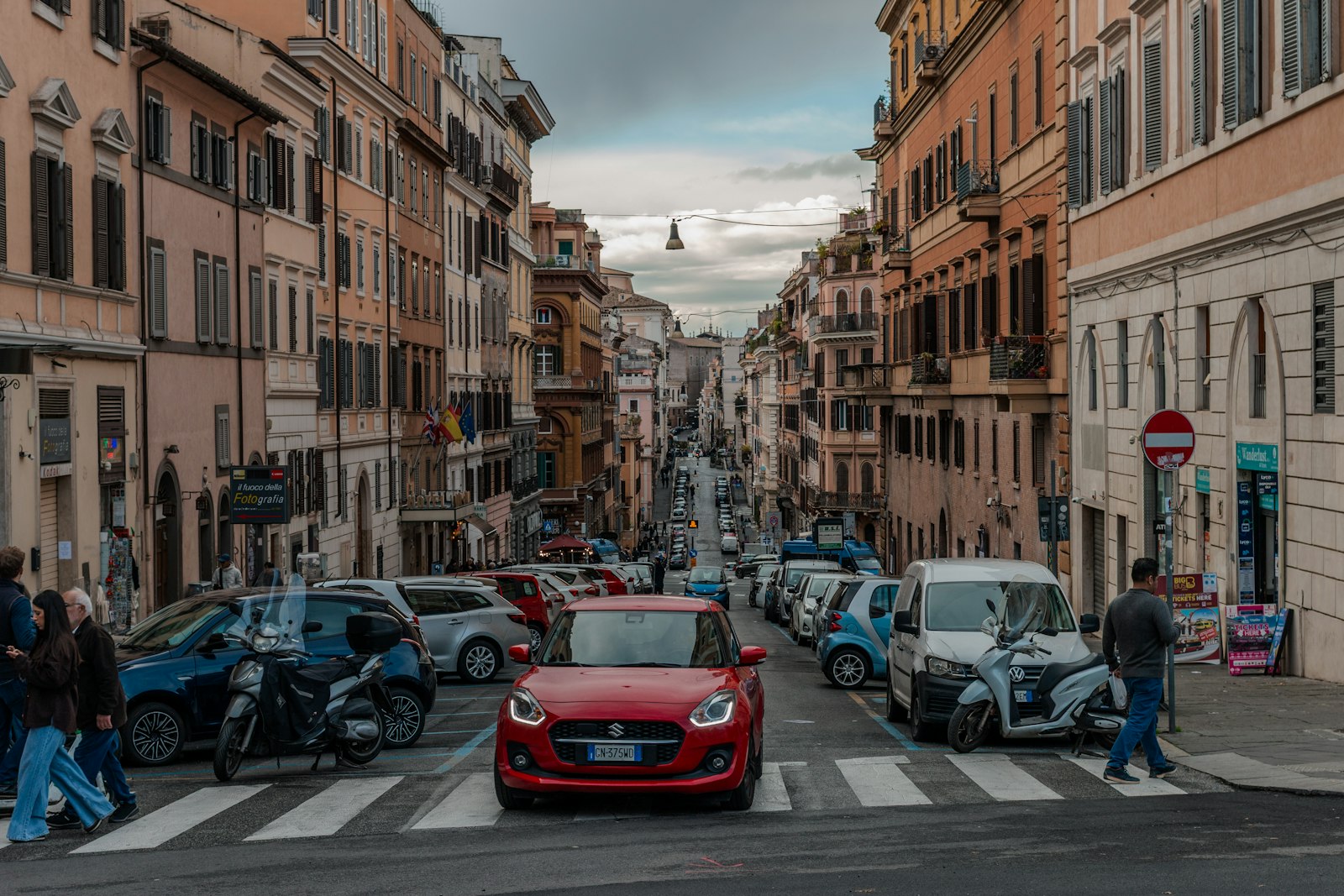
For drivers, this means low-emission zones in Italy cannot be handled with one national rule or one assumption about the familiar ZTL sign. You need to check both questions separately: is your vehicle environmentally eligible, and is ordinary traffic allowed through that particular entrance at that time?
The simplest way to tell a ZTL from an emissions restriction
Think of the two rules as answering different questions.
- ZTL: “Are you authorized to drive here?”
- Environmental restriction: “Is this type of vehicle allowed to circulate here?”
A historic-center ZTL might admit residents, taxis, hotel guests whose plates have been registered, delivery vehicles during certain hours and other authorized categories. A perfectly clean electric car can still be forbidden if it does not have the necessary access authorization.
An environmental zone works differently. A road may remain open to ordinary traffic, but an older diesel or petrol vehicle can be prohibited because of its classe ambientale, meaning Euro emissions class.
Then there are places where the systems overlap. Milan officially describes Area B as a ZTL designed to exclude more polluting vehicles. Rome calls its large environmental restriction the ZTL Fascia Verde. So seeing the letters “ZTL” does not tell you why traffic is restricted.
What the road signs may actually say
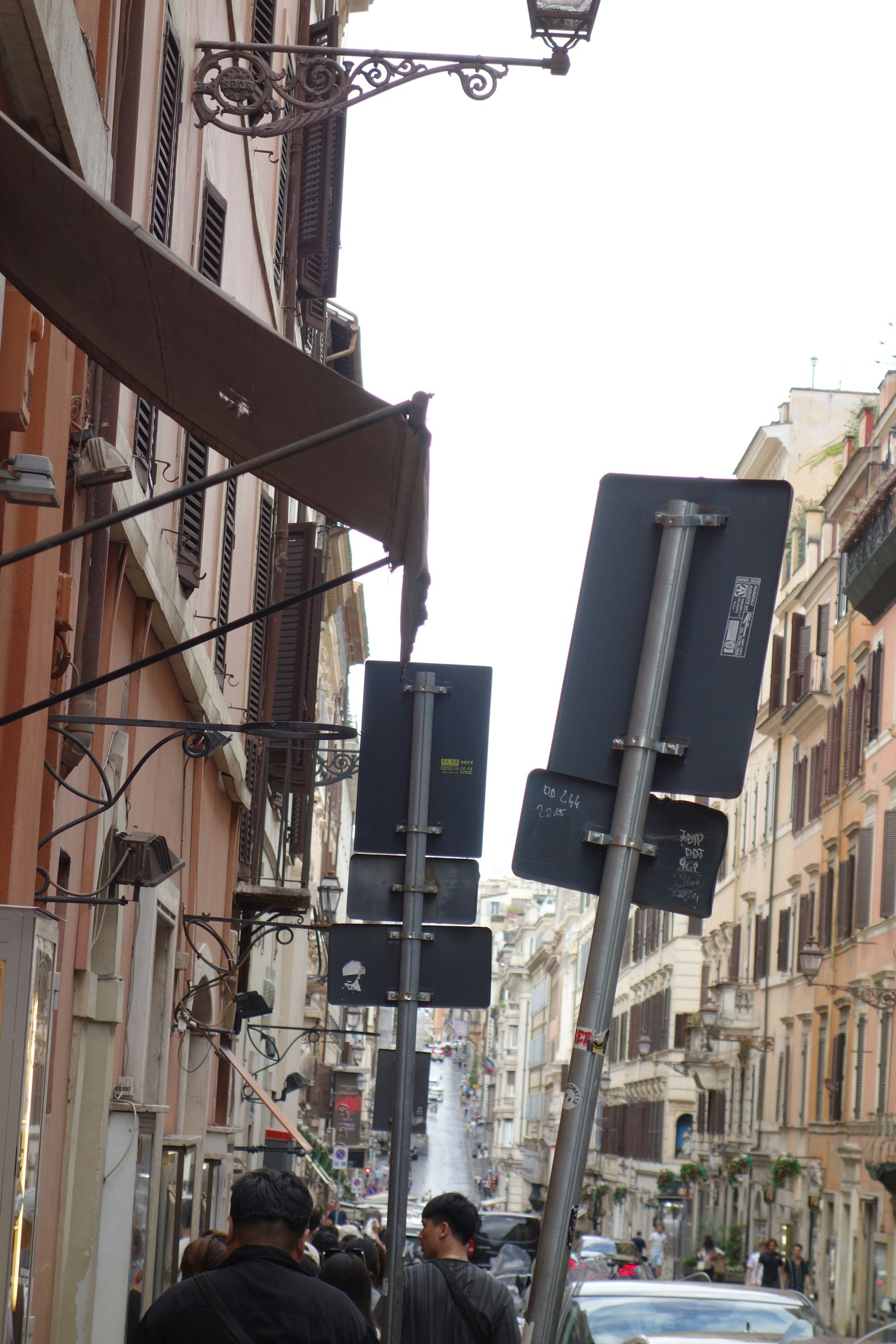
There is no single phrase you can rely on at every Italian city boundary. Watch for combinations of road signs, supplementary panels and electronic displays.
- Zona a Traffico Limitato / ZTL: limited-traffic zone.
- Varco: entrance or controlled access point.
- Fascia Verde: literally “Green Belt,” the name used for Rome’s large environmental zone.
- Area B / Area C: Milan’s named access zones.
- Limitazione del traffico: traffic restriction.
- Divieto di circolazione: prohibition on driving or circulating.
- Classe ambientale: environmental or Euro emissions class.
- Benzina: petrol/gasoline.
- Gasolio: diesel.
- Targa: vehicle registration plate.
At a traditional ZTL entrance you will commonly see the red-bordered white circular prohibition sign together with panels explaining who may pass and during which hours. Camera-controlled entrances may also have an electronic status display.
Do not turn the words varco attivo and varco non attivo into a nationwide rule for environmental zones. Not every pollution restriction uses the same electronic display, and some apply across a much larger municipal area rather than at a handful of obvious historic-center gates.
Milan shows why the distinction matters
Milan has two useful examples almost on top of each other.
Area B
Area B covers much of Milan and is primarily an anti-pollution restriction. The municipality states that it is active Monday to Friday, 07:30 to 19:30, excluding holidays. Eligible vehicles do not pay simply to enter Area B, but more polluting vehicles are prohibited according to a published calendar.
The perimeter has numerous controlled varchi. This is not just a tiny medieval-center ZTL you can avoid by staying a couple of streets away. A driver approaching Milan in an older vehicle needs to check eligibility before entering the city.
The municipality provides an official vehicle checker and the current Area B prohibition calendar.
Area C
Area C is the smaller central zone inside Milan. It combines traffic-management, charging and environmental rules. During its active periods, many vehicles that are permitted environmentally must still pay an access charge, while vehicles in prohibited emissions categories cannot simply buy their way around the environmental ban.
That produces an important decision rule:
- Allowed in Area B does not automatically mean allowed in Area C.
- Paying for Area C does not automatically make an environmentally prohibited vehicle eligible.
- Having a clean vehicle does not remove every other ZTL, reserved-lane or pedestrian-zone restriction in Milan.
Check the municipality’s Area C rules before driving toward the center.
Rome’s Fascia Verde is much larger than the historic-center ZTL
Rome is another place where visitors can mistake two different restrictions for one.
The city has familiar access-controlled ZTLs around areas such as the historic center. Separately, the much larger Fascia Verde restricts circulation by vehicle emissions category. As of the current rules, permanent restrictions apply to specified older petrol, gas and diesel vehicles, with the detailed categories and operating days published by Roma Mobilità.
The practical consequence is that avoiding the Centro Storico ZTL does not necessarily solve an environmental problem. A restricted older vehicle can encounter Fascia Verde rules well before it gets anywhere near Piazza Venezia, the Pantheon or another central landmark.
If you are driving in the capital, the Italy on Foot guide to parking in Rome is useful for the separate problem of central ZTLs and where to leave the car.
Some restrictions cover municipalities or whole regions, not just city centers
The problem becomes more complicated in northern Italy because air-quality measures can originate at regional level and then be implemented through municipal ordinances.
Lombardy, Veneto, Piedmont and Emilia-Romagna have all used structural and temporary traffic restrictions as part of air-quality policy. Depending on the region and municipality, rules may distinguish between:
- petrol and diesel;
- Euro emissions classes;
- cars, vans, commercial vehicles and motorcycles;
- weekdays and weekends;
- winter air-quality season and the rest of the year;
- ordinary conditions and temporary PM10 pollution alerts;
- municipalities above specified population thresholds.
This is why a rule you read for Milan should not be copied across to Verona, Bologna or Turin.
For example, Lombardy’s official air-quality rules include regional restrictions that are separate from Milan Area B. Veneto publishes its own structural and emergency traffic measures, while Emilia-Romagna maintains a separate vehicle-restrictions page.
October 2026 is an important date for older diesels in northern Italy
Drivers using diesel vehicles should be especially careful with trips from October 2026 onward.
Lombardy currently states that restrictions on Euro 5 diesel passenger cars will begin on 1 October 2026 in the urban areas of municipalities with more than 100,000 inhabitants, specifically Milan, Brescia, Monza and Bergamo. Other regions in the Po Valley have also published rules or plans connected with Euro 5 diesels, but the exact implementation is regional and municipal rather than one identical Italian rule.
If your trip falls close to 1 October, check again immediately before driving. Air-quality plans have been amended and postponed before, and municipalities may issue the operative traffic ordinances that determine exactly which roads, vehicle categories, days and exemptions are involved.
How to check a rental car before leaving the desk
“It’s a fairly new rental car” is not a reliable emissions check. Before driving toward a city with restrictions, identify the car’s fuel and Euro category.
- Confirm the fuel. Make sure you know whether the vehicle is benzina, gasolio, hybrid or fully electric.
- Ask the rental company for the Euro class. Use the phrase classe ambientale if necessary.
- For an Italian-plated vehicle, check the plate online. The Ministry of Infrastructure and Transport’s Portale dell’Automobilista has a service that returns the Euro class from the vehicle type and registration number when the service is available.
- Check the destination’s official rule. Knowing “Euro 6 diesel” is only useful once you compare it with the actual municipal or regional restriction.
- Do not confuse emissions eligibility with ZTL permission. Ask separately whether your hotel, garage or destination lies inside an access-controlled zone.
If your route includes several Italian cities, it is worth marking the driving days and parking points while you build your Italy itinerary. The important part is knowing where the car stops being useful before you reach a restricted center.
A hybrid or electric car does not give you unlimited city access
This mistake is particularly easy to make with rentals.
An electric vehicle may satisfy an emissions rule while still being subject to a ZTL’s authorization requirements. Some municipalities grant special access or exemptions to certain low-emission vehicles, but registration procedures and local conditions differ.
Do not drive through a historic-center camera simply because the dashboard says “EV.” Check the ZTL itself.
The reverse is also possible: your hotel may be able to arrange authorized access to a conventional ZTL, but that does not necessarily override a separate environmental prohibition on the vehicle. Ask the hotel specifically whether your targa and vehicle category are permitted under every restriction affecting the route.
Temporary anti-smog measures can tighten the rules
Permanent emissions limits are not always the strictest rules you will encounter.
During periods of poor air quality, northern regions and municipalities can activate temporary measures based on pollution-alert levels. These may prohibit additional vehicle classes that are normally allowed to circulate.
Signs or an article you saved several months ago may therefore describe the normal rule while today’s restriction is stricter.
Look on the regional or municipal air-quality page for words such as:
- misure temporanee: temporary measures;
- misure emergenziali: emergency measures;
- allerta: alert;
- PM10: the particulate-matter measure commonly used to trigger anti-smog restrictions;
- livello arancio / rosso: orange or red alert level.
Do not assume weekends and holidays work the same everywhere
Traditional ZTL schedules can become more permissive, more restrictive or simply different at weekends. Environmental restrictions are equally variable.
Milan Area B normally excludes public holidays from its Monday-to-Friday operating schedule. Rome’s current Fascia Verde permanent restrictions use their own day rules. Veneto’s ordinary winter measures use another timetable, and temporary pollution alerts can change what is allowed.
The safe question is never “Are Italian restrictions off on Sunday?” It is “What does this specific zone’s current ordinance say for this date?”
What to do when you reach a restriction and are not sure
Do not make the decision while blocking the entrance lane under a camera.
- Stay outside the controlled boundary.
- Follow signs for parcheggio or another unrestricted route.
- Pull over somewhere legal.
- Photograph or note the zone name, not just the red-circle sign.
- Check the municipality’s official page using that exact name.
- Confirm your plate’s Euro class if the restriction is environmental.
- If necessary, park outside and continue by train, metro, tram, bus or taxi.
Do not reverse into moving traffic because you spotted a camera at the last second. If the only safe option is to continue through the immediate junction, prioritize road safety and leave the restricted area by the first lawful route available.
If you have already driven in by mistake
Leaving immediately does not erase an unauthorized camera entry, but continuing to drive around the zone can create additional problems.
Record the date, approximate time, entrance street and vehicle plate. Check the official rules when safely parked. If it is a rental, keep the rental contract and remember that the rental company may later charge an administration fee separately from any official traffic penalty.
If your hotel had told you that access was authorized, contact reception promptly and ask whether your plate was actually registered and for which zone. Do not assume that a hotel inside one ZTL has authority to exempt a vehicle from an unrelated environmental restriction.
The four checks to make before driving into an Italian city
Before the car reaches the urban boundary, answer four separate questions:
- What is my vehicle’s Euro emissions class and fuel?
- Is there a city or regional environmental restriction today?
- Does my destination sit inside a separate ZTL or pedestrian area?
- If access requires registration, has my exact plate actually been registered?
If any answer is uncertain, parking outside the restricted area is usually cheaper and simpler than treating an Italian road sign as something you can decode after the camera has already photographed the car.