That low red cord is usually an emergency call device, especially when it hangs beside the WC, shower or bath in an accessible hotel room or public toilet. Pulling it may alert staff, sound a buzzer or activate a warning light. If you see a red pull cord in an Italian bathroom, treat it as an alarm unless the property clearly labels it otherwise. It is not normally the toilet flush, light switch, extractor-fan control or a cord for calling housekeeping.
How to Recognize the Emergency Cord
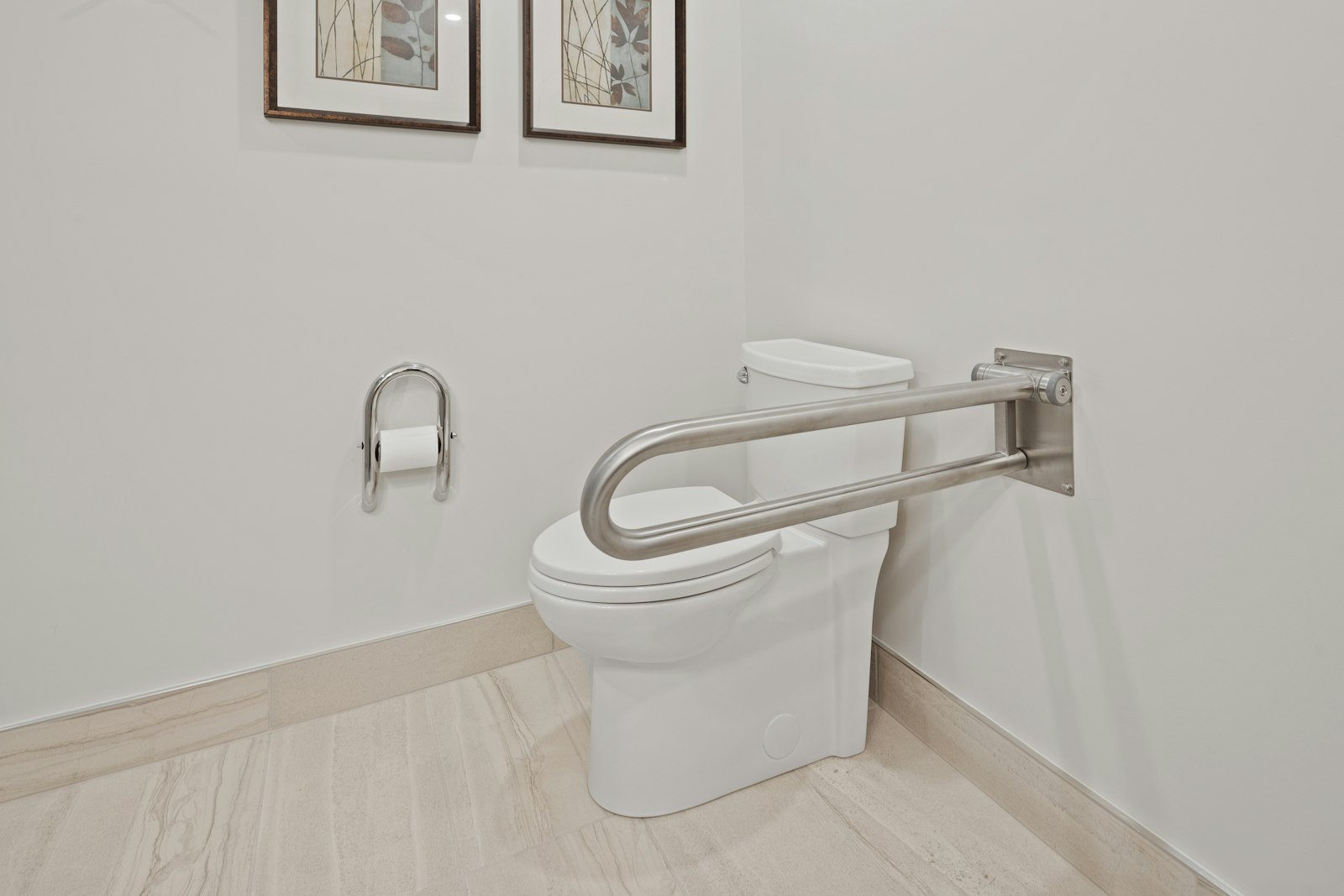
The strongest clue is where the cord ends. An emergency pull is deliberately positioned where someone who has fallen or cannot stand could still reach it. You may find it hanging almost to floor level beside the toilet, shower or bathtub.
Other clues include:
- a red cord, red handle or triangular pull at the bottom;
- grab rails around the toilet or shower;
- a wheelchair accessibility symbol on the bathroom door;
- labels such as allarme, emergenza, chiamata di soccorso or tirare in caso di emergenza;
- a small alarm unit, indicator light or reset button elsewhere in the room or outside the door.
Older Italian bathrooms can also have traditional pull switches for a light or extractor fan. Those are more often white or neutral-colored, mounted from the ceiling or high on a wall, and positioned where a standing person would operate them. Color alone is not a legal definition, however. If the purpose is unclear, ask before pulling.
Why Italian Bathrooms Have These Cords
The cord is primarily an accessibility feature, not an Italian bathroom quirk. Italy’s national technical accessibility rules in Ministerial Decree 236/1989 specify an emergency bell, campanello di emergenza, near the toilet and bathtub as part of the requirements for accessible sanitary facilities.
The regulation does not say that every bathroom in Italy must contain a red string. Nor does it prescribe one universal alarm design. The red pull cord is a common practical way of making the emergency control conspicuous and reachable.
You are particularly likely to encounter one in:
- accessible hotel rooms;
- airport and railway-station toilets;
- museums and public buildings;
- restaurants and shopping centers;
- hospitals and clinics;
- other toilets marked bagno disabili, WC disabili or servizi igienici accessibili.
At airports you may also see PRM, meaning passengers with reduced mobility. Palermo Airport provides a useful example of how seriously these systems can be connected. Its current airport operating regulations state that pulling the red cord in designated PRM toilets activates an audible alarm and a light at the bathroom door, while the system also sends remote notifications to airport personnel. Staff then attend the bathroom and reset the system.
What Happens If You Pull It
There is no single setup used by every hotel, station or attraction. A pull might activate a buzzer outside the bathroom, illuminate a warning lamp over the door, alert reception or security electronically, or combine several of these.
Do not assume that nothing happened simply because you cannot hear an alarm inside the bathroom. Some systems send the important signal somewhere else.
Also do not assume pulling the cord unlocks the bathroom door. Its job is normally to request assistance. Door access and staff procedures are separate matters.
When Not to Pull It
Leave the cord alone for ordinary bathroom tasks. In particular, do not pull it to:
- flush the toilet;
- switch on the light or ventilation fan;
- request towels or housekeeping;
- find out what it does;
- test whether the alarm works without telling staff first;
- give a child something to play with.
Do not tie the cord around a grab rail, shower fitting or towel hook to get it out of the way. The awkwardly low position is intentional. Someone who falls to the floor may need to reach it from there.
If You Pull It by Accident
An accidental pull is embarrassing rather than disastrous, but deal with it promptly because staff may already be responding.
- Do not keep pulling the cord. A second tug does not necessarily cancel the first one.
- Look for instructions. There may be a button marked reset, riarmo, annulla or tacitazione, but systems differ. Do not start pressing electrical controls at random.
- Tell staff immediately. In a hotel, call reception or go to the desk. In an airport, museum or station, tell the nearest employee.
- Stay available if someone comes to check. Some alarm procedures deliberately require staff to inspect the bathroom before the system is reset.
A useful sentence is “Ho tirato il cordino d’allarme per sbaglio. Va tutto bene.” It means, “I pulled the alarm cord by mistake. Everything is fine.”
If a child pulled it, the same approach applies. Tell staff rather than quietly leaving the bathroom and hoping the alarm stops by itself.
What to Do in a Real Emergency
If you have fallen, feel seriously unwell or cannot get up safely, that is exactly what the cord is for. Pull it firmly and wait for assistance. If there is no obvious indication that the alarm activated, pull again and shout or use your phone if you can.
For an emergency requiring immediate police, fire or medical assistance, Italy uses the European emergency number 112. In a staffed hotel or public facility, activating the bathroom alarm as well can help employees locate you quickly.
If you are arranging a trip around mobility requirements, accessible accommodation and transport connections, you can use the Italy on Foot trip planner to keep those practical details together rather than treating accessibility as an afterthought.
If Your Hotel Room Has One and You Did Not Request an Accessible Room
There is nothing unusual about being assigned a room containing an emergency cord. The hotel may simply have allocated an accessible or partially adapted room because it was available.
You do not need to do anything with the alarm. Leave the cord hanging where it is and use the room normally.
If mobility is important to you, however, the presence of the cord should not be treated as proof that the entire route is step-free. Historic hotels can have entrance steps, small lifts or stairs between an elevator landing and the room. Our guide to Italian hotel elevators explains the checks worth making before relying on the elevator symbol in a booking listing.
If You Need to Rely on the Alarm
Travelers who may genuinely need the emergency system should verify it with the property rather than testing it unexpectedly.
At a hotel, ask:
- “Possiamo verificare il campanello d’emergenza del bagno?” Can we check the bathroom emergency alarm?
- “Dove arriva l’allarme?” Where is the alarm received?
- “La reception è presente anche di notte?” Is reception staffed at night too?
If the cord has been tied high, shortened, tucked behind a rail or is otherwise unreachable from the floor, tell staff. A traveler who depends on the system should ask for it to be restored to a usable position or request another suitable room rather than assuming it will work when needed.
If pulling it produces no response during an agreed test, report that immediately as well. The useful Italian phrase is “Il cordino d’allarme del bagno non funziona.” That means, “The bathroom alarm cord is not working.”