In Italy, the same espresso can cost one amount at the counter and more at a table because the table price may include service and the use of a seat. The key to standing vs sitting at an Italian bar is to decide before ordering: choose al banco for counter service, or al tavolo if you want to sit and be served. Do not assume that buying a coffee at the counter automatically gives you the right to carry it to a café table.
Also, an Italian bar is not necessarily a place for alcoholic drinks. It is the everyday café where people stop for espresso, cappuccino, pastries, sandwiches, bottled drinks, and often aperitivo later in the day.
Al banco and al tavolo are two different ways of ordering
The distinction is simple once you know the vocabulary.
- Al banco means at the counter. You normally stand, order your drink, consume it there, and leave fairly quickly.
- Al tavolo means at a table. You sit down and either order from a waiter or follow the café’s instructions for table customers.
A café can charge different prices for these two types of service. The higher table price is not automatically a tourist surcharge or a scam. You are buying a different form of service.
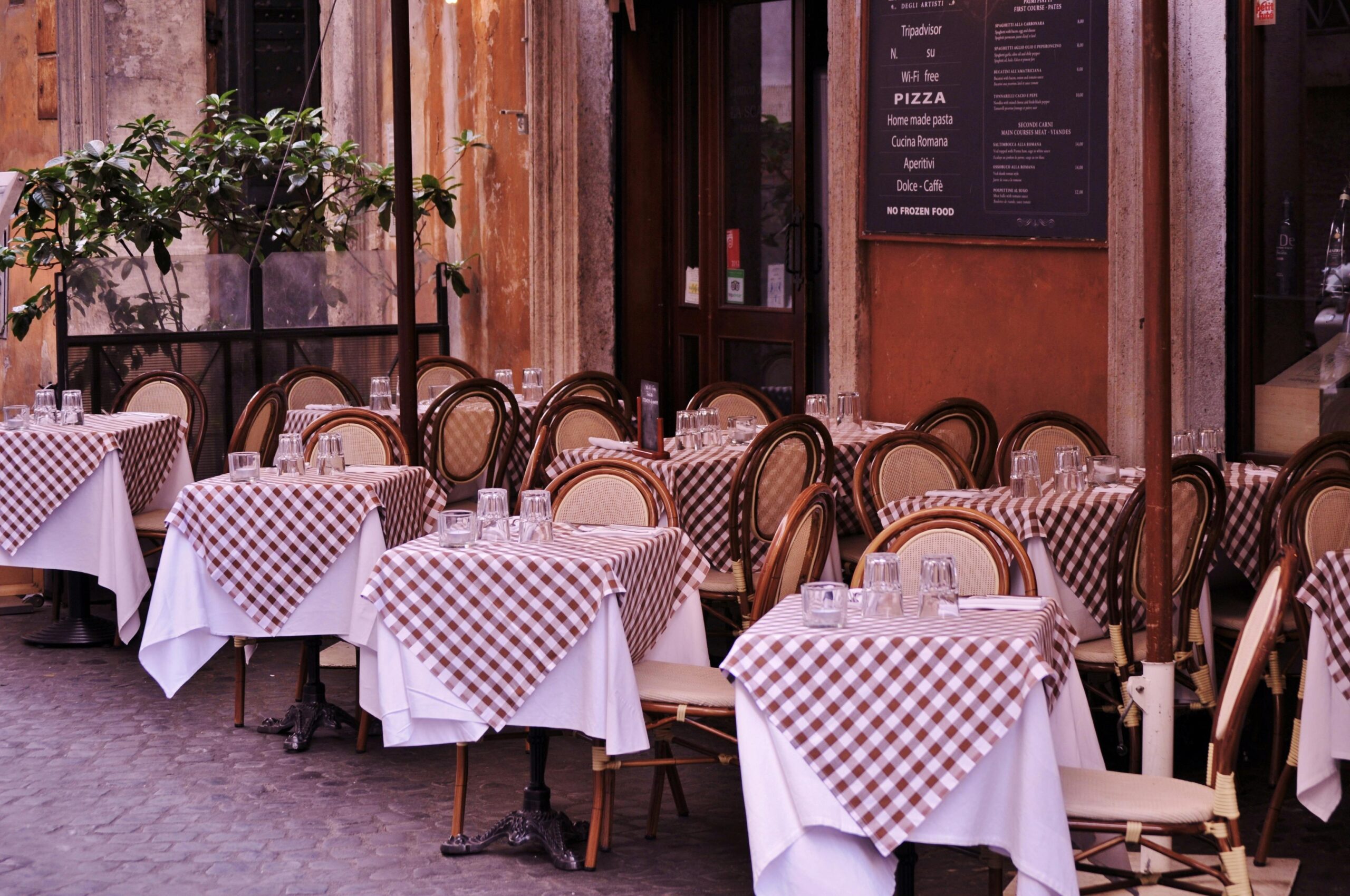
The difference is often modest at an ordinary neighborhood bar and potentially much more noticeable at cafés occupying valuable outdoor space in historic centers, famous piazzas, or directly beside major sights. The useful question is not “What should an espresso cost in Italy?” but “What does this particular café charge for the way I want to consume it?”
How to spot the two prices before ordering
Look around the entrance, counter, menu boards, table menus, and cash register for words such as:
- prezzi al banco: counter prices
- prezzi al tavolo: table prices
- servizio al tavolo: table service
- maggiorazione: surcharge or additional charge
- servizio: service
- listino prezzi: price list
- self service: collect your own order, according to the system used by that business
Some cafés print two complete columns, one for banco and one for tavolo. Others show a table-service component separately. If the arrangement is unclear, ask before ordering rather than trying to decipher the bill afterward.
The most useful question is:
“Quanto costa al tavolo?”
How much is it at the table?
You can also ask:
“Il prezzo è lo stesso al banco e al tavolo?”
Is the price the same at the counter and at the table?
Do you stand at the counter or sit down first?
Watch what other customers are doing. In a traditional quick-service bar, counter customers normally walk straight inside and order. If you want a table and waiters are circulating outside, taking a seat and waiting to order is usually the clearer choice.
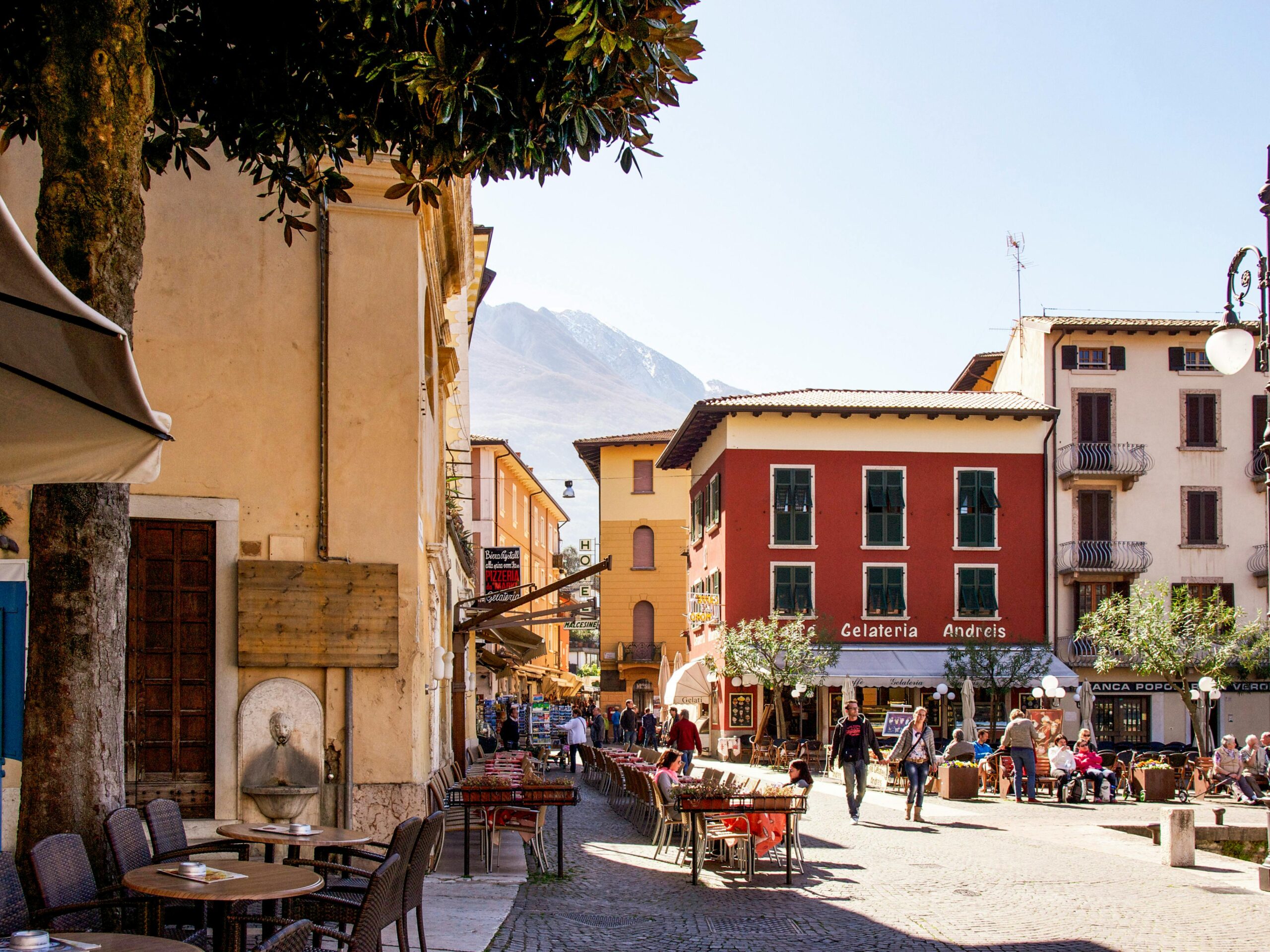
At another café, staff may expect everyone to order or pay inside before taking a seat. There is no single ordering sequence used by every bar in Italy.
If you cannot tell, say:
“Ordino qui o al tavolo?”
Do I order here or at the table?
That one sentence prevents several common misunderstandings.
Do not buy at the counter and quietly move to a table
This is the mistake most likely to create an awkward exchange.
You see an espresso listed at the counter, pay that price, collect it, then notice an empty table outside and sit down. A member of staff tells you that table service costs more. From the traveler’s perspective, the table looked empty. From the café’s perspective, you have switched from one service category to another.
If you change your mind after ordering, ask:
“Posso sedermi?”
May I sit down?
Staff may say yes with no change, ask you to pay the table difference, move your order onto table service, or tell you that particular tables are reserved for customers ordering through a waiter.
The same principle applies if you bought a pastry, sandwich, or bottled drink at the counter. An empty chair is not necessarily part of the counter purchase.
Why famous piazzas can produce much bigger price differences
A seat facing a major square can effectively be part of what the café is selling. Outdoor tables require service, staff time, cleaning, furniture, and often expensive commercial space. At historic cafés and prime sightseeing locations, the table price can therefore be substantially different from the quick counter price.
That does not mean you should avoid sitting down. It means you should make the choice deliberately.
If you want a fast espresso before sightseeing, use the counter. If what you actually want is 30 minutes off your feet with a view, table service may be money well spent. The mistake is expecting those two experiences to cost the same.
The pricing rules are regional, not one single café rule for all Italy
Italy regulates public food and drink establishments partly through regional legislation, so it is risky to quote one local rule as if it applied identically everywhere.
What travelers should expect is transparency about the price they are agreeing to. For example, Veneto’s rules on price publication specifically refer to displaying consumption prices together with the type of service offered, including counter or table service. In Lazio, which includes Rome, regional commercial legislation requires the price list to be available before a table order and to indicate any table-service component clearly.
In practical terms, a different table price is not suspicious merely because it is higher. A price or service addition that appears unexpectedly despite not being properly disclosed is a different matter.
Servizio, coperto, and mancia are not the same thing
These words are easy to mix up when you are looking at a receipt in Italian.
- Servizio is a service charge. In a café context, it may relate to being served at a table.
- Coperto is a cover charge associated mainly with sit-down dining. Its regulation is not identical throughout Italy. Lazio, for example, prohibits additional coperto charges for food and drink service.
- Mancia means tip. It is separate from both of the above.
For more unfamiliar bill terminology, the Italian menu translator covers the Italian words most likely to affect what you pay.
A higher table price also does not create an obligation to leave a large tip. Italian tipping habits are much lighter than in countries where percentage tipping is expected. The Italian tipping guide explains when leaving something extra makes sense and when simply paying the bill is normal.
How payment works at the counter
Counter service has another small complication: some bars want you to pay before ordering, while others take payment afterward.
At a pay-first bar, look for a separate cashier marked cassa. You tell the cashier what you want, pay, receive a receipt or order slip, and take it to the coffee counter. The barista may ask to see it before preparing your drink.
Elsewhere you order directly from the barista and pay at the register afterward. In a small neighborhood establishment, the same person may handle both.
If everyone around you seems to be holding little receipts, that is a strong clue that you should visit the cassa first.
For table service, payment often comes at the end. Depending on the establishment, you may pay the waiter, receive a bill at the table, or take the bill to the cash register inside.
Sitting can make sense when you have luggage, children, or need a proper break
The counter is ideal for a two-minute coffee, but it is not always the practical choice.
With a suitcase, a stroller, several children, or limited mobility, paying for a table can remove a lot of juggling. Ask before spreading bags around chairs or blocking a narrow aisle. Italian bars can be very compact, particularly in older city centers.
If you need to sit for physical reasons, you can simply ask staff where they would like you to go. Do not worry about trying to imitate the morning espresso sprint happening around you.
Likewise, carrying a large backpack into a crowded counter area just to save a table-service difference may be more trouble than it is worth. Small choices like this are useful to factor in when you build your Italy itinerary, particularly on transfer days when you will be moving through stations with luggage.
Aperitivo can follow a different pricing pattern
Later in the day, the same business may operate less like a quick coffee bar and more like a place to linger over drinks. During aperitivo hours, a table order may include snacks, more attentive service, or a different drinks menu.
Do not assume the morning espresso system still applies at 7 p.m. If the tables are full of people ordering spritzes, wine, and food, ask whether you should sit first or order inside.
The food included with a drink also varies enormously from one establishment to another. See the guide to Italian aperitivo if you are deciding between a quick drink and a longer pre-dinner stop.
What to do if the bill is higher than you expected
Do not start by arguing that coffee “should” cost the amount you saw above the counter. First establish whether that was specifically the al banco price.
- Ask to see the price list: “Mi fa vedere il listino, per favore?”
- Check whether there are separate counter and table columns.
- Look for servizio al tavolo, servizio, or another clearly stated addition.
- If you were charged differently from the displayed table price, point to the listing and ask staff to explain the discrepancy.
- Ask for and keep your receipt if the problem is not resolved.
If you have not ordered yet and the table price is more than you want to pay, the easiest recovery is simply to say “Allora prendo un caffè al banco, grazie”, meaning “Then I’ll have a coffee at the counter, thank you.”
The easiest rule to remember
For a quick espresso, cappuccino, pastry, or bottle of water, choose al banco and stay at the counter unless staff tells you otherwise. For a seat, a view, a longer break, or waiter service, check the al tavolo price before ordering.
That small pause at the menu is usually all it takes to turn a supposedly mysterious Italian café custom into a straightforward choice: pay for the quick counter stop when that is what you want, and pay for the table when the chair is part of the experience.