Italian long-distance and high-speed trains have onboard toilets, and most regional trains do too. They do not normally lock just because the train has stopped at a station. If a toilet door will not open, the more likely explanations are that it is occupied, temporarily out of service, or has been closed because of a technical problem. The exact location depends on the train model, so walking one carriage in either direction is often the quickest solution.
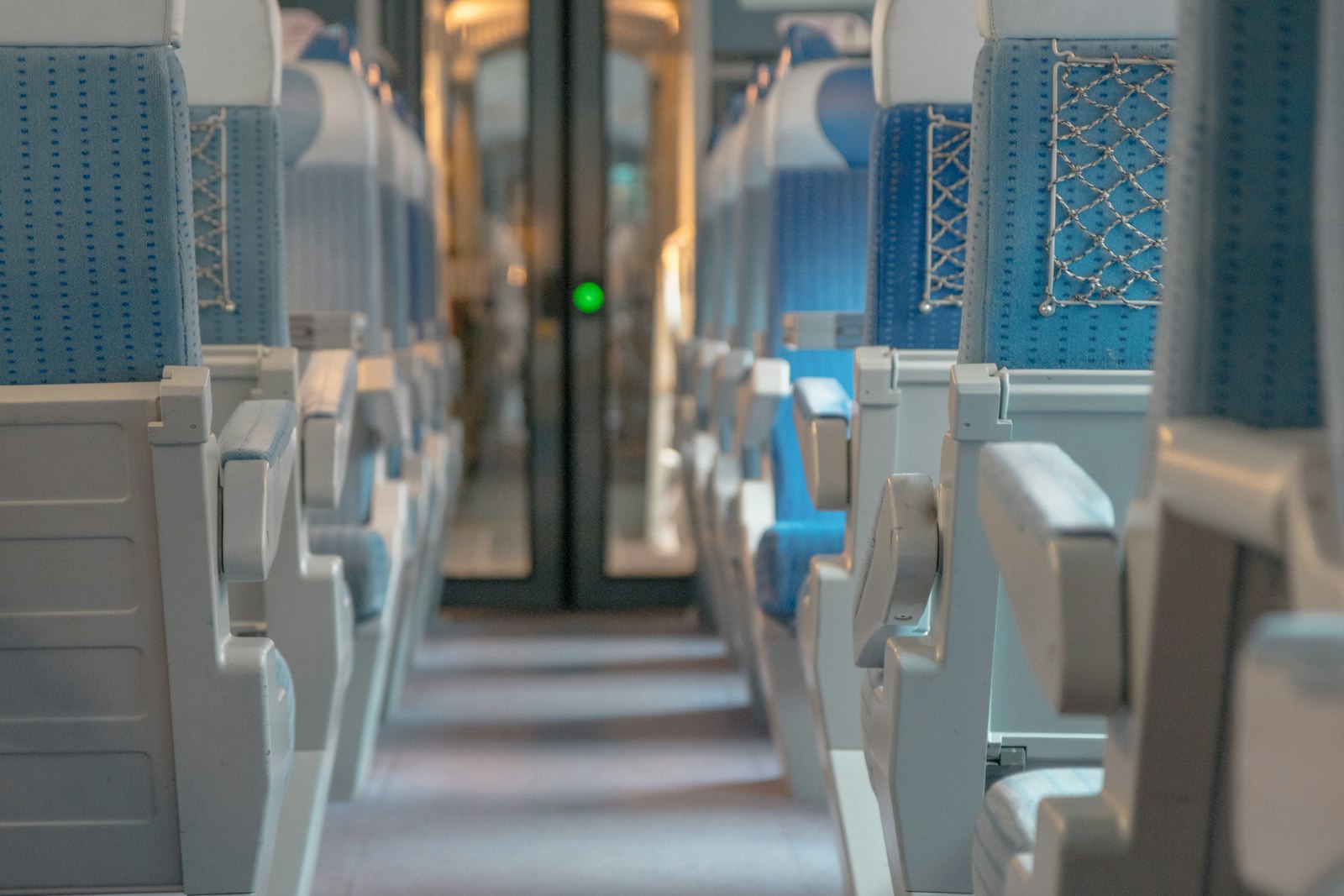
The main thing to know about toilets on Italian trains is that there is no single carriage layout used across Trenitalia, Italo, Intercity, and regional services. High-speed trains have several facilities spread through the train, while a short regional train may have only one or two. Accessible toilets are easier to locate because operators publish the carriages in which they are installed.
Do train toilets lock while the train is in a station?
On modern Italian trains, no. You can normally use the bathroom while the train is moving or standing at a station. There is no routine system that locks every toilet when the train pulls into Roma Termini, Firenze Santa Maria Novella, Milano Centrale, or another stop.
If you press the door button or pull the handle and nothing happens, look at the indicator beside the door before assuming it has been station-locked. Depending on the train, you may see:
- Occupato or a red light: occupied.
- Libero or a green light: vacant.
- Fuori servizio: out of service.
- WC non funzionante: toilet not functioning.
- Guasto: faulty or broken.
Electronically operated bathroom doors can also be confusing. On many newer trains, you press an illuminated button rather than pulling the door manually. Once inside, use the separate lock control. Do not assume that closing an automatic sliding door has locked it.
Why a toilet may be locked or marked out of service
Train staff can take a bathroom out of use when the equipment is not working properly. Trenitalia has acknowledged that toilets can become temporarily unavailable because of improper use or problems that cannot be fixed by normal cleaning during the journey and instead require maintenance.
Possible problems include a blocked toilet, malfunctioning automatic door, lack of water, or a fault with the waste system. On a busy regional service, one bathroom being unavailable can be much more noticeable because there may be only a small number on the entire train.
If the first one is closed, do not immediately assume there are no usable facilities. Walk through to the next carriage. On long-distance trains there will normally be alternatives elsewhere in the train.
Where the toilets are on Frecciarossa trains
Frecciarossa trains have multiple toilet facilities. They are normally reached from the vestibule area at or near the end of a carriage rather than from the middle of the seating area. Look for a WC symbol as you approach the connecting doors between coaches.
The exact arrangement changes because Trenitalia operates several Frecciarossa train types, including different ETR fleets. This is why advice such as “the bathroom is always behind carriage 5” is unreliable.
One location is more predictable: Trenitalia identifies carriage 3 as the location of the equipped accessible WC on its Frecce services in the normal configuration. Train formations can change, however, so passengers who require an accessible facility should use the operator’s current accessibility information rather than relying solely on a remembered carriage number. Trenitalia publishes details on its passenger accessibility page.
Frecciarossa also provides baby-changing facilities. If the nearest standard bathroom does not have what you need, follow the onboard toilet and accessibility symbols or ask the train crew, rather than searching every coach with a child in tow.
Where the toilets are on Italo trains
Italo high-speed trains also have bathrooms distributed through the train. An especially useful feature when choosing a seat is that Italo’s carriage map shows not only seats but also toilets, accessible toilets, exits, and baby-changing facilities. You can therefore check where the closest bathroom is before completing a seat selection.
For passengers using wheelchairs, the relevant carriage depends on the train type:
- Italo AGV: the wheelchair spaces are in carriage 8, close to the accessible toilet.
- Italo EVO: the equipped wheelchair spaces are in carriage 3, again close to the accessible toilet.
Italo explains these layouts on its official seat-selection page. If an equipment substitution takes place, follow the actual signs on board rather than assuming your usual layout will be identical.
Where the toilets are on Intercity trains
Trenitalia Intercity trains have onboard bathrooms, with the accessible WC officially located in carriage 3 together with the area intended for passengers with reduced mobility and their companions.
Standard facilities are found elsewhere in the train as well, normally off the vestibule or corridor. Older Intercity rolling stock can feel less uniform than a Frecciarossa, so carriage-end WC signs are more useful than trying to remember a universal coach number.
If you are still getting familiar with the difference between Frecciarossa, Italo, Intercity, and Regionale services, the Italy train travel guide explains how the main categories work and which one to choose for different journeys.
Regional trains are the least predictable
Regionale is where travelers should be most cautious about assuming there will be a bathroom beside their seat. Trenitalia uses several regional train types, and the number and position of facilities vary according to the rolling stock and the composition of that particular service.
Modern regional fleets such as Pop, Rock, Jazz, Swing, Minuetto, and other accessible rolling stock generally include an accessible toilet. Other regional configurations can differ, and Trenitalia specifically advises passengers who depend on accessible facilities to check the accessibility information for the actual service.
On a short regional train, there may be only one usable bathroom for a large number of passengers. If it is out of service, there may not be another one several coaches away as there would be on a long high-speed train.
For that reason, use a station bathroom before boarding if access to a toilet during the journey is essential, particularly on an older regional service or a long rural route with infrequent stops.
What about Intercity Notte sleeper trains?
Overnight trains use another layout again. Ordinary couchette and sleeping accommodation relies on shared facilities located in the carriage or corridor area. Do not assume that booking a sleeping compartment automatically means you have a private bathroom.
Trenitalia’s Cabina Superior is different: it includes a private WC, washbasin, and shower inside the cabin. Other accommodation categories can have a washbasin but shared toilets elsewhere in the sleeping car.
Check the accommodation description when booking rather than looking only at words such as “cabin,” “sleeper,” or “private.” Privacy of the sleeping compartment and privacy of the bathroom are two separate things.
How to find the bathroom once you are on board
Start by checking the ends of your carriage. The WC is usually in the vestibule area beside the doors, connecting passage, luggage space, or other service compartments.
Look for the familiar male/female or WC pictogram. You may also see:
- Toilette or WC: toilet.
- WC accessibile or a wheelchair symbol: accessible toilet.
- Fasciatoio: baby-changing table.
- Libero: vacant.
- Occupato: occupied.
If there is no toilet at your end of the carriage, go through the connecting door into the next coach. You do not need to stay inside your booked carriage during the journey simply because your seat is there.
Keep an eye on the station sequence if you start walking through the train shortly before your stop. Italian high-speed station calls can be brief. A search for a working bathroom is a poor reason to find yourself two coaches away from your suitcase when everyone starts getting off.
Can you leave your luggage while using the toilet?
Normally, yes, but use common sense. A suitcase stored in the proper luggage rack does not need to be dragged into the bathroom. Keep your passport, wallet, phone, and other valuables with you rather than leaving them loose on the seat or on top of a bag.
If you are traveling alone and your large suitcase is in a luggage rack near the carriage entrance, use a bathroom in the same carriage or an adjacent one where possible. Avoid wandering half the length of the train unnecessarily.
When arranging several rail journeys, hotels, and transfers, you can organize the rest of your Italy trip so that awkwardly long travel days and tight connections are easier to spot before booking.
Using an automatic train toilet without accidentally leaving the door unlocked
Newer train bathrooms often have electrically operated sliding doors. The sequence is usually:
- Check that the vacant indicator is showing.
- Press the exterior door-opening button.
- Enter and allow the door to close.
- Press the interior lock button or control.
- Check that the locked indicator has activated before using the toilet.
- Unlock the door before pressing the opening control to leave.
The important step is number four. A closed door is not necessarily a locked door. The controls often use symbols rather than much written Italian, but if there are separate buttons showing an open and closed padlock, use the closed-padlock button once you are inside.
What to do if the only toilet you find is locked
First check whether it is actually occupied. If the red occupied light remains on for an unusually long time, try another facility instead of repeatedly pressing the door button.
If you see fuori servizio, guasto, tape across the door, or a handwritten crew notice, do not force the door. Move to the next carriage and look again.
If you cannot locate another working toilet, ask the capotreno, the train manager/conductor, or another member of the onboard staff:
“C’è un altro bagno funzionante?” means “Is there another working bathroom?”
You can also ask “Dov’è la toilette?”, meaning “Where is the toilet?”
Staff may be able to direct you to a working facility several carriages away. If all onboard toilets are unavailable and the situation is urgent, tell the crew rather than simply waiting for the next scheduled stop. They know the route, the length of upcoming stops, and whether a station has usable facilities.
Do not count on getting off at an intermediate station
Leaving the train during a normal station stop to find a platform bathroom is risky. A stop may last only a minute or two, and the train will not wait because you went into the station building.
If you genuinely need to leave the train because onboard facilities are unavailable, speak to the crew first and expect that you may have to continue on a later service. This is particularly important with a reserved Frecciarossa, Italo, or Intercity ticket, where changing trains can have fare consequences.
On regional services with flexible ticket conditions, recovery may be easier, but never step off assuming the train will remain in the station for several minutes unless the timetable or crew specifically confirms it.
For children, strollers, and passengers who need more space
The accessible bathroom is generally the most practical option when a parent needs a baby-changing table or more room to help a young child. Follow the changing-table pictogram rather than assuming every small WC has one.
Do not try to squeeze a large stroller through the bathroom doorway. Leave it folded or safely positioned outside without blocking the aisle, vestibule, emergency equipment, or doors.
Travelers who specifically require an accessible toilet should check the actual booked train rather than relying on general fleet information. Equipment changes can happen, and regional trains in particular vary. Trenitalia and Italo both publish assistance information and can arrange support for passengers with reduced mobility.
The practical rule to remember
A bathroom that is closed while your train is standing in a station has probably not been locked simply because the train stopped. Check the occupancy light and any fuori servizio notice, then try the next carriage.
On Frecce and Intercity services, carriage 3 is the key reference point for Trenitalia’s accessible WC. On Italo, the accessible facility is near the wheelchair spaces in carriage 8 on AGV trains and carriage 3 on EVO trains. On regional services, the layout depends on the particular train, so the WC symbols on board and the accessibility information for your departure are more reliable than any universal carriage number.