Orta-Miasino is not beside the lakefront. The station sits in Legro, above the historic centre, with roughly 2 km and about 100 metres of descent between the railway and Piazza Motta. For Orta-Miasino station to Orta San Giulio, a pre-booked taxi is the easiest choice with luggage; a local bus works when its timetable matches your train; walking is perfectly reasonable with a light bag in daylight, but part of the route lacks a continuous pavement. Coming back to the station is the harder direction because the same route is uphill.
Which option should you choose?
- Backpack or small overnight bag: walk if the weather is good. The descent is straightforward once you find Via Marconi.
- Large wheeled suitcase: take a taxi if possible. The distance is not the problem so much as the roadside section, slope and stone paving once you enter the old town.
- Bus timetable matches your train: use it. Just make sure the timetable actually lists the railway-station stop, not merely a nearby junction.
- Stroller or limited mobility: arrange a vehicle rather than treating this as a simple station-to-centre walk.
- Late arrival, Sunday or public holiday: check the bus before travelling and have a taxi plan ready. This is not a station where you should assume frequent urban transport will appear every few minutes.
First understand where the station actually is
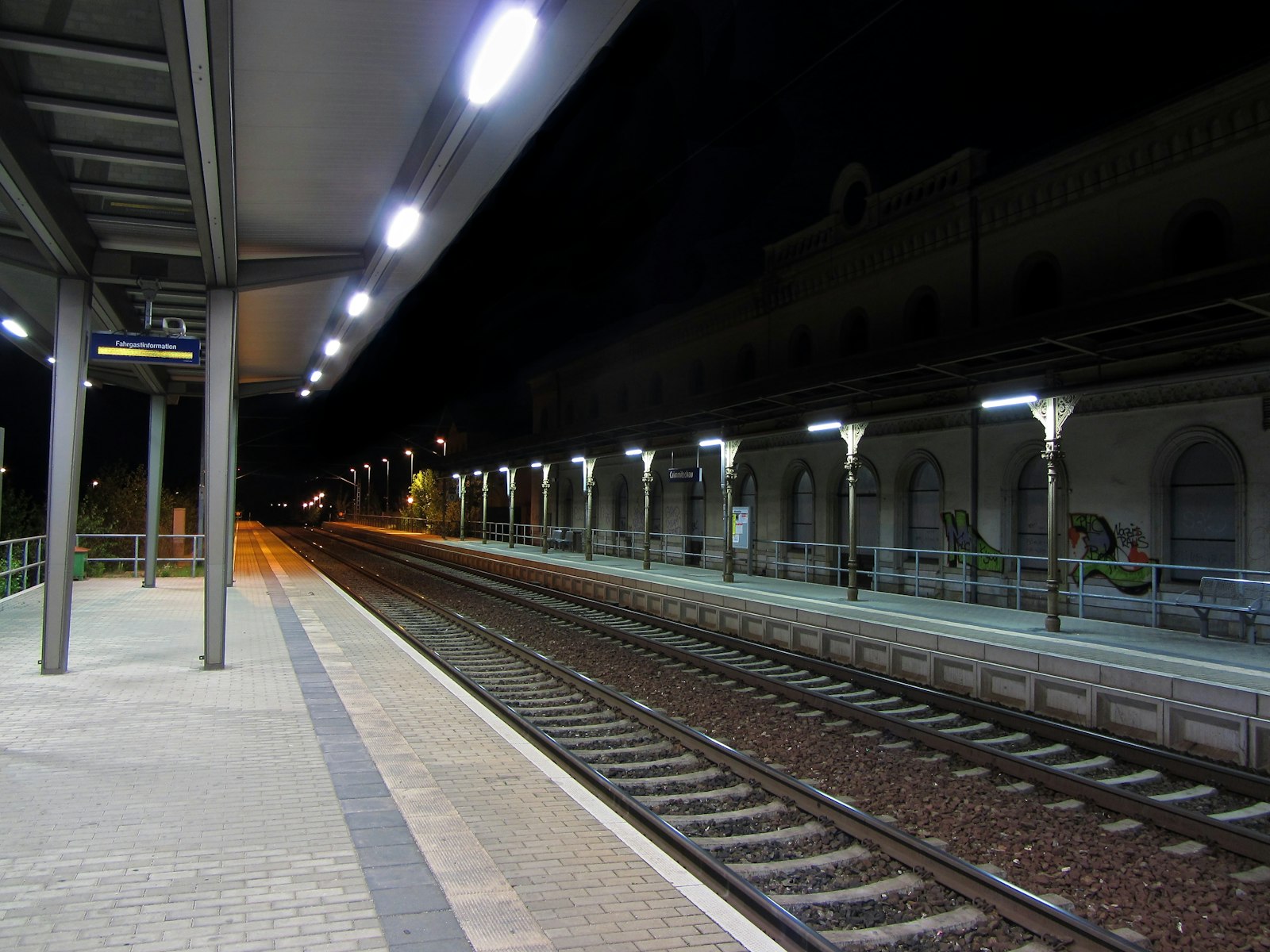
The railway station is in the hamlet of Legro, at Via Lunati, above Orta’s peninsula. The lakefront square most visitors are aiming for is Piazza Motta, where the boats for Isola San Giulio depart. They are not two parts of the same flat town centre.
This explains why a map can make the transfer look easier than it feels with luggage. The downhill journey is short enough to walk, but the return includes a sustained climb. If you are staying for one night and carrying a full-size case, saving the taxi fare on arrival can feel less clever by the time you drag the same case back uphill for a morning train.
Taking the local bus from the station
Autoservizi Comazzi serves Orta, and the municipality lists stops including Orta FS, Orta bivio Stazione, Orta Piazzale S. Bernardino and Orta Piazzale Prarondo. Those names matter because they are not interchangeable.
- Orta FS / Stazione Ferroviaria: this is the useful label when you want a bus serving the railway station itself.
- Bivio Stazione / Bivio Stazione Ferroviaria: bivio means junction. It is a separate stop near the station, not simply another name for the station forecourt.
- Piazzale San Bernardino: a useful drop-off at the edge of the historic centre. You still walk the final section to Piazza Motta or your hotel.
- Piazzale Prarondo: the parking and upper-town side of Orta. It can be useful for accommodation around Via Panoramica, but it is not the lakeside square.
Before deciding to wait for a bus, open the official Comazzi timetable and read the individual stop rows. Do not assume that every service passing through Orta enters the railway station. A departure that lists only a bivio may require an extra walk.
What is already published for 2027
For early 2027, Comazzi has published its winter timetable as valid from 14 September 2026 through 10 June 2027. At the time of checking, the following summer timetable for 2027 had not yet been published. Anyone travelling from mid-June onward should therefore check again rather than copying times from the previous summer.
The same caution applies to the train itself. RFI’s currently published station timetable does not yet cover the whole of 2027, so use the official Orta-Miasino departure information close to your travel date instead of building a connection around today’s departure minutes.
Buying the bus ticket
Comazzi currently states that ordinary single tickets can be bought from the driver. Its present fare notice also applies a €1 onboard collection charge to passengers buying a single ticket without a BIP card. Because fares and payment procedures can change, check the operator’s current ticket information before a 2027 trip rather than assuming an old fare is still valid.
If your Italian is limited, the useful request is simple: “Per Orta, piazzale San Bernardino?” Ask before settling into a seat. The driver can confirm whether that particular run is going where you need it.
Taxi: the best answer for luggage
Orta is small, so do not plan your arrival on the assumption that a line of taxis will be waiting outside every train. Pre-booking is safer, particularly for an evening arrival, a family with several bags, or a departure tied to a specific train.
The Comune di Orta San Giulio maintains local taxi and NCC contact information. NCC means noleggio con conducente, a pre-booked car with driver. Your hotel may also have a driver it regularly uses for station pickups.
When booking, give the name and address of your accommodation, not merely “Orta San Giulio.” Much of the historic centre is restricted to ordinary traffic, and some lanes are pedestrian-only. A driver may need to leave you at San Bernardino, Via Fava, Prarondo or another reachable point rather than directly at the hotel door.
A useful message to your accommodation is: “What is the closest point a taxi can reach with luggage?” That avoids discovering after arrival that “taxi to the hotel” really means taxi to a road above it followed by several minutes over stone paving.
Walking downhill from the station
The practical walking route begins at the Via Lunati side of the station. Follow signs for Orta or centro and descend toward Via Marconi. Local tourism directions use the same basic route from the railway to the roundabout beside Villa Crespi.
- Leave the station onto Via Lunati.
- Follow the road and signs toward Orta San Giulio / centro.
- Continue downhill on Via Marconi.
- At the roundabout by Villa Crespi, use the marked pedestrian crossing rather than cutting directly through traffic.
- Continue toward the lake. For the pleasant approach to the old town, follow Via Fava.
- Keep following signs for centro and Piazza Motta. The final streets become narrower and more obviously historic as you reach the waterfront.
Allow more time than the bare distance suggests. An unencumbered traveler can cover the descent fairly quickly, but a suitcase, wet pavement, photography stops or uncertainty at the road junctions can turn it into a noticeably longer transfer.
The awkward part is not the hill
Downhill, the slope itself is manageable for most reasonably mobile travelers. The bigger nuisance is that a section of the approach does not have a continuous pedestrian pavement. That is fine with a backpack and more annoying when you are steering a roller case while watching passing traffic.
Avoid accepting every pedestrian shortcut suggested by a mapping app. There are paths and walking routes around Legro and the sports facilities, but a paved road is the better choice when you have luggage. A path that saves a few hundred metres is of little value if you then have to carry a suitcase over an uneven surface.
Once you reach the old town
Orta’s historic lanes introduce a different luggage problem: stone and cobbled surfaces. Even after the steep part is over, small suitcase wheels can rattle badly. If your accommodation is in the centre, ask for its preferred approach rather than assuming the shortest-looking alley is the easiest one.
Walking back to the station is a different calculation
The return trip reverses the gradient, so the station is now above you. Do not use your downhill walking time to decide when to leave Piazza Motta for a train.
With a case, give yourself a generous margin for the climb up Via Marconi, finding the station entrance and reaching the correct platform. Thirty-five to forty-five minutes from the lakefront is a much safer planning window than trying to reproduce a brisk downhill pace in reverse. Add more if you have children, heavy luggage or reduced mobility.
If your train matters, this is also a good place to organize the rest of your Italy route so the uphill transfer, regional train and following connection are treated as one journey rather than three unrelated timetable entries.
Reduced mobility, wheelchairs and strollers
At the time of checking, RFI marks Orta-Miasino as a station without its passenger-assistance service for people with reduced mobility. That does not mean every passenger with limited mobility cannot use the station, but it does mean you should not arrive expecting the assistance facilities of a major railway hub.
The walk to town also combines slopes, roadside sections and old paving. Local accessibility information for Orta notes that many historic-centre streets are cobbled and can be difficult for a manual wheelchair. For a wheelchair user, someone who struggles on gradients, or a family managing both stroller and luggage, arranging a vehicle transfer and confirming the nearest suitable hotel drop-off is the sensible plan.
What to do if the bus does not appear
First check the stop name. The most common mistake is waiting at a stop labelled Bivio Stazione when the timetable refers to Orta FS, or doing the reverse. Then check whether you are reading a school-day, Saturday, Sunday or holiday column.
If you have just missed the useful departure, compare the wait with the walk rather than automatically standing there for an hour. In daylight with a small bag, walking can be the faster recovery. With a suitcase, phone a driver or contact your accommodation.
For a late arrival, do not begin the roadside walk simply because it is technically possible. Save the number of your booked driver before boarding the train, keep your phone charged, and tell your hotel which train you are on. If the train is delayed, message the driver before you reach Orta-Miasino.
The three Italian words that prevent most mistakes
- Stazione / FS: railway station.
- Bivio: junction. A stop containing this word may be near the station without being directly at it.
- Centro: town centre. Follow this on the downhill walk toward historic Orta.
For the lakefront and boat pier, your final landmark is Piazza Motta. For the return train, start thinking about the climb back to Legro before you are standing beside the lake with fifteen minutes left and a suitcase that suddenly feels twice as heavy.