For the easiest step-free arrival, use Porta San Pietro, not the shorter pedestrian passage directly opposite the station. The best route for Lucca station to the city walls is to leave through the main station exit, turn left, follow the edge of Piazzale Ricasoli and Viale Regina Margherita, then cross at the pedestrian lights for Porta San Pietro. Allow roughly 350 to 400 metres. It is the sensible route with suitcases, a stroller, a wheelchair or limited mobility.
The tempting alternative is the San Colombano bastion almost straight ahead of the station. It is shorter, at roughly 200 metres, but Lucca’s official tourism information specifically says those pedestrian passages are not accessible to people with motor disabilities. With heavy rolling luggage, the few minutes saved are rarely worth the awkward route.
Which entrance should you choose?
- Porta San Pietro: choose this for wheeled luggage, wheelchairs, rollators, strollers or anyone trying to avoid steps.
- Baluardo San Colombano passages: choose these only if you are comfortable with a more complicated pedestrian route and do not need guaranteed step-free access.
Do not confuse entering through the walls with climbing onto the elevated wall promenade. Porta San Pietro gives you a practical, step-free route into the historic centre. Reaching the park on top of the fortifications is a separate climb using ramps or stairs.
The step-free route via Porta San Pietro
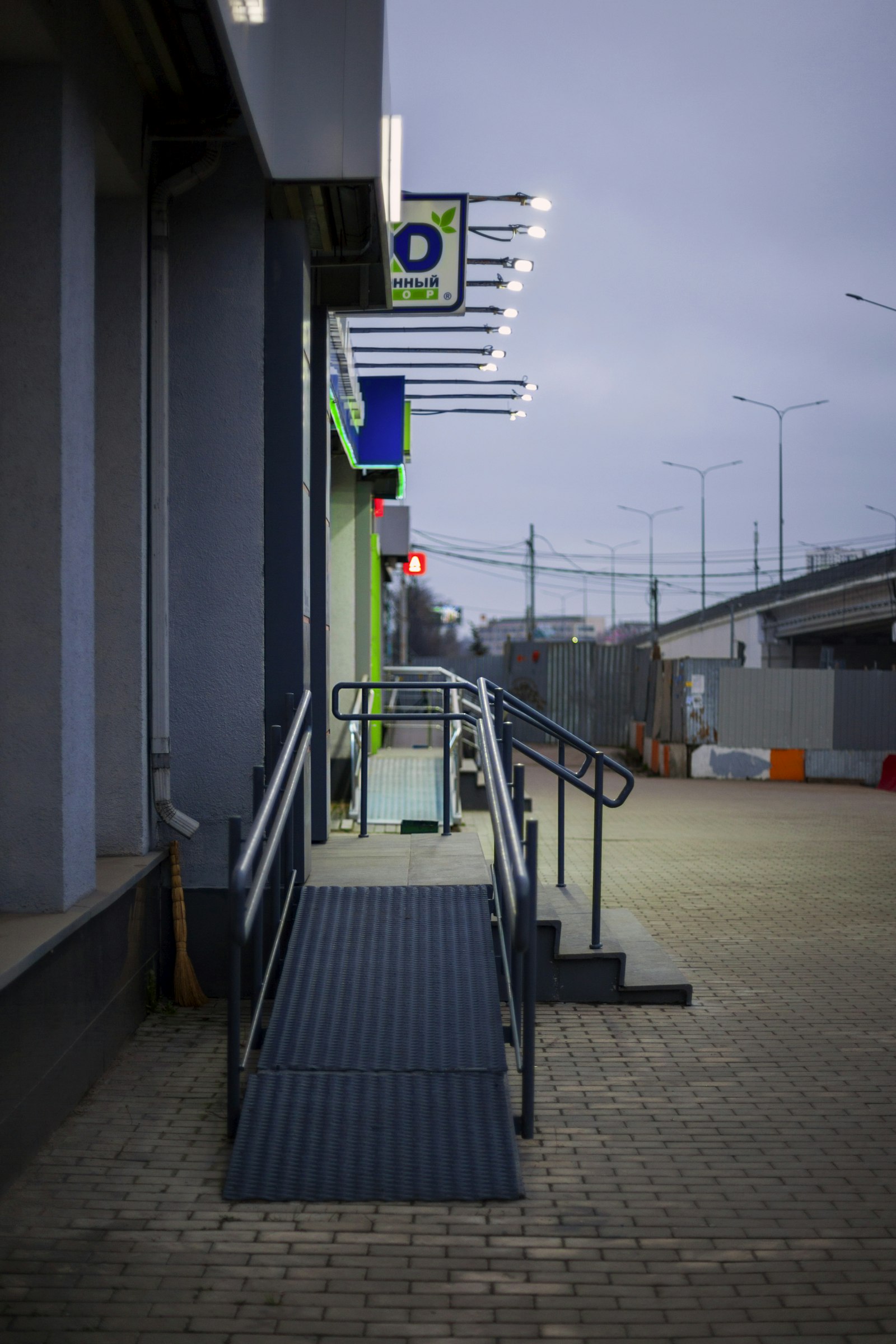
- Leave Lucca station through the main entrance onto Piazzale Ricasoli. The walls are immediately visible across the open area, so there is little danger of walking off in the wrong direction.
- Turn left while still beside the station building. Follow the covered frontage toward Viale Cavour. Lucca’s designated accessible itinerary uses this side rather than heading directly toward the bastion opposite.
- Use the pedestrian crossing at Viale Cavour. The official accessibility route describes ramps at the crossing and a push-button pedestrian signal.
- Continue around Piazzale Ricasoli and turn left along Viale Regina Margherita. You are now walking west with the walls on the opposite side of the road.
- Continue past Via Montanara. After this junction, keep following Viale Regina Margherita toward the monumental gate.
- Cross Viale Regina Margherita at the pedestrian lights for Porta San Pietro. Enter through the gate and you are inside Lucca’s historic centre.
The official LuccAccessibile information identifies Porta San Pietro as the accessible approach from the railway station. Surfaces are not uniformly modern and silky smooth. Expect pavement joints and occasional uneven sections, particularly around older paving, but this route avoids the deliberate shortcut through the bastion passages.
Why the straight-ahead shortcut can catch travelers out
From the station forecourt, the walls look so close that walking straight toward them appears obvious. Those openings belong to the Baluardo San Colombano system. In Italian you may see the word sortita, meaning a secondary passage or sally port through the fortifications.
The city’s official Walls FAQ puts the San Colombano access at about 200 metres from the station but states that it is not suitable for people with motor disabilities. That is the key detail that ordinary walking directions tend to miss.
With a backpack and good mobility, the shortcut can be appealing. With a 20 kg suitcase, two cabin bags, a pushchair or a wheelchair, stay on the Porta San Pietro route. A map app may favour the shorter line without understanding why the extra 150 metres is the easier choice.
Check your railway platform before worrying about the street route
Step-free access can matter before you even leave the station. RFI currently lists Lucca as a station offering assistance for passengers with disabilities and reduced mobility. Some platform areas have barrier-free access by level route or ramp, while platforms 3 to 6 depend on lifts.
At the time of writing, RFI publishes lift operating hours of 06:00 to 21:00 at Lucca. For a trip in 2027, verify those hours and the status of the lifts on the official RFI Lucca station page shortly before travelling. Lift hours, temporary outages and assigned platforms can change.
This particularly matters on a late train. Someone who can roll comfortably from the station entrance to Porta San Pietro may still have a problem if their arriving platform requires a lift that is unavailable. If stairs are not possible for you, arrange RFI assistance rather than relying on the lift being operational when you arrive.
Entering the city is not the same as getting onto the wall promenade
Porta San Pietro brings you through the fortifications at street level. Once inside, Lucca’s centre is relatively easy to cover with wheels, but the Passeggiata delle Mura, the broad path on top of the walls, sits above street level.
Official tourism information describes numerous stairs and ramps around the inner perimeter. Its accessibility guidance also warns that reaching the upper walls involves climbs that may require assistance. A ramp is therefore not automatically the same thing as an independently wheelchair-accessible route. Gradient matters.
If your priority is simply getting to a hotel, the cathedral or the historic centre with luggage, do not climb onto the walls at all. Go through Porta San Pietro and continue at street level. Save the elevated circuit for after you have dropped your bags.
Where to go once you have passed Porta San Pietro
The accessible route continues from the southern gate toward the area of Piazza San Giovanni, close to Lucca Cathedral. For most central accommodation, this is a better starting point than hauling luggage up to the wall promenade and looking for another ramp down.
If you are staying overnight, check your hotel’s exact street before leaving the station. Lucca’s old centre contains short lanes where a geographically direct line is not always the nicest one for suitcase wheels. You can also use the Italy on Foot trip planner to organize the rest of your route once you know where you are staying.
For sightseeing after the bags are gone, the Italy on Foot guide to visiting Lucca by train and exploring the city is a useful next step.
If you do not want to carry the bags into town
Lucca Tourism currently lists a luggage-storage service at the Tourist Center at Piazzale Ricasoli 503, opposite the station, as well as another option inside the historic centre. These are commercial services, so for 2027 confirm the business, opening hours and acceptance rules before building a day trip around them.
Leaving a suitcase by the station changes the calculation considerably. Without luggage and without mobility restrictions, the San Colombano passage can become a reasonable shortcut. With bags still in hand, Porta San Pietro remains the safer default.
Wheelchairs, rollators and reduced mobility
If you need a genuinely step-free journey, use three separate checks rather than assuming that “Lucca is accessible” covers everything:
- Train to station exit: confirm your platform and RFI lift availability.
- Station to historic centre: use the Porta San Pietro route.
- Street level to the top of the walls: assess the particular ramp separately, since the climb can be the difficult part.
Lucca’s municipal taxi service also lists an accessible vehicle equipped with a lift. If walking several hundred metres is the problem rather than stairs alone, arranging an accessible taxi from the station can be more useful than trying to force the shortest pedestrian route.
With a stroller
A stroller does not necessarily require the full wheelchair strategy, but Porta San Pietro is still usually easier. The San Colombano shortcut may look harmless on a map while becoming tedious when one adult has to lift the front wheels, manage bags and keep moving through a confined passage.
For a sleeping child, a loaded stroller or a pushchair with luggage clipped to it, use the longer gate route. An extra few minutes on pavement is preferable to discovering the awkward section after you have already committed to the shortcut.
Late arrivals and early departures
There is no museum admission procedure at Porta San Pietro. It functions as an entrance to the city, so you are not waiting for a ticket office to open before walking into the centre. The more important late-night issue is railway accessibility, particularly if your platform depends on an elevator.
If you arrive after the currently published RFI lift hours and cannot use stairs, arrange assistance in advance. If you simply have too much luggage to manage comfortably, use the station taxi rank rather than experimenting with the bastion passages after dark.
For an early departure, reverse the same Porta San Pietro route and give yourself extra time for the pedestrian crossings around Piazzale Ricasoli. Reaching the station building is only part of the job if you then need an elevator to your platform.
Lucca Comics & Games can change the normal route
One period deserves special caution: Lucca Comics & Games, normally held around the end of October and beginning of November. The municipality introduces major temporary pedestrian and traffic arrangements around the walls, station area and city gates. Previous editions have included restrictions around Porta San Pietro and changes to the use of San Colombano passages.
Do not copy the access plan from an earlier festival and assume it applies in 2027. The Comune publishes a specific logistics plan close to each edition. If your trip falls during the event, check the current municipal instructions a few days before arrival and follow temporary signs and staff directions at Piazzale Ricasoli.
If you take the wrong path
If you start toward San Colombano and discover stairs or an awkward passage, do not keep dragging luggage through simply because the walls are only metres away. Return toward Piazzale Ricasoli, face the station, and work back to the station-side pavement. From there, take the route west along Viale Regina Margherita to Porta San Pietro.
If an RFI lift is out of service, speak to station staff or contact the railway assistance service rather than trying to carry a wheelchair, mobility aid or very heavy luggage over station stairs. And if street-level walking becomes the problem, a taxi from Piazzale Ricasoli is the cleanest fallback. The shortest line on the map is not the useful measure here. The useful route is the one you can actually roll from beginning to end.