Read the entrance printed on your ticket before choosing which side of the stadium to walk toward. For the 2026/27 football season, San Siro’s perimeter was reorganised: Gates 7, 8, 9 and 10 are no longer used for normal spectator entry, and Via dei Piccolomini is closed to arriving pedestrians. The remaining entrances are spread around a very large perimeter, so getting off public transport on the wrong side can mean a substantial detour.
The safest way to use San Siro gate numbers is to treat the ticket as the authority, not an old stadium diagram or the colour of your stand. This matters especially now because Inter and AC Milan have slightly different rules about changing entrances when queues form.
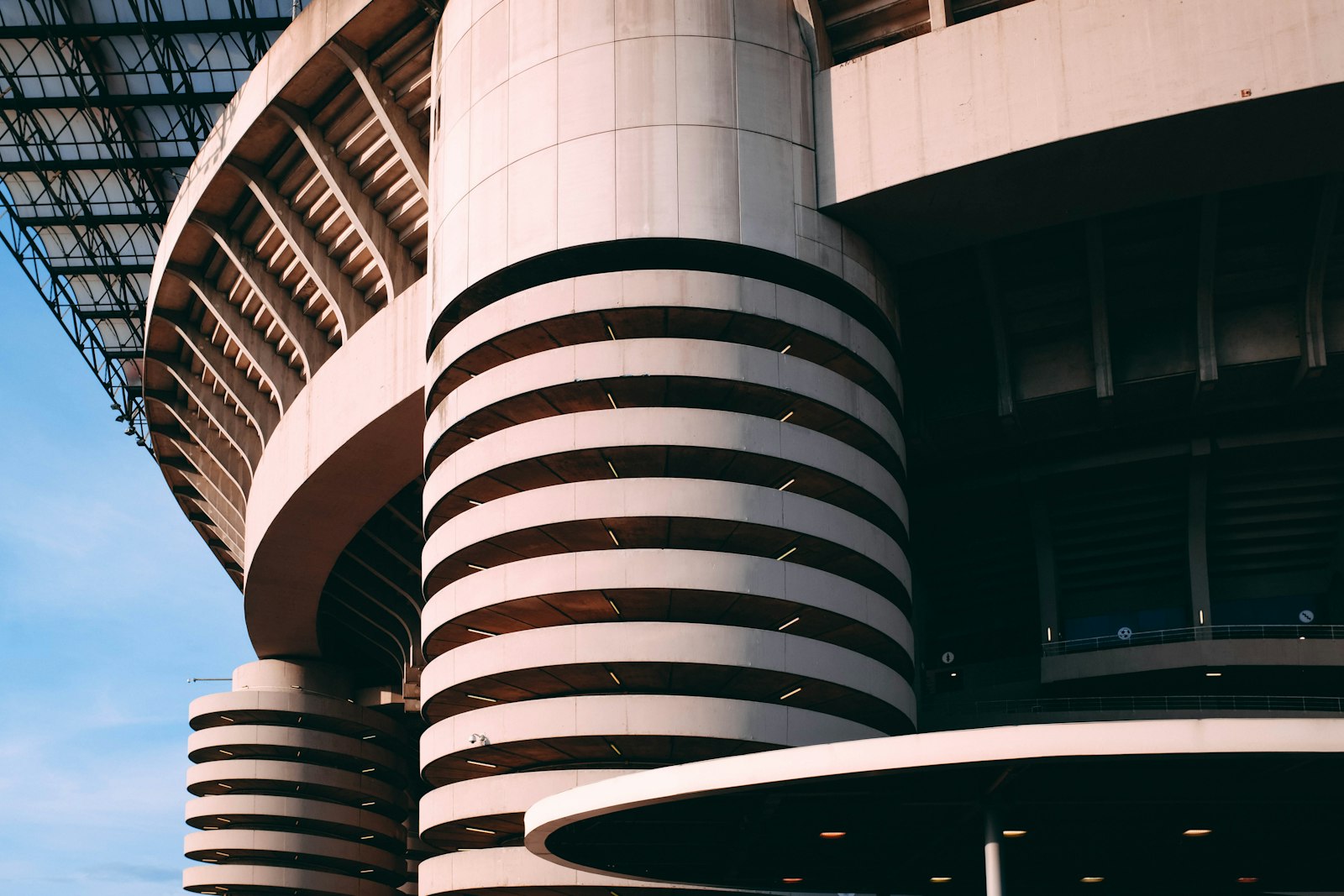
The 2026/27 entrance layout is different from older San Siro maps
The biggest source of confusion is that many maps, blog posts and saved screenshots still show Gates 7 to 10 as normal entrances. That information is outdated for the current football-season layout.
Both clubs announced a reorganisation of the perimeter in August 2026 as work connected with the new stadium project changed pedestrian routes. Inter’s current stadium access information states that entrances 7 through 10 are no longer in use for entry. AC Milan’s current access notice describes those positions as exit gates rather than public entrances.
The practical result is a deliberate jump in the numbering. You will see Gates 0 to 6, then the sequence resumes at Gate 11 and continues through Gate 15. Gate 15 bis and the dedicated PC4 accessible entrance also have specific functions.
If your phone shows an older map telling you to walk to Gate 8 or Gate 9 for a match, do not keep circling the fence looking for the old entrance. Follow the current event signs and your ticket instead.
First separate the entrance from your stand, tier and seat
A San Siro ticket can contain several numbers, and only one of them tells you where to enter the outer stadium perimeter. Look for wording such as Ingresso or Cancello.
- Ingresso / Cancello: entrance or gate. This is the number you need outside.
- Settore: seating section inside the stadium.
- Anello: tier or ring. Primo, Secondo and Terzo Anello mean first, second and third tier.
- Rosso: red stand.
- Verde: green stand.
- Blu: blue stand.
- Arancio: orange stand.
- Fila: row.
- Posto: seat.
- Settore ospiti: away-supporters’ section.
Do not assume that a section number in the 200s or 300s is an entrance number. The outside gate gets you through the perimeter and security checks. After that, internal signs direct you to the correct tier, section, row and seat.
Which side of the stadium are the active gates on?
The current 2026/27 access map is easiest to understand by using the four coloured stands and the surrounding streets as landmarks.
- Red stand: the Piazzale Angelo Moratti side of the current map.
- Green stand: the Via Achille side.
- Blue stand: the Piazzale Axum side.
- Orange stand: the Via Piccolomini side, although Via dei Piccolomini itself is currently closed to pedestrians arriving at the stadium.
Starting near the Via Achille and Via Piccolomini corner, the active numbering runs from Gate 0 upward through Gates 1, 2, 3, 4, 5 and 6 as you continue around that half of the perimeter. After the closed former entrance area, Gate 11 appears on the other side of the red stand, followed by Gates 12, 13 and 14 along the Piazzale Axum side and Gate 15 toward the orange corner. Gate 15 bis sits close to Gate 15 and has a specialised away-supporter function for Inter matches.
This is why “walk toward the red stand” is no longer precise enough. Two spectators sitting in broadly the same colour area may still have different approaches because their assigned entrances are on opposite ends of that stand.
Inter and AC Milan do not currently use the gates in exactly the same way
For an Inter home match
Inter’s current 2026/27 instructions say that the entrance printed on most tickets is a recommended entrance rather than an absolute requirement. Where crowd conditions allow, spectators may use another active entrance, and stewards can redirect people toward a shorter queue.
There are important exceptions. Inter currently identifies these as mandatory:
- Gate 2: Second Green, Secondo Verde.
- Gate 3: Third Green, Terzo Verde.
- Gate 15 bis: Third Blue away section, Terzo Blu settore ospiti.
If you hold one of those tickets, do not join another queue just because it looks shorter.
For an AC Milan home match
AC Milan’s current instructions are stricter. The club says the entrance shown on the ticket is assigned to that section and is the entrance spectators must use. It specifically advises supporters not to switch to another gate.
For a Milan match, therefore, a short queue at a neighbouring entrance is not a reason to change. Go to the gate printed on your ticket unless a steward explicitly redirects you.
This difference is easy to miss because both clubs play in the same building. Always check which club is organising the match before applying advice you found for another fixture.
Choosing your public-transport approach
For Inter fixtures under the current layout, the club recommends the M1 red metro line to Lotto for the Orange, Green and Red sectors. For Orange, Blue and Red it also recommends M5 to San Siro Stadio or tram 16 to the stadium.
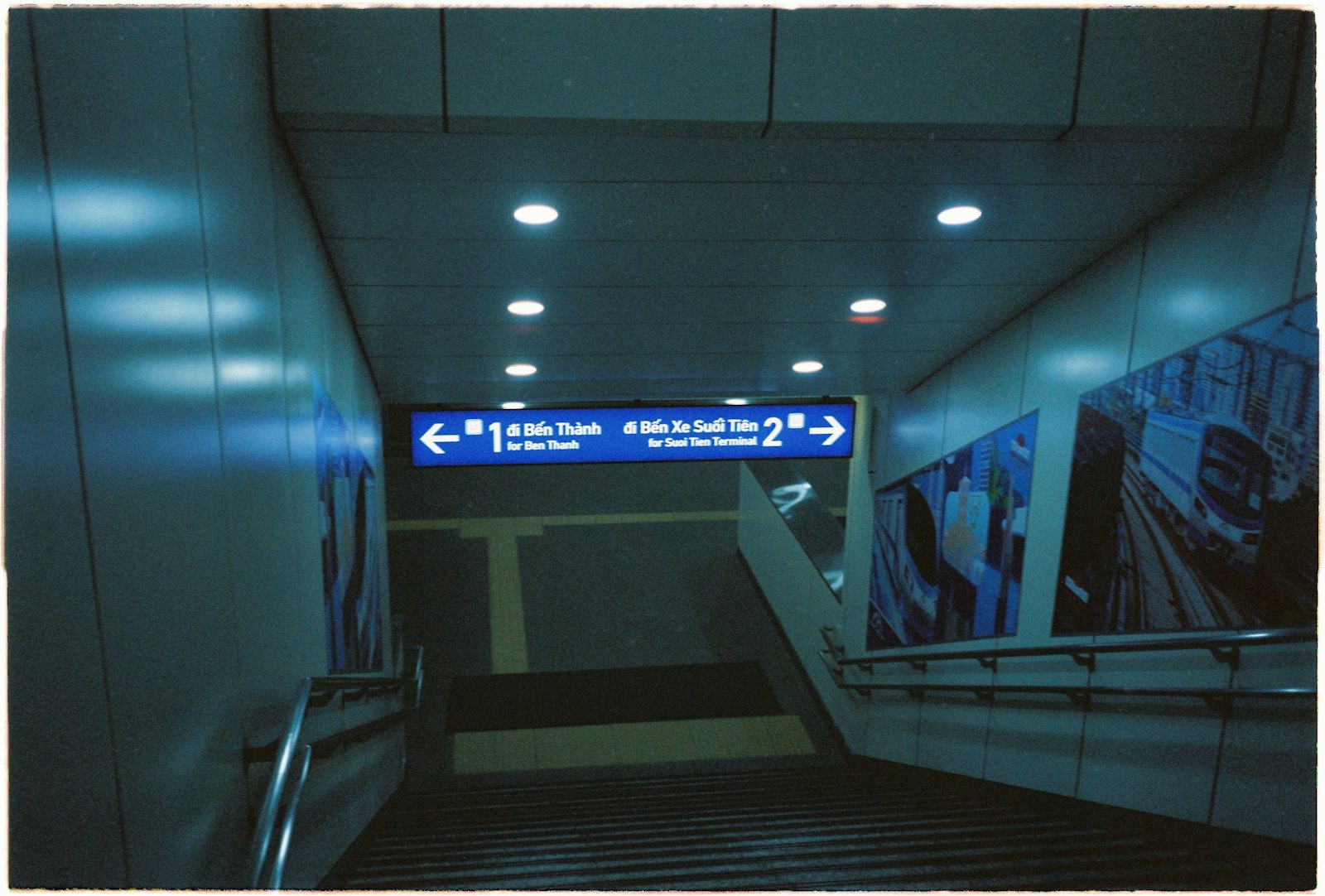
The M5 terminus and tram approach are particularly convenient for the Piazzale Axum side, where the Blue stand and Gates 12 to 15 are located. If your ticket sends you toward the Via Achille side, do not automatically follow the largest crowd coming out of San Siro Stadio station. Check your gate first and follow the current pedestrian signs around the perimeter.
The closure of Via dei Piccolomini matters here. A map app may suggest walking around the southern side because it looks like the shortest geometric route. On match days, follow the staffed pedestrian route instead of trying to force a shortcut through a closed approach.
For the wider metro and tram system, including ticketing and contactless travel, see the Italy on Foot guide to getting around Milan by public transport.
What actually happens when you reach the entrance
Reaching the numbered gate is only the beginning of the entry process. For football matches, expect several stages rather than one quick barcode scan.
- Find the correct outer entrance. Look for Ingresso, the gate number and temporary match signage.
- Join the pre-filtering queue. Signs may refer to prefiltraggio or varchi di prefiltraggio.
- Have your ticket and valid identification ready. Stadium rules require ID to be shown with the ticket so staff can verify that the named ticket holder or authorised transferee is the person entering.
- Complete the security check. Stewards may inspect bags and use metal detectors.
- Pass the turnstiles. Tornelli means turnstiles.
- Follow internal signs to the correct colour, tier and section. Your outside entrance number is not your final seating section.
Keep the ticket available after entry. Stadium regulations require spectators to retain it and show it to stewards if requested.
How early should you arrive?
There is no single gate-opening time for every San Siro event. It varies by fixture, competition and organiser, so check the club’s match-specific information rather than assuming the gates always open two hours before kickoff.
Both clubs currently advise arriving well in advance. That advice is particularly sensible for a sold-out match, your first visit, a ticket requiring a mandatory entrance, or anyone arriving from the opposite side of the stadium. The walk around the perimeter plus ID, security and turnstile checks can consume the buffer you thought you had.
If the match is one stop in a larger Italian trip and you need to coordinate it with sightseeing, trains or another city, you can build your Italy itinerary around the fixed kickoff time rather than squeezing the stadium journey into an unrealistic gap.
Away supporters should not follow home-fan shortcuts
Away access is deliberately separated, and police or club instructions can change for individual fixtures.
For Inter’s current layout, Third Blue away tickets use Gate 15 bis exclusively. Do not enter through Gate 15 simply because it is next door.
AC Milan’s 2026/27 access notice describes a dedicated away-supporter route, with the drop-off area near the north ticket office and Entrance 0-bis. Match-specific public-security measures can alter parking, shuttle and walking arrangements, so visiting supporters should check the organiser’s information for their exact fixture before setting out.
An away supporter who reaches the home perimeter on the wrong side should speak to police or a steward rather than trying to walk through barriers or follow home fans across restricted areas.
Accessible entrance: look for PC4, not just Gate 11
The current layout places the dedicated accessible entrance at PC4, beside Gate 11. You may also see the wording ingresso disabili.
Accessibility tickets, accreditation and parking arrangements are handled by the club organising the match, so use the access instructions supplied with your booking. Someone using a wheelchair or needing a medical mobility aid should not simply join an ordinary Gate 11 queue because it appears adjacent on the map.
Current match notices also list crutches among items restricted at normal entrances. If you medically require them or another mobility aid, arrange this with the club before match day so staff know which access procedure applies.
Do not arrive with a trolley suitcase or pushchair
Current Inter match information lists trolley suitcases and pushchairs among items that cannot be brought into the stadium. Other prohibited or restricted objects include large umbrellas, helmets, lighters, lasers, flares, unauthorised banners and professional photographic equipment. Small folding umbrellas without pointed tips may be accepted in rainy weather under the current guidance.
The practical rule for travelers is simple: leave major luggage at your hotel or a proper luggage-storage facility before heading to the stadium. Do not arrive with a cabin trolley expecting to solve the problem at the turnstile. Arrangements associated with the daytime Museum & Tour are separate and should not be assumed to provide matchday baggage storage.
Families should also notice the pushchair restriction. Do not bring a stroller assuming it can be folded and left beside your seat.
If you have walked to the wrong gate
What to do depends on the match organiser.
At an AC Milan match: go to the entrance printed on your ticket. If construction barriers or crowd-control fencing stop you from reaching it by the route you expected, show the ticket to a steward and ask, “Dov’è l’ingresso numero…?”, meaning “Where is entrance number…?” Do not substitute another gate on your own.
At an Inter match: if your ticket is not for one of the mandatory entrances, another active gate may be possible under the club’s current policy. Ask the stewards before joining a different queue. Second Green, Third Green and the Third Blue away sector must use their designated entrances.
If you reach the old Gates 7 to 10: stop relying on the old map. Those positions are no longer normal entry points in the 2026/27 layout. Follow the current signs or ask staff which direction to take. Construction barriers mean that simply walking along the fence may not always be possible.
If you arrive after kickoff
A late arrival does not make the entrance rules disappear. Go directly to the assigned or permitted active gate with your ticket and ID ready. Do not waste time testing several old entrances or following spectators who are moving in a different direction.
If an outer route appears closed, find a steward or police officer and show the entrance printed on your ticket. The useful phrase is “Ho un biglietto per l’ingresso…”, meaning “I have a ticket for entrance…” Staff can direct you around temporary barriers far more reliably than a navigation app that does not know the day’s crowd-control layout.
Concerts use event-specific access arrangements
Do not apply the football entrance map automatically to a concert. San Siro’s official visitor information specifically tells concertgoers to follow the event organiser’s instructions for entrances and accessibility.
A concert ticket may use its own entrance assignment, standing-area route or security perimeter. Follow the number or label on that ticket and the promoter’s same-day information, even if it conflicts with a football diagram saved on your phone.
Leaving the stadium can use different gates
Do not expect to leave through the same entrance you used on arrival. Gates 7 to 10, which are no longer normal public entry points, can be used as exit routes during the post-match flow. Stewards and police may also channel different sections toward particular streets or metro approaches.
After the final whistle, follow Uscita signs and staff directions rather than trying to retrace your inbound route exactly. This is especially important around the closed Via dei Piccolomini approach and for away supporters, whose departure may be managed separately from the home crowd.