A cheesemaking day trip from Rome is possible without renting a car, provided the farm offers collection from a railway station or you arrange a local transfer in advance. Regional trains connect Rome with Bracciano, but working dairies are often several kilometres outside town. Before confirming a visit, check the exact farm location, whether you will actually make cheese, and how you will get back to Rome afterward.
The countryside around Lake Bracciano has a long tradition of sheep farming and producing cheeses such as pecorino, ricotta and caciotta. Some agricultural businesses welcome visitors for educational activities, while others concentrate on production and direct sales. A farm that makes excellent cheese does not necessarily offer tourist workshops, so arranging the experience is the first step.
What happens during a cheesemaking experience near Bracciano?
Most countryside cheese experiences follow the working schedule of the dairy. Production often takes place in the morning, when fresh milk is processed. Depending on the farm and the visit you arrange, the experience may include meeting the animals, observing cheesemaking, participating in a practical workshop and tasting the finished products.
There are three different experiences to distinguish when comparing descriptions:
- Farm visit and tasting: You see the agricultural property, learn about its animals and production methods, and sample local cheeses. You may not enter the production area.
- Cheesemaking demonstration: A cheesemaker explains and demonstrates processes such as coagulating milk, cutting the curd, draining whey and shaping cheese. Visitors primarily observe.
- Hands-on cheesemaking workshop: Participants take part in selected stages of production under supervision. This requires suitable facilities, hygiene arrangements and a workshop specifically designed for visitors.
The distinction matters because an advertised esperienza in caseificio (dairy experience) might involve a guided explanation without any practical participation. If making something yourself is the main reason for travelling, ask specifically for a laboratorio pratico di caseificazione.
Also ask which cheese will be made. The Bracciano area has strong traditions in sheep’s milk products, and a farm may demonstrate ricotta or another fresh cheese rather than mozzarella. Aged pecorino requires time to mature, so you should not assume that you can produce a finished wheel and take it home the same afternoon.
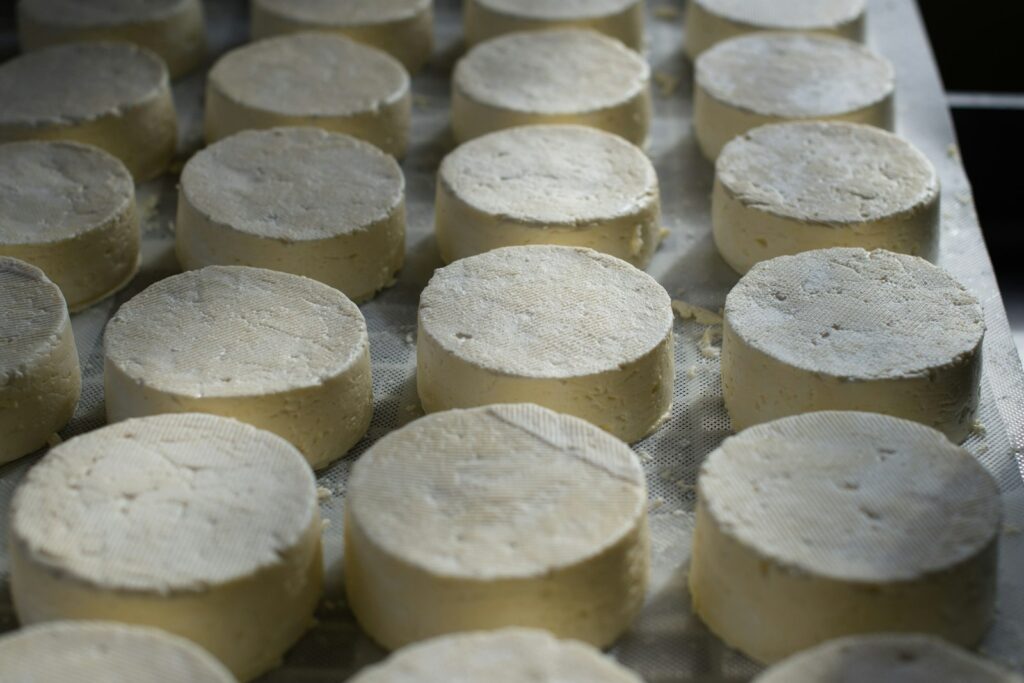
How to travel from Rome to a Bracciano cheese farm
There are three realistic transport arrangements: train with a prearranged farm transfer, a private driver from Rome, or a rental car. The right option depends more on the farm’s address than on the distance between Rome and Bracciano.
Option 1: Regional train and a local pickup
Bracciano is served by Trenitalia’s FL3 regional railway, which links Rome with the Viterbo area. Useful departure stations include Roma Ostiense, Roma Trastevere, Roma San Pietro and Valle Aurelia.
Valle Aurelia is particularly convenient if you are staying near Metro Line A. The interchange involves moving between metro and railway levels, so allow time for the connection. Our Valle Aurelia station guide explains the layout and how to identify trains travelling toward Bracciano.
Allow approximately 60 to 90 minutes for the railway journey from central Rome, depending on your departure station and service. Some trains terminate at Cesano, before Bracciano, so check the stops rather than relying solely on the FL3 line name.
Bracciano railway station is reasonably central for exploring the town. However, it is not necessarily close to the farm you are visiting. A dairy in the countryside toward Castel Giuliano, Anguillara Sabazia or another rural locality may require a separate road journey.
Before buying your train ticket, ask the farm which station is most convenient and whether somebody can meet you there. Anguillara may be more practical than Bracciano for some properties. The answer depends on the exact location.
If collection is not provided, arrange a local taxi in advance, including the return journey. The Comune di Bracciano’s taxi information provides a starting point for local transport arrangements. Do not assume that an unbooked taxi will be waiting outside the dairy when your visit finishes.
Option 2: Private transport from your accommodation
A driver collecting you in Rome removes the railway connection and rural transfer problem. This can be particularly useful for families, groups, visitors with mobility difficulties or anyone combining a farm visit with other stops around the lake.
Allow roughly one to one and a half hours each way for travel from Rome to the wider Bracciano area, depending on traffic, the pickup address and the farm’s location. The journey can take longer during busy periods.
When comparing transport quotes, establish whether you are paying for:
- A one-way transfer to the farm.
- A return transfer at a fixed collection time.
- A driver who waits throughout the experience.
- A full-day service that includes additional stops.
These arrangements have different costs and levels of flexibility. An inexpensive outward transfer is not especially useful if the return journey is left to you and the farm is far from public transport.
Ask for the total price, including parking, waiting time, additional stops and any applicable supplements. Families should confirm child seats before accepting a quote.
Option 3: Rental car
Driving yourself offers the greatest flexibility if you want to visit a rural dairy, explore Bracciano and continue around the lake. It can also simplify the trip if the farm has no transfer service.
Obtain the property’s exact address and map pin, together with instructions for the correct entrance. Agricultural properties sometimes have multiple gates or access roads, and a postal address may lead you to the wrong side of an estate.
Check parking arrangements and whether the final approach is paved. If you are staying in central Rome, also account for the practicalities of collecting and returning the rental car, including any restricted-traffic zones along your route.
How much time should you allow?
A farm experience can occupy anything from a couple of hours to most of the day. The total excursion is longer once transport, meals and possible sightseeing are included.
A reasonable outline for a day involving a morning dairy visit is:
- 8:00–9:00 am: Leave Rome by train or car, depending on the farm’s agreed start time.
- 9:30–10:30 am: Arrive at the meeting point and transfer to the farm.
- 10:00 am–1:00 pm: Farm visit, cheesemaking activity or demonstration, and tasting, according to the actual booking.
- 1:00–3:00 pm: Lunch, return transfer or additional time in Bracciano.
- Late afternoon: Return to Rome, with more time allowed if you are including the castle or lakeside.
These times are an illustrative planning outline, not a published tour schedule. A farm might require an earlier arrival for production or offer only a shorter educational session.
Ask when the actual cheesemaking begins. Arriving after production has finished could turn a practical visit into a tasting and explanation, even if the dairy is otherwise open.
How to arrange a cheesemaking visit
Farm experiences around Bracciano are not always sold through instant-booking calendars. Some are arranged directly with the agricultural business, while others form part of a countryside excursion organised by a guide or tour operator.
Local agricultural directories and educational-farm listings are useful starting points. The Campagna Amica farm network, for example, documents sheep’s milk cheesemaking and educational farm activity in the Bracciano area. Such listings establish the type of agricultural activity taking place, but they should not be treated as confirmation that a particular visitor workshop is currently available.
A sensible booking sequence is:
- Identify the type of experience. Decide whether you want a hands-on workshop, a production demonstration or a guided tasting.
- Confirm the exact location. Request the full address and check the journey from Rome before discussing transport prices.
- Check availability. Give your preferred date, group size, ages of any children and preferred language.
- Confirm participation. Ask exactly which stages of cheesemaking visitors may perform and whether everyone can take part.
- Settle the transport arrangements. Establish the pickup location, arrival time and return arrangements.
- Request the full cost and conditions. Clarify the price, inclusions, deposit, cancellation terms and any minimum group size.
- Get written confirmation. Keep the agreed itinerary, meeting instructions and contact number accessible on the day.
Questions to send before paying
A short, specific enquiry usually avoids several rounds of clarification. Include your travel date, number of adults and children, accommodation area in Rome, and whether you intend to use the train or a driver.
Then ask:
- Is the activity hands-on, or will we only watch the cheesemaker?
- Which cheese is being produced on our date?
- How long does the activity last, and what time must we arrive?
- Is the workshop conducted in English?
- Does the price include tasting, lunch or drinks?
- Can you arrange collection and return from Bracciano or Anguillara railway station?
- Are there minimum ages, group sizes or other participation restrictions?
- What happens if production changes, the weather is poor or we cannot reach the farm?
For a private session, also ask whether your group will have exclusive use of the activity or whether other visitors may join. The word privato can refer to private transport while the farm visit itself remains shared.
What does the price include?
There is no single standard price for a cheesemaking excursion around Bracciano. A short farm activity arranged independently has a different cost structure from a privately guided day with transport from Rome and a full lunch.
Compare quotes according to what is actually provided rather than the advertised duration alone.
Farm activity costs may cover the cheesemaker’s time, materials, protective equipment, a tasting and use of the facilities. A more involved practical workshop may cost extra if additional supervision or preparation is required.
Transport costs may include collection from Rome, station transfers, waiting time and the return journey. Check whether these are included in the experience price or billed separately.
Food costs depend on whether the booking includes a simple cheese tasting, a substantial farmhouse lunch or a complete meal with drinks. A listing that mentions degustazione normally indicates a tasting, so do not automatically interpret it as lunch.
Ask for the total amount for your actual party, the currency and the payment deadline. If a deposit is required, find out whether it is refundable, transferable to another date or retained if you cancel.
A low initial price deserves closer examination if it excludes transport, a practical workshop or the meal you expected. Equally, an expensive all-day excursion may be unnecessary if you only want an hour of cheesemaking and can reach the farm independently.
Children, food restrictions and accessibility
Visiting with children
Farm experiences can be engaging for children, particularly when they involve seeing sheep or goats and learning where milk comes from. However, a working dairy has production equipment, hot liquids, wet surfaces and hygiene procedures that may limit children’s participation.
Each host sets its own participation conditions. Ask for the minimum age for hands-on activities, whether younger children can observe with an adult, and whether a family session is available.
If you are bringing a baby or toddler, confirm that there is a suitable place for a stroller and somewhere to change or feed the child. Farm paths and production buildings may be difficult to access with a pushchair.
For journeys by car or private transfer, provide the children’s ages and seating requirements before the booking is confirmed.
Food allergies and raw-milk cheeses
Tell the organiser about allergies and dietary requirements before paying, especially if the experience includes a prepared meal. Cheese tastings may be accompanied by bread, nuts, honey, cured meats or other ingredients.
Some traditional cheeses are produced using unpasteurised milk, described in Italian as latte crudo. Visitors who are pregnant, immunocompromised or travelling with young children should ask which cheeses are made with pasteurised milk and whether suitable alternatives are available. Follow the relevant food-safety advice for your circumstances.
Do not assume that a dairy can provide a completely milk-free tasting or guarantee the absence of cross-contact with milk products.
Reduced mobility
Ask about accessibility at both the farm and the railway station. A property may have level access to its dining area but uneven ground between the parking area, animals and production building. Wet floors can make the dairy itself difficult for visitors who use walking aids.
Request specific information about steps, surfaces, accessible toilets and the distance between activities rather than relying on a general statement that the farm is accessible.
For train travel, RFI provides Sala Blu accessibility assistance information. Confirm the assistance available at the relevant stations and arrange any required support in advance.
Weather, seasonality and changes to production
Cheesemaking is agricultural work, and its schedule depends on milk availability, animal management and the individual dairy’s production calendar. A farm visit should therefore be confirmed for a specific day rather than assumed to be available throughout the year.
Some countryside experiences suspend visits during parts of July and August because of reduced milk production or their seasonal operating arrangements. That restriction is provider-specific. It does not mean all dairies around Bracciano close in summer.
If you are arranging a trip for 2027, request confirmed dates directly. Likewise, check the relevant 2027 railway schedule once it is available through Trenitalia rather than relying on departure times from a previous year.
Rain does not necessarily stop cheesemaking, but it can affect outdoor farm walks, animal encounters and lunch arrangements. Bring closed, non-slip shoes suitable for potentially muddy ground. A light waterproof layer is useful outside the warmest months.
Ask whether the farm visit continues in bad weather and what parts of the itinerary would change. If the cheesemaking demonstration cannot proceed because of production needs, establish whether the provider will offer an alternative activity, a different date or a refund.
Can you combine the farm visit with Bracciano Castle and the lake?
Yes, provided the dairy visit finishes early enough and you have transport between the farm and town. This works especially well with a car or a driver who has agreed to additional stops.
The main cultural attraction is Castello Orsini-Odescalchi, the historic castle overlooking Bracciano. Allow roughly an hour for the visit, plus time to reach the entrance and explore the surrounding streets.
The castle has seasonal opening hours and may be affected by private events. Check the official castle visitor information for current admission arrangements, opening times and last entry before committing to an afternoon visit.
The lake is another possibility, particularly when the weather is pleasant. However, the railway station and castle sit above the lakeshore, so reaching the waterfront adds walking time or another transfer. A long farmhouse lunch followed by the castle and a substantial lake visit can make the afternoon crowded.
For travellers staying several days in Rome, it may be easier to keep this day focused on the dairy and one additional stop. You can use the Italy on Foot trip planner to fit the excursion around your other sightseeing days and transport plans.
What if the train is late or the farm changes the arrangement?
The most useful precaution is having a direct contact number for the person responsible for your visit. A general booking email is less helpful when you are standing at a railway station and your train is delayed.
If your train is disrupted, contact the host before the agreed collection time. Ask whether they can meet a later service and whether the workshop can still take place. A delay may matter more for a production demonstration than for a tasting scheduled afterward.
Trenitalia’s regional ticket rules explain changes and validation. Under the current Digital Regional Ticket arrangements, tickets activate automatically at the scheduled departure of the selected train, and permitted departure-time changes must generally be made before that departure. Paper tickets have separate validation requirements. Check the rules that apply to the ticket you actually purchase.
If an organised driver is late, contact the transport operator or excursion organiser using the number in your confirmation. Clarify the expected pickup time and whether the rest of the itinerary can still be completed before agreeing to a shortened visit.
For cancellations, distinguish between the farm’s conditions and those of any separately booked driver or tour operator. A refund from one does not automatically cover the cost of the other.
When a private cheesemaking excursion makes sense
Private transport or a fully organised visit is most useful when the dairy is difficult to reach, when you have children or mobility requirements, or when you want an English-language practical workshop arranged specifically for your group.
It can also be useful if the visit needs to fit around other activities and you want someone to coordinate the timetable and return transport.
Travellers who are comfortable with regional trains and have confirmed a straightforward station pickup may have little reason to pay for a driver all the way from Rome.
If your main interest is simply tasting local sheep’s milk cheeses, consider a farmers’ market or specialist cheese shop in Rome instead. You can explore the products without spending most of a day travelling to a dairy. The countryside excursion makes more sense when learning about production, meeting the people involved and seeing the agricultural setting are important parts of the experience.
What to confirm before leaving Rome
By the evening before your excursion, make sure you have the following details:
- The farm’s exact name, address and entrance location.
- The confirmed date, start time and expected finishing time.
- The type of activity booked, including any hands-on participation.
- The train station or driving meeting point and exact pickup arrangements.
- A direct phone or WhatsApp number for the host or driver.
- The agreed total price, any outstanding payment and cancellation conditions.
- Confirmation of meals, allergies, children’s participation and accessibility arrangements.
- A return train or transport plan with enough time for delays.
Keep your return transport arrangement in writing, particularly if the dairy is outside Bracciano. That final detail is easy to overlook when the cheesemaking activity itself is confirmed, and it can make the difference between a manageable day trip and an expensive last-minute journey back to the station.