Rome is full of wonders. You can walk down a random street and see ancient ruins tucked between everyday shops and cafes. But some sites go beyond just being old walls or statues, they let you actually feel what ancient life was like. The Roman Baths are one of those experiences. Imagine a place that’s part gym, part spa, part co-working space, and part community center. That’s what a Roman bath was in the days of emperors, senators, and citizens from all walks of life.
Whether you have three days in Rome or a bit longer, fitting in a visit to at least one of the city’s major bath complexes is an unforgettable way to piece together the daily lives of Romans. If you’re planning your trip and need a flexible plan for seeing more in less time, check out our handy Rome in Three Days Itinerary, it’s traveler-tested and will help you make the most out of your time!
In this article, you’ll visit both of Rome’s best preserved ancient bath sites, discover what made these massive complexes so important, and pick up tips for how to explore them today. You’ll also get a glimpse into the secret world of Roman bathing, from the steamy saunas to the social games in the courtyards. We’ll keep it friendly, and easy to follow, and include all the ticket links and practical details you need.
Planning Rome? Grab the step-by-step digital guide
Why Were Roman Baths So Important?
Bathing wasn’t just for getting clean in ancient Rome. Visiting the baths was a big part of everyday life. Going to the baths meant catching up with friends, exercising, reading in a library, and even doing a bit of shopping. Kids, adults, and elders all came together in these giant spaces. Think of it like a city’s community center or your favorite weekend hangout spot, only much, much bigger and even more impressive.
The largest baths could welcome thousands of people in a single day! They featured not just pools and steam rooms, but also gardens, libraries, gyms, snack bars, and beautiful halls for relaxing and talking. Romans believed going to the baths was good for your body and for your mind. Even emperors would sometimes show up to make an appearance, so everyone was a part of this daily tradition.
The fact that two enormous Roman bath complexes still survive in Rome is a miracle. Walking through their ruins, you can almost hear the chatter and laughter of people who lived nearly two thousand years ago. That’s what makes a visit so special, you’re not just looking at old rocks, but stepping into the real heart of Roman social life.
How Did Roman Baths Work? A Step-By-Step Experience
You might be surprised at how organized, clean, and surprisingly modern these spaces were. Most Roman baths followed a certain layout that helped visitors move from one area to the next, enjoying each step along the way.
Here’s what a Roman bath visit was usually like:
- First, you’d stop in the changing rooms (apodyterium). You’d take off your clothes and leave them in little cubbies or with an attendant.
- Next, most people went to exercise in a gym-like area (palaestra). You could stretch, play ball games, or even lift weights.
- The real bathing began in the warm room (tepidarium), where you got used to the heat and relaxed your muscles.
- Afterwards, you’d go into the hot, steamy sauna (caldarium). This is where you’d sweat and sometimes get massaged or scraped with special tools.
- To cool off, you’d dive into the cold pool (frigidarium), shock your system, and then maybe repeat the whole process again for fun.
- Afterwards, you might visit the open-air courtyard, read in the library, or chat with friends. Some baths even had snack bars and shops.
Aqueducts brought in fresh water, and massive furnaces kept the pools and steam rooms nice and warm. In the largest baths, special teams of workers kept everything running smoothly, making sure there was always hot water and plenty of towels.
These bathhouses were designed with real brains. You could see art on the walls and floors, hear the echo of voices in huge domed halls, and enjoy a mix of public spaces and tucked-away corners for chatting or relaxing.
The Baths of Caracalla: Rome’s Most Famous Ancient Spa
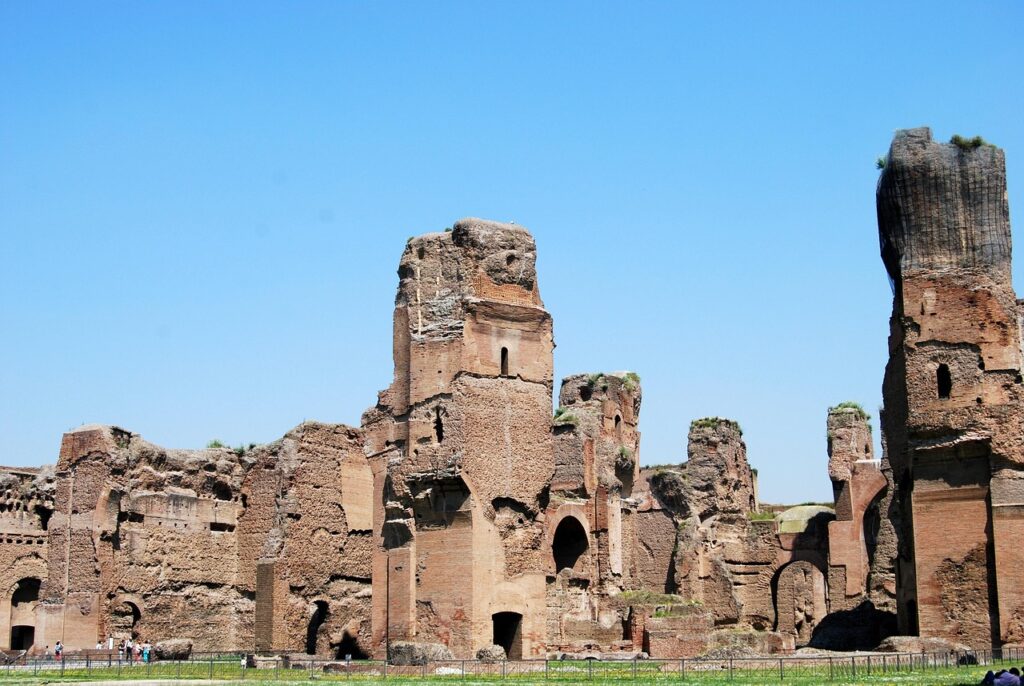
If there’s one bathhouse you have to see in Rome, it’s the Baths of Caracalla (Terme di Caracalla). They’re so big you could run a soccer match inside, and even today, the towering brick walls and colorful mosaics leave visitors speechless.
Here’s what you’ll see at Caracalla:
- The main bathing hall, which once held hot, warm, and cold pools surrounded by giant columns
- Remains of the gym areas and exercise courts
- Fragments of beautifully decorated mosaic floors and walls
- Underground service tunnels where slaves kept the bath running smoothly
- Wide open gardens around the whole complex
Walking around, you’ll get a sense of the incredible size and power of ancient Rome. Engineers brought water to the site using a dedicated aqueduct branch, and huge furnaces (now partly visible below ground) heated up the baths day and night. You can stroll through the grassy grounds, wander among half-ruined columns, and stand where emperors once relaxed.
Ticket and Visitor Info:
– Official Caracalla Baths Ticket Page (Choose your timeslot for easy entrance.)
– Address: Viale delle Terme di Caracalla (metro: Circo Massimo)
The site is mostly outdoors so bring sunscreen and water if you’re visiting during the summer. The walkways are wide and stroller- and wheelchair-friendly for the most part, but some extra rough ground remains. Audio guides in many languages help bring the ruins to life.
People often ask: is it worth doing a guided tour here? If you love ancient history or want the little details explained, tours help you spot things you’d otherwise miss (like bits of ancient plumbing or hidden mosaics). Otherwise, the site layout is simple and easy to explore on your own.
What Makes Caracalla Special?
It’s not just the size that’s impressive, but the sense of life you get here. You’ll see the spaces where thousands gathered, plenty of sunny courtyards, and details that hint at the luxury ancient Romans enjoyed. During summer evenings, the site sometimes hosts concerts and performances, adding a magical twist to any visit.
If you’re visiting with kids, Caracalla is wide open and great for exploring, just keep an eye on little ones as some steps are uneven. There are plenty of spots to sit and relax if you want to take in the vibe for a while.
The Baths of Diocletian: Ancient Baths Meet Modern Museum
Rome’s other giant bathhouse is the Baths of Diocletian (Terme di Diocleziano), not far from Rome’s busy train station. Here, the ancient ruins have become part of a huge museum, the National Roman Museum (Museo Nazionale Romano).
What’s unique is how you can see both the original bath structure and fascinating treasures from all over Roman history, all under one roof. Some parts of the complex are still roofed and nearly intact, giving you a rare “inside” feeling.
Here’s what stands out at the Baths of Diocletian:
- Giant former pools and steam halls, now filled with sculpture and ancient art displays
- The cloister of Michelangelo, yes, the famous artist helped design one part centuries later
- Rows of ancient inscriptions, gods, and statues found all across Rome
- Peaceful gardens with orange trees and quiet corners
While Diocletian’s Baths are less “ruined” and more like a living, breathing museum, you can explore plenty of original walls, high arches, and even bits of ancient plumbing. Museum displays inside explain the daily life of Romans, not just in the baths but across the whole empire.
Ticket and Visitor Info:
– Official Museo Nazionale Romano – Baths of Diocletian Ticket Page
– Address: Via Enrico de Nicola, 78 (Steps from Termini station)
Tickets here include single-visit and “combo” passes that let you see more museum sites around Rome. If you’re interested in Roman art, inscriptions, and daily objects, this site gives you plenty to see and some wonderful photo ops. Most of the museum and baths are wheelchair-accessible, though some old paths are a little bumpy.
What Makes the Diocletian Baths Special?
Standing in the silent halls, under high brick vaults, you get a sense of the enormous effort it took to build these ancient “wellness centers.” Most surprising is how they’ve become part of modern Rome’s life, sometimes used for concerts, events, and big exhibitions.
There are plenty of benches and shady corners, so it’s a nice place to unwind after a busy morning at nearby sites. Combined with the chance to see ancient statues and beautiful gardens, it’s one of Rome’s most relaxed ancient monuments.
Other Baths in Rome: Hidden Corners and Ancient Remains
While Caracalla and Diocletian are by far the largest and most complete ancient bath complexes open to visitors, Rome is dotted with smaller remains and curiosities. Here’s a quick look at these less-famous bathhouses:
- Baths of Agrippa: The oldest big public bath in Rome. Today only a few walls are visible near Piazza Navona, but you can spot them peeking out from under later buildings.
- Baths of Trajan: Built on top of Nero’s Golden House, these massive baths shaped the later Caracalla layout. Fragmentary remains are visible in the park above the Colosseum.
- Baths of Titus, Constantine, and others: Scattered ruins and fragments can be seen around Rome’s biggest parks and piazzas.
While you can’t exactly bathe or walk the halls in these sites, their ruins give you a sense of how common and important public baths were. Many modern buildings in Rome were built right over them!
If you love piecing together Rome’s hidden puzzles, take a map and see if you can spot some of these ancient stones as you wander between the city’s other highlights. Many are unsigned and blend in with later architecture, but guidebooks and self-guided walks often point out the best ones.
Planning Your Visit: Tips and Practical Information for Exploring Rome’s Baths
That “wow” feeling you get standing in an ancient Roman bath is amazing, but a little practical planning goes a long way to make your visit smoother and more comfortable.
Here’s a quick-read list to help:
- Wear comfortable shoes: Even with modern paths, these sites cover a lot of ground (especially Caracalla).
- Sun protection: Most areas are open and get very sunny. Bring a hat, sunscreen, and water bottle.
- Buy tickets ahead: It’s smart to book online using the official links, especially in the busy season.
- Guided tours: If you love stories and want a full picture, tours run regularly at both Caracalla and Diocletian, or you can get an audio guide at the entrance.
- Packing light: Backpacks are usually allowed but big bags might need to be left at security checks.
- Photographs: Both sites allow photography for personal use, but no tripods or flash in museum areas.
- Check opening times: Hours may change for special events or weather, so check right before your visit.
Most visitors spend about 1 to 2 hours at each bath complex, but history fans could easily spend half a day wandering and looking for details.
Quick Table: Rome’s Main Bath Sites for Travelers
| Bath Site | Location | What’s Special? | Official Ticket Link |
|---|---|---|---|
| Caracalla | Viale delle Terme di Caracalla (Metro Circo Massimo) | Huge outdoor ruins, mosaics, peaceful gardens, best preserved classic Roman bath | Buy Caracalla Tickets |
| Diocletian | Via Enrico de Nicola, near Termini | Part museum, part bath complex, sculpture displays, shady gardens | Buy Diocletian Tickets |
| Smaller Baths | Centered near Piazza Navona, Oppian Hill, Circus Maximus | Fragments only, but fun to spot on a city walk | – |
After visiting these incredible sites, you might find you notice ancient baths everywhere in Rome, sometimes as part of apartment buildings, or hidden in busy piazzas. They left a mark on Roman life that’s still easy to spot, from curved ceilings echoing the old domes to the big courtyards and stone benches.
Even the idea of going to a spa, gym, or local swim club today owes something to Roman baths. Pick up some local bread or gelato and take a break in the nearest park, or even plan your own version of an ancient day out by moving from ruins to gardens, to coffee shops, and back again!
The Baths of Caracalla and Diocletian are more than history, they’re a chance to live a part of Rome that was once crowded, busy, and full of stories. If you’re someone who loves to understand how people really lived, you can’t miss them. Add them to your Rome bucket list, and let yourself be surprised by how much “old Rome” you can still live, right in the heart of today’s city.
