A family photoshoot in Rome usually lasts between 30 minutes and two hours, with the photographer taking a mixture of posed portraits and natural photographs as you explore a small area of the city. For families with toddlers, a 30- to 60-minute session in one location is often enough. Families with older children or grandparents may prefer 60 to 90 minutes, provided the route includes manageable walking distances and breaks.
When booking a family photographer Rome visitors should agree on three things before paying: the exact meeting point and walking route, the session length, and what the finished photography package includes. In particular, confirm how many edited images you will receive, when they will be delivered and whether high-resolution downloads are included in the quoted price.
What happens during a family photoshoot?
Most vacation photography sessions involve meeting a photographer at a predetermined landmark, spending some time taking family portraits and then walking to nearby streets or viewpoints for additional photographs.
The photographer generally guides you into suitable positions, helps arrange larger groups and suggests activities that encourage children to interact naturally. A family session does not need to involve everyone standing still and smiling at the camera for an hour.
You can normally expect a combination of photographs such as:
- Everyone together with a recognizable Roman landmark in the background.
- Individual portraits of the children.
- Parents with each child.
- Siblings together.
- Grandparents with their grandchildren, if they are participating.
- Candid photographs of the family walking, laughing or interacting.
- A few photographs showing the surroundings and atmosphere of your Rome holiday.
Tell the photographer which combinations matter most. For a multigenerational trip, for example, a portrait of the grandparents with all the grandchildren may be more important than ten different photographs of everyone walking together.
If you dislike heavily posed photography, look for someone whose portfolio includes genuine interactions between parents and children. If you want a formal family portrait suitable for framing, say so as well.
Where should you take family photos in Rome?
The best location depends on your children’s ages, how far everyone can walk and whether you want famous monuments or quieter surroundings. Rome’s landmarks are spread across different neighborhoods, so it is better to concentrate on one manageable area than to spend much of the session moving between distant attractions.
Colosseum and Monti: recognizable Rome backgrounds
The exterior of the Colosseum is a natural choice for families who want photographs that immediately identify their holiday destination. Several nearby public viewpoints offer different angles, although the photographer must choose positions that respect pedestrian access and local photography rules.
Early morning generally provides more manageable crowds and softer light. Later in the day, large groups, traffic and visitors can make certain angles more difficult.
For families with young children, ask about the actual meeting point and the walking surface. The surrounding area includes cobblestones, slopes and busy crossings. Some attractive elevated viewpoints require additional walking or steps.
A short session can focus on one suitable Colosseum viewpoint. A longer session might continue into Monti for photographs along streets with older buildings, doorways and neighborhood scenery.
Do not assume that hiring a photographer includes entry to the Colosseum or Roman Forum. Interior visits require separate arrangements with the Colosseum Archaeological Park, including compliance with applicable photography rules.
Villa Borghese: space for children to move
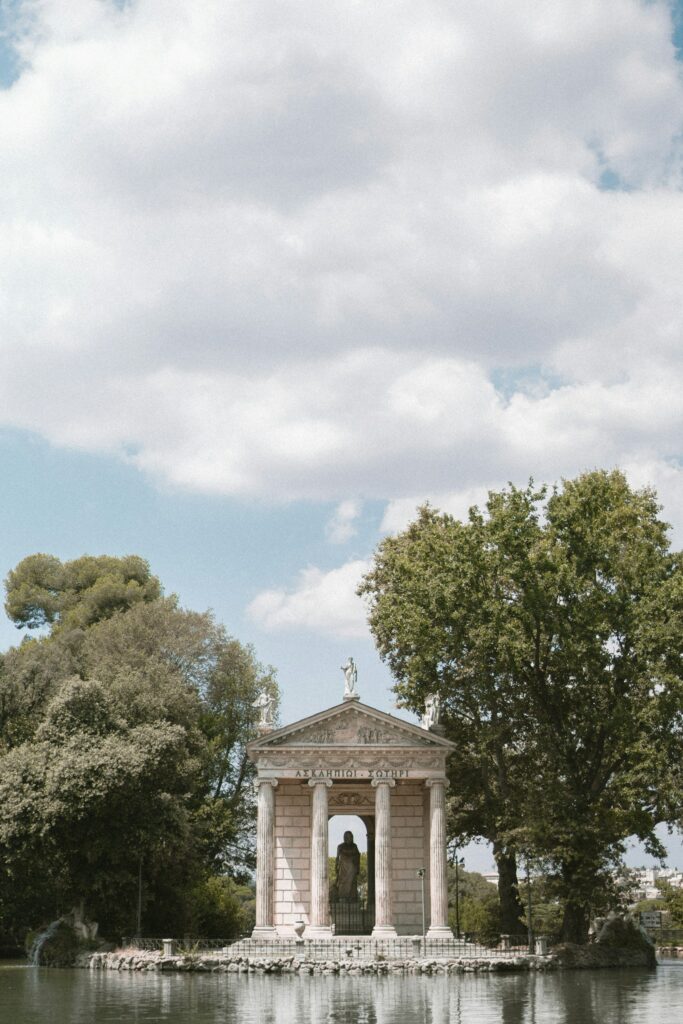
Villa Borghese is particularly useful for families with toddlers and younger children who find it difficult to remain still. The park has broad paths, greenery and areas where a photographer can capture walking, playing and natural family interactions.
Instead of arranging a series of formal portraits, you can plan photographs around a relaxed walk, a bench or an open area where children have room to move.
There are differences between the park’s pathways. Some are broad and comparatively level, while others have slopes, gravel or uneven surfaces. If you are bringing a stroller or traveling with someone who has reduced mobility, ask the photographer to propose a route with suitable access.
Villa Borghese also works well for families who prefer photographs with trees and softer backgrounds rather than a landmark visible in every image.
Pincio Terrace and Piazza del Popolo: city views
The Pincio viewpoint overlooks Piazza del Popolo and the rooftops of Rome. It offers an opportunity to photograph the whole family with a broad view of the city behind them.
The terrace is especially popular around sunset, which can make the railing and panoramic viewpoints crowded. Early morning or another less busy period may be more comfortable with children.
If you want to combine the terrace with Villa Borghese, ask how much walking is involved. The distance can be manageable for older children, but the uphill approaches and changes in level may be tiring for toddlers or grandparents.
For a family with several generations, a session focused on one accessible part of Pincio and a nearby area of the park can be more practical than attempting a lengthy route.
Piazza Navona and the Pantheon: classic historic-center streets
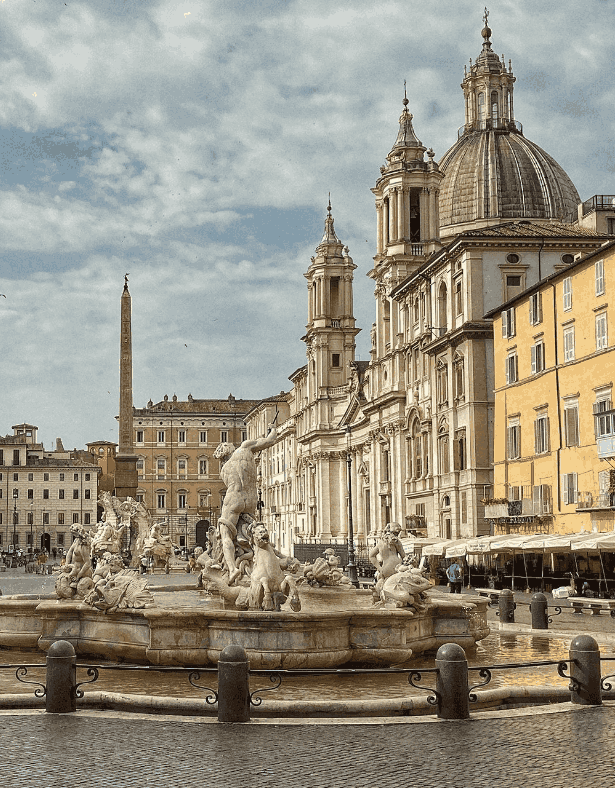
Piazza Navona and the streets around the Pantheon provide attractive architectural backgrounds, fountains, narrow streets and lively Roman surroundings.
The area is relatively compact, making it suitable for a walking photoshoot that combines several different compositions without taking transport between locations.
However, these streets are often busy with pedestrians, outdoor restaurant seating, delivery vehicles and visitors. There are also areas of uneven paving.
A photographer who works regularly in the historic center should be able to suggest nearby streets that provide attractive backgrounds when the main squares are crowded.
For younger children, a 45- or 60-minute route within this area can be easier than trying to include the Colosseum or Spanish Steps during the same session.
Trevi Fountain: beautiful background, busy surroundings
Trevi Fountain is one of Rome’s most requested photography locations. It is also one of the more challenging places for a family photoshoot because of crowding and limited space.
Early morning usually provides the best opportunity to photograph the fountain without large numbers of people directly behind the family.
Since February 2, 2026, Rome has charged non-resident visitors €2 to enter the fountain’s inner perimeter during designated visiting hours. The fountain remains visible without charge from the surrounding public area. Check the official Trevi Fountain information for current arrangements and restrictions.
A professional photographer should establish where photography is permitted and whether any authorization is needed for the intended activity. Ordinary visitor access does not automatically include permission for every form of commercial photography.
For toddlers or families with strollers, avoid planning an extended session at the busiest part of the fountain. A few photographs from an appropriate viewpoint followed by quieter nearby streets may work better.
Spanish Steps: architecture and recognizable scenery
The Spanish Steps provide an architectural background with the staircase, Trinità dei Monti and Piazza di Spagna.
There are several possible photography angles, but sitting on the historic staircase is prohibited. Do not plan seated family portraits on the steps.
The area can also involve significant changes in level. If anyone in your group finds stairs difficult, ask for a suitable street-level meeting point and a route that avoids climbing.
Morning is often more comfortable than the busiest daytime periods. A short session can focus on the surrounding piazza and nearby streets rather than requiring children to climb the staircase repeatedly.
Trastevere: neighborhood photographs
Trastevere works well for families who prefer photographs showing everyday Roman streets rather than major landmarks.
The area has narrow lanes, older buildings, shutters, small squares and attractive street backgrounds. Early morning can provide quieter conditions before restaurants and shops become busy.
The main practical issue is the paving. Cobblestones and irregular surfaces can make stroller use less comfortable, especially when moving between several streets.
For family photographs, choose a compact walking route and avoid expecting young children to cover a large part of the neighborhood.
Some streets are also used by delivery vehicles and local traffic, so a photographer should avoid placing children in the roadway simply to achieve a particular composition.
Orange Garden: a quieter garden setting
The Orange Garden on the Aventine Hill, known as Giardino degli Aranci, provides trees, pathways and panoramic views toward St. Peter’s Basilica.
It can work well for family portraits with a softer garden setting and recognizable Rome scenery in the background.
The viewpoint is popular, particularly near sunset, and the garden has gated opening hours. Confirm that the location will be accessible during your planned session.
Also consider transport and walking. The Aventine Hill involves slopes, and traveling there solely for a short photoshoot may not be convenient for families staying in another part of Rome.
Choosing a location based on your family’s needs
- Babies and toddlers: Consider Villa Borghese or a short route near your accommodation, where there is room for breaks and stroller access can be checked.
- Children aged 5 to 10: The Colosseum area, Piazza Navona or Villa Borghese can provide interesting scenery without requiring an overly long session.
- Teenagers: Monti, Trastevere or the historic center may offer varied street backgrounds alongside family portraits.
- Families with grandparents: Prioritize a small area with comfortable access, nearby seating and minimal changes in level.
- Families wanting iconic Rome photographs: Choose one major landmark as the priority, then use nearby streets for variety.
- Families who dislike crowds: Consider quieter park areas or neighborhood streets, ideally at a less busy time of day.
Ask the photographer to recommend a route based on your youngest participant and anyone with mobility limitations. A beautiful location is less useful when reaching it leaves the family exhausted before the photographs begin.
How long should a family photoshoot last?
The right session length depends on the number of people, children’s ages and how much moving between locations is involved.
Thirty-minute sessions
A 30-minute session is a practical option for a family with a baby or toddler who may not tolerate a longer activity.
It usually works best at one location, with a few simple family arrangements and some candid photographs.
You will have limited time for outfit adjustments, extensive group combinations or walking to another landmark. Make sure everyone is ready before the agreed start time.
Sixty-minute sessions
One hour is often a useful balance for families with school-age children. It gives the photographer time to take several family combinations and allows some movement within a small area.
For example, a session might begin with family portraits near a Colosseum viewpoint and continue along nearby streets. Alternatively, you could spend the full hour in Villa Borghese, allowing children to move naturally between photographs.
For many families, one hour provides enough variety without requiring children to treat the photoshoot as a major sightseeing event.
Ninety-minute sessions
Ninety minutes works better when your family includes several generations, when you want a broader range of portraits or when the route includes multiple nearby settings.
The extra time can also allow for breaks, feeding a baby or letting children relax between photographs.
Do not assume that a longer booking means continuous posing. Discuss whether the photographer can work at a slower pace while still capturing the agreed images.
Two-hour sessions
Two hours may suit a large extended family, a group wanting several portrait combinations or older children and teenagers who are comfortable walking between locations.
It can also accommodate a change of clothes or two nearby photography areas.
However, a two-hour session is not necessarily better for a family with very young children. If the youngest child becomes tired after 40 minutes, additional time may produce fewer useful photographs than a shorter session scheduled at the right time.
What time of day is best for photographs with children?
Early morning is often the easiest time for family photography around Rome’s famous landmarks. There are generally fewer visitors, the temperatures may be more comfortable in warmer months and the light can be softer than it is at midday.
That does not mean every family should book a sunrise session. A toddler who normally sleeps until 8 a.m. may be unhappy about getting dressed and traveling across Rome at 6 a.m.
Choose a time that works with your children’s usual routine. A happy, rested child is more valuable to the photographs than an empty landmark.
Morning photography
Morning works well for families who are naturally early risers. It is particularly useful at crowded locations such as Trevi Fountain, the Spanish Steps and the Colosseum.
Allow enough time for breakfast, getting dressed and traveling to the meeting point. If you are using public transport, check whether services operate early enough for your booking.
For babies, a session soon after feeding may be easier than one scheduled just before their usual nap.
Late-afternoon photography
Late afternoon can provide pleasant light in parks and panoramic locations. Pincio Terrace and the Orange Garden are popular choices when the sun is lower.
However, sunset sessions can be difficult for young children who become tired or hungry toward the end of the day. They may also coincide with the busiest period at popular viewpoints.
If you are booking in summer, a late-afternoon session may offer relief from the midday heat, but consider whether everyone will still have enough energy after a full sightseeing day.
Midday photography
Midday is generally less flattering for outdoor portraits because overhead sunlight can create strong shadows and cause children to squint. During summer, the heat can also make the experience uncomfortable.
If midday is your only available time, ask the photographer to choose shaded streets, covered areas or suitable sections of a park. An experienced photographer can work with difficult light, but the location and shooting direction become especially important.
What should the family wear?
Clothing should be comfortable enough for walking, sitting and helping younger children. Rome’s cobblestones and uneven pavements make practical footwear particularly important.
For family portraits, coordinating colors usually works better than dressing everyone identically. Choose a small range of colors that look good together, and avoid large printed logos or slogans if you prefer photographs that will still feel current years later.
Neutral colors, soft blues, greens and other relatively simple combinations can work well against Rome’s warm stone buildings. However, there is no requirement to dress in muted colors. The clothes should still reflect your family’s personalities.
If you are photographing several generations, ask everyone to discuss their outfits before the day. An elegant family portrait can look inconsistent if some participants arrive in formal clothes while others wear sportswear, unless that mixture is intentional.
For children, prioritize familiar clothes that fit well and are easy to move in. Avoid buying a new pair of shoes specifically for a session involving a long walk.
Should you bring a change of clothes?
A change of clothes can provide variety during a longer session, but it creates logistical problems in public areas. You may need to find a restroom or another private place to change, and that time can reduce the actual photography coverage.
For a 30- or 60-minute family session, one outfit is usually enough.
For 90-minute or two-hour bookings, an outfit change may be possible if there is a convenient location and the photographer has included the necessary time.
Families with babies and toddlers should consider bringing spare clothes for accidents or spills, even when no formal outfit change is planned.
Also consider bringing a small cloth to wipe faces, water, suitable snacks and any comfort item that helps a young child settle.
How to prepare babies and toddlers
Family photography with very young children benefits from a simple plan and a little flexibility.
Tell the photographer the child’s age, whether they can walk independently and when they usually sleep or eat. This helps determine whether a park, a compact landmark location or a short session close to your accommodation is most practical.
If you are bringing a stroller, explain whether it is compact or full-sized. Ask about stairs, narrow pavements and the amount of walking required.
For babies, bring whatever you normally need for feeding, changing and keeping them comfortable. There is no reason to expect a baby to cooperate with a continuous sequence of formal poses.
A useful photographer will usually alternate between simple portraits and moments when parents hold, walk with or interact with the child.
Do not schedule the session at your child’s usual nap time simply because that slot has the most attractive light.
What if the children refuse to cooperate?
Children may become shy, restless or unhappy during a photography session, particularly when they have just arrived in a new city or spent several hours sightseeing.
Ask the photographer how they handle these situations. Someone who regularly photographs families should be comfortable allowing a short break, changing the activity or capturing natural interactions instead of insisting on repeated formal poses.
A child who does not want to look at the camera can still be photographed walking with a parent, holding a sibling’s hand or exploring a suitable park path.
It also helps to decide which portraits matter most and capture those early. If you particularly want one photograph of the whole family together, tell the photographer before the session begins.
Do not promise children that the shoot will last only ten minutes if you have booked an hour. A simple explanation that someone will take family photographs during a short walk is usually enough.
Photography with grandparents or a large extended family
Multigenerational vacations often create the opportunity for photographs that are difficult to arrange at home. However, a group of eight or ten people requires more planning than a family of three.
Give the photographer the exact number of participants and their ages. Some advertised packages have a maximum group size, and additional people may increase the price.
Agree on a list of essential groupings before the day. For example:
- The entire family together.
- Grandparents with all their grandchildren.
- Each individual household or family unit.
- Grandparents together.
- All siblings or cousins together.
- Parents with their own children.
For a large group, allow more time for organizing everyone and making sure each person is visible in the frame.
Choose a location with enough space for the full group to stand without blocking pedestrians. If someone has difficulty standing for long periods, ask about seating and arrange the most important portraits first.
For a group that includes older relatives, avoid a route with repeated steps or long walks solely to reach a famous viewpoint.
What if someone uses a wheelchair or has limited mobility?
Discuss mobility requirements before choosing the location. Some of Rome’s most attractive streets have cobblestones, uneven paving, steps and slopes.
Tell the photographer whether anyone uses a wheelchair, walking frame or cane, or has difficulty standing for extended periods.
Ask for the exact walking distance, changes in level and accessibility of the meeting point. A location that can be reached by taxi may still involve walking across uneven pavement to reach the intended photography position.
If needed, request a session based around one easily accessible setting with opportunities to sit. Family portraits can be arranged around a seated participant without requiring everyone to stand in the same way.
Do not rely only on a venue being described as accessible. The particular route and shooting positions also need to work for your family.
How much does a family photographer in Rome cost?
Prices vary considerably according to session length, photographer experience, group size, editing and image delivery.
Current advertised examples help illustrate the differences. Smiler lists Rome photography packages starting at €99 for a 30-minute session with 25 edited photographs and €169 for a 60-minute session with 50 edited photographs, subject to the specific package, location and availability.
Photoshoot Rome advertises family photography packages starting at €219, with durations from 30 to 120 minutes. Independent photographers may charge substantially more for customized sessions, extensive editing or larger family groups.
These are examples of individual advertised offers rather than fixed market rates. Check the current total for your dates and group size before making comparisons.
Some packages charge a fixed price for the session, while others vary the price according to the number of participants. A seemingly inexpensive booking can become more expensive when grandparents and additional children are included.
What should be included in the photography package?
A clear package should explain exactly what you are purchasing. The number of photographs taken during the session is usually much larger than the number ultimately delivered.
Ask the photographer to confirm the following:
- Session duration: The total booked time and whether walking between locations counts toward it.
- Group size: The maximum number of adults and children included.
- Location planning: Whether the photographer helps select a route suitable for your family.
- Edited photographs: The minimum number of finished images included.
- Editing: What adjustments and retouching are included.
- High-resolution files: Whether the delivered photographs are suitable for printing.
- Download rights: Whether all included photographs can be downloaded without watermarks.
- Online gallery: Whether it is private and how long it remains accessible.
- Delivery deadline: When the finished images will be available.
- Additional images: Whether extra photographs can be purchased and at what price.
- Prints and albums: Whether physical products are included or cost extra.
- Travel and other charges: Any additional fees for certain locations, early starts or larger groups.
Pay particular attention to offers described as “unlimited photos.” Ask whether that means unlimited photographs taken, all usable photographs delivered or unlimited access to a selected and edited gallery.
How many photographs will you actually receive?
The number of delivered images depends on the package rather than simply how long the camera is in use.
For example, one advertised 30-minute package may include 25 edited photographs, while another photographer may offer a smaller selection or deliver a much larger gallery from a similarly timed session.
A 60- or 90-minute family session can include dozens of finished photographs, but there is no universal minimum.
Ask whether the image count is guaranteed. Also clarify whether the photographer chooses the final pictures or sends you a proof gallery so you can select favorites.
If you want photographs of specific family combinations, explain that before booking. Receiving 50 photographs is less useful if the one portrait you particularly wanted was never taken.
What does photo editing include?
Standard professional editing generally covers color, brightness, contrast, cropping and other adjustments needed to produce consistent photographs.
Some packages also include basic skin retouching or removal of small distractions, but extensive editing is often an additional service.
Do not assume that every stranger in a busy Roman square will be digitally removed from your photographs. Removing large groups of people or rebuilding complicated backgrounds can require substantial editing work.
If this matters to you, choose a quieter location or time of day instead of depending on retouching afterward.
Likewise, ask in advance if you have specific expectations about skin retouching, clothing adjustments or replacing backgrounds. The photographer’s published editing style should help you understand what to expect.
When will you receive your photographs?
Some Rome photography services deliver edited digital galleries within a few days. Others take one to four weeks, depending on the photographer’s workflow and the complexity of editing.
As a current example, Travaya advertises delivery within five days for its Rome packages, while Smiler advertises a 48-hour delivery period for its family photography service. Independent photographers may use different timelines.
Before booking, ask whether the delivery deadline refers to calendar days or working days and whether it starts on the session date.
If you hope to share photographs while still in Italy, request the delivery timeframe in writing. Some photographers offer a small preview selection before the completed gallery, potentially for an additional fee.
Do not assume that a faster turnaround means you will receive every photograph taken.
Will you receive printing and sharing rights?
High-resolution files and personal printing rights are useful if you want to create albums, frame portraits or order prints after returning home.
Ask whether you can download the photographs and print them for personal use without additional charges. Also check whether images supplied for social media have a lower resolution than the downloadable originals.
Photographers generally retain copyright unless a separate agreement states otherwise. Your booking should explain what you are permitted to do with the images, including personal sharing, printing and any restrictions on commercial use.
If you want to use a photograph in a business publication, advertisement or commercial website, discuss that separately.
Can the photographer publish pictures of your children?
Privacy is particularly important when children appear in professional photography portfolios.
Some photographers request permission to display selected images on their websites, social media accounts or promotional materials. Others may include portfolio usage provisions in their booking agreements.
If you do not want your children’s faces published, tell the photographer before paying and ask for written confirmation that the images will remain private.
Also clarify whether the online gallery is password-protected, whether anyone with the link can access it and whether you can request its removal after downloading the photographs.
For families who prefer privacy, a written restriction on promotional use is more reliable than assuming the photographer will ask again before publishing.
Do professional family photoshoots need permits in Rome?
Permit requirements depend on the location, type of professional photography, equipment and whether the session occupies public space or involves protected cultural property.
Roma Capitale distinguishes between photography that requires formal authorization and certain activities for which a prior communication is sufficient. Its rules also explain that using a tripod can count as occupation of public space and may require separate permission.
The city’s official photographic authorization guidance explains the relevant procedures and exceptions.
Requirements at the Colosseum, museums, archaeological areas and privately managed venues may differ because these places can fall under other authorities.
Ask your photographer to confirm which permissions, notifications or fees apply to the planned shoot and who is responsible for them. A family vacation photography booking should not leave you unexpectedly dealing with administrative requirements on the day.
For ordinary exterior photography, the photographer should choose locations and working methods that respect pedestrian access and any local restrictions.
What happens if it rains?
Rain can affect both the photographs and the family’s comfort. Some photographers continue working in light rain, while others may offer alternative times or locations.
For children, the practical problem can be wet clothing, slippery paving and the difficulty of keeping everyone comfortable during an outdoor session.
Ask whether the photographer can move the shoot to another time on the same day, postpone it to a different day or suggest a suitable sheltered location.
If your itinerary is tightly scheduled, rescheduling may be difficult. A backup date earlier in your holiday is usually more useful than one immediately before departure.
Before paying, confirm who decides whether the weather is unsuitable, how much notice is required and whether you are entitled to a refund if no alternative session is possible.
Light rain alone may not qualify for a refund under every photographer’s policy.
What if someone becomes ill or the children are exhausted?
Family vacations rarely run exactly to schedule. Children can become unwell, miss naps or have difficult days after long journeys.
Check whether the photographer allows rescheduling for illness and how much notice is required. Some offer flexibility when another appointment is available, while others apply standard cancellation charges.
If you are uncertain how young children will manage, consider a shorter session earlier in your stay. That may give you another opportunity to reschedule if necessary.
If a child becomes tired during the shoot, ask the photographer to prioritize the remaining important photographs rather than extending the session beyond what the family can manage.
Should you arrange hotel pickup?
Most family photoshoots start at a designated meeting point rather than including transport. The photographer normally meets you near the chosen landmark or another agreed location.
If you want photographs outside your hotel or apartment, ask whether the photographer can begin there. That can work well when your accommodation is in an attractive neighborhood and you want to avoid traveling with young children before the session.
Hotel lobby photography, rooftop access and photography inside private accommodation may require permission from the property manager.
If you are staying far from central Rome, check whether the photographer charges additional travel fees.
For families with strollers or mobility requirements, agree on an exact meeting point with a street address or clearly identified entrance. A broad instruction such as “meet at the Colosseum” can lead to unnecessary walking and confusion.
How to fit a photoshoot into your Rome itinerary
A short photography session works best when it is planned around nearby sightseeing rather than treated as another attraction to race across the city to reach.
For example, if the session takes place in Villa Borghese, you could plan a relaxed morning in the park afterward. A Colosseum-area session can fit with sightseeing in Monti, provided everyone has enough energy and you allow suitable breaks.
Be cautious about scheduling a photo session after several hours inside major attractions, particularly in summer. Children may be tired, hungry or uncomfortable in their sightseeing clothes.
You can use the Italy on Foot trip planner to coordinate the photography appointment with your Rome sightseeing, meal breaks and transport arrangements. Include the exact meeting point and allow time to arrive ready for the session.
For families with young children, it is often sensible to leave the period immediately after the photoshoot relatively flexible. You may want to return to the accommodation, change clothes or take a break before continuing the day.
How to compare photographers before booking
Photographers have different styles, so examine their family portfolios rather than comparing packages only by price and image count.
Look for examples featuring children of similar ages to yours. A photographer who produces elegant portraits of adult couples may have a different approach from someone who regularly works with toddlers, siblings and large families.
Ask to see a complete or representative family gallery rather than only a handful of selected portfolio photographs. This helps you assess consistency across different lighting conditions and family combinations.
Also check whether the photographer offers natural candid images, formal portraits or a mixture of both.
If a listing advertises a particular photographer, confirm whether that person will actually photograph your family. Some booking services assign photographers according to availability.
Request the name or portfolio of the assigned photographer where possible, especially if their personal style is a significant reason for booking.
Booking deposits and cancellation terms
Some photographers require full payment when booking, while others request a deposit and collect the balance later.
Before paying, obtain written confirmation of the session date, start time, exact meeting point, photographer, duration, price and deliverables.
The cancellation policy should explain what happens if you cancel, arrive late, miss the appointment or request a different date. Some services permit free cancellation until a specified deadline, but the terms differ.
Also ask what happens if the photographer becomes unavailable. You should know whether a replacement photographer may be assigned and whether you can review their work or decline the substitution.
For a larger family group, confirm whether the final participant count can change after booking and whether additional guests affect the price.
Questions to ask before booking a family photoshoot
Send the photographer your preferred date, the number and ages of participants, your accommodation area and any important mobility requirements. Then confirm the following details:
- Do you regularly photograph families with children of these ages?
- Can you share a recent complete family session or representative gallery?
- Which location would you suggest for our family and why?
- What is the exact meeting point?
- How much walking will the session involve?
- Is the route suitable for a stroller or someone with limited mobility?
- How many people are included in the quoted price?
- Can we request specific family combinations, including grandparents and grandchildren?
- How many edited photographs are guaranteed?
- Are high-resolution downloads and personal printing rights included?
- Can we purchase additional images, and what will they cost?
- When will the finished gallery be delivered?
- How long will the online gallery remain available?
- Will our photographs be used on your website or social media, and can we decline that?
- Who handles any photography permissions required for the location?
- What happens if it rains or someone becomes ill?
- What are the deposit, cancellation and late-arrival terms?
Before the session, agree on the essential portraits you want, then leave some time for natural family moments. For most families with younger children, one well-chosen location and 30 to 60 minutes of photography will be easier to manage than a long route across Rome. The most important booking details are a realistic walking plan, a photographer comfortable working with children and a written agreement specifying the number, quality, delivery time and permitted use of your finished photographs.