A surprise proposal photoshoot in Rome works best when the location, exact standing position and timing are agreed with the photographer before the day. The photographer usually arrives early, waits discreetly and captures the proposal without your partner knowing a session has been arranged. Afterward, you can continue with a short engagement photoshoot around nearby streets or landmarks.
When hiring a proposal photographer Rome visitors should prioritize someone who has photographed real surprise proposals, understands the city’s crowds and can explain exactly how the surprise will work. Before paying, confirm the meeting plan, backup location, photography duration, number of edited images and what happens if you arrive late or the weather changes.
How does a surprise proposal photoshoot work?
The main difference between a proposal photoshoot and an ordinary couple’s photography session is coordination. Your photographer needs to know what will happen before your partner does, including where you will stand, when you plan to propose and how to recognize you in a crowd.
Most surprise sessions follow a straightforward sequence:
- You contact the photographer with your travel dates, preferred location and approximate proposal time.
- The photographer helps identify a suitable position and explains how to approach it naturally.
- You agree on a meeting plan, identifying details and a discreet signal.
- The photographer arrives ahead of you and moves into the agreed position.
- You arrive with your partner and propose at the planned spot.
- The photographer captures the proposal and your immediate reactions.
- After the surprise, the photographer introduces themselves and continues with portraits if included in the booking.
A good plan should feel simple from your side. You should not need to spend the final ten minutes secretly checking your phone or searching a crowded square for someone holding a camera.
Ask your photographer to prepare a plan that can be followed using one recognizable landmark, a clear standing position and an easy way to communicate if something changes.
Choosing the right proposal location in Rome
Rome offers plenty of attractive backgrounds, but the most recognizable landmark is not necessarily the easiest place to propose. Popular squares can be crowded, terraces may have visitors standing against the railings, and narrow streets sometimes leave little room for a photographer to work discreetly.
Think first about whether your partner would enjoy a public proposal. A busy landmark can mean strangers watching, taking photographs or applauding. A garden or quieter street generally offers more privacy, although no freely accessible public location can guarantee an empty background.
Trevi Fountain: recognizable but difficult to keep private
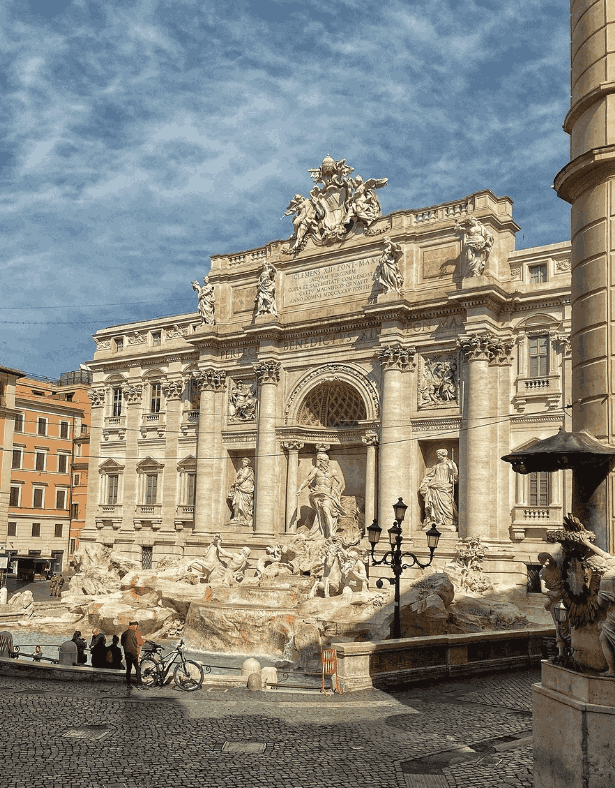
Trevi Fountain is one of Rome’s most recognizable proposal locations. It provides a dramatic background, particularly in the early morning when visitor numbers are generally lower.
The main challenge is the crowd. People may step between the couple and the photographer, and the limited space makes it difficult to reposition once the proposal begins.
There is also an important access rule. Since February 2, 2026, Rome has charged non-resident visitors €2 to enter the fountain’s inner perimeter during designated visiting hours. The fountain remains visible free of charge from outside that area, and access arrangements can change for maintenance or public-order reasons. Check the official Trevi Fountain website before planning a proposal close to the basin.
If you want the proposal photographed from inside the controlled area, ask the photographer whether the intended arrangement is permitted and how entry will be coordinated. Do not assume that paying the visitor entrance fee automatically authorizes a professional photoshoot.
For a surprise, decide on the exact position in advance. “In front of Trevi Fountain” is too vague when dozens of other visitors are taking photographs.
Pincio Terrace: panoramic views over Rome
The Pincio viewpoint, or Terrazza del Pincio, overlooks Piazza del Popolo and Rome’s rooftops. It is a popular setting for proposals because the background offers a broad city panorama rather than a single monument.
The terrace is particularly attractive in late-afternoon light, although sunset also brings visitors who gather along the railing. A photographer should help choose a recognizable section of the terrace and an angle that keeps the city visible behind you.
Ask whether the photographer wants you near the main railing or slightly farther back. A location that looks ideal when empty may become impractical if people are standing in the same position.
Pincio can be a good choice for couples already exploring Villa Borghese or Piazza del Popolo. However, reaching the viewpoint may involve an uphill walk, so take mobility needs and footwear into account.
Giardino degli Aranci: a garden setting on the Aventine Hill
The Orange Garden, officially Giardino degli Aranci or Parco Savello, provides trees, pathways and views toward St. Peter’s Basilica. Its atmosphere is different from the major monument squares, which makes it appealing for people who would prefer a quieter setting.
The panoramic terrace attracts visitors, especially around sunset. If privacy matters, ask the photographer to consider another position within the garden rather than relying entirely on the main viewpoint.
The garden is gated and subject to opening hours. These can vary seasonally, so confirm access for your exact date before arranging an early-morning or evening proposal.
The nearby Aventine streets offer possibilities for photographs after the proposal, but do not plan to propose directly in front of the famous Knights of Malta keyhole without considering the queue and other visitors.
Spanish Steps: impressive background, limited privacy
The Spanish Steps and Piazza di Spagna provide one of Rome’s most recognizable architectural settings. Early morning is usually preferable if you want to avoid the heaviest crowds.
Remember that sitting on the Spanish Steps is prohibited. Do not plan a seated proposal or arrange decorations on the staircase. The photographer should identify a suitable standing position that does not obstruct pedestrians.
There are several possible angles, including the lower piazza, the staircase background and the upper area near Trinità dei Monti. These give different photographic results and involve different levels of walking.
The location is suitable for someone who enjoys recognizable Roman scenery and does not mind some public attention. It is less suitable if you want the proposal to feel private.
Colosseum: choose the viewpoint carefully
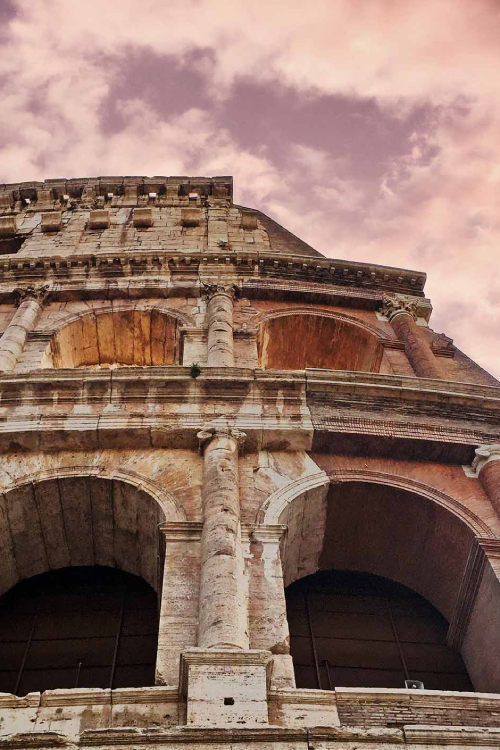
The Colosseum provides a distinctive background, but its immediate surroundings include busy pedestrian routes, archaeological areas and traffic restrictions.
You do not need to stand directly beside the monument to include it in your photographs. Some exterior viewpoints provide a better composition and more space for a photographer to work.
Ask whether the suggested location involves public pavement, a park area or an archaeological site with its own access rules. Entering the Colosseum or Roman Forum is a separate activity with ticketing and photography restrictions to consider.
Sunrise can be useful for reducing crowds near the exterior, although good light depends on the exact viewpoint and season. Your photographer should explain where the sun will be relative to you and the monument.
Janiculum Hill and quieter streets
The Janiculum, known locally as Gianicolo, offers panoramic views and a number of possible outdoor settings. It can be useful if you prefer a city skyline and want to avoid the busiest historic-center squares.
Some viewpoints are popular with visitors and locals, so they are not guaranteed to be private. The hill also covers a considerable area, making an exact meeting point essential.
For a more intimate proposal, consider a quieter street in Trastevere or the historic center. These locations can be attractive in photographs, especially when buildings and narrow lanes create a natural background.
However, narrow streets can also present problems with passing pedestrians, delivery vehicles and poor light. A local photographer should identify a suitable position rather than relying on a generic description of a romantic Roman street.
Which location should you choose?
The most useful decision is based on the kind of moment your partner would enjoy.
- For a famous Roman landmark: Consider Trevi Fountain or an exterior Colosseum viewpoint, preferably at a quieter time.
- For a panoramic background: Pincio Terrace or the Janiculum can provide city views.
- For a garden atmosphere: The Orange Garden or a suitable area of Villa Borghese may work, depending on access and crowds.
- For architectural photographs: The Spanish Steps area offers recognizable Rome scenery.
- For greater privacy: Consider a quiet street, a privately reserved terrace or another controlled location where access has been arranged.
If your partner dislikes public attention, prioritize privacy over the most famous background. A quieter location can also make it easier for the photographer to capture expressions without people standing directly behind you.
Sunrise or sunset: when should you propose?
Both can produce attractive photographs, but they involve different practical considerations.
Sunrise proposals
Early morning often offers fewer visitors at places such as Trevi Fountain, the Spanish Steps and the Colosseum’s exterior viewpoints.
It can also provide soft natural light, especially before direct sunlight reaches narrow streets or creates strong shadows.
The main challenge is getting your partner to the location early without making the surprise suspicious. If waking up before sunrise is unusual for your partner, you may need a convincing reason, such as taking photographs before the city becomes busy.
Allow enough time to reach the location. Early public transport services may be limited, and a taxi may be easier depending on your accommodation.
Sunset proposals
Late-afternoon light can work particularly well at panoramic viewpoints, including Pincio Terrace and parts of the Aventine Hill.
Sunset is also easier to combine with a restaurant reservation or evening celebration. You can suggest an afternoon walk followed by dinner without creating an unusual schedule.
The disadvantage is the number of people gathering at popular viewpoints. Your photographer should consider crowd patterns and identify an alternative position if the intended spot is occupied.
Sunset times change substantially throughout the year. Ask the photographer for a specific arrival and proposal time for your date rather than booking a generic 6 p.m. session.
How to keep the photographer hidden
There are two common approaches to photographing a surprise proposal.
Discreet coverage from a distance
The photographer waits at a predetermined location and photographs the proposal using a longer lens. Your partner may not notice the photographer until after the question has been asked.
This works well when the photographer has a clear line of sight and enough space to remain unobtrusive.
However, busy areas create a risk that other visitors will block the view. Discuss what happens if someone stands between the camera and the proposal position.
A photographer pretending to photograph the surroundings
Another approach is for the photographer to appear to be taking ordinary street or landmark photographs nearby.
This can be useful in places where carrying a camera is completely normal. The photographer can remain relatively close without attracting attention.
Still, you should know exactly where to stand. The photographer may need you to face a particular direction so that your partner’s reaction is visible.
Ask whether a simple signal is necessary. Some photographers prefer a message shortly before arrival, while others use a predetermined action or position.
Make a precise plan for the proposal moment
The most important preparation is agreeing on what you will do during the final minute before proposing.
For example, the plan might specify that you approach a particular side of a viewpoint, stand facing the city and wait until both of you are positioned near an identifiable feature.
The photographer should explain where they will be and which direction you should face.
You do not need to memorize complicated instructions. A good arrangement should have only a few essential steps.
Confirm these details:
- The exact location, preferably marked on a map.
- A photograph showing the intended proposal position.
- The approximate time you should arrive.
- How the photographer will recognize you.
- How you can confirm your arrival discreetly.
- Which direction you should face when proposing.
- Where the photographer will stand.
- What to do if the position is occupied.
- What happens if you arrive early or late.
If possible, send a recent photograph of yourself and describe what you expect to wear. This can help the photographer identify you in a crowded area.
How to make the plan feel natural to your partner
One of the main difficulties is getting your partner to the chosen location at the right time without creating suspicion.
Use an activity that would make sense during your holiday. You might suggest visiting a viewpoint before dinner, taking an early walk to see a famous fountain or exploring a neighborhood you already planned to visit.
Avoid inventing complicated stories that require reservations, fake phone calls or several people to coordinate. The more moving parts you introduce, the greater the chance that something will go wrong.
If you want your partner dressed for photographs, suggest an occasion that reasonably calls for nicer clothes, such as a dinner reservation. Be aware that this may create expectations about the evening.
The photographer should also know if your partner strongly dislikes posed photographs. After the proposal, a shorter and more relaxed portrait session may be more appropriate than an extended series of formal poses.
How long should you hire a proposal photographer?
Proposal photography packages commonly range from around 30 minutes to two hours. The appropriate duration depends on whether you want only the proposal itself or additional engagement photographs afterward.
Thirty-minute session
A short session can be sufficient when the photographer is covering one predetermined location and you want a small collection of photographs.
However, thirty minutes leaves little room for delays or moving between landmarks. Confirm how much time is reserved before the proposal and whether the booking begins at the agreed arrival time or when the photographer starts shooting.
One-hour session
One hour is often a practical choice for capturing the proposal, giving you a few minutes together afterward and taking portraits nearby.
This can be enough for a viewpoint proposal followed by photographs along adjacent paths or streets.
Ninety minutes to two hours
A longer session suits couples who want a more extensive engagement photoshoot, several nearby locations or more relaxed pacing.
For example, a proposal around Pincio could be followed by photographs in Villa Borghese or the Piazza del Popolo area, depending on the agreed route.
Do not assume that two hours allows you to cover the Colosseum, Trevi Fountain, Spanish Steps and Vatican area. Travel and walking between distant locations can consume much of the booking.
How much does a surprise proposal photographer cost in Rome?
Prices vary with session duration, experience, image delivery, editing and planning support.
As one current published example, Photographer Rome advertises a 30-minute proposal package at €200 and a one-hour package at €250. These include location guidance, edited high-resolution photographs and preview images according to the listed package terms.
Those prices are examples from one provider, rather than a general market rate. Other photographers may charge more for additional coverage, extensive planning, specialized editing or arrangements involving assistants.
Before comparing quotations, establish exactly what each package includes.
- Time reserved for preparation and proposal coverage.
- Photography time after the proposal.
- Number of edited photographs included.
- Whether all usable photographs or only a selected collection are delivered.
- High-resolution digital files.
- Private online gallery or another delivery method.
- Delivery deadline and any early-preview service.
- Additional travel or location charges.
- Any fees for a second photographer or assistant.
- Applicable taxes and booking charges.
A lower-priced session may be suitable if you want a few photographs of one moment. If you want a full engagement collection or significant planning assistance, compare the scope of the service rather than the hourly price alone.
What should you look for in a photographer’s portfolio?
Look specifically for complete surprise-proposal examples. Ordinary couple portraits demonstrate composition and editing skills, but they reveal less about a photographer’s ability to capture an unexpected reaction.
Ask to see examples that include the approach, the proposal itself and the moments immediately afterward.
Pay attention to whether both partners’ faces are visible, whether the photographs remain sharp when people move and how the photographer handles difficult backgrounds.
Photographs at the same location are particularly useful. Someone familiar with photographing proposals at Trevi Fountain may already understand the practical challenges of crowd movement and limited space.
Also check how the photographer handles lighting. A portfolio filled with bright daytime portraits does not necessarily demonstrate experience shooting proposals after sunset.
Ask whether the images shown are from actual surprise proposals rather than styled engagement sessions.
Can you arrange flowers, a musician or decorations?
Some photographers can help coordinate additional services, including flowers, music or a private venue. Others provide photography only.
Before adding anything, consider whether your partner would enjoy a more elaborate public proposal. A musician or decorative setup can make the surprise obvious before you reach the planned position.
There are also practical restrictions. Installing a floral arch, candles, furniture or other decorations in a public square may require authorization, and blocking pedestrian access is not acceptable.
If you want an elaborate setup, a private terrace or authorized venue is generally easier to coordinate than a public monument.
Ask whether the quotation includes the photographer’s planning time and whether additional suppliers are booked and paid separately. Make sure responsibilities are clear if a supplier arrives late or the planned setup cannot be used.
Do professional proposal photoshoots need permits in Rome?
Permit requirements depend on the location, commercial nature of the photography, equipment used and whether the activity occupies public space or involves protected cultural property.
Rome has formal procedures for professional photographic activities. In some cases, a communication is sufficient rather than a full authorization. Other situations, particularly shoots involving certain cultural sites, installations or occupation of public space, can require additional permission.
The city explains the distinctions through its official photographic authorization service.
Rules also differ at museums, archaeological sites and privately managed properties. Permission to visit or take ordinary personal photographs does not automatically authorize a paid professional shoot with specialized equipment.
Ask the photographer to confirm whether the proposed location requires notification, permission or a fee, and who is responsible for arranging it.
Do not assume that a handheld camera always eliminates every requirement or that a public location is automatically available for unrestricted professional photography.
What happens if it rains?
Rome can experience rain in any season, so a backup plan is useful even if your visit falls during a generally dry period.
Ask whether the photographer can move the session to another time on the same day, switch to an alternative outdoor location or arrange a sheltered setting that is legally available for photography.
A covered arcade or sheltered street may offer some protection, but check the photographic conditions and access rules before treating it as a reliable replacement.
If you are arranging a private terrace or another paid venue, confirm its weather policy separately from the photographer’s policy.
The key questions are:
- What weather conditions qualify for rescheduling?
- Who decides whether the session can proceed?
- Can the session move to a different time?
- Is an alternative location included?
- What happens if no suitable alternative is available?
- Is a refund possible, and under which conditions?
Rain alone may not entitle you to a refund. Check the actual cancellation terms before paying a deposit.
What if you arrive late or your partner changes the plan?
A proposal involves two people, but only one normally knows about the photography arrangement. That creates a risk that your partner may want to stop for coffee, visit a shop or take a different route.
Build a little flexibility into the schedule. Avoid arranging the proposal immediately after a timed museum reservation or directly before a non-refundable dinner booking.
Agree on a discreet communication method with the photographer. If you are delayed, a short message should be enough to update them without drawing attention.
Ask whether the photographer can wait beyond the scheduled time, whether an additional charge applies and what happens if the session can no longer be completed.
For locations with controlled access or closing times, a delay may make the original plan impossible. Have a nearby alternative agreed in advance.
How to carry the engagement ring safely
The ring needs to be accessible when you propose but secure throughout the day.
Choose a pocket or small bag compartment that closes properly. Avoid leaving the ring loose in a jacket pocket where it could fall out when you retrieve your phone or wallet.
Check whether the ring box creates a noticeable outline under your clothing. Some compact boxes are easier to conceal, but make sure the ring remains secure and that you can open the box comfortably.
If you are flying into Italy with an expensive engagement ring, consider appropriate insurance and keep purchase or ownership documentation accessible where useful. Customs obligations depend on the item’s status, value, origin and your travel circumstances.
Do not hand the ring to an unfamiliar person or leave it unattended while you prepare for the proposal.
Planning the photoshoot around your Rome itinerary
It is easier to coordinate a surprise when the proposal fits into an otherwise ordinary sightseeing day.
If you plan to propose near the Spanish Steps, spend the surrounding time in the historic center rather than scheduling attractions across the city. For a Pincio proposal, Piazza del Popolo and Villa Borghese can fit naturally into the same outing.
For useful travel logistics, the Italy on Foot guide to Rome metro exits explains which stations serve several major landmarks. Remember that some routes still involve significant walking or stairs.
If your proposal is part of a longer holiday, you can use the Italy on Foot trip planner to organize nearby activities, transport and dinner reservations. Keep confidential proposal details in a separate conversation or note that your partner cannot accidentally see.
When booking dinner afterward, allow enough time for photographs and travel. A restaurant reservation 15 minutes after the planned proposal gives you very little flexibility if the moment runs late or you want to spend time together before leaving.
When will you receive the photographs?
Delivery arrangements vary by photographer. Some provide a small selection of preview images within 24 or 48 hours, while the complete edited gallery may take considerably longer.
Ask for the exact delivery deadline before booking, particularly if you want to share photographs with family soon after the engagement.
Clarify what “edited photographs” means. Standard editing commonly includes adjustments to exposure, color and framing, while extensive retouching may be priced separately.
Ask whether the photographs are delivered in high resolution, whether you can download them without watermarks and whether personal printing is included in the usage rights.
Also discuss privacy. Some photographers use proposal images in portfolios, websites or social media. If you want the engagement kept private until you announce it, request a written agreement about publication and promotional use.
Booking and cancellation terms
Many photographers require a deposit to reserve a specific date and time. The remaining balance may be due before the session or afterward, depending on the provider.
Ask for a written booking confirmation showing the location, date, time, package, price and agreed arrangements.
Important conditions include rescheduling, cancellation, weather, late arrival and photographer illness.
Also ask what happens if the original photographer becomes unavailable. Will a replacement be offered, can you review their portfolio, and are you entitled to decline the replacement?
A surprise proposal can be difficult to reschedule because it may be tied to an anniversary, travel date or dinner reservation. Understand the options before paying.
Questions to ask before booking a proposal photographer
Once you have an approximate date and location, send the photographer a detailed enquiry covering both the photography and the practical coordination.
- Have you photographed actual surprise proposals at this location?
- Can you show examples of complete proposal sequences?
- What exact position would you suggest for the proposal?
- How will you remain unnoticed until the proposal?
- How will you recognize us, and how should I signal that we are ready?
- What time should we arrive for the light and crowd conditions?
- What happens if other visitors occupy the planned spot?
- Do we need any permission or authorization for professional photography there?
- How much time is included before and after the proposal?
- How many edited photographs will we receive?
- When will preview images and the full gallery be delivered?
- Can the images be kept private and excluded from your promotional portfolio?
- What is the total price, including any additional fees?
- What deposit is required, and what are the cancellation terms?
- What happens if it rains or we arrive late?
- Can you help coordinate a nearby dinner or other arrangements, and would that cost extra?
Before the day, ask the photographer to send one final message with the exact location, planned standing position, arrival time, discreet contact method and backup arrangement. Save those details somewhere your partner will not see them. With the practical decisions settled in advance, you can concentrate on asking the question while the photographer takes care of capturing the moment.