Planning to visit Rome and thinking about driving? While the idea of cruising through the Eternal City might sound tempting, parking in Rome isn’t exactly a Roman holiday. The historic center is filled with narrow, twisting streets, and strict parking regulations. That doesn’t mean you can’t do it, but you’ll need to know the rules and your options. Here’s your ultimate, traveler-friendly guide to parking in Rome, from ZTL zones and street parking to garages and park-and-ride tips. If you want to skip the hassle, check out this Rome in Three Days Itinerary for the best ways to explore the city on foot. Read on for everything you need to know so you don’t end your Roman adventure with an unwanted parking ticket!
Should You Drive and Park in Rome?
Driving in Rome can make sense for some travelers and be more trouble than it’s worth for others. Ask yourself: do you plan to mostly visit the big attractions in the historic center, or are you using Rome as a base to explore the countryside, visit family, or travel with kids or people with limited mobility?
The inner part of Rome’s center is a maze of picturesque alleys, centuries-old monuments, and bustling piazzas. That charm comes with restricted zones and tricky parking. If your hotel is outside the central zone, or if you’re doing day trips to the countryside, like wine regions or hill towns, a rental car can be handy. If you want to try Rome’s classic neighborhoods by car, you’ll need to plan ahead carefully to avoid fines and parking stress.
Planning Rome? Grab the step-by-step digital guide
It’s important to note that Rome is organized to favor pedestrians, not drivers. Most Romans themselves avoid bringing cars into the core, relying on public transport, scooters, or simply walking. If your heart is set on motoring through Rome, the rest of this guide details exactly what you need to know for a smooth, ticket-free, experience.
Understanding Rome’s ZTLs (Limited Traffic Zones)
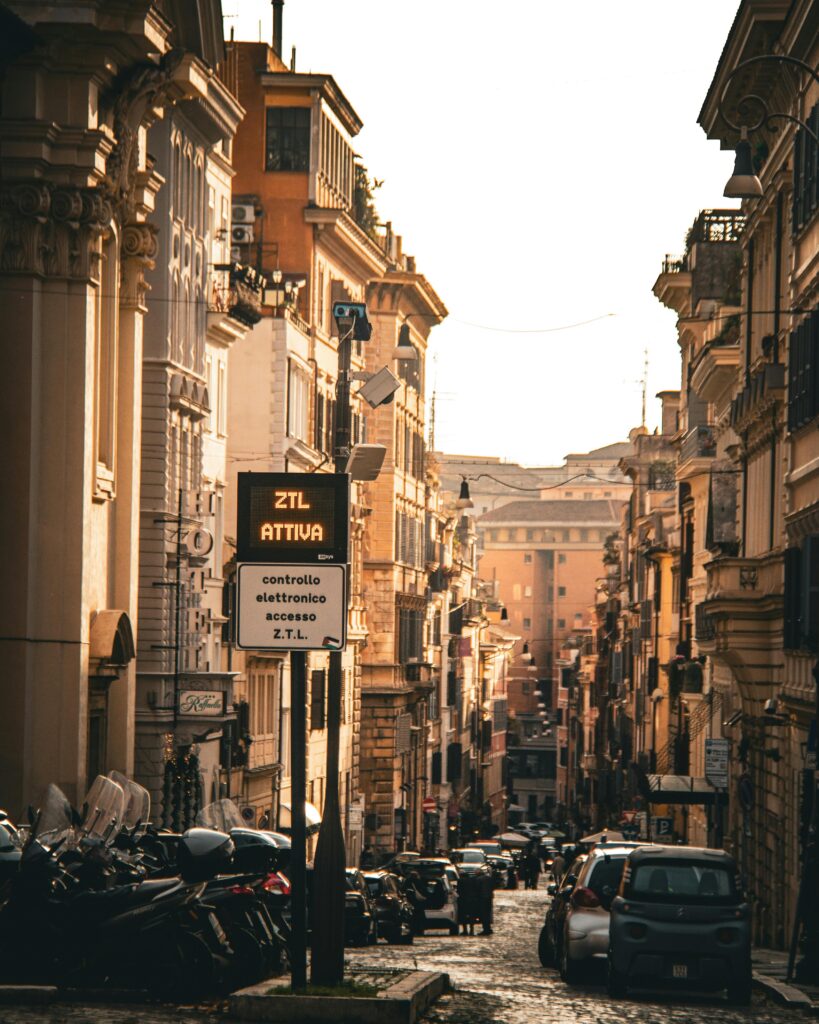
You may have heard the term “ZTL”, in Rome, it’s a big deal. ZTL stands for Zona a Traffico Limitato or “Limited Traffic Zone.” Think of these as car-restricted areas, usually the most historic and crowded parts of the city. Entry to ZTLs is controlled by cameras that automatically photograph license plates. Unauthorized entry nets a fine that can really sour your trip.
Rome’s main ZTLs include Centro Storico, Tridente, Trastevere, Testaccio, and San Lorenzo. Each has its own active hours. The Centro Storico and Tridente zones have camera enforcement during daytime weekdays and sometimes on Saturday mornings. Meanwhile, nightlife districts like Trastevere and nearby Testaccio flip their ZTLs on for the evenings, just when everyone’s out for dinner or drinks.
Don’t assume you can trust Google Maps or your GPS to warn you. ZTL times often change for holidays, events, or at short notice. Always check for physical ZTL signs, which show a white circle with a red border and LED displays for active times. If the sign lists “VARCO ATTIVO” (zone active), do not enter if you aren’t permitted. Other times, “VARCO NON ATTIVO” means you can pass.
Take it seriously: ZTL cameras are extremely accurate and fines will be mailed internationally (even months later) via your rental company. Unless your accommodation arranges an exemption for you, avoid any ZTL zone during “active” hours.
How to Recognize ZTL Signs in Rome
| Sign | What It Means | What To Do |
|---|---|---|
| Red circle (white inside), “ZTL” | Limited Traffic Zone. Check neon display for status (VARCO ATTIVO = Active) | Do NOT enter during active times |
| Blue sign, “P” + hours | Pay to park. Check sign for days/hours and rates | Pay at meter or with app |
Rome’s Street Parking: Decoding Lines and Colors
Once you leave ZTL zones behind, the next challenge is Rome’s street parking color codes. Here are the basics:
Blue Lines: These spots are pay-to-park. Anyone can use them, but you’ll need to buy a ticket from nearby meters or use an app (like EasyPark). Always check posted signs for time limits and costs.
White Lines: Free parking, but there’s a catch. Sometimes these spaces are reserved for residents or valid only during certain times, so double check the signs before leaving your car.
Yellow Lines: Reserved for disabled drivers, medical personnel, taxis, official vehicles, etc. Do not park here unless you have the appropriate permit, it can lead to towing or steep fines.
Pink Lines: Special spaces for parents-to-be and parents with infants. If you qualify, you’ll need the right card (contrassegno rosa) in the window.
Here’s a quick color chart for handy reference:
| Line Color | Meaning | Travelers: Can You Park? |
|---|---|---|
| Blue | Pay to park (public street) | Yes, with a ticket |
| White | Free, but check signs | Sometimes; verify instructions |
| Yellow | Reserved (disability, official, taxi) | No, unless you have the correct permit |
| Pink | Maternity/parent | Only with specific permit |
Tips for Using Street Parking
– Always pay if you park on blue lines, even if you aren’t sure
– Look for pink EasyPark stickers or app logos for quick mobile payment
– Never park in front of driveways, bus stops, or anywhere blocking bikes or emergency access
Rome’s police are very used to giving out tickets and towing. Central and popular zones are especially watched, so it’s not worth the risk.
Parking Garages and Bookable Lots: A Stress-Free Solution
If you want maximum peace of mind, book your parking in advance at a private garage or lot. Unlike street spaces, these are secure and often covered, with attendants during most hours. In downtown areas, if you absolutely must bring a car, reserving a garage is the safest way, especially for multi-day stays.
Many central garages can provide temporary ZTL access for guests, but you have to arrange this in advance and give your license plate info. Always ask your hotel or parking garage if they can help organize ZTL permissions if you’re staying downtown.
Prices vary depending on proximity, size, and time. Some garages cater specifically to tourists with dedicated spots for larger cars. When booking accommodations, ask if parking is available or if they can recommend a nearby arrangement.
Rome parking websites let you compare choices and book in advance:
A little forward planning reduces stress, no circling, no surprise tickets, and easier arrival and departure.
Park & Ride: The Best Option for Visitors With Cars
For most travelers, parking in a “park-and-ride” lot and continuing by public transport is the simplest, cheapest, and most relaxing way to handle Rome by car. These large, official parking lots are located at Metro and major train stations just outside ZTL zones. Here’s how it works: you park for the day (for a flat fee) and travel to the historic center by Metro, tram, or bus.
Park-and-ride lots are especially helpful if:
- You’re arriving in Rome by car from another city
- You’re heading out for a countryside day trip, but don’t want to deal with central traffic
- You’ve rented a car for only part of your journey and want to avoid overnight central parking fees
Here are some of the best options based on your approach:
From the North: Park at Saxa Rubra or Tiburtina. Both connect to Metro and regional trains.
From the South: Anagnina (Metro A line). Lots of space, quick Metro into city.
From the East: Rebibbia or Ponte Mammolo on Metro B.
From the West: Cornelia (Metro A line), or EUR Magliana.
All official park-and-ride lots are listed on the Roma Mobilità official site. Most are open 24/7, some require payment at machines. Signs are in Italian and English.
Parking at Rome’s Airports or Cruise Ports
If you are flying out of Rome or joining a cruise at Civitavecchia, each airport and the cruise port has secure official parking. The main options at Fiumicino and Ciampino Airports include multi-level garages and economy lots with shuttle service to the terminals.
For the most up-to-date information on tariffs, availability, and booking:
- Fiumicino (Leonardo da Vinci) Official Parking
- Ciampino Official Parking
- Civitavecchia Cruise Port Parking
Booking in advance is always recommended during busy travel months or holidays.
What About Disabled Parking and Permits?
Rome works with an EU-wide system for disability permits (blue badge). If you are traveling with a family member or friend who has a valid disability card, they can park for free in any blue-lined spot, use yellow-lined reserved spaces, and also enter ZTLs as long as the permit is visibly displayed and the permit holder is in the car. For tourists: it’s wise to have a translation and inform your hotel in advance.
If you need additional advice, Roma Mobilità provides official info on disability parking in Rome.
Avoiding Tickets, Fines, and Break-ins
Rome’s traffic police are active and they don’t hesitate to ticket cars that are wrongly parked , especially in central neighborhoods and around major attractions. Street parking fines can be substantial, and in some cases, your car can be towed if you block traffic or park in a reserved space.
For your own safety, always check the lines, the nearest parking sign, and look around before leaving your car. Do not leave valuables visible inside the vehicle: break-ins, while rare, do happen, especially in popular tourist areas. Here’s a handy checklist to avoid trouble:
- Use only legal parking space (check for colored lines and posted rules)
- Pay for your ticket and display it on the dashboard
- Never block gates, bus stops, or pathways
- Take all valuables with you or stash them out of sight
- Photograph your car and nearby signs, so you can prove parking was legal if needed
- If in doubt, use a private garage or book an official spot
If you receive a fine, your car rental company will often charge an administrative fee and forward the notice; avoid unnecessary hassle by following city rules closely.
Checklist for Parking in Rome
- Know your route: Avoid ZTLs unless you have an exemption from your accommodation
- Look for colored lines before parking: blue (pay), white (maybe free), yellow (reserved), pink (maternity)
- Trust posted signs more than GPS instructions or Google Maps
- Prefer private garages if staying overnight inside the city ring
- Consider park-and-ride facilities at Metro or regional train stations for stress-free access to the center
- Check official airport and port parking for long-term stays
- If you have a disability permit, bring documentation and always display it
- Book parking in advance during high season
When Does It Make Sense to Bring a Car to Rome?
For most Rome vacations, a car isn’t needed, and can be a headache in the city. However, it makes perfect sense to have a car if:
– You plan to explore rural Lazio, Umbria, or Tuscany and just visit Rome for a couple of days
– You’re traveling with kids and want door-to-door convenience
– Someone in your group has mobility needs
– Your hotel offers guaranteed garage parking
If you fall into one of these categories, follow the above advice and you’ll have no trouble parking in Rome. If not, think about leaving the car behind and focusing on walking, public transport, or using taxis for short hops. In a city built for walking and admiring stunning sights around every corner, you may find you don’t miss your car at all.
