Renting a road bike in Rome requires a little more preparation than hiring an ordinary city bicycle. Before paying, confirm the frame size, pedal system, collection arrangements and security deposit. Check what equipment comes with the bike, particularly a helmet, lights and puncture kit. You should also know who to contact if something breaks during your ride.
A search for road bike rental Rome can bring up everything from carbon racing bikes to gravel bikes and basic touring models. They are intended for different kinds of riding, and the cheapest available bicycle may be unsuitable for your planned route. Rome’s cobblestones, traffic and surrounding hills make that distinction particularly important.
First, choose the right type of bicycle
A proper road bike, called a bici da corsa in Italian, normally has drop handlebars, relatively narrow tyres and gearing designed for riding efficiently on paved roads. It suits experienced cyclists who want to maintain their training, join a group ride or explore the countryside around Rome.
It is less practical for casual sightseeing in the historic centre. Between pedestrians, uneven paving and frequent stops, you may spend more time concentrating on the road surface than enjoying the surroundings.
- Road bike: Choose this for training rides, longer distances on paved roads and cycling in the hills outside Rome.
- Gravel bike: A useful compromise if your route includes rough paving, compacted dirt roads or mixed surfaces.
- Mountain bike: Better for rough tracks and particularly uneven sections of the Appian Way.
- City bike or electric bike: Usually more comfortable for sightseeing, short trips and leisurely riding around Rome.
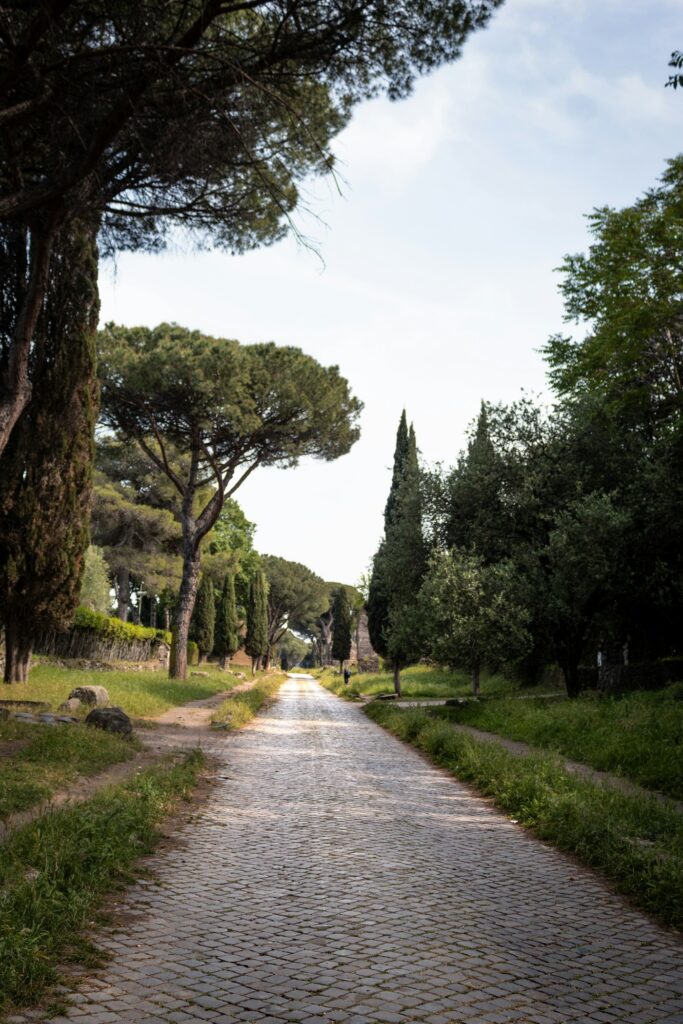
The Appian Way is a good example of why the distinction matters. The official Appia Antica Regional Park itinerary describes sections with modern paving, ancient stone slabs, cobbles and unpaved surfaces. Some stretches are also open to motor traffic.
A lightweight racing bicycle with narrow tyres is poorly suited to the roughest sections. If the Appian Way is your main destination, consider a gravel bike or mountain bike instead.
Road bike sizes: what to confirm before booking
Frame size is probably the most important detail to settle before paying. A road bike that is too large or too small can quickly become uncomfortable, especially on a ride lasting several hours.
Rental listings may show sizes such as 50, 52, 54, 56 and 58, or use letters such as S, M, L and XL. These labels do not translate consistently between manufacturers. A 54 cm frame from one brand may fit differently from a 54 cm frame produced by another.
Information to send the rental shop
- Your height: Give your measurement in centimetres.
- Your inseam: Measure from the floor to your crotch while standing barefoot.
- Your usual bicycle: If you already ride a road bike, provide its brand, model and frame size.
- Your riding position: Explain whether you prefer an upright endurance position or a more aggressive racing position.
- Any important fit requirements: Mention unusual reach requirements, a previous fitting measurement or adjustments needed for comfort.
Experienced cyclists may find it useful to provide their usual saddle height, measured from the centre of the bottom bracket to the top of the saddle, along with their normal handlebar position.
Ask the shop to confirm the taglia del telaio, meaning frame size, and the actual model allocated to you. Availability of a particular size on a website does not necessarily mean that bicycle will be available for your dates.
Can the shop adjust the bicycle?
Most standard rental setups allow the saddle height to be adjusted. However, changing the stem, handlebar width or crank length may not be possible.
If you are particularly sensitive to bike fit, ask whether the shop can adjust the saddle position or fit your own saddle. Some may accommodate these requests, while others provide only basic adjustments.
For a multi-day rental, a short test ride before accepting the bicycle is sensible. If the fit feels wrong, ask about alternatives before leaving. A promise to provide an equivalent model is only useful if the replacement also fits.
Pedals and cycling shoes: check the exact system
One of the easiest mistakes when hiring a racing bicycle is assuming the pedals will match your cycling shoes.
Unlike ordinary city bikes, road bikes are often rented without a specific clipless pedal system fitted. Rental companies may offer several options, and some expect you to bring your own pedals.
Common systems include:
- Shimano SPD-SL: Three-bolt road cleats, commonly used with road cycling shoes.
- Look Keo: Another popular three-bolt road system, with cleats that are not interchangeable with SPD-SL.
- Shimano SPD: The smaller two-bolt system commonly used for mountain biking and some touring or gravel setups.
- Wahoo Speedplay: A road pedal system requiring compatible cleats and shoes.
- Flat pedals: Suitable for ordinary shoes, although less familiar to riders accustomed to clipless pedals.
Do not simply request Shimano pedals. Specify SPD or SPD-SL, because they require different cleats.
If you intend to bring your own pedals, confirm that the shop will install them and remove them before you return the bicycle. You may need the appropriate pedal wrench or hex key if the shop does not offer this service.
Cycling shoes are not normally something to assume is included. Bring your own unless the rental company has explicitly confirmed shoe availability, size and any additional cost.
Also check the brake arrangement during collection, particularly if you are used to a different front and rear brake lever configuration.
What does the rental price normally include?
There is no single standard rental package across Rome. Some shops advertise an equipped bicycle with accessories, while others calculate the cost of specialist pedals, helmets and equipment separately.
The quoted price may depend on the type and value of the bicycle, its components, rental duration and delivery requirements. Carbon-frame performance bikes generally cost more to hire than basic aluminium models.
Before comparing prices, check whether the following are included:
- The bicycle in your confirmed frame size.
- Your chosen pedal system and pedal installation.
- A correctly sized cycling helmet.
- A secure bicycle lock.
- Front and rear lights, particularly for early morning or evening riding.
- A spare inner tube or compatible tubeless repair equipment, pump or CO2 inflator, and tyre levers.
- A multitool and basic mechanical assistance.
- Collection from the shop or delivery to your accommodation.
- Any insurance or damage protection.
Not every road bicycle comes with mudguards, a luggage rack, bottle cages or a phone holder. Many performance bikes cannot accept conventional panniers, and some use unusual seatposts or integrated handlebars that limit accessory compatibility.
If you need to carry more than a small amount of equipment, discuss this before booking rather than assuming the bicycle can accommodate bags.
How is a rental day calculated?
This small detail can make a noticeable difference to the final price.
One shop may charge by calendar day, another by a 24-hour period, and another according to its opening and closing times. Some specialist providers also require a minimum rental of two or three days, while others offer single-day hire.
For example, collecting a bicycle on Friday afternoon and returning it on Saturday morning could be charged differently depending on the provider’s policy.
Ask for the exact collection and return deadlines, the total cost for your dates and any late-return charges. Do not assume that a short rental automatically costs one daily rate.
Security deposits: what happens to your money?
Most bicycle rental businesses require identification and some form of security guarantee. This may be a refundable cash deposit, a credit card pre-authorisation or another arrangement specified in the rental contract.
In Italian, the security deposit is called a cauzione.
The amount can differ considerably between a basic bicycle and an expensive carbon road bike. There is no city-wide standard deposit amount.
Card pre-authorisation versus an actual charge
With a pre-authorisation, the rental company temporarily reserves part of your available card balance or credit limit. The money is normally released after the bicycle has been returned and checked, assuming no charges apply.
However, the money may not become available immediately. The rental company can release the authorisation, but the issuing bank controls how quickly the funds become accessible again.
Before paying, ask:
- How much is the deposit for this specific bicycle?
- Is the amount pre-authorised or actually charged?
- Can you use a debit card, or is a credit card required?
- When is the deposit released after return?
- What happens if the shop identifies damage?
- Will you receive written documentation for any deduction?
Take a valid identity document for collection. For an ordinary pedal bicycle, you do not need a driving licence, although rental companies can set their own identification and age requirements.
If asked to leave your original passport as security, request an alternative deposit arrangement rather than automatically handing it over.
Insurance and damage liability
Do not assume that the security deposit is the maximum amount you could owe.
Some rental agreements make customers responsible for the full cost of theft or damage. Others include protection with an excess, called a franchigia.
Read the terms for:
- Accidental damage to the frame, wheels and components.
- Damage caused by a crash or incorrect use.
- Tyre punctures and ordinary wear.
- Theft while the bicycle is locked outside.
- Theft from a hotel, garage or other storage area.
- Loss of accessories, keys or pedals.
A policy described as basic protection may still exclude certain circumstances or require you to pay an excess. Ask what documentation is needed if a bicycle is stolen, including whether a police report is required.
Collection in Rome: shop pickup or hotel delivery?
Collection arrangements deserve attention because specialist bicycle rental shops are not necessarily located beside major tourist attractions.
The Italian terms you may see are ritiro for collection, restituzione for return and consegna for delivery.
Collecting from the shop
Shop collection normally gives you the opportunity to check the bicycle, have your pedals fitted and request a final adjustment before leaving.
However, opening hours vary. Some bicycle shops close for part of the afternoon, operate shorter Saturday hours or remain closed on Sunday. Specialist rentals may also need several days’ notice.
Confirm the actual street address, appointment time and contact number. An online confirmation saying only “pickup in Rome” is insufficient.
Allow time for identification checks, payment, deposit arrangements, adjustments and a short test ride. If your planned ride begins early in the morning, ask whether collection is possible the previous evening and whether this changes the charge.
Hotel and apartment delivery
Delivery may be useful if you are hiring several bicycles, staying outside the centre or arranging an early departure.
Before accepting a delivery quote, confirm the following:
- Whether delivery and collection are both included.
- The precise handover location and time window.
- Whether the bicycle arrives fully assembled with pedals installed.
- Who will adjust the fit and explain the equipment.
- Whether someone must be present to sign for the bicycle.
- What happens if your flight or train is delayed.
Ask your accommodation whether it can accept a delivery and where you can store the bicycle overnight. A full-size road bike may not fit easily into a small lift or apartment staircase.
Some hotels restrict bicycles in guest rooms. Secure storage arrangements matter especially with expensive rental equipment.
If you are arriving with luggage, consider the logistics carefully. You cannot reasonably ride a conventional racing bicycle while carrying a large suitcase. Arrange to leave your bags at your accommodation before collection, or choose delivery.
What to inspect before leaving with the bicycle
Do not rush the handover, even if the bicycle looks clean and properly maintained.
A basic inspection should include:
- Frame and fork: Look for cracks, obvious impact marks or existing damage, especially around a carbon frame.
- Wheels and tyres: Check tyre condition, inflation and whether the wheels rotate freely.
- Brakes: Test both brakes and check that the levers operate as expected.
- Gears: Shift through the gears during a short test ride and listen for unusual noises.
- Pedals: Check that the correct system has been fitted securely and that your shoes engage and release properly.
- Saddle and handlebars: Confirm that the fit is comfortable and adjustments are secure.
- Accessories: Check lights, lock, repair kit and any equipment promised in your booking.
Photograph the bicycle before departure, including existing scratches or marks. If there is visible damage, ask the shop to record it on the rental agreement.
Make sure you understand how to use the gears and brakes, particularly if the bicycle has unfamiliar electronic shifting or hydraulic disc brakes.
Finally, save the shop’s assistance number. You should know whom to call before you are standing beside a punctured tyre several kilometres outside Rome.
Where road cycling in Rome makes sense
Rome has an extensive cycling network, including routes through parks and along major streets. However, having a cycle route nearby does not mean every part of the journey will be smooth or traffic-free.
The city transport authority maintains information about the network on its official cycling page.
For cyclists interested primarily in training, routes outside the busiest central neighbourhoods are generally more appropriate than repeated loops around the Colosseum or Pantheon.
The countryside north and south of Rome offers longer paved roads and climbing opportunities. The Castelli Romani area, for example, has substantial hills, although reaching quieter roads may require riding through busy suburban streets.
Check the entire route rather than concentrating only on its scenic middle section. A 60-kilometre ride can become unpleasant if the first and last 10 kilometres involve heavy traffic or difficult junctions.
If you plan to explore the city itself, look for a route with appropriate cycle paths and avoid forcing a racing bicycle over long sections of ancient paving. Wet cobblestones and tram tracks need particular care.
Basic cycling rules in Italy
Ordinary cyclists must follow the Italian Highway Code. The rules include using designated cycle infrastructure where required, riding responsibly around pedestrians and complying with bicycle equipment requirements.
The Italian Automobile Club’s text of Article 182 explains the principal rules for cyclists. Article 68 covers required bicycle equipment, including brakes, a bell, lights and reflectors.
Lights must be working during the legally specified hours of darkness and in conditions of poor visibility. Reflective high-visibility clothing or braces are required outside built-up areas during specified nighttime hours and when riding through tunnels.
A cycling helmet is not generally compulsory for ordinary bicycle riders in Italy, but wearing one is sensible, particularly when riding a performance bike in traffic. A rental operator may also require it under its own conditions.
Before riding, check that the rented bicycle has the equipment necessary for your intended route and time of day. Do not assume that a race-oriented setup is automatically suitable for everyday public-road use.
Can you take a rented road bike on the metro or train?
Yes, under certain conditions. This can be useful if you want to reach a more suitable cycling area without riding across the entire city.
Rome’s public transport operator, ATAC, permits conventional non-folding bicycles on Metro A, B/B1 and C without time restrictions, subject to its carriage rules and crowding conditions. Some stations have restrictions. In particular, bicycles cannot use the Line A stations of Spagna, Barberini, Repubblica, Termini, Vittorio Emanuele and San Giovanni.
Passengers without the relevant Metrebus season pass generally need an additional ticket for the bicycle. Access can also be refused temporarily when services are overcrowded.
Check the official ATAC bicycle transport rules before travelling, particularly if your planned journey involves a specific station or a busy service.
On Trenitalia regional trains, assembled bicycles are permitted on services displaying the bicycle symbol, subject to available space. A bicycle supplement or eligible additional ticket is normally required. The applicable conditions are explained in Trenitalia’s bicycle carriage information.
Before planning a ride that depends on rail transport, confirm that both your outbound and return services accept assembled bicycles.
If you only want a short cycling outing during a sightseeing holiday, it may be simpler to hire a bicycle near your intended route and use ordinary public transport for the rest of the day. Our guide to getting around Rome explains the alternatives.
Children, smaller riders and accessibility
Sport-oriented road bicycle rentals are generally aimed at adults and riders who already have some cycling experience. Smaller frame sizes may be limited, and a shop may have minimum age requirements or require a parent to sign the agreement.
Do not assume a racing bicycle can be fitted with a child seat. Many carbon frames and performance setups are unsuitable for this equipment.
For families, city bikes, child-specific bikes or other appropriately equipped bicycles are more practical. Confirm each child’s height, the available frame or wheel sizes, and the rental company’s policy before booking.
Riders with reduced mobility or particular physical requirements should also ask about the available bicycle configuration. Standard road bikes usually involve a forward-leaning position and a relatively high top tube. A step-through bicycle, flat-handlebar model or specialist adaptive cycle may be more suitable, although availability must be checked individually.
When arranging collection, ask whether the shop has step-free access and whether staff can help with adjustments and handling the bicycle.
Weather, cancellations and changing your plans
Road cycling conditions around Rome vary substantially through the year. Summer afternoons can be very hot, while winter mornings may be cold and damp. Rain makes cobblestones and other polished surfaces particularly slippery.
In hot weather, an early start is often preferable. However, that only works if you can collect the bicycle before the shop opens or have it delivered in advance.
Do not assume that rain automatically entitles you to a refund. Rental companies may have different rules for cancellation, rescheduling and bad weather.
Ask what happens if:
- You cancel several days before collection.
- Heavy rain is forecast for the rental date.
- Weather conditions become unsafe after the rental has started.
- Your flight or train arrives late.
- You need to return the bicycle earlier than expected.
- You want to extend the rental by another day.
Confirm the cancellation deadline and any non-refundable booking payment in writing. If the rental forms part of a longer trip, it helps to keep your other Rome activities flexible. You can organize your Italy itinerary around your cycling day and adjust sightseeing plans if the weather changes.
What happens if the bicycle breaks down?
A puncture or mechanical problem is inconvenient in any city, but it becomes more complicated if you are riding outside Rome and need to return an expensive rental bicycle by a fixed time.
Before setting off, establish whether the rental includes roadside assistance and exactly what that means.
Some arrangements may provide telephone advice or assistance within a defined area. Others may offer collection or replacement at an additional cost. You should not assume that the company will send a vehicle wherever you happen to be.
If something goes wrong:
- Stop somewhere safe and assess whether the bicycle can be ridden.
- Contact the rental provider using the agreed assistance number.
- Explain your location and the problem, ideally with photographs.
- Ask for permission before arranging an outside repair, especially for expensive components.
- Agree on any recovery cost and revised return arrangements before proceeding.
If the bicycle is stolen, contact the rental provider promptly and follow the police reporting requirements specified in the agreement. Keep copies of all documents and communications.
Do not continue riding a bicycle with suspected frame damage, faulty brakes or another potentially dangerous mechanical defect.
What to send when requesting a road bike rental quote
A detailed first message helps the rental shop confirm whether it has an appropriate bicycle and reduces the likelihood of unexpected charges during collection.
Include:
- Rental dates: Exact collection and return dates, with preferred times.
- Rider measurements: Height, inseam and usual bicycle size.
- Bicycle preference: Road or endurance bike, with carbon or aluminium preference if relevant.
- Pedals: Exact system required, or confirmation that you will bring your own.
- Planned riding: Approximate daily distance and whether you expect hills, gravel or rough paving.
- Equipment: Helmet, lights, lock, repair kit and other accessories needed.
- Collection: Shop pickup or hotel delivery, with the hotel address if applicable.
- Payment: Request the total rental price, deposit amount and damage liability terms.
- Support: Ask about punctures, mechanical problems and bicycle recovery.
For a multi-day hire, mention whether you plan to take the bicycle outside Rome or transport it by train. Some companies may apply geographical restrictions or require prior approval for particular arrangements.
A short message covering these details will usually be more useful than asking simply how much it costs to rent a racing bicycle.
Check the confirmation before you pay
The final booking confirmation should clearly identify the bicycle or agreed model category, frame size, pedal choice, collection location, rental dates and total price.
Also check that it records the security deposit, cancellation terms, included accessories and what happens if the bicycle you reserved becomes unavailable.
Be cautious about vague promises of a similar bike without a size guarantee, unclear damage charges or a rental price that excludes equipment you need to complete the ride.
For expensive carbon bikes, ask specifically how existing damage will be recorded at collection and how any later damage assessment will be handled.
Before leaving the shop, make sure you have three things saved on your phone: the rental agreement, the assistance contact and the exact return deadline. Those details matter much more than an impressive list of components if your ride does not go according to plan.