Many travelers arrive in Rome thinking that St. Peter’s Basilica and the Vatican are the same thing. This confusion is very common, and it often leads to wasted time, missed experiences, and buying the wrong tickets. Understanding the distinction helps you plan smarter, move with confidence, and enjoy what you came to see without stress. Before diving into details, it helps to know that the Vatican is not just a church, and St. Peter’s Basilica is not a museum. They are connected, but they serve very different purposes. If you are planning several days in Rome, it also helps to place this visit in a wider itinerary, such as a balanced city plan like this Rome in Three Days itinerary, which shows how the Vatican area fits into a broader visit.
In simple terms, the Vatican can refer to an entire country, a governing authority, and a group of major visitor sites. St. Peter’s Basilica is just one part of that picture. It is a massive and important part, but it is still one specific place with its own rules, access points, and visitor flow. When people say “I visited the Vatican,” they might mean they walked through St. Peter’s Square, toured the Vatican Museums, attended Mass, or climbed the dome of the Basilica. These are not interchangeable experiences, and they do not all require the same tickets or time commitment.
This article breaks everything down in a clear and practical way. You will learn what the Vatican actually is, what St. Peter’s Basilica is, how they overlap, and where they are completely separate. You will also learn what is free, what costs money, where official tickets are sold, and what mistakes travelers most often make. By the end, you will know exactly what you are visiting and how to plan it without confusion.
Planning Rome? Grab the step-by-step digital guide
What people mean when they say “the Vatican”
In everyday conversation, “the Vatican” is used as a catch-all phrase. Travelers use it to describe everything from the Pope to the Sistine Chapel to St. Peter’s Basilica. In reality, the Vatican includes several different things that just happen to exist in the same small area. The most important one for travelers to understand is Vatican City State. This is a tiny independent country located entirely inside the city of Rome. It has its own laws, administration, services, and borders, even though those borders are not always obvious when you are walking around.
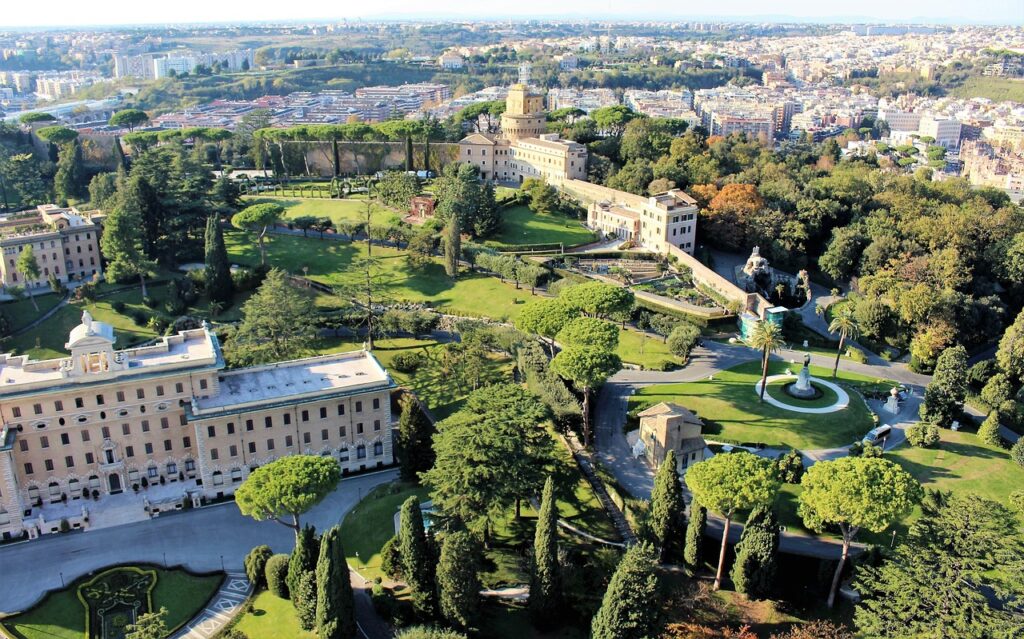
Within Vatican City State, you will find St. Peter’s Square, St. Peter’s Basilica, the Vatican Museums, offices, gardens, and residences. Not all of these areas are open to visitors, and not all visitor areas are accessed the same way. For example, St. Peter’s Square is open to everyone and does not require a ticket. The Vatican Museums require a timed ticket. St. Peter’s Basilica has free entry but strict security and dress rules. These differences matter when planning your day.
Another meaning of “the Vatican” is the Holy See, which is the central governing body of the Catholic Church worldwide. This is not something you visit like a museum or church. It exists as an authority rather than a place you tour. Travelers do not buy tickets for the Holy See, but it explains why the Vatican operates differently from typical tourist attractions. Understanding this helps explain why rules, schedules, and access sometimes feel more formal than elsewhere in Rome.
What St. Peter’s Basilica actually is
St. Peter’s Basilica is a church, and it is one of the most important churches in the world. It is built over what is traditionally believed to be the burial place of Saint Peter, one of Jesus’s apostles and the first Bishop of Rome. For travelers, this means it functions primarily as a religious site, even though millions of people visit it every year. Because of this, the rules for visiting St. Peter’s Basilica are very different from museum rules.
Entry into St. Peter’s Basilica itself is free. You do not need a Vatican Museums ticket to walk into the church. You do, however, need to pass through airport-style security, and lines can be long during busy times of day. Modest dress is required, meaning shoulders and knees must be covered. Inside, photography is allowed in most areas, but respectful behavior is expected since it is an active place of worship.
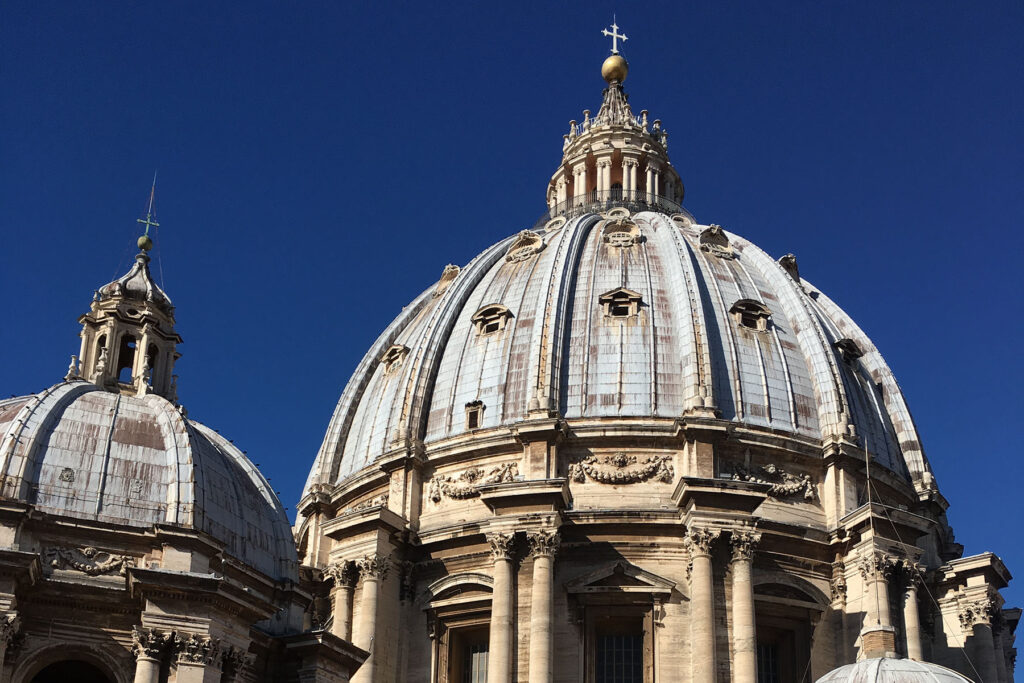
Some parts of St. Peter’s Basilica do require a ticket. The most popular paid experience is access to the dome, also called the cupola. From the top, you get one of the best views in Rome. Tickets for the dome are purchased on site after security or through the Basilica’s official channels. Another special area is the Vatican Necropolis, also known as the Scavi, which is accessed by reservation only and managed separately. These options are part of the Basilica experience, not the Vatican Museums.
How the Vatican Museums fit into the picture
The Vatican Museums are a completely separate visitor experience from St. Peter’s Basilica, even though they are located within Vatican City State. The Museums are a vast complex of galleries, courtyards, and chapels, and they are the only way to access the Sistine Chapel. This is where most travelers need a ticket, and this is also where the most planning is required.
Tickets for the Vatican Museums are sold through the official site only: https://tickets.museivaticani.va/. Buying tickets in advance is strongly recommended because daily entry is capped and lines can be extremely long. The Museums operate on timed entry, meaning you must arrive within your selected window. This system does not apply to St. Peter’s Basilica.
Many visitors assume that a Vatican Museums ticket includes access to St. Peter’s Basilica. This is not always true. While there is an internal exit that can lead toward the Basilica, its availability depends on time, crowd levels, and guided group status. For planning purposes, it is best to treat the Museums and the Basilica as two separate visits that just happen to be next to each other.
Understanding borders and geography on the ground
One of the most surprising facts for travelers is that you can walk into Vatican City without noticing a border. St. Peter’s Square is part of Vatican City State, even though it feels like an open Roman plaza. The border is marked by a subtle stone line under the colonnade. Once you cross it, you are technically in another country, even though everything looks and feels seamless.
This geographic detail explains why security, policing, and organization can feel different in the Vatican area. Italian police often manage crowd control in the Square, while Vatican authorities handle internal security. For visitors, this mostly affects bag checks, crowd flow, and event days such as Papal audiences or religious celebrations.
Knowing where you are helps with planning your route. For example, entering St. Peter’s Basilica happens directly from the Square. Entering the Vatican Museums requires walking to a different entrance along the Vatican walls. They are close but not interchangeable, and confusing them can cost you time and energy, especially during peak seasons.
Tickets, access, and official booking links
To make planning easier, here is a clear breakdown of what requires a ticket and where to buy it. Using official sites protects you from overpaying or missing entry due to invalid reservations. Always double-check dates and times before confirming.
| Experience | Ticket Needed | Official Site |
|---|---|---|
| St. Peter’s Basilica main church | No | https://www.vatican.va/ |
| St. Peter’s Basilica Dome | Yes | https://www.vatican.va/ |
| Vatican Museums and Sistine Chapel | Yes | https://tickets.museivaticani.va/ |
| Vatican Necropolis (Scavi) | Yes, reservation required | http://www.scavi.va/ |
Keeping these experiences separate in your mind makes planning far easier and helps avoid the most common mistakes visitors make.
Common misunderstandings that cause problems
One of the biggest mistakes travelers make is assuming they need a Vatican Museums ticket to enter St. Peter’s Basilica. This leads to unnecessary spending or frustration when plans do not align. Another common issue is underestimating how long security lines take at the Basilica, especially in the morning. Because entry is free, many people assume it will be quick, but security checks are thorough.
Another misunderstanding involves the word “Vatican” itself. When someone says “Vatican tour,” you must clarify whether they mean the Museums, the Basilica, or both. These are not bundled by default. Guided experiences may combine them, but they are still distinct locations with different entry points.
Finally, many travelers do not realize that special experiences like the Scavi tour are limited and require advance requests. Showing up without a reservation usually results in disappointment. Knowing these distinctions ahead of time allows you to prioritize what matters most and build a realistic schedule.
How to plan your visit with confidence
The easiest way to approach this area is to think in blocks. Plan one block for St. Peter’s Basilica and another for the Vatican Museums. Decide whether the dome or the Scavi are important to you, and build extra time for security and walking between entrances. Avoid scheduling back-to-back commitments without buffer time.
If your time in Rome is limited, visiting St. Peter’s Basilica early in the morning and the Museums on a separate day often works best. This reduces fatigue and lets you enjoy each place without rushing. Remember that both sites are rich in history, art, and meaning, and trying to see everything at once can feel overwhelming.
By understanding the difference between St. Peter’s Basilica and the Vatican, you move from confusion to clarity. This knowledge saves time, reduces stress, and helps you experience one of the most unique places in the world with confidence and respect.
