Milazzo railway station is about 3 km from the port, so the train does not deliver you within a quick walk of the Aeolian Islands boats. For most travelers making the Milazzo station to the ferry port connection, the SAIS city bus is the cheapest choice, a taxi or pre-booked NCC is the fastest, and the AMP tourist shuttle is useful when its limited timetable happens to match your train. Allow extra time because the railway, local transfer and ferry are separate parts of the journey.
The important detail is that “the port” is not one single door. Liberty Lines hydrofoils use the Terminal Aliscafi area on Via Luigi Rizzo, while conventional ferries may use other quays around Molo Marullo, Pontile Eolie and the XX Luglio area. Check your ferry operator before choosing where to get off.
The simplest choice: bus, shuttle or car?
- SAIS urban bus: best if you have enough connection time and want the lowest fare. The current single-ride fare is €1.20.
- AMP tourist shuttle: particularly convenient for Liberty Lines because it stops at Terminal Aliscafi, but it has only a handful of departures and is explicitly not a regular public bus service.
- Taxi or NCC: best for a tight ferry connection, heavy luggage, several passengers, a Sunday or holiday when buses are thin, or an early or late arrival.
Walking is technically possible, but the Port Authority of the Strait puts the railway station about 3 km from the port. With suitcases, summer heat and a boat departure hanging over you, that is rarely the useful option.
Taking the SAIS city bus from Milazzo station
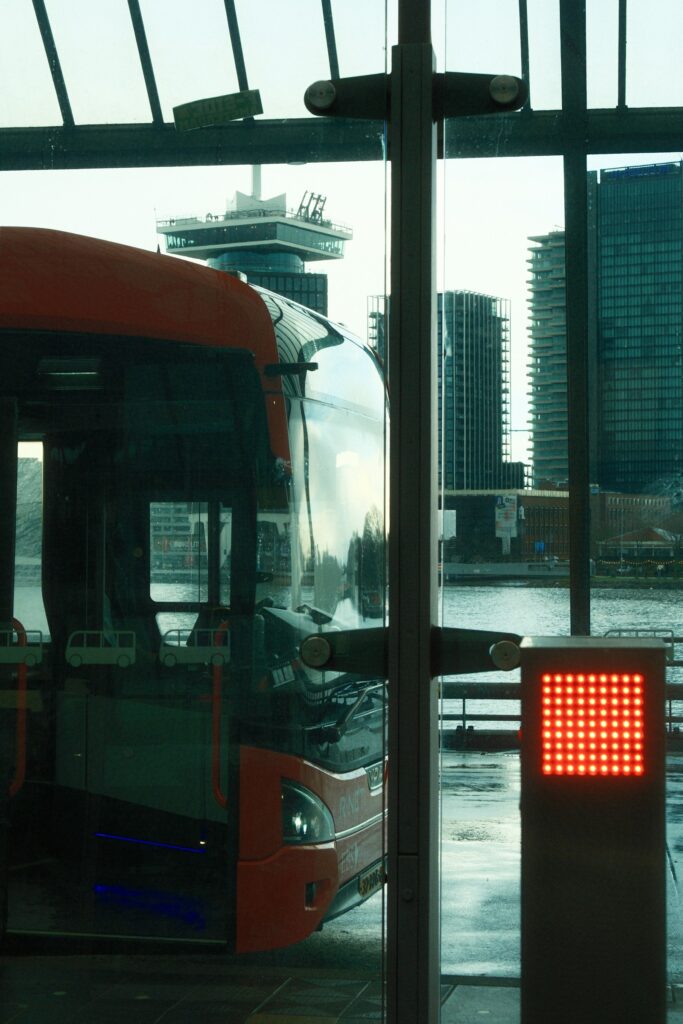
Outside the railway station, look for the stop identified in the official timetable as Piazza Stazione F.S. The letters F.S. refer to the railway station. SAIS operates Milazzo’s urban network, and the routes most relevant to ferry passengers are Lines 4 and 5.
For a straightforward station-to-port trip, Line 5 is usually the easiest timetable to read. Caronte & Tourist’s own directions for Aeolian Islands passengers also tell rail travelers to use bus 004 or 005 after arriving at Milazzo station. Their instructions currently give Porto Molo Marullo for Line 004 and Via Ciantro 3 for Line 005, with about a three-minute walk from either stop to the port area. You can check those instructions on the Caronte & Tourist website.
Read the two station rows carefully
The official Line 5 timetable contains a small trap for anyone reading it quickly: Piazza Stazione F.S. appears twice. The first row is the bus arriving at the station from the port. The second is the departure back toward Via Ciantro and the port. For your ferry connection, use the second station time.
For example, on the winter timetable currently published for 15 September 2026 through 9 June 2027, a Line 5 bus may reach the station at 08:15 but does not depart back toward the port until 08:20. On other runs the pause is longer, such as an arrival at 09:30 followed by departure at 09:40.
The same published winter schedule runs Monday to Saturday, excluding holidays. Station departures toward the port begin at 06:40 and continue through 19:35, with numerous trips in between. Line 4 also serves the station and can provide an alternative, but it follows a longer pattern involving places such as the hospital and Olivarella, so confirm that the bus is on the portion of its route heading back toward Porto.
Use the current official Milazzo timetable rather than saving a screenshot months in advance. The document available now confirms service into June 2027, but its summer timetable is still the 2026 version. Travelers arriving after 9 June 2027 should therefore check again once SAIS publishes the new summer schedule.
Bus tickets and validation
SAIS currently charges €1.20 for a one-ride Milazzo urban ticket, with other time-based and day-ticket options also available. Tickets can be bought through SAIS online channels and the app, and the operator also advertises contactless payment on board. Current fares and ticket options are listed on the SAIS Milazzo page.
A purchased ticket still needs to be valid for the journey. SAIS describes the single ticket as no longer reusable once it has been convalidato, meaning validated. If you are using a digital ticket, follow the activation or validation instructions shown with that ticket rather than assuming that purchasing it alone has started the ride.
The AMP tourist shuttle to Terminal Aliscafi
Milazzo’s Marine Protected Area operates an electric tourist shuttle connecting the railway station with Terminal Aliscafi. This can be the neatest transfer for a Liberty Lines hydrofoil because there is no need to decide which general port stop is closest to the hydrofoil terminal.
The currently posted AMP timetable shows departures from Stazione Ferroviaria di Milazzo at 09:50, 11:40, 16:50 and 18:50, reaching Terminal Aliscafi 15 minutes later. Do not build a tight ferry connection around those times without checking again: the operator describes this as a tourist, non-line service, says the times are indicative, and reserves the right to alter or suspend service.
The current ticket costs €3, is valid for the day for up to four rides, and is sold only online through the AMP system. The electronic ticket must be validated on the first boarding. Children under six travel free with a paying adult.
The shuttle is also worth knowing about for reduced-mobility travelers. The operator says the electric bus has a wheelchair ramp and a dedicated wheelchair position. Free assistance for a disabled passenger and companion is available with at least 36 hours’ advance notice. Full operating conditions are on the official shuttle regulations page.
Taxi and NCC transfers from the station
A car transfer normally covers this short road journey in roughly 10 to 15 minutes, depending on traffic. It is the sensible fallback when the next bus would make your ferry connection uncomfortable.
You may see services described as both taxi and NCC. NCC means noleggio con conducente, a pre-booked private car with driver. Do not assume that every vehicle uses the same citywide meter or fare. Current private transfer listings advertise daytime station-to-port rides in roughly the €15 to €20 range, with higher prices for some night journeys or larger groups, but these are operator prices rather than a universal fare guaranteed for every vehicle.
Before getting in, confirm three things: the total price, whether luggage is included, and the exact drop-off point. Useful wording is “Quanto costa in totale fino al Terminal Aliscafi?” for the hydrofoil terminal, or show the driver the operator and departure point printed on your ticket.
For a late train, early departure, family group or several large cases, pre-booking is safer than assuming a suitable car will be waiting outside the station. If your train is delayed and waiting for the next bus would use up the ferry company’s requested boarding margin, switch to a car rather than gambling on the local timetable.
Make sure you go to the right part of Milazzo port

Liberty Lines hydrofoils
For Liberty Lines, look for Terminal Aliscafi, Aliscafi or Via Luigi Rizzo. Liberty Lines lists its Milazzo ticket office as the New Hydrofoil Terminal on Via Luigi Rizzo. The official ticket-office page is useful if you need to verify the terminal before traveling.
The AMP shuttle stops directly at Terminal Aliscafi. If you take a SAIS bus instead, show the driver your Liberty Lines ticket and ask “Per il Terminal Aliscafi, dove scendo?” so you know which stop gives you the shortest walk.
Caronte & Tourist and Siremar ferries
Do not automatically walk into the Liberty Lines hydrofoil terminal just because you have arrived at the port. Conventional ferry operations use different quays. The port authority lists locations including Molo Marullo, Pontile Eolie, Dente XX Luglio, Banchina Luigi Rizzo and Pontile Aliscafi.
Check the departure information on your ticket or operator message for the exact molo or banchina. A few minutes spent confirming the quay is preferable to discovering that your vessel is boarding at the other end of the passenger area.
Italian signs that matter on this transfer
- Stazione F.S.: railway station.
- Fermata: bus stop.
- Porto: port.
- Terminal Aliscafi: hydrofoil terminal.
- Biglietteria: ticket office.
- Imbarco: boarding.
- Partenze: departures.
- Molo: pier.
- Banchina: quay or berth.
How much connection time to leave
A ferry ticket’s formal boarding deadline and a sensible train-to-boat connection are not the same thing. For a first visit, a practical target is to have at least about an hour between scheduled train arrival and ferry departure if you intend to take a pre-booked car. With the city bus, around 90 minutes gives you more protection against a missed bus, a short train delay and the walk to the correct ticket office or quay.
For the final Aeolian departure of the day, increase that buffer rather than relying on the theoretical fastest transfer. Train and ferry tickets are normally separate journeys, so a delayed train does not create a protected connection to your boat.
If Milazzo is one transfer inside a longer rail-and-island day, the Italy on Foot trip planner is useful for keeping the train, local transfer and sailing margins visible in the same itinerary.
Sundays, holidays and late arrivals
Pay particular attention to the day of the week outside summer. The currently published Line 5 winter timetable for 15 September 2026 to 9 June 2027 is marked dal lunedì al sabato, festivi esclusi, meaning Monday through Saturday excluding public holidays. It does not publish a winter Sunday or holiday schedule for that route.
The 2026 summer timetable did include separate Sunday and holiday service during part of the season, but that should not be treated as proof of the 2027 pattern. If your trip is in summer 2027, verify the new SAIS schedule when it is released.
For an evening arrival after the last useful urban bus, do not count on walking 3 km with cases and hoping the ferry terminal is still comfortably within reach. Arrange an NCC or taxi in advance. The AMP shuttle is not a late-night substitute either: its current station departures are limited, and the later tourist run shown on its schedule does not stop at the railway station.
Luggage and mobility
SAIS currently allows one bag up to 50 x 70 x 80 cm and 20 kg free of charge, plus one hand bag up to 40 x 30 x 15 cm and 5 kg. Larger amounts of luggage make the car option increasingly attractive, especially if the bus is busy with other ferry passengers.
With reduced mobility, consider the whole chain rather than only the three-kilometre road transfer. The AMP shuttle has wheelchair facilities, but its small vehicle has limited capacity. A pre-booked accessible vehicle may give you more control over timing and can take you to the most appropriate passenger terminal. Tell the ferry company about any boarding assistance you require separately, since assistance on the road transfer does not automatically arrange help at the vessel.
If something goes wrong, use the departure operator rather than simply following the crowd at the waterfront. A missed Liberty Lines hydrofoil and a missed Siremar ferry are handled by different companies and may have different change conditions. Go straight to the correct biglietteria, show the existing ticket, and ask about the next available sailing before buying a completely new ticket elsewhere.