Most family pizza and gelato classes in Rome last between two and three hours. Children typically stretch pizza dough, choose toppings and eat the finished pizza, while the gelato portion may be a hands-on activity or a chef demonstration. Minimum ages vary by school, with some accepting children as young as two or three and others offering activities better suited to children aged five and above.
Before booking a Rome cooking class with kids, confirm the minimum age, whether each child makes their own pizza, how much of the gelato preparation is hands-on and whether the kitchen can safely accommodate any food allergies. These details matter more than the number of dishes advertised.
What children actually do in a pizza and gelato class
Most family cooking experiences combine a practical pizza lesson with a shorter introduction to gelato. The cooking usually takes place in a teaching kitchen with an instructor supervising several participants or, in a private session, just your family.
The pizza portion is generally the most interactive. Children can help work the dough, stretch it into shape, spread tomato sauce and select toppings before the instructor handles the hot oven.
The gelato portion varies more. Some classes involve measuring ingredients, mixing a base and learning how gelato is prepared. Others provide a demonstration followed by tasting. A listing that says “pizza and gelato making” does not necessarily mean your child will personally make both dishes from beginning to end.
Making the pizza
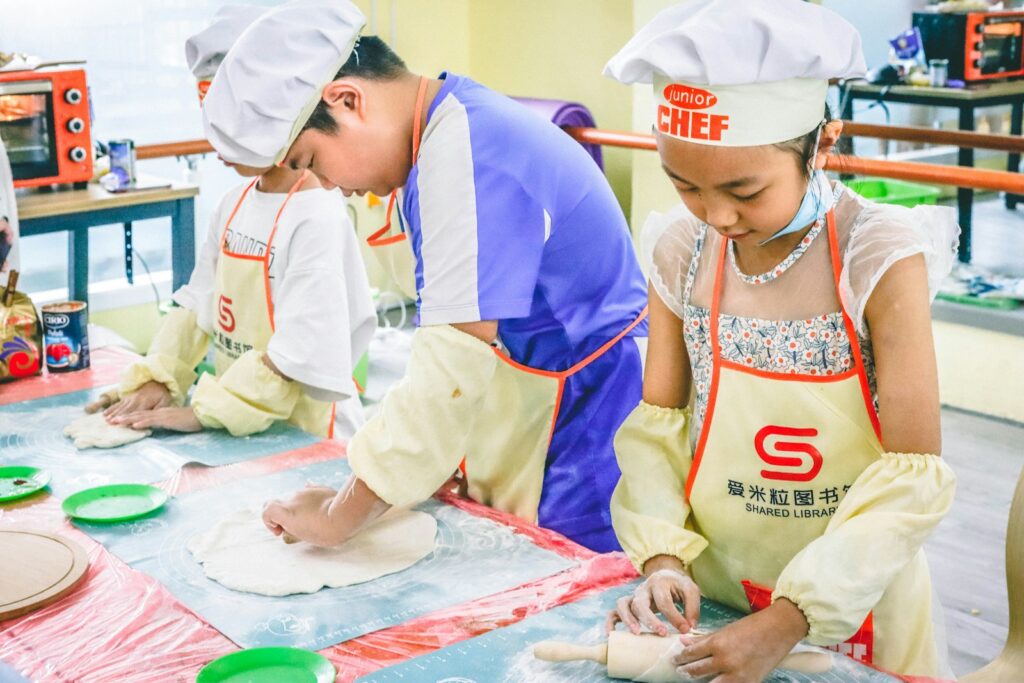
In a typical beginner lesson, the instructor explains the ingredients and demonstrates how to handle the dough. Children may then knead or stretch a prepared portion and choose toppings such as tomato, mozzarella and vegetables.
Ask whether participants make the dough entirely from scratch or use dough that has been prepared in advance. Pizza dough normally needs time to ferment and rise, so classes lasting only a few hours often use a prepared batch for baking while demonstrating how a fresh batch is mixed.
Both approaches can be educational. The difference is useful to understand if your family wants to learn a recipe that you can reproduce at home.
Making the gelato
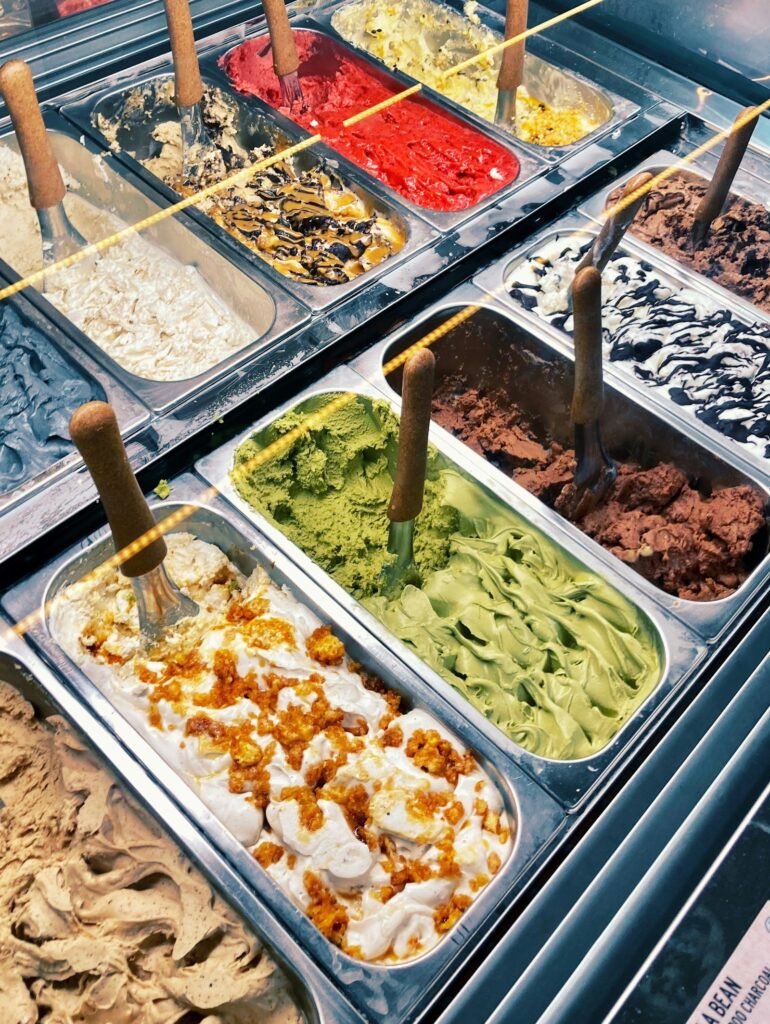
Gelato is usually introduced after the pizza preparation or while the pizza is baking. The chef may explain the difference between gelato and ordinary ice cream, demonstrate the ingredients and show how the mixture is churned or frozen.
Some workshops invite children to measure and combine ingredients. In others, the instructor handles most of the preparation because the gelato machine requires time or because the equipment is not suitable for unsupervised use.
For example, the family pizza and gelato class advertised by Towns of Italy includes hands-on pizza preparation and a gelato-making demonstration. Families should distinguish that arrangement from a class in which every participant prepares their own gelato mixture.
If your child is particularly interested in making ice cream, ask the school exactly which steps children perform themselves.
What is the minimum age for a cooking class in Rome?
There is no single minimum age across Rome’s cooking schools. Each provider sets its own requirements based on the activities, equipment, supervision and class format.
Published policies illustrate the differences. Rome Pizza & Pasta School states that children from age two may participate, with parental supervision. Rome Adventures advertises a 90-minute pizza and gelato experience for ages three and above. Other family experiences are particularly suited to children aged four or five and older.
The following age groups are useful planning guidelines, although the provider’s actual minimum age always takes precedence.
Children aged 2 to 4
Very young children may enjoy touching dough, sprinkling toppings and watching the pizza come out of the oven. However, they are unlikely to follow a full technical lesson without regular help.
For this age group, a short private or explicitly toddler-friendly session is often easier than a long shared class. Ask whether the instructor adapts activities for preschoolers and whether a parent must work alongside the child throughout.
Also check whether the child receives their own ingredients and pizza or simply joins an adult’s workstation.
Children aged 5 to 7
Many children in this age range can participate in most of the pizza-making process with supervision. They can follow simple instructions, shape their dough and make choices about toppings.
A session lasting around two hours may be easier to manage than a lengthy class that includes a long meal and extended demonstrations. If your child becomes tired or loses interest, check whether there is a place to sit while the instructor finishes the cooking.
Children aged 8 to 12
Older children can usually take on more of the practical work, including measuring ingredients, learning about dough preparation and following a sequence of instructions.
A two-and-a-half or three-hour session is often reasonable for children in this age group, particularly when there is a proper meal break. They may also appreciate learning the measurements and techniques needed to recreate the pizza at home.
Teenagers
Teenagers can generally participate in standard beginner cooking classes, although some experiences require anyone under 18 to be accompanied by an adult.
If your teenager already enjoys cooking, look for a class that goes beyond simply adding toppings to prepared dough. Ask whether the instructor covers flour selection, hydration, fermentation, stretching and baking techniques.
Choosing between a 90-minute, two-hour and three-hour class
The scheduled duration usually includes more than the time spent preparing food. There may be introductions, demonstrations, oven time, a sit-down meal and dessert tasting.
- Around 90 minutes: Better for younger children or families with limited time. Expect a relatively focused activity with fewer technical explanations.
- Around two hours: Often provides enough time for pizza preparation, a gelato activity or demonstration and eating the finished food.
- Around three hours: Common for organized family cooking schools that combine preparation, cooking, demonstrations and a full meal.
These are typical formats rather than guarantees. Rome Adventures currently advertises a 90-minute pizza and gelato session, while Towns of Italy and InRome Cooking list three-hour family experiences.
Ask for the practical timetable before paying. A three-hour class may involve 90 minutes of cooking followed by a meal, while a shorter workshop may keep children working for most of the session.
Should you book the class at lunchtime or in the evening?
Lunch sessions can work particularly well for younger children because the class becomes both an activity and a meal. You can avoid booking a restaurant immediately afterwards, and children can eat the food they have prepared.
Afternoon and early-evening sessions are useful after a morning of sightseeing, although tired children may find a long cooking activity more difficult after several hours of walking through Rome.
Check the actual start and finish times, including the meal. If a class begins at 5 p.m. and lasts three hours, you may not leave until around 8 p.m., potentially later if the session runs behind schedule.
Do not schedule another timed attraction immediately afterwards. Cooking and dining experiences can take longer than expected, particularly when several families share the kitchen.
Food allergies: what parents need to check before booking
Pizza and gelato workshops commonly handle several major food allergens. Wheat flour is central to most pizza lessons, mozzarella and many gelato bases contain milk, and some gelato recipes contain eggs. Nuts may also be used in flavors such as pistachio or hazelnut.
The most important distinction is between a provider that can replace an ingredient and one that can manage the risk of allergen cross-contact throughout the preparation process.
Under European Union food-information requirements, businesses serving non-prepacked foods must provide information about specified allergens present in their products. This does not mean a cooking studio is automatically equipped to prepare meals free from cross-contact with those allergens.
If your child has a medically diagnosed allergy, explain the exact allergen and the seriousness of the reaction before booking. Ask the provider to confirm in writing whether the entire activity, including preparation and tasting, can be made suitable.
Gluten and celiac disease
This is particularly important because ordinary pizza workshops involve handling wheat flour, often directly on shared countertops and work surfaces.
Some operators advertise gluten-free alternatives but explain that the class itself is unsuitable for people with celiac disease. For example, Rome Pizza & Pasta School describes a gluten-free meal option while warning that regular wheat dough is handled in the shared kitchen and that cross-contamination is possible. Towns of Italy also explicitly states that its standard family pizza and gelato class is unsuitable for guests with celiac disease.
Other providers advertise dedicated gluten-free pizza lessons. Even then, ask about separate equipment, preparation surfaces, ingredients, ovens and staff procedures. A description such as “celiac-aware” should prompt further questions rather than replace a detailed safety confirmation.
For a child with celiac disease, do not book an ordinary wheat-flour workshop on the assumption that swapping the dough will be enough.
Milk and lactose
Mozzarella, ricotta and traditional milk-based gelato frequently contain dairy. Some studios may offer dairy-free cheese substitutes or fruit-based desserts, but availability and preparation arrangements vary.
A lactose intolerance is also different from a milk-protein allergy. Lactose-free dairy products can still contain milk proteins, so they are not automatically suitable for someone allergic to milk.
Tell the studio which condition applies. If the child has a milk allergy, ask about all ingredients, shared utensils, preparation surfaces and possible cross-contact during both the pizza and gelato portions.
Egg allergies
Standard pizza dough often contains no eggs, but recipes vary. Gelato may contain egg yolks, depending on the flavor and preparation method.
Ask for the full ingredient list for the planned pizza and gelato recipes. Even if the selected gelato flavor contains no egg, the kitchen may prepare other recipes containing eggs.
Nut allergies
Pistachio and hazelnut are common gelato flavors in Italy. Tree nuts may be present in pastes, toppings or other ingredients handled in the same preparation space.
If your child has a nut allergy, ask whether nut products are used during the session or elsewhere in the kitchen, and how ingredients and utensils are separated. Choosing vanilla or strawberry gelato alone does not resolve possible cross-contact.
What to ask about cross-contact
For a serious food allergy, the general question “Do you have allergy-friendly options?” is insufficient. Ask about the specific preparation process.
- Will wheat flour, milk, eggs, nuts or the relevant allergen be handled during our session?
- Are separate utensils, bowls and preparation surfaces available?
- How are ingredients stored and identified?
- Can the chef confirm all ingredients used in the planned recipes?
- Is the pizza prepared or baked using equipment shared with allergen-containing foods?
- Can the gelato be made without exposure to the relevant allergen?
- Will the instructor be informed before our family arrives?
- Can you confirm in writing whether you are able to accommodate the allergy safely?
For children at risk of anaphylaxis, follow the child’s medical action plan and bring prescribed emergency medication, including adrenaline auto-injectors where prescribed. If the studio cannot adequately explain its allergen procedures, choose another activity.
The Italian Ministry of Health’s food allergy guidance provides additional information about food allergies and consumer safety in Italy.
Can vegetarian, vegan and other dietary requirements be accommodated?
Vegetarian pizza is usually easier to arrange because many common toppings, including tomato, mozzarella and vegetables, fit a vegetarian diet. However, some cheeses contain animal rennet, and certain toppings or sauces may include meat or fish products.
Vegan participation needs more advance planning, particularly for the gelato component. A vegetable pizza without cheese may be straightforward, but the planned dessert could require a separate recipe or substitute ingredients.
Ask whether the dietary adjustment applies to the actual cooking activity or only to the food served at the end. A child who makes ordinary pizza and then receives a separate vegan meal is having a different experience from a child who prepares their own suitable recipe.
For halal, kosher or other dietary requirements, request ingredient and handling details rather than relying on a general dietary label. Some recipes or included meals may also involve wine, cured meat or products containing animal-derived ingredients.
Are private cooking classes better for families?
A private class can be useful when you need flexibility with younger children, want the instructor to spend more time helping each participant or have specific dietary requirements that the provider has confirmed it can accommodate.
Private sessions can also be easier for families whose children have different abilities. The instructor may be able to give a younger child a simple dough-shaping task while teaching an older sibling more technical skills.
However, private does not automatically mean allergen-free. The kitchen may still use the same work surfaces, ingredients, utensils and equipment as its ordinary group classes. Ask about those arrangements separately.
Private booking can also cost significantly more than joining a shared session. Compare the total price for your whole family rather than the advertised individual rate.
What is the difference between a family class and a standard cooking class?
The phrase “family-friendly” sometimes describes a regular adult cooking class that accepts children. Other experiences are designed specifically around younger participants, with simpler instructions, child-sized equipment and a more flexible pace.
For example, Towns of Italy describes its family pizza and gelato experience as suitable for children while explaining that the session is not exclusive to families. Couples and individual adults may join the same class.
When comparing options, ask:
- Will the session include families with children or a mixture of adults and children?
- Are the instructors accustomed to teaching the ages of our children?
- Does each child have their own workstation and pizza?
- Are stools or suitable work surfaces available for shorter children?
- Can an adult work directly beside a younger child?
- Does the instructor handle all oven operations?
- Is there a place to sit if a child needs a break?
A smaller group may allow more individual assistance, although the instructor-to-participant ratio and the number of workstations are more useful details than the maximum group size alone.
What about burns, knives and kitchen safety?
Cooking classes involve real kitchen equipment. Pizza ovens can reach very high temperatures, hot trays and surfaces may be nearby, and some preparation tasks involve knives or other sharp utensils.
Parents should confirm which tasks children are permitted to do and which are performed by the chef. Younger children can usually participate in handling dough and adding suitable toppings without needing to operate an oven.
Ask whether the school provides child-sized aprons and whether long hair must be tied back. Closed-toe shoes are a sensible choice in a working kitchen.
Also check the parental-supervision rules. Even when an instructor leads the class, many schools expect an accompanying adult to remain responsible for their children throughout the activity.
Will children eat the pizza they make?
Most family pizza classes include eating the finished pizza, frequently as part of a seated lunch or dinner. Some also provide appetizers, drinks and gelato for dessert.
Still, confirm how much food is included. A demonstration class may provide tastings, while a full meal experience may allow every participant to prepare and eat an individual pizza.
Ask whether families can choose their own toppings and whether the school can make a simpler pizza for a picky eater. For children who dislike tomato sauce or cheese, this may be more important than the advertised menu.
If the session includes alcohol for adults, confirm that appropriate non-alcoholic drinks are available for children and any adults who prefer them.
How much do family pizza and gelato classes cost?
Prices depend on duration, group size, location and whether the booking is shared or private. Current published examples show a fairly wide range.
Rome Adventures advertises a 90-minute pizza and gelato class at €55 per participant for its listed adult and child categories, while Towns of Italy lists its three-hour pizza and gelato experience from €79 per person. Private workshops may have significantly higher minimum charges or group rates.
These are individual advertised prices, not a fixed market rate. Always check the current booking page for your date and the relevant age category.
Before comparing prices, confirm whether the fee includes all ingredients, equipment, the finished pizza, gelato, drinks, recipes and any booking charges. Some schools offer child rates, while others charge the same price for all participants who use a workstation.
Ask how accompanying adults are charged. A parent who helps a young child without making a separate pizza may still need a paid place in the class.
Choosing a convenient location in Rome
Several cooking schools operate in Rome’s historic center, often near Piazza Venezia, Piazza Navona, the Pantheon or other popular sightseeing areas. Others are farther from the central tourist districts.
Do not assume the meeting point is the restaurant or office shown in the first photographs on a booking page. Some cooking companies operate more than one kitchen, and the assigned address may depend on the session.
Check the full street address, arrival instructions and whether the cooking space is upstairs. Rome’s older buildings sometimes have steps or limited lift access, which matters if you are arriving with a stroller or traveling with someone who has reduced mobility.
If you are staying outside the center, include travel time in your plans. A class lasting three hours can occupy much of the day once transportation and the meal are included.
How to plan the class around sightseeing
A cooking lesson works well as a break from walking-heavy sightseeing, especially during hot or rainy weather. Since the meal is often included, you may not need a separate restaurant reservation.
For younger children, consider a morning activity followed by lunch at the cooking school and a less demanding afternoon. Older children may enjoy a late-afternoon session after visiting a museum or nearby attraction.
If you are visiting the Pantheon before a class, allow enough time for entry and security procedures. The Italy on Foot article on Pantheon tickets and entry rules explains the booking arrangements and practical details for that visit.
For a longer family trip, the Italy on Foot trip planner can help you organize the class alongside sightseeing, meal times and travel between Rome neighborhoods. Include the actual cooking-school address rather than simply marking the general historic-center area.
Cancellation policies and what happens if your child is unwell
Cancellation terms vary between group and private experiences. Some shared cooking classes permit free cancellation until 24 hours before the scheduled start. Others require more notice, especially when a private instructor or kitchen has been reserved exclusively for your group.
For example, Towns of Italy currently advertises free cancellation up to 24 hours before its shared pizza and gelato experience, while the company’s private version has stricter cancellation conditions.
If you have young children, pay particular attention to what happens if someone becomes ill on the day of the class. Ask whether the booking can be rescheduled, whether a partial cancellation is possible and whether a no-show results in the loss of the full payment.
Do not assume that having a sick child automatically qualifies your family for a refund. The written cancellation terms determine what the provider is obliged to offer, although some may choose to be flexible.
What if your child does not want to participate?
Even children who enjoy cooking at home may feel uncomfortable in an unfamiliar kitchen, especially when the session is conducted in another language or includes many adults.
If your child is shy, ask whether a parent can help at the same workstation. A class that allows some flexibility can be easier than one where every participant is expected to complete each step independently.
For children who are sensitive to noise, crowds or unfamiliar textures, ask about the size of the kitchen, the number of participants and whether quieter private sessions are available.
If the child decides not to cook, the instructor may still allow them to observe or join the meal, but this is a provider decision. It normally does not create an automatic entitlement to a refund.
Questions to send before booking
A short message covering your children’s ages, dietary requirements and preferred session can resolve most of the practical uncertainties.
- What is the minimum age, and are both my children’s ages accepted?
- Does every child make their own pizza?
- Do children prepare gelato themselves, or do they watch a demonstration?
- How much of the session is cooking, and how much is eating?
- Is the class specifically designed for families or shared with adult participants?
- Must a parent work beside each younger child?
- Who handles the hot oven and any sharp tools?
- Are all ingredients, food, drinks and equipment included?
- Can you accommodate our specific allergy or dietary restriction, including cross-contact precautions?
- Is the kitchen accessible if we have a stroller or mobility requirements?
- What is the exact meeting address?
- What are the cancellation and rescheduling terms?
- Does the quoted price include every adult and child in our group?
If your children are young, prioritize the right duration and enough hands-on pizza preparation. For older children, look more closely at the skills being taught and whether the instructor explains how to recreate the recipes at home. When an allergy is involved, obtain clear written answers about ingredients and cross-contact before paying. A class that cannot safely accommodate the child’s dietary needs is one to skip, regardless of how convenient the location or timetable appears.