A private boat excursion from Venice with lunch and swimming usually needs six to eight hours if you want enough time to explore the lagoon, eat a proper meal and stop for a swim. Some operators offer four-hour experiences, but these generally require a shorter route and a choice between a leisurely restaurant lunch and substantial time in the water. The swimming arrangements are especially important because Venice’s historic canals are not bathing areas, and boats cannot simply approach any beach or anchor wherever passengers want.
A private boat day Venice visitors organize for lunch and swimming can take several forms: a cruise through the southern lagoon with lunch on Pellestrina, a beach stop near the Lido, or an excursion with food served on board and a swim at a location the skipper confirms is permitted and safe. Before booking, establish exactly where the swimming takes place, whether lunch is included in the price, how passengers will enter and leave the water, and whether the vessel is equipped for the proposed route.
What does a private boat day from Venice involve?
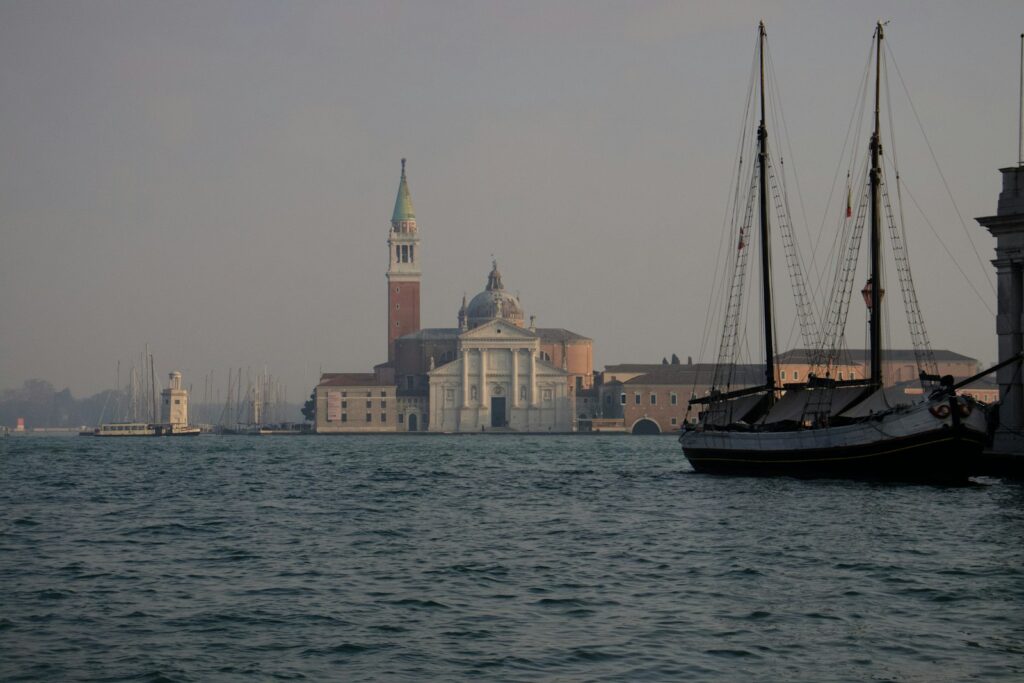
Most private excursions begin at an agreed landing in Venice, where a professional skipper collects your group and takes you into the Venetian Lagoon. Unlike a scheduled island tour, the day can be organized around your interests, although the available route depends on navigation permissions, weather and the time you have booked.
Some trips concentrate on the southern lagoon, passing fishing villages, historic fortifications and the long island of Pellestrina. Others head toward Murano, Burano and Torcello before arranging a swimming stop where conditions and regulations permit.
A typical full-day experience may involve:
- Boarding your private boat at a designated pier in Venice.
- Cruising through part of the lagoon while the skipper explains the surroundings.
- Stopping at a fishing village, island or permitted anchorage.
- Having lunch at a restaurant or on board, depending on the package.
- Spending time swimming at a suitable location or visiting an accessible beach.
- Returning to Venice through the lagoon, with the option of additional sightseeing if time allows.
The order can change. You might swim before lunch, particularly in summer, or stop for lunch first and spend the afternoon cruising.
The important distinction is that a private booking gives you a dedicated vessel for an agreed period. It does not guarantee access to a specific beach, a particular anchorage or unrestricted navigation through protected areas.
How many hours should you book?
Swimming takes longer than a conventional sightseeing stop. Passengers need time to change, enter and leave the water, dry off and organize their belongings. A restaurant lunch can also take considerably longer than a quick food tasting.
Four hours: a short cruise with one main stop
A four-hour booking can work when you want some lagoon sightseeing followed by either a relatively short swimming break or a relaxed lunch.
Combining both is possible on certain carefully planned routes, but time may be tight, particularly when the swimming area is far from the departure pier.
For example, Classic Boats Venice advertises a lunch-and-swimming experience with a flexible duration of four to seven hours. The actual itinerary is arranged according to the boat, destination and meal format.
If you have only four hours, ask the operator to recommend one suitable swimming location rather than attempting to cover several distant islands.
Six hours: a useful balance for lunch and swimming
Six hours is a practical starting point for a southern-lagoon excursion that includes a village stop, time at a beach and lunch.
Il Bragozzo, for example, publishes a six-hour southern-lagoon itinerary traveling from Venice toward Pellestrina, passing Malamocco and San Pietro in Volta. Its suggested experience includes swimming near Pellestrina and either a picnic or a restaurant lunch.
That is an example of how the day can be arranged, rather than a guaranteed schedule or a universal tour format.
Ask how much time will be allocated to the swimming stop and whether the restaurant visit fits comfortably within the six-hour booking.
Seven to eight hours: a full day with more flexibility
An eight-hour charter can allow additional island visits, a longer lunch and a less hurried swimming break.
Some operators advertise full-day routes through Murano, Burano and Torcello before heading toward a suitable swimming location. Others concentrate on the Lido, Pellestrina and the southern lagoon.
For example, Lofty Venice Boat currently describes an eight-hour private outing with island visits, lunch and an optional swimming stop. The operator’s published route is a suggested itinerary and remains subject to navigation and weather conditions.
For a family or group that wants a proper sit-down meal, time on the beach and opportunities to explore ashore, seven to eight hours is generally more comfortable than four.
Confirm whether the full-day duration means six, seven or eight hours. Operators use the term differently.
Where can you actually swim near Venice?
This is the detail to resolve before choosing a boat. The waters of the Venetian Lagoon are a working navigation environment, with channels, shallow mudflats, tidal currents and protected habitats.
Several established swimming beaches are on the Adriatic-facing side of the barrier islands. A boat excursion can sometimes combine a permitted landing on the lagoon side with a walk to one of those beaches.
Other tours propose swimming directly from the boat in a suitable location. That requires a separate assessment of local rules, water conditions, anchoring permission and the vessel’s equipment.
Pellestrina: swimming with a fishing-village lunch
Pellestrina is a long, narrow island separating part of the southern Venetian Lagoon from the Adriatic Sea. Its lagoon-facing side has small fishing villages and waterfront restaurants, while the opposite coast has beaches and historic sea defenses known as the murazzi.
The island is one of the more practical destinations for combining a boat excursion with local seafood and time at the beach.
A private route may include San Pietro in Volta, Portosecco or the village of Pellestrina. From a suitable authorized landing, visitors can continue on foot toward the sea-facing shore.
Do not assume the skipper can pull the boat directly onto the sandy beach. The operator needs to arrange a legal landing, and the walk to the swimming area depends on the chosen stop.
Pellestrina’s beaches are generally less developed than the main resort areas of the Lido. According to Venice’s official visitor information, Pellestrina does not have the same organized beach establishments found on the Lido.
That means facilities such as changing cabins, loungers and beach showers should not be assumed.
If you want lunch, ask whether the operator can arrange a table at a restaurant on the island and whether you will have enough time to reach the beach afterward.
Alberoni: beaches and protected dunes on the Lido
Alberoni is at the southern end of the Lido of Venice, near the entrance connecting the lagoon to the Adriatic Sea.
Its coastline includes a protected dune environment and beach areas. It can be an appealing destination for travelers who want a more natural setting rather than a busy organized beach club.
However, the nature reserve has additional rules protecting vegetation, dunes and nesting birds.
Visitors must remain on permitted paths, avoid fenced conservation areas and respect restrictions on activities that disturb wildlife.
Ask the operator where the boat can legally dock, how you will reach the beach and whether the proposed walking route is suitable for your group.
The presence of an attractive beach does not establish that a motorboat can anchor close to it.
Ca’ Roman: a natural beach requiring more planning
Ca’ Roman is a protected natural area at the southern end of Pellestrina, near the entrance to the port of Chioggia.
It is known for its dunes, woodland and bird habitats. The beach is relatively undeveloped and is not a conventional resort with extensive facilities.
Because the area is protected, access arrangements and conservation rules matter. Do not assume that a private charter can stop directly beside the reserve or that passengers may cross dunes wherever they wish.
If the operator suggests Ca’ Roman, ask for the exact landing point, the permitted walking route and the time required to reach the beach.
This may be less convenient for a group with a stroller, wheelchair or limited walking ability.
Venice’s tourism authority provides information about Pellestrina and the Ca’ Roman nature reserve.
Lido beaches: more facilities for a conventional beach stop
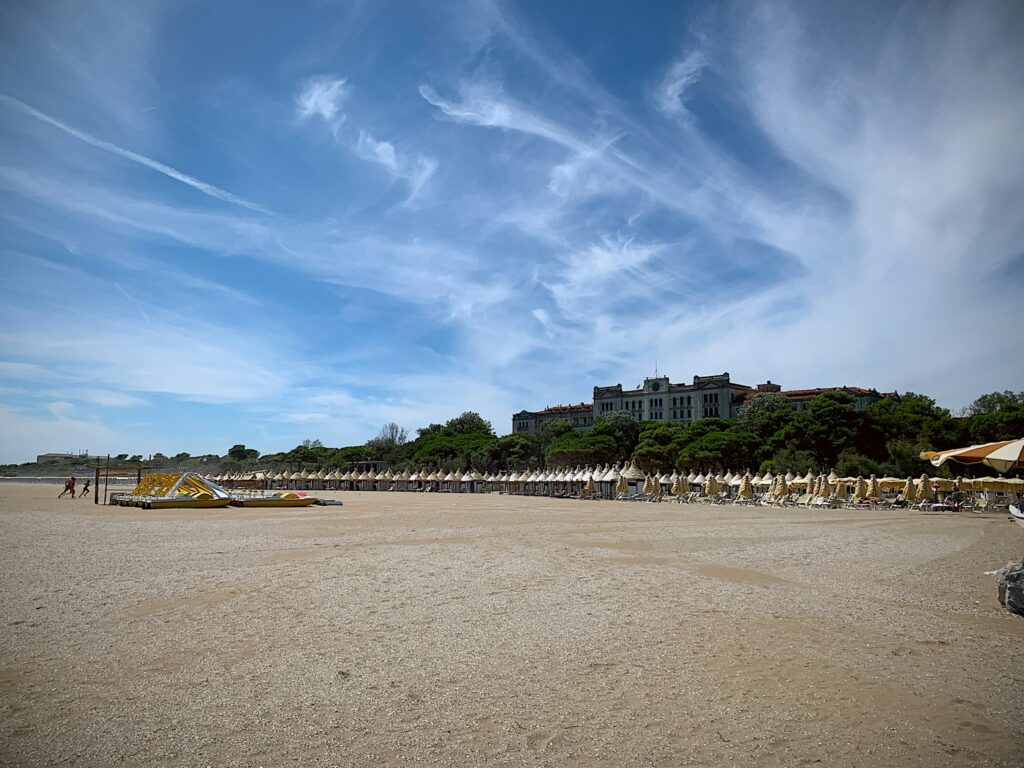
The Lido has a long Adriatic-facing coastline with both free public beach areas and organized beach establishments.
If your group wants toilets, changing facilities, loungers, shade and a meal nearby, a planned stop at a suitable Lido beach may be easier than an isolated swimming location.
However, the boat will generally need to use an appropriate landing on the lagoon side, followed by a transfer or walk to the sea-facing beach.
Ask how the journey between the landing and beach is arranged. The Lido is long enough that an unsuitable landing could leave you far from your intended bathing area.
A private beach establishment may charge separately for umbrellas, loungers, cabins or other facilities.
Can you jump directly from the boat into the lagoon?
Some private boat operators advertise swimming from the vessel in suitable parts of the lagoon or outside the lagoon in the Adriatic Sea.
However, a swimming stop must be planned around local navigation rules, safe water conditions, water quality and a location where the skipper is permitted to stop.
The lagoon includes working channels used by commercial boats, public transport, fishing vessels and other traffic. It also has shallow areas, submerged objects, varying currents and environmentally protected zones.
You should not assume that an apparently calm stretch of water is suitable for swimming.
If an operator advertises an offshore swim, ask for the intended area and whether the activity involves swimming from an anchored boat, a beach landing or another arrangement.
The skipper should assess the actual water depth, navigation traffic, currents, weather and safe entry and exit before permitting anyone into the water.
Never jump or dive into unfamiliar lagoon water. Even when the surface looks clear, the depth and underwater conditions may be unsuitable.
Swimming in Venice’s historic canals is prohibited
The City of Venice explicitly prohibits bathing, diving and swimming in the canals of the historic center.
The published penalty is €350, and an urban exclusion order may also apply.
This restriction covers activities such as jumping into the Grand Canal, swimming beside the Rialto Bridge or entering the water from the city’s historic waterfronts.
The official Venice visitor conduct rules explain the prohibition.
Private boat passengers are subject to these rules just like everyone else. A skipper cannot turn a Grand Canal sightseeing cruise into a swimming excursion.
If swimming is an essential part of your booking, the route needs to include a suitable location outside those prohibited urban waterways.
Boats cannot anchor inside the ordinary beach swimming zone
Another important restriction concerns the Adriatic beaches of the Lido and Pellestrina.
Under the Venice Harbour Master’s 2026 bathing-safety ordinance, motorboats and sailing vessels are generally prohibited from transiting, mooring or anchoring within the sea area reserved for bathing, extending 500 metres from the coast, except under the specified authorized arrangements.
The restriction applies even when marker buoys are absent.
This means a charter boat cannot simply approach a busy beach, drop anchor beside swimmers and allow passengers to enter the water.
The operator must use a lawful landing, permitted navigation corridor or other arrangement appropriate to the location and vessel.
Venice’s municipality summarizes the rules in its 2026 bathing and protected-beach guidance. The municipality has also published the relevant 2026–27 maritime and bathing ordinances.
For travel in 2027, ask the skipper to confirm the restrictions that apply to the exact date and swimming location. Do not rely on a general assurance that the boat can stop “near the beach.”
Check water quality before swimming
Swimming water quality is monitored in designated bathing areas, particularly along the Adriatic coast.
Veneto’s environmental agency, ARPAV, carries out sampling and publishes information about designated bathing waters, including temporary restrictions when results do not meet the relevant standards.
The 2026 Adriatic bathing season ran from May 1 to September 30. ARPAV reported generally favorable water-quality results, although temporary pollution incidents occurred at individual monitoring locations.
That regional result does not establish that every lagoon channel or unmonitored anchorage is suitable for swimming.
Before a beach stop, check the official ARPAV bathing-water information and any current local warnings.
If you are booking for 2027, check the updated water-quality information during that year’s bathing season rather than treating 2026 conditions as confirmation.
If your operator proposes a swimming location outside a designated monitored bathing area, ask how the water’s suitability is assessed and what alternative will be offered if conditions are uncertain.
Restaurant lunch, picnic or food cooked on board?
There are three common meal arrangements on private lagoon excursions. Each affects the route, price and amount of time available for swimming.
Lunch at a restaurant on Pellestrina or another island
A restaurant lunch is a practical choice if you want freshly cooked Venetian food, a proper table and access to normal restaurant facilities.
On Pellestrina, traditional menus often feature fish and seafood, including grilled fish, shellfish and pasta or risotto dishes prepared with local ingredients.
A meal may begin with antipasti, continue with a pasta or fish course and finish with dessert or coffee.
Ask the boat operator whether the restaurant is selected in advance and whether a table will be reserved for your group.
A restaurant stop generally requires around 60 to 90 minutes, depending on the menu and service. The boat must also reach an authorized landing, and you may need to walk to the restaurant.
Check whether the skipper waits during lunch or returns later. The arrangement can affect your ability to change the schedule.
Do not assume that lunch is included in the charter price. Some itineraries advertise lunch as a recommended stop while the restaurant bill remains your responsibility.
A picnic or packed lunch
A picnic can provide more flexibility if you want to spend most of the day swimming and relaxing rather than sitting in a restaurant.
Depending on the operator, you may be able to bring prepared food or arrange a packed lunch through the charter company.
Ask whether the boat has a refrigerator or cooler and whether there is enough storage for everyone’s food and drinks.
If you plan to eat on a beach, follow the site’s rules, use permitted areas and take all rubbish away. Protected dune areas should not be used for improvised picnic setups outside designated paths and spaces.
For perishable foods, especially seafood, dairy and prepared salads, suitable temperature control matters. A boat sitting in summer sunshine is not an appropriate place to leave food unrefrigerated for several hours.
Lunch prepared and served on board
Some longer private excursions offer onboard catering or a chef-prepared meal. This may involve dishes prepared in advance and served on the vessel, or food cooked on board where the boat has suitable facilities.
For example, Classic Boats Venice advertises both restaurant lunches and seasonal chef-prepared onboard food as possibilities for its longer lunch-and-swimming excursions.
These arrangements are not standard across every charter. Smaller motorboats may have no kitchen, limited refrigeration and little space for serving a substantial meal.
Ask who prepares the food, whether cooking takes place on board, how many courses are included and whether the meal can accommodate your group’s dietary requirements.
A quoted “lunch on board” may refer to a prepared cold meal rather than freshly cooked food.
Food allergies and dietary requirements
Food arrangements are particularly important if anyone in your group has a serious allergy, celiac disease or another restriction requiring careful preparation.
Before booking, establish which restaurant or caterer will provide the meal and whether they can safely accommodate the exact requirement.
Ask about allergens in fish and shellfish dishes, sauces, bread, pasta and desserts. Seafood menus commonly involve several allergens, and preparation surfaces or cooking equipment may be shared.
For celiac disease, a gluten-free pasta substitution may not be sufficient if the kitchen cannot prevent cross-contact.
For vegetarian or vegan guests, request a suitable menu in advance rather than assuming a seafood-focused restaurant will have several alternatives ready.
Under EU food-information rules, businesses serving non-prepacked food must provide information about specified allergens. This does not guarantee they can safely eliminate cross-contact.
If you need strict precautions, obtain written confirmation from the food provider before paying for a non-refundable charter.
Also request appropriate water and non-alcoholic drinks. A lunch package advertised with wine or Prosecco may not include enough other beverages for children or guests who do not drink alcohol.
Choose a boat that is equipped for swimming
A private sightseeing boat and a vessel suitable for swimming excursions are not always the same thing.
A traditional Venetian motorboat may offer attractive seating and a covered cabin but have no convenient way for swimmers to get back aboard from the water.
For a trip involving direct swimming from the boat, ask about the actual vessel’s equipment.
- Swim ladder: Is there a proper ladder that can be deployed and used safely?
- Boarding platform: Is there a suitable position for entering and leaving the water?
- Life-saving equipment: What flotation and rescue equipment is carried?
- Shade: Can all passengers find protection from the sun?
- Freshwater shower: Is one available for rinsing after swimming?
- Toilet: Is there a usable enclosed toilet on board?
- Changing space: Is there somewhere private to change clothes?
- Refrigeration: Can food and drinks be kept at suitable temperatures?
- Dry storage: Is there space for towels, phones and spare clothes?
- Seating: Does every passenger have a suitable place to sit while underway?
Ask for recent photographs of the vessel and its swim-access arrangements, rather than relying on photographs of a different boat from the same fleet.
Some boats are licensed and equipped only for lagoon navigation. If your itinerary proposes leaving through a lagoon inlet to swim in the Adriatic, confirm that the particular vessel is authorized and suitable for that navigation area.
A listing that promises “swimming at sea” should be able to explain how passengers will reach the water safely and where the boat can legally stop.
What safety arrangements should the skipper explain?
A skipper should be able to describe the swimming procedure before anyone enters the water.
Important considerations include the location of the propeller, the boat’s engine and anchoring arrangements, local currents, nearby navigation traffic and the possibility of a swimmer needing assistance.
Do not enter the water until the skipper has explicitly confirmed that swimming is permitted and conditions are suitable.
Ask how swimmers will be supervised, where they should remain in relation to the boat and what happens if someone becomes tired or cannot climb back aboard.
If swimming directly from the boat is essential, establish whether the skipper can remain responsible for the vessel while also monitoring passengers in the water, and whether any additional crew is required.
Children and less confident swimmers need particular attention. A person who can swim comfortably in a supervised pool may find open water more difficult because of currents, waves and the lack of a poolside edge.
If your group includes weak swimmers, a properly supervised beach with suitable facilities may be a better arrangement than an offshore swim.
Are children allowed on private swimming excursions?
Many private boats can accommodate families, but the permitted passenger count and safety equipment depend on the vessel.
Give the operator the number and ages of all children, including infants. Ask for properly sized life jackets and confirm how children must be seated while the boat is moving.
Life jackets used during navigation and equipment intended to assist swimming have different purposes. Do not assume one item is appropriate for every activity.
For young children, a beach stop may be more practical than entering deep water directly from a boat. Even then, adult supervision remains essential.
Ask whether the beach has lifeguards during your visiting period. More isolated beaches may have no lifeguard service, toilets or nearby refreshments.
If a child is not a confident swimmer, explain this before booking so the operator can propose an appropriate destination.
A six- or eight-hour boat day also requires planning around meals, naps and the time children can comfortably spend seated. Consider whether a shorter outing would better suit younger family members.
Accessibility and reduced mobility
Private boats can reduce the need to change public water buses, but boarding and swimming arrangements may still be difficult for someone with reduced mobility.
Boarding may involve stepping across a gap between the pier and the boat. The height difference can change with the tide.
Ask whether the chosen vessel provides step-free boarding, suitable handholds or an accessible transfer arrangement.
For wheelchair users, confirm whether the person can remain in their wheelchair, whether it can be secured and whether a transfer is required.
Also consider the destination. A boat may reach a lagoon-side pier without the nearby beach being accessible to someone using a wheelchair or walking aid.
For a swimming activity, ask whether the operator has any suitable assistance or equipment for safe entry and exit. A standard swim ladder will not be suitable for everyone.
If appropriate access cannot be confirmed, consider a private sightseeing cruise with a restaurant stop instead of an excursion requiring a beach walk or transfer into open water.
Where does the boat collect you in Venice?
Private excursions may begin at Fondamente Nove, Zattere, a pier near San Marco, Giudecca or another authorized boarding point.
Some operators offer hotel collection, but this does not always mean that the vessel can stop directly outside your accommodation.
A hotel may have a private water entrance that is too narrow, shallow or otherwise unsuitable for the boat assigned to your excursion.
If you want pickup from your hotel, send the exact address and ask whether the vessel can use the property’s landing. If it cannot, request the nearest permitted pier and the walking distance from reception.
Venice regulates the boarding locations used by professional passenger-boat services. The municipality’s water-transport guidance explains the authorized boarding arrangements for chauffeur-operated boats.
Also confirm the return location. A tour finishing at a different pier from the starting point may leave you with an additional walk or vaporetto journey.
How much does a private boat day with lunch and swimming cost?
There is no single standard price. The total depends on the boat, length of the charter, number of passengers, fuel requirements, food arrangements and whether a guide or additional crew is included.
Current published prices illustrate how different the packages can be.
Venice Lagoon Trips advertises a four-hour private motorboat cruise for up to six passengers at €490. That is a general lagoon-cruise price and should not be assumed to include a full swimming excursion or restaurant lunch.
At the other end of the range, a six-hour private lagoon island excursion advertised through Click&Boat, including a skipper and guide for a group of up to six, starts at €1,630. Although the itinerary includes a lunch stop, the restaurant bill and any swimming arrangements need separate confirmation.
Specialist lunch-and-swimming operators such as Classic Boats Venice and Il Bragozzo publish suggested itineraries but request a quotation for the chosen vessel, route and meal arrangements.
These are examples of individual advertised offers, not standard rates across Venice. Prices for 2027 should be checked again rather than inferred from 2026 listings.
Ask for a complete group price instead of an hourly starting rate. A cheaper boat may become more expensive when additional fuel, an island transfer, restaurant arrangements and extra cruising hours are added.
What should the written quote include?
The quotation should identify the exact services being provided and which expenses remain your responsibility.
- Exclusive boat use: Confirm that only your group will travel.
- Skipper: Confirm that a qualified, appropriately authorized professional is included.
- Fuel: Ask whether the quoted amount covers the actual route, including any Adriatic crossing.
- Duration: Establish when the booked time starts and finishes.
- Pickup and return: Confirm the boarding and disembarkation locations.
- Swimming: Identify the proposed beach or permitted swimming area and how it will be reached.
- Lunch: Confirm whether the meal, restaurant reservation, drinks and service charges are included.
- Equipment: Check for a swimming ladder, towels, shower, life-saving equipment and shade.
- Additional charges: Ask about marina, docking, landing and overtime fees.
- Insurance: Request details of the commercial passenger coverage and swimming-activity arrangements.
- Cancellation: Obtain the refund, rescheduling and weather policies.
Fuel deserves particular attention. Some online listings display fuel among the included amenities while stating elsewhere that an additional amount is payable.
For example, one eight-hour full-day Venice charter listed on Click&Boat describes fuel as excluded in its detailed terms, with differing estimated amounts appearing in the description.
When a listing contains conflicting information, request a final written price before paying.
Does the boat remain available during lunch?
This depends on whether you are booking an all-day charter or a series of scheduled transfers.
Under a full private charter, the boat may remain assigned to your group throughout the booking, including the time you spend eating ashore.
Other operators may drop passengers at a village, depart and return at an agreed time. This can be workable, but it reduces the flexibility to finish lunch early or change the plan.
Ask whether restaurant time counts toward your paid hours and whether the skipper remains nearby.
Also ask what happens if lunch runs longer than planned. The operator may have another booking afterward, or additional time may be charged at a fixed overtime rate.
If you are paying for a seven-hour charter, make sure you know whether those seven hours cover the entire experience from boarding to final drop-off, including the restaurant stop.
Can you customize the route on the day?
Some private charters allow considerable flexibility, particularly when the operator has reserved the vessel exclusively for your group and has no subsequent booking.
However, navigation conditions and legal access restrictions still apply.
You might be able to spend an extra hour on Pellestrina and reduce time elsewhere, but the skipper may not be able to add a distant destination without extending the charter.
Likewise, a change from lagoon sightseeing to a swim in the Adriatic is possible only if the boat is appropriately authorized, equipped and suitable for the sea conditions.
Before paying, tell the operator which elements matter most. If swimming is the priority, the itinerary should be built around a lawful and suitable swimming location.
If lunch is the main event, allow sufficient time ashore and keep the remaining route simple.
What happens if bad weather prevents swimming?
Wind, waves, thunderstorms, fog and poor visibility can affect boat excursions even when the weather appears acceptable from central Venice.
A skipper may be able to operate a sightseeing cruise within sheltered parts of the lagoon while deciding that the proposed swimming area is unsafe.
This creates an important distinction between cancellation of the entire tour and cancellation of the swimming portion.
Ask what happens in both situations.
For example, if swimming becomes unsafe but navigation remains possible, will the operator provide a different sightseeing route? Could the group spend longer on Pellestrina or have lunch at an alternative destination?
If swimming is an essential reason for your booking, establish whether you can reschedule rather than accept a boat excursion with no water activity.
Also check whether a reduced itinerary creates any refund entitlement under the agreement.
The skipper must make the final safety decision. Do not expect swimming to proceed simply because the booking description includes it.
When is the best season for a private swimming day?
Late spring through early autumn is the most practical period for combining boating and swimming around Venice, although water temperature and weather vary.
May and June
Late spring can provide pleasant boating conditions, but the water may still feel cool, particularly in May.
June often offers more suitable temperatures for swimming, although individual days can be windy or unsettled.
Confirm that any planned beach facilities are operating and that the swimming activity is available for your date.
July and August
These are generally the warmest months and are suitable for spending substantial time in the water.
However, strong sun and summer heat make shade, drinking water and suitable food storage especially important.
Afternoon thunderstorms can occur, so discuss the operator’s weather procedure and consider whether a morning departure gives your group a more useful schedule.
For a full-day trip with children, choose a vessel offering adequate shade for everyone rather than relying only on an exposed sun deck.
September
September can still offer suitable swimming conditions, particularly early in the month. However, daylight shortens and weather becomes less predictable as autumn approaches.
If swimming is the priority, ask whether the operator expects to offer the activity on your date and whether a change of schedule is possible.
October through April
Private boat sightseeing and restaurant excursions may still operate, but ordinary recreational swimming becomes less practical for most visitors.
During colder months, consider a lagoon cruise with lunch and an island stop without relying on swimming as a central part of the experience.
Do not assume an operator offering summer swimming trips runs the same itinerary all year.
When you may not need a private boat
If your primary goal is spending a few hours swimming at a beach, you may not need to hire a private charter.
The Lido is accessible from Venice by public water bus, followed by a walk or local transport toward the beach. It has a much broader range of facilities than the more isolated stretches of Pellestrina.
You can also reach Pellestrina independently using the public-transport connection through the Lido and the Line 11 bus-and-ferry service.
These options involve more planning and less privacy, but they can cost considerably less than reserving a boat and skipper for the day.
Our guide to swimming in Venice explains the main beach options and the restrictions on swimming in historic canals.
A private excursion becomes more useful when you specifically want a day on the water, several lagoon destinations, a coordinated lunch and transport tailored to your group.
How to fit the boat day into your Venice itinerary
A six- or eight-hour excursion is best treated as the main activity for the day.
Allow time to reach the boarding pier, particularly if you are staying in another part of Venice or on the mainland.
It is also sensible to leave the evening reasonably flexible. Navigation conditions, a longer lunch or a changed return landing may affect your plans after the charter.
If your boat returns near San Marco or Zattere, you may be able to arrange dinner nearby. However, avoid making a non-refundable reservation immediately after the scheduled return.
You can use the Italy on Foot trip planner to organize the excursion alongside your other Venice activities, including the boarding location, lunch arrangements and travel back to your accommodation.
For transport connections before and after the excursion, see the Italy on Foot guide to getting around Venice.
Deposits, cancellation and payment questions
Private charter operators may require a deposit or full payment to reserve the boat.
Cancellation policies differ substantially between providers. Some online charter listings advertise free cancellation until 24 hours before departure, while other privately arranged full-day experiences have stricter terms.
Ask whether the deposit is refundable, whether booking-platform fees are excluded from refunds and what happens if the operator cancels.
The written agreement should also explain what happens when the reserved vessel becomes unavailable because of a mechanical problem.
If the operator offers a substitute boat, ask whether it has comparable passenger capacity, shelter and swimming equipment.
A replacement ordinary water taxi may not be suitable if the main purpose of your booking was swimming directly from the boat.
Do not accept an unsuitable substitute solely because it can complete a sightseeing route.
Questions to ask before booking a private boat day
Send the operator your preferred date, number of passengers, children’s ages if applicable and whether lunch, swimming or sightseeing is your main priority.
Before paying, confirm the following:
- Will the boat be exclusively reserved for our group?
- What is the exact vessel model and legal passenger capacity?
- Is a professional skipper included throughout the charter?
- Is the vessel appropriately authorized and insured for commercial passenger service?
- Is the boat approved and equipped for the proposed lagoon or Adriatic route?
- How many hours are included, and when does the charter time begin?
- Where exactly will we board and disembark in Venice?
- Can the boat collect us from our hotel or an authorized pier nearby?
- Which parts of the southern or northern lagoon will we visit?
- Where exactly is the planned swimming stop?
- Will we swim from the boat or visit a beach on foot?
- How will the skipper verify that swimming is permitted and safe at that location?
- Where will the boat dock or anchor, and what legal restrictions apply?
- Is there a proper swim ladder and safe way to get back aboard?
- Are appropriately sized life jackets and rescue equipment available?
- Does the boat have sufficient shade, a toilet and changing space?
- Are towels, freshwater showers and a cooler provided?
- Will lunch be served at a restaurant, packed for a picnic or prepared on board?
- Is the complete meal included, and can we see the proposed menu?
- Can the food provider safely accommodate our specific allergies or dietary requirements?
- Does the boat remain available while we eat?
- Are fuel, landing fees, taxes and any extra charges included?
- What is the total price for our entire group?
- What happens if the weather allows boating but prevents swimming?
- Can we reschedule or cancel if the essential swimming portion cannot operate?
- What happens if the skipper must replace the boat or shorten the excursion?
- What are the deposit, cancellation, refund and overtime conditions?
For most travelers wanting both lunch and time in the water, a six- to eight-hour private excursion toward Pellestrina or another suitable coastal destination is a realistic starting point. Decide whether you prefer a beach visit with a restaurant lunch or a boat equipped for swimming directly from an approved location.
Before making a non-refundable booking, obtain the proposed swimming location, legal boarding or anchoring arrangements, meal inclusions and final price in writing. If the operator cannot explain where you will swim and how the boat will get you there safely, choose a more clearly defined itinerary rather than relying on a general promise of a swimming stop somewhere in the lagoon.