A private Riva boat tour in Venice can last from around two hours to a full day, depending on whether you want to cruise through the city’s waterways, explore the lagoon or stop at islands such as Murano and Burano. Authentic Riva Aquariva experiences are luxury charters, with published half-day prices around €1,800 to €1,900 for the boat. Short sightseeing cruises and longer island excursions have different arrangements, so the exact vessel, route and services matter when comparing quotations.
Listings under the search phrase “private boat tour Venice” can describe anything from a conventional water taxi to a genuine Riva motorboat. Before paying, confirm the manufacturer’s model, passenger capacity, whether a professional skipper and fuel are included, the precise boarding point and how much of the booked time will actually be spent cruising. A luxury boat reservation does not automatically include a private guide, access to every canal or stops at the islands.
What makes a Riva boat different from an ordinary private boat?
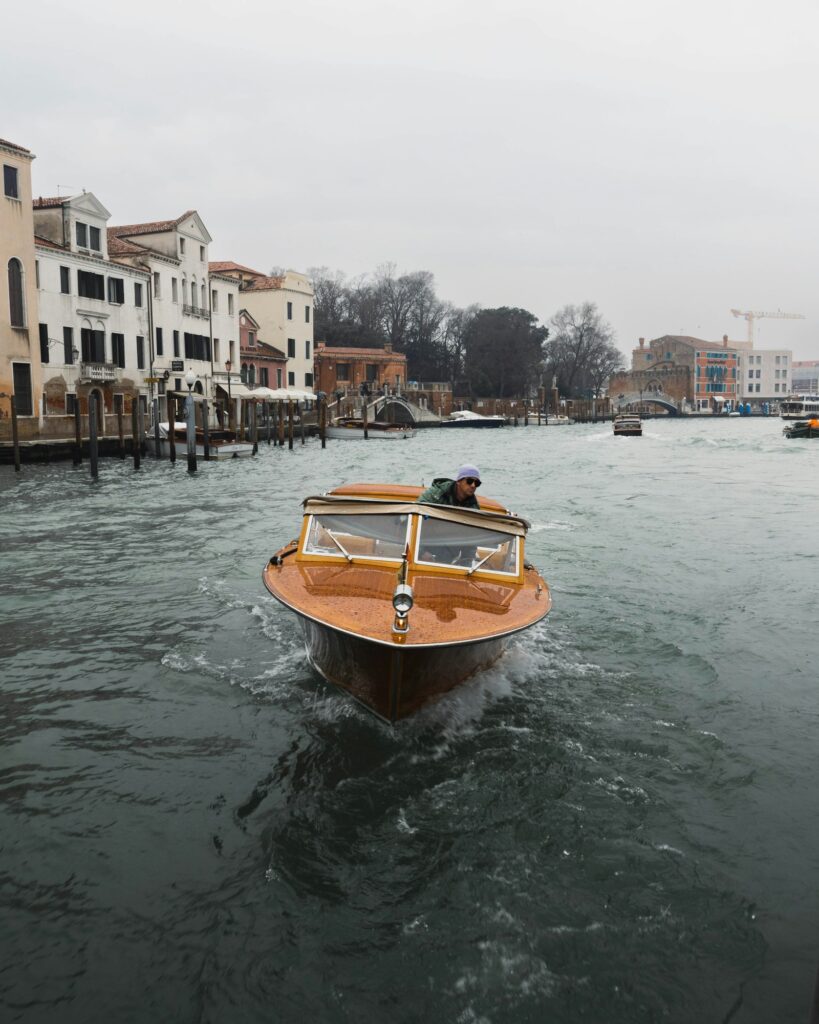
Riva is a specific Italian luxury boat manufacturer with a history dating to 1842. Its classic mahogany motorboats became particularly associated with mid-twentieth-century Italian design, while modern models retain distinctive styling and luxury finishes.
One of the most recognizable historic models is the Riva Aquarama. Produced from the 1960s until the 1990s, it is known for its varnished wooden hull, wraparound windshield and open passenger seating.
Contemporary charter experiences in Venice more commonly advertise models such as the Riva Aquariva, a motorboat approximately ten metres long with polished wood detailing, upholstered seating and an open cockpit.
Riva’s current Aquariva Special specifications describe a vessel just over ten metres long, with a beam of 2.8 metres. Actual charter vessels may be older versions with different layouts and equipment.
The distinction matters because the name Riva is sometimes used loosely in tourism descriptions. A polished wooden Venetian water taxi may resemble a classic Riva without being manufactured by Riva.
If the boat itself is the main reason you are paying a premium, ask the operator for:
- The manufacturer and exact model.
- The boat’s name and production year, if available.
- Recent photographs of the actual vessel.
- The number of passengers permitted on the charter.
- Whether the pictured vessel is guaranteed or may be substituted.
Do not rely only on photographs showing a mahogany deck or white leather seats. Several styles of Venetian motorboat have similar visual features.
Riva Aquariva, classic Riva or luxury water taxi?
These options can provide quite different experiences despite sometimes appearing together in luxury boat searches.
Authentic Riva Aquariva
An Aquariva is a relatively small luxury motorboat designed for comfortable cruising with a limited number of passengers. Its open layout can offer good views of the surrounding city and lagoon.
Operators may provide cushioned seating, a sun pad, refreshments and other amenities. However, the equipment varies between individual boats.
It can be a suitable choice for a couple or small private group that particularly values the vessel’s design and wants a personalized excursion.
Because the boat is relatively large compared with some conventional Venetian water taxis, it may be unable to enter certain narrow canals or use particular hotel landings.
Vintage Riva motorboat
A restored historic Riva offers a different experience from a newer Aquariva. The attraction is partly the age, design and original craftsmanship of the vessel.
If a listing says “vintage Riva,” ask which model will be supplied and whether it is an original boat or a modern vessel inspired by an older design.
Older boats may have different seating, shelter, noise levels and boarding arrangements. They may also be reserved mainly for short private outings, special occasions or photography rather than lengthy sightseeing trips.
Traditional Venetian luxury water taxi
A Venetian water taxi, called a taxi acqueo, is normally a motorboat designed for transporting passengers around the city’s navigable canals and lagoon.
Many have wooden finishes, enclosed cabins and outdoor seating. They can provide an attractive private sightseeing experience without being authentic Rivas.
Depending on the operator, a licensed water taxi may also be able to access smaller canals or hotel landings that a larger luxury yacht cannot reach.
If you mainly want to see the Grand Canal and major monuments from the water, a conventional private water taxi tour may meet your needs at a substantially lower price.
Paying for an authentic Riva makes more sense when the specific boat, its atmosphere and the private charter experience are important parts of your plans.
How long should you book a Riva tour?
Choose the duration according to the actual route rather than the number of attractions named in the advertisement. Some operators offer short cruises around central Venice, while others concentrate on lagoon islands that require considerably more travel time.
Around one hour: a short scenic cruise
Short private cruises are designed primarily for enjoying the boat, taking photographs and seeing part of Venice’s waterfront.
An hour might allow a circuit near St. Mark’s Basin, San Giorgio Maggiore and the Giudecca Canal, depending on the boarding point and navigation conditions.
It generally leaves little time for getting off the boat or visiting an island.
Not every authentic Riva operator offers one-hour reservations. Some set a minimum booking of approximately two hours, and shorter aperitivo experiences may have their own pricing structure.
If your only interest is a short cruise and photographs, ask whether the operator provides a one-hour option before paying for a longer package.
Two hours: a useful choice for sightseeing from the water
Two hours provides more flexibility for a central Venice and lagoon circuit, with time to enjoy several different waterfront views.
For example, Blitz Exclusive publishes a two-hour Aquariva itinerary covering central lagoon locations including Giudecca, St. Mark’s Basin, San Giorgio and areas around Vignole and Poveglia.
This illustrates the type of experience that can fit into a short luxury cruise, although the final route depends on the actual starting point and operating conditions.
A two-hour booking is suitable when your priority is time on the boat rather than walking around Murano or Burano.
Before confirming, ask whether the itinerary includes the Grand Canal. Some tours concentrate on the open lagoon and St. Mark’s waterfront without traveling the full length of the Grand Canal.
Four hours: lagoon cruising and one substantial island stop
A four-hour experience can combine sightseeing around Venice with a visit to Murano or another nearby lagoon island.
Some published Riva packages include a private glassmaking demonstration on Murano, followed by additional cruising through the lagoon.
Four hours is generally more practical for a single island visit than for attempting to explore Murano, Burano and Torcello in detail.
Ask how much of the advertised time is spent on the water and how much is allocated to the workshop or island stop.
If a glassmaking demonstration takes 30 to 45 minutes, you also need to account for docking, walking to the workshop and returning to the boat.
A four-hour booking may be worthwhile if you want both a luxury cruise and one specific activity ashore.
Six to eight hours: longer excursions around the northern lagoon
Full-day Riva experiences may include Murano, Burano, Torcello, Mazzorbo or other islands, with time for food, artisan visits and sightseeing.
Published examples include private Aquariva itineraries covering Murano, Burano and Torcello, sometimes with additional stops around San Giorgio Maggiore, Vignole or the northern lagoon.
However, even a full-day itinerary requires choices. Several island visits, lunch and a glassmaking demonstration can occupy most of the day.
Some operators advertise a full-day experience as six hours, while others use eight hours. Do not assume the phrase “full day” always means the same amount of time.
Ask whether the duration includes all transfers between islands, shore visits, lunch and the return journey to Venice.
If you want to explore all three islands thoroughly, a longer charter or a separate island-focused excursion may be more suitable than a luxury cruise mainly designed around time on the boat.
Which route should you choose?
Venice has two distinct types of scenery from the water: its historic canals and the more open Venetian Lagoon.
The Grand Canal offers close views of palaces, bridges and city life. The surrounding lagoon provides broader panoramas, distant islands and more open water.
Many Riva experiences combine elements of both, but the balance varies.
Grand Canal and Rialto Bridge
The Grand Canal, or Canal Grande, is one of the most recognizable routes in Venice. A boat journey offers views of the façades of historic palaces, churches and the busy working waterway.
Important landmarks along the route include the Rialto Bridge, Ca’ d’Oro, Ca’ Foscari and the area near the Basilica of Santa Maria della Salute.
However, the Grand Canal is heavily used by public water buses, taxis, commercial vessels and other authorized boats.
A Riva cannot travel through it at high speed or ignore the regulations governing navigation and stopping.
Ask whether the itinerary includes the full Grand Canal, a shorter section or only views near its southern entrance.
If passing beneath the Rialto Bridge is one of your priorities, make that specific request before booking.
St. Mark’s Basin and San Giorgio Maggiore
The Bacino di San Marco, or St. Mark’s Basin, provides broad waterfront views of the Doge’s Palace, the bell tower of St. Mark’s and the nearby island of San Giorgio Maggiore.
This area is frequently included on luxury boat cruises because of the open views and recognizable landmarks.
The boat may pass near San Giorgio Maggiore without docking there. If you want to visit the church or climb its bell tower, ask whether a landing and enough time ashore can be arranged.
The area is also exposed to boat traffic and changing conditions on the lagoon. Your skipper must follow the designated navigation routes.
Giudecca Canal and Dorsoduro
The Giudecca Canal separates Giudecca from parts of Venice’s historic center and provides wider views than many of the city’s smaller internal canals.
A cruise may pass along the waterfront near the Zattere, with views of churches, historic buildings and working boat traffic.
The route can be a useful addition to a short sightseeing cruise, particularly when the boat is unable to enter narrower canals elsewhere.
Ask whether the journey continues around Giudecca or simply crosses the canal before returning toward St. Mark’s.
Lagoon views near Lido, Vignole and Poveglia
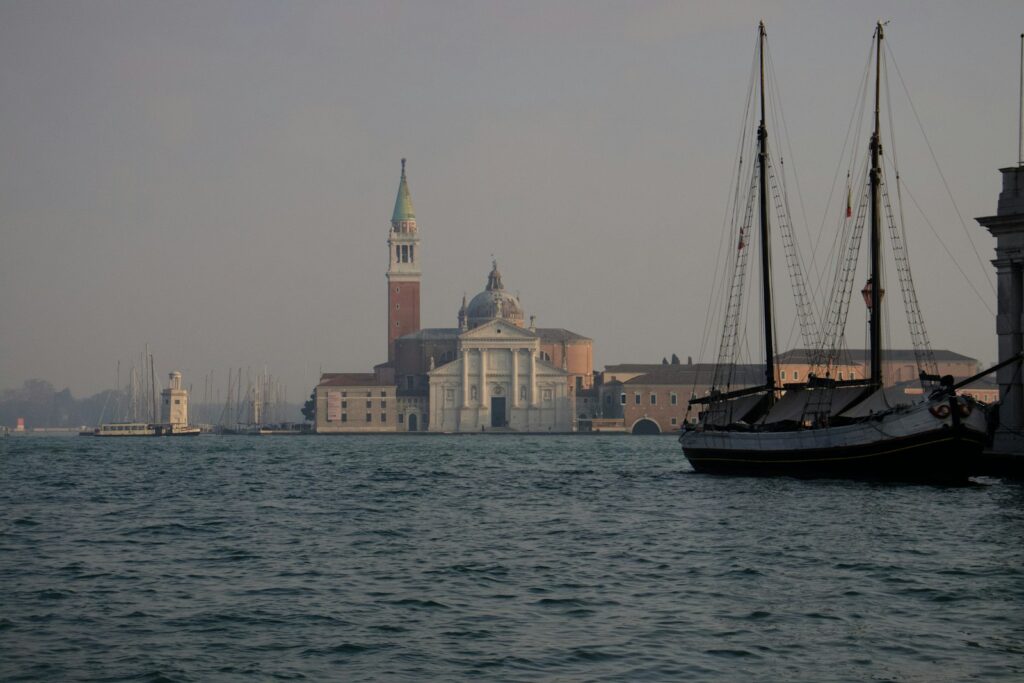
Some Riva itineraries extend into the lagoon toward islands such as Vignole, the Lido area and Poveglia.
These routes offer more time in open water and a different perspective on Venice’s islands and shorelines.
The named locations may be passed from the boat rather than visited on land.
For example, an itinerary that mentions Poveglia should not be interpreted as permission to land on the island. Poveglia has restricted access and is not an ordinary walk-in sightseeing attraction.
Likewise, passing the Lido does not necessarily mean reaching one of its beaches.
Ask which locations involve an actual stop and which are included only as views from the water.
Murano, Burano and Torcello
These islands are commonly included in longer private lagoon excursions.
Murano is associated with glassmaking, Burano with its colorful houses and lace traditions, and Torcello with early Venetian history and the Basilica of Santa Maria Assunta.
They are separate destinations requiring time for docking and exploring on foot.
If the boat tour is only four hours long, adding all three can mean spending much of the booking traveling between them.
A longer island-focused itinerary is more appropriate when you want to visit museums, have lunch or explore the streets beyond the landing points.
Before paying, ask for an estimated number of minutes ashore at each island. That is more useful than simply confirming that Murano and Burano appear on the route.
Can a Riva go through Venice’s smaller canals?
Not necessarily. The boat’s length, width, draft and turning space can prevent access to narrow or shallow waterways.
A modern Aquariva is approximately ten metres long and almost three metres wide. Some smaller Venetian canals have low bridges, tight corners or insufficient clearance for a vessel of that size.
Other waterways may have access restrictions based on the vessel’s authorization or the type of service being provided.
High or low tide can also affect whether a boat can safely approach certain landings.
Ask the operator which canals the actual vessel is permitted and physically able to navigate. If you particularly want to travel beneath small bridges and through quiet residential canals, a smaller licensed water taxi may be a better choice.
A promise to visit “Venice’s hidden canals” is too vague. Request the names of the waterways or ask the operator to explain the route’s limitations.
Can you choose the route yourself?
Private charters often allow more flexibility than scheduled group tours, but the degree of customization depends on the package.
Some operators sell fixed two-hour, four-hour and full-day itineraries. Others allow you to select destinations and pay for the vessel by the hour or half-day.
If you want to customize the route, provide a short list of priorities before asking for a quote. For example, you might request the Grand Canal, San Giorgio Maggiore and a short cruise around Giudecca, without any island visits.
The operator can then confirm whether those locations fit the booked duration and the boat’s navigation permissions.
There are practical limits. Canal traffic, speed restrictions, landing availability and weather may affect the sequence of stops. Your skipper must also comply with local rules rather than following the shortest line on a map.
Ask whether the price remains the same if you change destinations. A route involving longer lagoon crossings may consume more fuel or require extra time.
Speed limits and navigation rules in Venice
Riva boats are capable of traveling considerably faster than Venice’s permitted speeds in its urban waterways. The manufacturer’s published cruising speed is a technical specification, not the speed you should expect during a sightseeing tour.
The Grand Canal and smaller city canals have navigation restrictions designed to manage traffic, protect historic buildings and reduce the effects of boat wakes.
Speed limits and permitted routes vary by waterway and vessel category. Operators must also comply with regulations governing access to specific canals and docking areas.
The City of Venice maintains the applicable rules through its water transport and navigation administration.
Do not choose an expensive motorboat expecting a high-speed ride beneath Rialto Bridge. Much of a central Venice cruise involves controlled, relatively slow navigation.
A larger luxury boat may have more opportunity for steady cruising in permitted areas of the lagoon, but those areas also have navigation limits and safety requirements.
If the operator advertises a high-speed experience, ask exactly where that is possible and how much of the booked duration it represents.
Hotel pickup: can the Riva collect you at your accommodation?
Some luxury boat experiences advertise hotel pickup. In Venice, that can mean two different things.
The skipper may collect passengers directly from an accessible private hotel landing. Alternatively, a representative may meet you in the lobby and accompany you on foot to a nearby authorized pier.
The second arrangement is common when a hotel has no suitable water entrance or the Riva is too large to reach it.
Before booking, send the operator your complete hotel address and ask:
- Can the actual Riva boat use our hotel’s private landing?
- If not, where will we board?
- Will someone meet us at reception?
- How many minutes must we walk to the pier?
- Does that walk involve bridges or steps?
- Will the tour finish at the same location?
For example, a tour advertised as including pickup from a San Marco hotel might involve meeting a representative in the lobby, then walking to a suitable landing.
This is different from the boat arriving directly outside your room or hotel entrance.
If boarding at the property is particularly important, request written confirmation that the specific vessel can use the landing, subject to water conditions.
Common boarding areas for private tours
Private boat excursions may start near San Marco, along the Zattere waterfront, on Giudecca or at another designated pier.
Some charters use a marina as their normal departure point, while others can arrange collection elsewhere for an additional charge.
These locations can be a considerable distance apart when traveling on foot through Venice.
San Marco and Riva degli Schiavoni
The waterfront near St. Mark’s Square is a practical starting point for routes around the Basin of St. Mark and the central lagoon.
However, there are multiple boarding locations along the waterfront. A general instruction to meet near San Marco is insufficient.
Ask for the name or number of the pier and a map pin.
Also note that riva in Venetian place names means a waterfront or landing. Riva degli Schiavoni is a street and quay name, not a reference to the Riva boat manufacturer.
Zattere and Dorsoduro
The Zattere waterfront faces the Giudecca Canal and is used as a starting area for some private lagoon experiences.
Different operators use different landings along this relatively long promenade. Ask which section or nearby building identifies the boarding point.
If you are staying in Dorsoduro, this may be more convenient than traveling to the San Marco waterfront.
Giudecca
Some private luxury boats are based at marinas or moorings on Giudecca.
If the quotation does not include transfer from central Venice, you may need to reach the agreed boarding point yourself.
Ask whether the boat can collect you from a suitable pier on the Venice side of the canal and whether that changes the price.
Also confirm the return arrangement. Finishing on Giudecca when your hotel is near Rialto creates an additional journey that should be accounted for.
Santa Lucia railway station and Piazzale Roma
These are important transport gateways, but not every Riva charter provides pickup there.
A vessel may need to make an additional journey to collect you, and the operator may charge for the transfer or include the time in your booked duration.
If you are arriving by train and want to start the excursion immediately, ask whether there is a suitable authorized landing near Venezia Santa Lucia and whether luggage can be carried aboard.
For more detail on boarding at hotels and alternative landings, see the Italy on Foot guide to Venice water taxi hotel access.
Why a boat cannot simply stop anywhere
Private passenger boats in Venice operate under regulations governing licensing, navigation and the use of landing places.
The city’s official information on chauffeur-operated boat hire distinguishes scheduled private hire, known as noleggio con conducente or NCC, from ordinary on-demand water-taxi services.
Authorized hire boats use designated and permitted landing arrangements. The applicable rules depend on the type of service and vessel.
The City of Venice also identifies specific authorization markings for different categories of commercial passenger boats.
Before paying for a Riva charter, ask the operator to confirm that the vessel is authorized and appropriately insured for carrying paying passengers on the proposed itinerary.
A private booking does not mean the skipper may use any landing or take the boat into restricted canals.
If the operator promises pickup from a particular hotel or an isolated island, ask which landing will actually be used.
How many passengers can a Riva tour accommodate?
Capacity depends on the specific model, its operating authorization and the layout used for the charter.
For example, the Riva Aquariva offered by Blitz Exclusive in Venice lists a capacity of five guests plus the captain.
Other versions of the Aquariva have different manufacturer specifications, but the maximum number permitted on a commercial charter can be lower than a model’s general technical capacity.
Do not count a spare-looking seat as an additional passenger place.
For a group of five adults, confirm that the boat is approved to carry all five guests plus the skipper. If you have six or seven guests, ask whether another vessel is required.
For larger groups, an alternative private motorboat may provide more space and better value than arranging multiple Rivas.
Also ask whether the available seating allows everyone to travel comfortably together. A boat with a large sun pad does not necessarily provide the same number of upright passenger seats.
Are Riva boat tours suitable for children?
Some private Riva tours accept children and infants, although age rules and safety equipment vary.
Before booking, give the operator each child’s age and approximate weight. Ask whether appropriately sized life jackets or other required safety equipment are available.
Children must be supervised throughout the journey and follow the skipper’s instructions about seating and movement.
A Riva may have an attractive open sun pad or deck area, but that does not mean passengers can sit or stand there while the boat is moving.
Ask where young children are permitted to sit and whether there is enough sheltered space if the weather changes.
If you are bringing a stroller, confirm whether it can be folded and stored securely. A large stroller may occupy valuable space on a small luxury vessel.
For infants, ask how boarding is managed and whether the operator has a suitable safe seating arrangement. A travel-platform label such as “infant seats available” needs clarification because ordinary car seats and equipment intended for use on boats are not interchangeable.
A short cruise may be easier with toddlers than a full-day island itinerary involving repeated boarding, walking and long periods at sea.
What about wheelchair users and reduced mobility?
Do not assume that a Riva Aquariva is accessible because it is a luxury boat.
Boarding commonly involves stepping between a quay and the boat, negotiating a height difference and moving down into the seating area.
The boat may also have narrow passageways and limited space for mobility equipment.
If someone uses a wheelchair or walking frame, ask whether they can board safely and whether the vessel can accommodate the equipment.
Questions should cover:
- Whether passengers must step down into the boat.
- Whether a ramp or lift is available.
- Whether the wheelchair user can remain seated in their wheelchair.
- Whether the wheelchair can be properly secured.
- Whether the passenger must transfer onto a boat seat.
- Whether there is room to store a folding wheelchair.
- Whether the landing is accessible at the expected water level.
- Whether the chosen itinerary includes steps at island stops.
A private Riva may not be suitable for someone who cannot transfer independently or with appropriate assistance.
Venice separately authorizes boats equipped for passengers with reduced mobility. The municipality explains the arrangements through its accessible private water-transport service.
If accessibility is essential, consider a properly adapted boat rather than assuming the Riva’s appearance or price indicates suitable facilities.
What happens if the weather changes?
Conditions on the open lagoon can be different from those inside Venice’s sheltered canals.
Wind can create waves and spray, particularly on routes crossing larger areas of open water. Rain and colder temperatures can also make an open motorboat uncomfortable.
Some Riva vessels have retractable covers or other weather protection. However, a canopy may cover only part of the seating area and may not provide the same protection as a fully enclosed water-taxi cabin.
Ask for photographs showing the boat with its weather cover in place.
Also confirm whether the vessel has an indoor or enclosed seating area that can be used during poor conditions.
The skipper is responsible for deciding whether the boat can navigate safely. Strong wind, thunderstorms, fog or other conditions may require a route change or cancellation.
Before booking, establish:
- Who decides whether the weather is suitable.
- Whether the operator can change the planned route.
- What happens if conditions are safe for a short city cruise but unsuitable for a longer lagoon crossing.
- Whether you can reschedule the tour.
- Whether a weather-related cancellation by the operator results in a refund.
- What happens if you personally prefer not to travel in weather the skipper considers acceptable.
Do not assume that a rainy forecast automatically entitles you to cancel without charge.
Sunset cruises and private aperitivo experiences
Some luxury Riva packages are advertised as sunset or aperitivo experiences rather than conventional sightseeing tours.
These may include drinks and light snacks while the boat cruises around St. Mark’s Basin, Giudecca or quieter lagoon areas.
The atmosphere can be different from a daytime sightseeing excursion, especially when the focus is on enjoying the boat and evening light.
However, sunset times change considerably throughout the year. Ask the operator for the suggested boarding time for your exact date.
A departure at 6 p.m. may provide evening light in one season and complete darkness in another.
Also ask whether the itinerary actually places the boat in a suitable location at sunset or whether the experience merely departs in the late afternoon.
For an aperitivo booking, check how many drinks are included and whether the food is a few snacks or a more substantial arrangement.
If you are celebrating a birthday, anniversary or proposal, arrange any special details before departure. Flowers, professional photography, decorations and premium drinks are not necessarily included in the standard charter.
Can you swim during a Riva boat tour?
Some longer Riva excursions advertise swimming or sunbathing as possible activities in suitable lagoon locations.
However, swimming is prohibited in Venice’s urban canals. The City of Venice’s visitor conduct rules explicitly prohibit bathing, diving and swimming in the canals.
Do not assume you can stop near the Rialto Bridge or St. Mark’s waterfront and enter the water.
If a tour includes swimming, ask where it will take place, whether the location is legally permitted and whether conditions are suitable on your date.
Also ask about the boarding ladder, towels, supervision arrangements and whether the activity is appropriate for children.
The skipper should determine whether swimming is safe. A boat having a sun pad or swim ladder does not mean entering the water is permitted at every point along the route.
Does the skipper provide a guided tour?
A professional skipper is responsible for navigation and passenger safety. Some also provide informal commentary about landmarks and local history.
However, a dedicated tourist guide is a separate service.
If you want detailed explanations of Venetian history, architecture and lagoon culture, ask whether a professional guide will be aboard.
For island visits, establish whether someone accompanies you ashore. A skipper may remain with the vessel while passengers explore independently.
On a short two-hour cruise, informal commentary may be sufficient. On a full-day itinerary involving museums, artisan workshops and historic churches, a dedicated guide may add more value.
Ask whether guiding is included in the quoted price or charged separately, and confirm the language of the service.
What should be included in the charter price?
Private Riva experiences are usually priced for the vessel or group rather than for each individual seat. However, booking platforms can display prices differently, so always check the final total.
A complete quotation should clarify:
- Actual vessel: The confirmed Riva model and whether substitutions are permitted.
- Skipper: Professional crew services for the entire booking.
- Fuel: Whether the estimated route’s fuel consumption is included.
- Duration: The exact number of hours and when the clock starts.
- Pickup: The agreed boarding location and any additional transfer cost.
- Return: The final disembarkation point.
- Docking charges: Any applicable landing or marina fees.
- Guiding: Whether historical commentary or a separate guide is included.
- Food and drinks: Water, Prosecco, snacks or other refreshments.
- Island visits: Any scheduled glassmaking demonstrations or other appointments.
- Admission: Museum, church and attraction tickets, if included.
- Additional costs: Overtime, route extensions, restaurant bookings or premium services.
- Taxes: Any applicable VAT and platform booking fees.
Do not assume a charter described as “all-inclusive” includes restaurants, private guides or every requested island stop.
Ask for a written quotation showing the actual services and total price, particularly when you are comparing a boat-only charter with a complete escorted experience.
How much does a private Riva boat tour in Venice cost?
Authentic Riva Aquariva charters are substantially more expensive than ordinary sightseeing boats or standard water taxis.
Current published examples give a useful indication of the price level, although they describe individual vessels and packages rather than a fixed Venice market rate.
A Riva Aquariva 33 listed for charter in Venice through Nautal currently advertises:
- Half-day charter: €1,800.
- Full-day charter: €3,000.
The listing identifies a skipper and displays the boat’s amenities, but its fuel information is not entirely consistent across the listing sections. Anyone booking this or a similar charter should request written confirmation of whether fuel is included in the total.
As another example, a four-hour Riva Aquariva experience operated by ShoMe Venice and listed on Tripadvisor currently starts at approximately €1,890 per group of up to five people. The advertised package includes private transport, bottled water, Prosecco, snacks and an onboard bathroom.
These examples illustrate the cost of specific luxury Riva experiences in 2026. They do not establish what every Riva operator charges, and they should not be treated as confirmed prices for 2027 travel.
Some companies also offer shorter aperitivo cruises, but their prices may be displayed per participant rather than per boat. Always compare the complete group total.
Why do two similar-looking tours have different prices?
Several factors can change the cost even when two listings advertise a Riva Aquariva.
The age and condition of the vessel matter, as does the duration for which it is reserved. A private charter may also include crew, guiding, a glassmaking demonstration, refreshments or other arrangements.
Fuel costs can differ considerably between a short central Venice cruise and a longer trip across the lagoon.
Pickup location also matters. A boat normally based on Giudecca may need extra time to collect passengers near the railway station or another distant landing.
Some operators charge from the agreed passenger boarding time. Others may incorporate the boat’s repositioning journey into the quotation.
When comparing prices, request answers to these questions:
- Is the price for the entire vessel or per participant?
- Does the total include the skipper?
- Is fuel included for the proposed route?
- Does the booking start when we board or when the boat leaves its base?
- Are docking and landing charges included?
- Will a separate professional guide accompany us?
- Are refreshments included?
- Does the price cover admission to any planned attractions?
- What is the charge for an additional hour?
- Will the total change if we alter the route?
Two tours advertising four hours can deliver different amounts of cruising, guiding and time ashore. Compare the written itineraries alongside the prices.
Is there a cheaper way to enjoy Venice by private boat?
Yes. If your primary goal is to see Venice from the water, a conventional private water taxi or another licensed sightseeing motorboat can provide a private experience without the cost associated with the Riva brand.
For a short route, you may also prefer a gondola if you want to travel through smaller canals rather than cross the lagoon.
A gondola and a Riva offer very different experiences. A gondola travels slowly through selected canals, while a motorboat can cover greater distances and reach islands across the lagoon.
Public water buses, known as vaporetti, are another alternative for travelers who simply want to see major waterfront landmarks.
ACTV Line 1 travels along the Grand Canal, with views of its palaces and bridges. It is public transport, however, so you share the vessel with other passengers and cannot choose where it stops for photographs.
Our guide to getting around Venice explains the differences between water buses, private taxis and other transport options.
A Riva charter becomes more relevant when having that particular vessel and a privately arranged itinerary is an important part of the experience.
What about photographs and special occasions?
Riva boats are sometimes hired for proposals, anniversaries, wedding-related photographs and private celebrations.
If you want photographs of the boat itself, ask whether the skipper can arrange a suitable stop or slow passage with an appropriate background. Professional photographs may require a separate photographer and additional authorization depending on the location, equipment and commercial use.
For a proposal, explain the plan discreetly beforehand. Agree on when the boat will be in the intended area, where you will sit and whether the skipper can help coordinate the timing.
Do not assume the boat can stop directly in front of any landmark for an extended period.
Some operators can arrange flowers, a special bottle of wine or another celebration detail. These services should be itemized in the quotation.
If the photographs will be used commercially, establish whether additional permissions are required. Private holiday photographs and a professional commercial production are different activities.
Food, drinks, toilets and comfort on board
Onboard amenities differ between Riva models and individual operators.
Some Aquariva charters advertise a small bathroom, while others may have more limited facilities. Never assume a luxury motorboat has a usable passenger toilet without checking.
For a short cruise, this may be a minor consideration. For a full-day excursion, toilet access and suitable stops become much more important.
Ask whether the operator supplies drinking water and whether alcoholic drinks are included.
If a package mentions Prosecco or a welcome drink, establish how much is provided and whether additional drinks cost extra.
Also check whether you may bring your own food. Some operators permit small snacks, while others restrict outside catering or charge for additional service.
If you want lunch during a longer cruise, ask whether the package includes a restaurant reservation and whether the meal is paid separately.
For a group with food allergies, identify any catered ingredients and discuss cross-contact arrangements with the food provider before booking.
Keep in mind that seating comfort changes with the length of the trip. An open sun pad may be pleasant for a short period, but passengers will need suitable secure seating while the boat is underway.
What happens if the boat is changed after booking?
Mechanical problems, maintenance and other operational issues can sometimes require an operator to propose a replacement vessel.
For an ordinary transport booking, a comparable licensed boat may be an acceptable alternative.
For an authentic Riva charter, the vessel itself is often central to the purchase decision. A different luxury water taxi may not provide the experience you paid for.
Ask the operator’s substitution policy before paying.
The confirmation should identify the agreed model and explain what happens if it becomes unavailable.
In particular, establish whether:
- You will be informed before departure.
- The replacement will also be an authentic Riva.
- You can approve or decline a different vessel.
- A price adjustment will be offered.
- You can cancel and receive a refund if the specified boat cannot be supplied.
Keep the vessel description and photographs attached to your booking confirmation where possible.
Cancellation policies and weather-related refunds
Luxury private charters can have substantial cancellation charges because the vessel and crew are reserved for your booking.
Cancellation terms vary significantly between operators and booking platforms.
For example, the ShoMe Venice four-hour Riva experience currently advertises free cancellation until 24 hours before the scheduled start time on its Tripadvisor listing.
Another full-day Riva Aquariva experience sold through Viator specifies a non-refundable booking, with no refund for ordinary customer cancellation or amendment.
These are different services with different terms. Do not assume that all private Riva cruises have the same refund policy.
Before paying, ask what happens if:
- You cancel several days before departure.
- Your flight or train is delayed.
- You arrive late at the boarding pier.
- The skipper determines that the weather is unsafe.
- Only part of the proposed route can be completed.
- The operator cannot supply the agreed vessel.
- You want to shorten the charter after boarding.
- You need to reschedule because of illness.
Ask whether refunds are issued to the original payment method and whether booking fees are also refundable.
If you are booking well in advance for 2027, obtain the prices and cancellation terms applicable to that reservation rather than relying on a previously published 2026 offer.
What if you arrive late for the tour?
Unlike a regular water taxi hired on demand, a private Riva charter often operates on a reserved schedule.
If your booking is for four hours beginning at 10 a.m., arriving at 10:30 a.m. may reduce the time available for your excursion.
Some operators can adjust the departure, while others have another charter scheduled later in the day.
Ask whether waiting time is included and when the paid charter period begins.
If you are arriving in Venice that morning, avoid reserving a Riva immediately after your expected train or flight arrival. Transport delays and the time needed to reach the boarding point can make this difficult.
For a special occasion, booking the excursion on a day when you are already in Venice is usually easier to coordinate.
Keep the skipper’s contact number and meeting instructions available offline.
How early should you reserve?
Authentic Riva boats are specialized vessels, and operators may have only one or a small number available for private charter.
If you need a specific model, a particular date or sunset departure, begin enquiries several weeks ahead when practical.
For a major celebration or a longer full-day arrangement, additional planning time may be useful because restaurant reservations, photographers or other services have to be coordinated.
There is no universal booking deadline. Availability depends on the actual vessel, season and operator.
Ask when the reservation becomes confirmed and whether paying a deposit guarantees the named boat.
Do not assume a quotation or initial availability message constitutes a completed reservation.
Planning the cruise around the rest of your Venice trip
A short two-hour Riva tour can fit into a day that includes walking around central Venice. A four-hour excursion with a Murano stop will occupy much of a morning or afternoon, while a full-day lagoon itinerary is better treated as the main activity for that day.
When scheduling other attractions, account for the journey to the boarding pier and the possibility of weather-related changes.
For example, an afternoon cruise ending near San Marco may be easy to combine with dinner in that area. If the boat returns to Giudecca, you need to plan the journey back to your accommodation before making a restaurant reservation.
You can use the Italy on Foot trip planner to organize the charter alongside your hotel, sightseeing appointments and restaurant plans. Save the precise boarding point and skipper contact details separately from the general tour description.
If you are planning the cruise as a surprise, make sure the itinerary and confirmation emails are not visible to the person you are surprising.
Questions to send before booking a Riva boat tour
A detailed enquiry should identify your preferred duration, number of guests, accommodation location and the parts of Venice you most want to see. Then ask the operator to confirm the practical details.
- Is the boat an authentic Riva, and what is its exact model?
- Can you provide recent photographs of the specific vessel we will use?
- Is the named vessel guaranteed, and what happens if it becomes unavailable?
- How many passengers can the boat legally carry in addition to the skipper?
- Is the charter completely private?
- Where exactly will we board and disembark?
- Can the boat collect us from our hotel’s own landing?
- If hotel pickup is offered, does that mean boarding at the hotel or meeting a representative there?
- When does the booked charter time begin and end?
- Will the tour include the Grand Canal and pass beneath Rialto Bridge?
- Which parts of the lagoon and which islands are included?
- Which locations are viewed from the boat, and where will we actually disembark?
- Can we customize the route without additional charges?
- How much time is allocated to each planned island stop?
- Does a professional guide accompany us, or does the skipper provide informal commentary?
- Are the skipper, fuel, landing fees and taxes included in the price?
- Are drinks, snacks or a meal included?
- Is there a usable toilet on board?
- What protection is available against rain, wind and cold?
- Are suitable life jackets available for every guest, including children?
- Can the vessel accommodate a stroller or someone with reduced mobility?
- Is the vessel appropriately authorized and insured for commercial passenger service?
- What happens if bad weather prevents the planned route?
- What is the price for an additional hour?
- What are the deposit, cancellation and refund conditions?
- What happens if we arrive late or the skipper cancels?
For travelers primarily interested in the Riva itself and the views around central Venice, a two-hour cruise can be a reasonable starting point. Four hours gives more scope for exploring the lagoon and including a Murano stop, while a longer charter is more suitable for visiting several islands.
Before committing to a substantial payment, get the exact boat model, route, duration, boarding arrangements and all-inclusive price in writing. In particular, check whether the experience guarantees an authentic Riva and whether the paid hours include everything from pickup to final drop-off. Those two details can explain much of the difference between apparently similar luxury boat quotations.