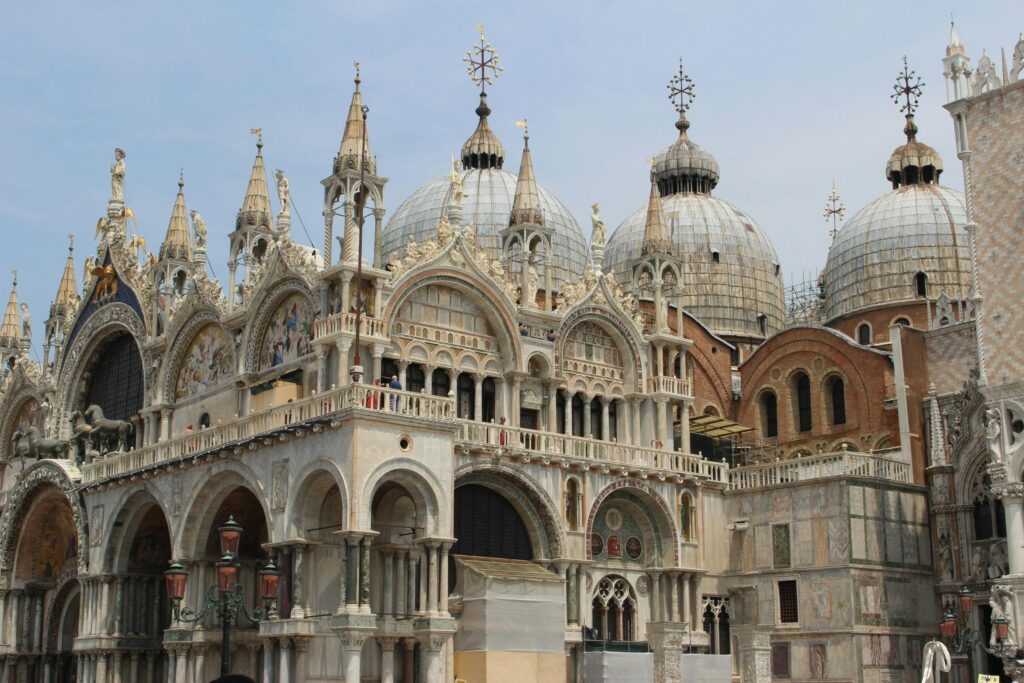
When people say “St. Mark’s” in Venice, they usually mean the whole San Marco cluster, not just one building. The heart is St. Mark’s Basilica, but most visitors also want the Bell Tower (Campanile) for the views, plus the famous square (Piazza San Marco) and, often, Doge’s Palace next door. The tricky part is that each place runs on its own rules: the Basilica has strict entry rules, timed tourist access, and a clear dress and bag policy; the Bell Tower is lift-only; and the square has behavior rules that can lead to fines if you treat it like a picnic spot. If you want a simple plan that fits most trips, pick your Basilica time first, then layer the rest around it. A good rhythm is Basilica when you have the most energy and patience for security lines, then the Bell Tower for photos and views, then a longer museum-style visit (Doge’s Palace and the San Marco museums) when you feel like slowing down.
If you want a ready-made route for the area with a practical day-by-day flow, you can pair this guide with the Two Days in Venice Itinerary so you’re not deciding everything on the spot. One more helpful mindset: think “small, controlled visit” for the Basilica and “slow, flexible visit” for the museums. The Basilica visit is paced and rules-driven, while places like Doge’s Palace are more like standard attractions where you can take your time. If you’re visiting as a day-tripper, also keep in mind that Venice sometimes uses an entry-access system on select peak days, so it’s smart to check official updates before you go. With that in mind, the rest of this page is built to answer the questions people always have: what to book, when to go, what rules actually get enforced, and how to avoid wasting time once you arrive.
Tickets and official booking links (Basilica, Pala d’Oro, Museum, Horses, Bell Tower)
St. Mark’s Basilica: prayer entry vs timed tourist entry
There are two very different ways people enter St. Mark’s Basilica, and mixing them up is where confusion starts. If you are going in for prayer or a liturgy, entry is free and follows a dedicated access route (often indicated at the north side entrance known as Porta dei Fiori). If you are visiting as a tourist to see the mosaics and main interior, the most reliable approach is to reserve a timed entry through the official ticket office. Tourist tickets are typically named, and you should expect ID checks at entry. It’s also normal for access to be managed around worship needs, meaning visits can be paused or adjusted if religious services require it, so build a little buffer into your day. The official place to buy tickets for the Basilica areas (including add-ons like the Pala d’Oro, the Museum, and the Loggia dei Cavalli) is here: tickets.basilicasanmarco.it.
The official Bell Tower ticket is also sold on the same official ticket system, which makes it easier to keep everything consistent. If you want to go deeper than the main Basilica interior, the Pala d’Oro is the “wow” upgrade for many visitors, and the Museum and Horses Loggia is the best choice if you love art details and want an elevated view back into the church. If you’re deciding what to book, use this simple rule: book “Basilica only” if you just want the main space and mosaics; add Pala d’Oro if you want the most famous gold masterpiece; add Museum and Horses if you want the added perspective and extra exhibits. For the Bell Tower, book a time that matches your photo goals, but note that it can be affected by weather. Below is a quick snapshot of common official options and typical pricing shown on the official system, with a small booking fee often added per ticket. Always confirm the exact total on the official checkout screen before purchase.
| Official ticket option | What it includes | Price shown (plus fee) |
|---|---|---|
| Basilica timed entry | Main Basilica visit at a set time | €6 + €1 |
| Basilica + Pala d’Oro | Main visit plus the golden altarpiece area | €12 + €1 |
| Basilica + Museum | Museum access (often paired with Horses Loggia) | €15 + €1 |
| Full Basilica package | Basilica + Pala d’Oro + Museum + Horses Loggia | €30 + €1 |
| Bell Tower (Campanile) | Lift to the top for panoramic views | €10 + €1 (reduced €5 + €1) |
If you also plan to visit Doge’s Palace and the museums in St. Mark’s Square, those are managed on the official MUVE network. Start with the official Doge’s Palace visitor info page for updates and hours: palazzoducale.visitmuve.it. For official ticket purchasing, MUVE uses its official ticketing channels, including: muve.vivaticket.it and the official MUVE tickets overview: visitmuve.it. MUVE ticket prices can vary by ticket type and, in some cases, by how far in advance you buy, so if you’re comparing options, check the official listings on the date you plan to visit.
A practical money-saving tip is to decide whether you truly need every site in one day: Basilica + Bell Tower is a compact pairing; Doge’s Palace + museums is a longer block of time. Doing all of them back-to-back is possible, but it’s also the fastest way to feel rushed in the most crowded part of Venice. If you want your day to feel calmer, choose one “must” (often the Basilica) and one “nice-to-have” (Bell Tower or Doge’s Palace) and treat anything else as a bonus. This approach also helps if weather changes or lines get longer than expected. Most importantly, use only official ticket links so you know exactly what you’re buying and what time slot you’re getting.
Opening hours and the best times to visit (so you don’t waste a morning)
Know the Sunday pattern and the Bell Tower cutoffs
St. Mark’s works best when you plan around the real opening patterns, especially weekends and holidays. The Basilica has a clear split between “prayer hours” and “tourist visiting hours,” and Sundays are different from weekdays. On many days, the tourist visiting schedule runs with a morning start and an afternoon close, but on Sundays and public holidays, the Basilica tourist visit often starts later in the day. Meanwhile, the Museum and Horses Loggia portion can have its own access window, so you may be able to visit that portion in the morning even when the Basilica interior tourist route opens later. For the Bell Tower, the day is long, but there is a last admission cutoff you should respect, and closures can happen due to weather like wind or fog.
If you are trying to avoid the most intense crowds, the biggest lever you control is timing: early slots feel calmer, especially for security checks and movement inside the Basilica; later afternoon can also be less packed than late morning, depending on how many day-trippers are in town. Another timing note: during big event periods like Carnival, nearby attractions such as Doge’s Palace may offer extended evening openings on select dates, which can be a smart way to spread your San Marco sights across the day. Always check the official pages the week of your visit because hours can shift for ceremonies, safety, and special schedules. Here is a simple reference table using commonly posted official hours; use it to understand the pattern, then confirm on the official sites before you go.
| Place | Typical opening pattern | Last admission notes |
|---|---|---|
| St. Mark’s Basilica (tourist visit) | Mon to Sat morning through late afternoon; Sundays/holidays often start later | Last admission commonly listed as 16:45, closing around 17:15 |
| Basilica (prayer access) | Early morning through evening | Access follows liturgy needs and may pause for services |
| Museum + Horses Loggia | Often opens in the morning | Useful add-on when Basilica tourist entry is later |
| Bell Tower (Campanile) | Daily daytime into evening | Last admission commonly listed as 20:45, weather can close it |
Rules that are actually enforced: dress code, bags, security, photos, and time limits
Read this once and you’ll avoid the most common “we got turned away” stories
St. Mark’s Basilica is a working religious site, and the rules are not just suggestions. Expect airport-style security, including metal detectors and bag checks, and expect staff to enforce a dress code. That means shoulders should be covered, shorts and skirts should not be too short, and clothing should be respectful in a church setting. Men should remove hats inside, and bare feet are not acceptable. If you’re visiting in hot weather, plan your outfit like this: light layers that still cover shoulders and knees, and comfortable shoes that are easy to remove if security asks. Bags matter even more than outfits. If you show up with a large backpack or a cabin-size trolley, you’re likely to be denied entry. The commonly posted maximum bag size is 40 x 30 x 20 cm, and trolleys are not permitted. The most reliable fix is simple: leave big bags at your accommodation and come with a small day bag. If you’re carrying camera gear, keep it minimal. Photography is generally allowed only for personal use, and professional equipment needs special authorization.
Streaming is not allowed. Inside behavior is also controlled: keep voices low, silence your phone, and avoid phone calls. Food, drinks, and chewing gum are not allowed, and you should not sit inside the Basilica. Another surprise for many visitors is pacing. The Basilica visit is managed with a maximum time limit for the main route, and the Pala d’Oro area has its own shorter time window. This is why it helps to decide what you want to focus on before you step inside. If mosaics are your priority, don’t spend your first minutes taking wide-angle shots at the door. If the Pala d’Oro is your priority, head there with purpose once allowed. A helpful prep checklist is below. It’s short on purpose, because the main goal is to prevent a ruined entry moment after you’ve already waited in line.
- Wear: covered shoulders, respectful shorts/skirts, comfortable shoes
- Bring: a small bag under the posted size limit, ID for named tickets, patience for security
- Avoid: big backpacks, trolleys, noisy phone use, food/drinks/chewing gum inside
- Remember: visit timing can be managed; don’t count on unlimited lingering
What to see at St. Mark’s: quick visit vs full visit (and how to combine it with Doge’s Palace)
Choose your “musts” so your day feels like Venice, not like lines
The Basilica itself is the centerpiece: the interior mosaics are the main reason most people come, and a “Basilica only” timed entry can be perfect if you want the highlight without turning your day into a checklist. If you want the deeper version, the two add-ons that change the experience are the Pala d’Oro and the Museum with the Horses Loggia. The Pala d’Oro is a gold masterpiece that feels like a concentrated punch of Venetian wealth and craft. The Museum and Horses Loggia gives you extra context and the kind of viewpoint that makes the Basilica feel less crowded because you’re looking from above and from different angles. Then there’s the Bell Tower, which is a separate experience: it’s not about art details, it’s about seeing Venice from above. The Bell Tower ascent is lift-only, which is great if you don’t want stairs, but it also means you should skip it if you have severe claustrophobia and don’t like elevators.
Because it’s outdoors at the top, it can also be affected by weather and visibility. If your plan also includes Doge’s Palace, think of it as your “slow, story-driven” block. Doge’s Palace and the San Marco museums are where you spend time reading rooms, noticing details, and following a route that takes longer than most people expect. For planning, it’s smart to set aside a dedicated chunk of time for the Palace rather than trying to squeeze it into the same hour as the Basilica. If you want a clean order, do Basilica first (timed and strict), then Bell Tower (quick), then Doge’s Palace (longer). If you’re visiting during a busy event period, consider flipping it and doing Doge’s Palace later if the official site posts extended hours. Use the official MUVE pages to check that: palazzoducale.visitmuve.it for visitor info, and muve.vivaticket.it or visitmuve.it for tickets. The key is not to over-pack. St. Mark’s is a small area, but it’s one of the most crowded places in Venice, and choosing one deep experience plus one quick one usually feels better than trying to “win” the square in a single sprint.
Accessibility, group rules, and Piazza San Marco fines you can avoid in seconds
What matters most once you step outside: the square has rules too
If you need step-free access, St. Mark’s Basilica provides an accessible entry route via Porta dei Fiori, where a ramp system is used to help visitors with mobility needs. If you’re traveling with someone who uses a wheelchair or has limited mobility, build extra time and aim for calmer hours, because the biggest barrier is often crowd pressure, not architecture. For the Bell Tower, accessibility is strong in the sense that it is lift-only, but that also creates a different challenge: if elevators make you anxious, choose another viewpoint instead and don’t force it. Group rules are also stricter than many people expect. Large groups are capped, and if your group is more than a handful of people, you may be required to use audio headsets for guiding or keep spoken explanations outside to maintain the church atmosphere. Even if you’re not on a tour, it’s smart to keep your group tight and quiet, because staff will intervene if the noise level rises. Once you’re back in Piazza San Marco, the rules shift from “church behavior” to “city fines.”
Venice takes public behavior seriously in the most famous spots. Avoid sitting or eating on the ground, and don’t sit on monuments, steps, bridges, or temporary high-water walkways. Feeding pigeons and even seagulls is not allowed, and it can lead to a fine. These rules are especially enforced around San Marco because it’s where tourists naturally pause with snacks and photos. You can check the city’s official behavior rules here: comune.venezia.it. If you are visiting Venice as a day-tripper, also check the city’s official access system portal because Venice sometimes applies an entry-access fee on select peak days with a daytime window. The official place to verify that is: cda.ve.it. One simple way to keep your day smooth is to do San Marco early, then leave the square for quieter neighborhoods, and return later only if you have a specific museum entry or evening plan. You’ll see more Venice, you’ll feel less rushed, and you’ll avoid the small mistakes that turn into frustrating fines in the most photographed place in the city.
Official ticket links (quick list)
- St. Mark’s Basilica and Bell Tower official tickets: tickets.basilicasanmarco.it
- Doge’s Palace official info: palazzoducale.visitmuve.it
- MUVE official ticketing: muve.vivaticket.it and visitmuve.it
- City behavior rules (avoid fines): comune.venezia.it
- Venice access system portal (day-tripper checks): cda.ve.it