Buying an original art print directly from a Venetian studio gives you the chance to see how the work was made, meet the artist or printer, and choose a piece with a clear history. Start by checking whether the studio sells original etchings, linocuts, lithographs or screen prints rather than reproductions. Ask about edition sizes, signatures, paper quality and protective packaging before paying. You can often buy an existing print during a short visit, although demonstrations and private viewings may require an appointment.
When comparing Venice art prints, the most useful question is simple: was this image created through an original printmaking process, or was an existing picture digitally reproduced? Both can look attractive on a wall, but the distinction matters for craftsmanship, pricing and what you are actually buying.
What Makes an Art Print Original?
In fine-art printmaking, an original print is an artwork created through a printing process chosen and controlled by the artist. The image is transferred from a prepared plate, block, stone or screen onto paper. More than one impression can be produced, so an original print does not have to be unique.
Venetian studios use several techniques, each with a different appearance:
- Etching (acquaforte): Fine lines are created in a metal plate, traditionally using an acid-resistant ground and an etching solution. The plate is inked and printed under pressure. It suits detailed architectural drawings, reflections and delicate textures.
- Drypoint (puntasecca): The image is scratched directly into a plate, producing expressive lines that can have a soft, slightly velvety appearance.
- Linocut (linoleografia): The artist carves a design into linoleum and prints from the raised surface. It often produces strong silhouettes, bold contrasts and graphic compositions.
- Woodcut (xilografia): A similar relief-printing process using a carved wooden block. The resulting work may show distinctive textures or cutting marks.
- Lithography (litografia): Traditionally produced using a prepared stone or plate and the interaction of grease and water. It can reproduce subtle drawing effects.
- Screen printing (serigrafia): Ink passes through a prepared screen, often in separate layers of color. It is particularly useful for contemporary graphic artwork.
- Monotype (monotipo): An image is transferred from an inked surface, usually producing one principal impression rather than a conventional edition of substantially identical prints.
A digital fine-art print may also be an intentional artwork in its own right. However, a digital reproduction of a painting, watercolor or drawing is different from an original etching or woodcut. The important point is that the studio accurately describes the medium.
If you specifically want traditional printmaking, ask whether the impression was printed from an artist-created matrix, such as an engraved plate or carved block.
How to Recognize a Genuine Working Studio
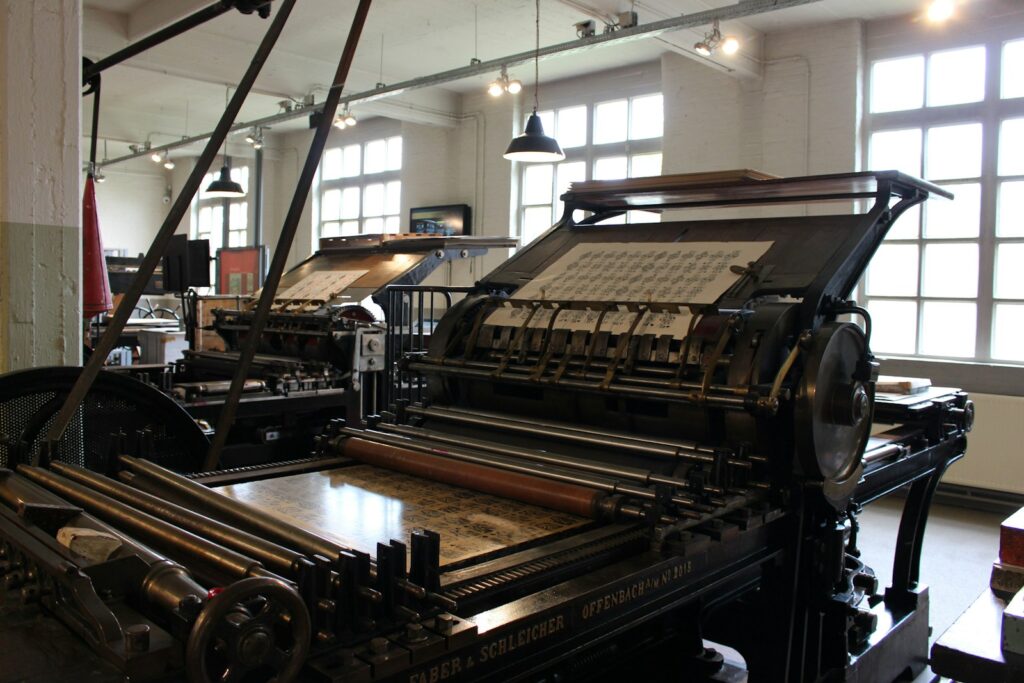
Venice has a long history of printing, engraving and publishing. Contemporary artists continue this tradition in small workshops, sometimes using hand-operated presses and techniques that have changed relatively little over centuries.
A working studio, known as an atelier, bottega or stamperia d’arte, may combine production, teaching, exhibitions and sales within the same space.
Unlike a conventional souvenir shop, a studio may contain printing equipment, drying racks, paper stocks, original plates and works at different stages of production.
These are useful signs, although the presence of a printing press alone does not establish the origin of every artwork being sold.
Look for a studio that can explain:
- Who designed the artwork and who printed it.
- Which technique was used to produce the image.
- Whether the work was created on the premises or elsewhere.
- How many impressions belong to the edition.
- Whether the artwork is signed, numbered or accompanied by documentation.
- Whether the piece is ready to take home or needs additional finishing.
Some professional printshops collaborate with several artists. The original artist and the specialist printer may be different people. This is an established part of fine-art printmaking, so the important question is whether those roles are explained accurately.
Venice’s official tourism platform, Venezia Unica, provides information about Venetian craft traditions and studio-related events. It is a useful starting point for understanding the city’s active artisan community.
Should You Book a Studio Visit or Simply Walk In?
You do not necessarily need a reservation to purchase a finished print.
Some ateliers operate regular retail hours and welcome visitors who want to browse. Others primarily function as production spaces and arrange visits around their work schedules.
There are three common ways to visit:
Casual browsing
This suits travelers who already know they want to buy a finished artwork. You can examine available pieces, compare sizes and discuss prices without arranging a formal activity.
Allow approximately 30 to 45 minutes if you want to look carefully at several works and ask questions. A quick purchase may take considerably less time.
Before walking across Venice, check that the studio has an actual retail space and welcomes visitors during its published hours.
A private viewing
A scheduled viewing is useful when you are interested in a particular artist, need a larger piece or want to examine several works from a limited edition.
It also makes sense if you are buying for an existing collection and need documentation, exact measurements or information about the printing process.
Ask whether the artist will be present, whether a private viewing costs anything and whether the studio can prepare specific works for inspection.
A printmaking demonstration
Some studios offer demonstrations showing how an engraved plate or another printing surface produces a finished impression.
This may be a short presentation or a more involved private session. A demonstration may have a separate fee and does not automatically include an artwork.
Ask whether visitors can watch the full printing process, how long the demonstration lasts and whether any equipment or work areas are restricted.
If your main interest is owning an artwork rather than learning the craft, a normal studio visit may be sufficient.
How to Choose the Right Original Print
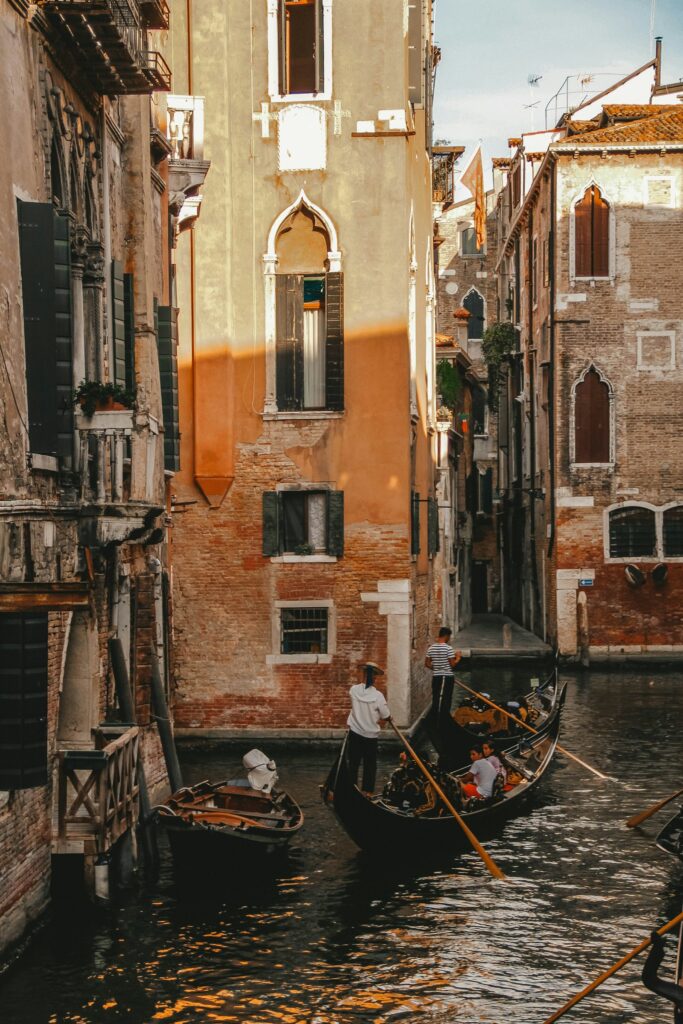
Begin with the artwork itself. Venice provides plenty of familiar subjects, including canals, bridges, gondolas, churches and the lagoon. Contemporary artists also explore everyday details, architectural patterns and less recognizable aspects of the city.
The technique, paper and edition size deserve as much attention as the subject.
Check the edition number
A limited-edition print might carry a marking such as 8/30. This generally identifies the impression as number eight from an edition of thirty.
However, an edition can also include artist’s proofs and other impressions outside the numbered series.
Italian terminology worth recognizing includes:
- Tiratura: The number of impressions produced in an edition.
- Prova d’artista (P.A.): Artist’s proof, usually identified separately from the numbered edition.
- Prova di stampa: A trial or proof impression.
- Firmata: Signed.
- Numerata: Numbered.
- Opera originale: Original artwork.
- Riproduzione: Reproduction.
Ask whether the edition is complete, whether further impressions are planned and how artist’s proofs are accounted for.
Do not assume every authentic print must be numbered. Some artists produce unique monotypes, small unnumbered editions or experimental works.
Look carefully at the signature
Artists often sign prints in pencil below the printed image. The edition number, title and date may also appear in the margin.
A signature reproduced as part of the printed image is different from a handwritten signature added to an individual impression.
Neither a pencil signature nor an edition number proves authenticity by itself. The studio should still identify the artist and explain the work’s origin.
For a more expensive purchase, request a written description containing the artist’s name, title, technique, dimensions, year and edition details.
Examine the paper and condition
Paper contributes significantly to a print’s appearance and longevity.
Traditional printmaking papers may have a textured surface, deckled edges or a visible impression from the plate. These characteristics can be part of the intended artwork.
Check for accidental creases, tears, stains, fingerprints, discoloration and damage around the edges.
Ask whether the paper is archival quality and whether the work has been stored appropriately.
Most importantly, distinguish between intentional characteristics of handmade printing and damage that occurred afterward. Slight variations in inking can be normal, while a water stain is a different matter.
What Determines the Price?
There is no standard price for original prints sold by Venetian studios. The amount depends on the artist, technique, edition, dimensions, materials and how much work is involved in producing each impression.
A small, unframed linocut may cost considerably less than a large, detailed etching requiring extensive preparation and careful printing.
Important price factors include:
- Edition size: Smaller editions may command higher prices, although limited availability alone does not establish artistic quality.
- Artist’s reputation: Established artists may have higher prices than emerging printmakers.
- Printing technique: Complex multi-stage printing can involve more labor and materials.
- Paper and dimensions: Larger sheets and specialist papers can increase production costs.
- Hand coloring: Individually colored impressions may require additional work.
- Framing: Professional mounting, glazing and framing may be quoted separately.
- Documentation and delivery: Certificates, special packaging, insurance and international shipping may affect the final amount.
Ask for the complete price of the exact impression you are examining. If the studio displays both framed and unframed versions, check which one the price refers to.
A lower-priced reproduction can be a reasonable purchase when you simply want an attractive image of Venice. There is no reason to pay an original-print premium unless the medium, authorship and production process matter to you.
What to Ask Before Paying
Most misunderstandings can be avoided with a few questions before the transaction.
- Is this an original print created through a printmaking process, or a reproduction?
- Who is the artist, and who produced the impression?
- What is the printing technique?
- Is it part of a limited edition? How many impressions and proofs exist?
- Is the signature handwritten or printed?
- What are the full paper dimensions and actual image dimensions?
- Does the price include VAT and protective packaging?
- Is the displayed impression the exact one I will receive?
- Is a receipt or certificate identifying the work included?
- Can I take it away today, or will I need to arrange collection or delivery?
- What happens if the work arrives damaged or differs from the agreed description?
For valuable purchases, photograph the artwork and its signature with the seller’s permission. Keep the invoice and any written description together.
Taking Your Print Home: Flat Packing, Tubes and Shipping
Paper artwork is relatively easy to transport compared with Venetian glass, but careless packing can permanently crease or damage a print.
Carrying a print yourself
For smaller pieces, a rigid, appropriately sized art folder is often the simplest solution.
Ask the studio to place the print between protective archival-quality sheets and firm backing boards. The artwork should not slide around inside the package.
For larger works, a sturdy tube may be suitable if the paper and printing medium can safely tolerate rolling. Roll only in the direction and manner recommended by the studio.
Some prints should remain flat because of their paper, ink, surface texture or condition. Never assume every artwork can be rolled tightly.
Check the external dimensions of the folder or tube against your airline’s cabin-baggage rules. A long tube is not automatically permitted as an additional free item.
In Venice, keep paper artwork protected from rain and spray during boat journeys. Do not leave a valuable sheet inside an unprotected shopping bag while crossing the city in wet weather.
Should you buy a framed print?
An unframed print is usually more convenient for international travel.
Framing increases the package’s dimensions and weight, while glass creates additional breakage risk. A framed artwork can also be harder to fit into aircraft baggage.
If you are purchasing an original impression, ask whether the artist recommends a particular mount or frame size. You can then arrange professional framing after returning home.
Do not trim the original paper margins merely to fit a convenient frame or suitcase. Margins may contain the artist’s signature, edition number and other valuable information.
International shipping
For a large or expensive artwork, shipping directly from the studio may be more practical than carrying it through airports and hotels.
Request a written shipping quotation that identifies:
- The destination address and postal code.
- Whether the artwork travels framed or unframed.
- The packaging method and any packaging charge.
- The carrier and whether tracking is provided.
- The estimated dispatch and delivery periods.
- Insurance coverage and exclusions, particularly for original artwork.
- Who handles damage or loss claims.
- Any import duties, taxes or customs clearance charges payable by the recipient.
Import requirements depend on the destination country and the circumstances of the sale. Ask the studio to describe the artwork accurately on shipping documentation and check your home country’s import rules.
Italy also regulates the movement of certain artworks and cultural property. Depending on a work’s age and category, documentation or authorization may be required even for a purchase made legitimately in a studio. The Italian Ministry of Culture’s cultural-property circulation guidance explains the relevant procedures, including documentation for contemporary works and different rules for older items.
For an older or historically significant print, establish who will handle the necessary paperwork before agreeing to an international shipment.
Where to Fit a Studio Visit Into Your Venice Day
Working printshops can be found in different parts of Venice, including Cannaregio, Santa Croce and Dorsoduro. They may be located along canals, within residential streets or behind entrances that are easy to overlook.
Venetian addresses use sestieri, or district names, together with civic numbers. The numbers do not always follow the straightforward street-by-street pattern that visitors expect.
Ask for the full address, a map pin and the name of the nearest recognizable campo (square) or fondamenta (canal-side walkway).
A studio may have one entrance for retail visitors and another for its working area. Confirm where you should arrive, especially if you have reserved a demonstration.
If you are traveling from another part of the city, check public transport using the official ACTV waterbus route maps. Allow time to walk from the vaporetto stop and cross any intervening bridges.
It is usually unnecessary to arrange a private water taxi solely to visit a small printshop. Walking and public waterbuses will generally be more practical unless your mobility needs or other arrangements justify private transport.
Children, strollers and accessibility
Families can often browse finished artworks together, but working printmaking areas require more care.
Presses, sharp engraving tools, inks and other equipment may be present. Children should not handle equipment or enter restricted areas without permission.
If you are bringing a stroller, ask whether there is enough space to move around safely and whether it must remain near the entrance.
For visitors with reduced mobility, confirm step-free access, doorway widths and whether the viewing area is on the ground floor. An accessible vaporetto stop does not guarantee an accessible walking route or studio entrance.
A private viewing may be useful when a studio can prepare artworks at an accessible table, but this arrangement should be confirmed beforehand.
Commissioning a Print or Requesting a Different Edition
If you like an artist’s style but cannot find the right subject, size or color, you can ask whether commissions are accepted.
Commissioning an original print involves considerably more than producing another copy of an existing image. The artist may need to develop a design, prepare a printing surface, test impressions and complete the final edition.
Provide the studio with:
- The subject or location you would like depicted.
- Your preferred printing technique, if you have one.
- The approximate image and paper dimensions.
- Your preferred colors or visual style.
- Whether you want one impression or a numbered edition.
- Your budget and required delivery date.
- Your shipping destination if you will have left Venice.
Ask for a written quotation stating what is included, whether revisions are possible, the expected completion period and when payment becomes due.
A deposit may be requested, but there is no universal deposit percentage for independent artists. Confirm whether it is refundable and what happens if the finished work cannot be delivered as agreed.
Also establish whether the artist may produce or sell additional impressions of the commissioned design. Purchasing one print does not automatically give you ownership of the artwork’s copyright or exclusive reproduction rights.
If you only want a print that is already in stock, avoid commissioning new work unnecessarily. Buying an existing impression is generally simpler and avoids production deadlines.
Planning a Studio Visit Around Other Activities
A printshop visit fits naturally into a day exploring Venice’s artisan neighborhoods, particularly if you are already interested in bookbinding, paper-making, engraving or other local crafts.
For a broader look at locally made purchases, the Italy on Foot Venetian shopping guide covers different types of traditional goods and where to look for them.
If you would rather make your own printed artwork, the separate guide to printmaking workshops in Venice explains the techniques, class formats and practical booking considerations.
You can use the Italy on Foot trip planner to organize a studio appointment alongside your walking route, museum visits and transport arrangements. Include a return visit in your schedule if the studio needs additional time to prepare or pack the artwork.
For travelers on a short stay, arranging a studio visit earlier in the trip offers more flexibility if the artist is absent, the desired print needs finishing or a second collection is required.
Returns, Cancellations and Common Buying Problems
Before paying, distinguish between buying a finished print in person, ordering one online and commissioning a personalized artwork. The rules and contractual arrangements may differ.
Under EU consumer rules, a customer generally does not have an automatic right to return an item bought inside a physical shop simply because they have changed their mind.
Distance purchases normally have a 14-day withdrawal right, subject to exceptions. Goods made to a customer’s specifications or clearly personalized may be excluded from that right.
These rules are explained on the European Union’s official consumer returns guidance.
Consumer remedies for faulty goods or items that do not match their description are a separate matter.
Before purchasing, ask the studio to confirm its applicable refund, exchange and cancellation conditions in writing.
If the studio is closed when you arrive
Check whether your appointment was confirmed for the correct date and whether you have reached the proper entrance.
Contact the studio using the telephone number or other contact method supplied in your confirmation. A printed opening-hours notice or an older online listing may not reflect a temporary closure.
If you prepaid for a private viewing or demonstration that cannot take place, ask for a new appointment or a refund according to the agreed booking terms.
If your chosen print is no longer available
Ask whether another impression from the same edition exists.
Do not assume the studio can simply print more copies of a sold-out limited edition. Producing additional impressions may conflict with the edition arrangements under which earlier works were sold.
If the artist offers a different edition, size or technique, confirm how that work differs before accepting the substitution.
If a shipped print arrives damaged
Photograph the outer packaging, inner protective materials and damaged artwork before discarding anything.
Contact the seller promptly, provide the order details and explain the damage. Keep all packaging until the seller or carrier confirms whether it is needed for a claim.
Check the carrier’s reporting deadlines and the seller’s obligations under the sale agreement. Avoid attempting to flatten creases, remove stains or repair damaged paper yourself.
Caring for Your Print After You Return Home
Good storage and framing help protect original artwork over the long term.
The Library of Congress guidance on caring for works on paper recommends stable environmental conditions, limited light exposure and suitable protective storage materials.
For a newly purchased print:
- Keep it away from direct sunlight and intense light.
- Avoid damp rooms, excessive heat and sudden environmental changes.
- Use appropriate archival-quality mounting and backing materials.
- Do not allow ordinary adhesive tape to touch the artwork.
- Ask a professional framer about suitable glazing and mounting methods.
- Preserve the original signature, edition markings and paper margins.
If the print traveled in a tube, ask a qualified framer to flatten and mount it safely. Do not force it flat under heavy objects or use heat.
The Details Worth Checking Before You Leave the Studio
Once you have chosen an artwork, take a moment to verify exactly what you are receiving.
The print should match the agreed image, technique, edition and condition. You should know the artist’s name, have the correct invoice and understand any documentation accompanying the piece.
Check the packaging before leaving, particularly if you will be walking around Venice for several hours or traveling onward by train or plane.
If the studio is arranging delivery, keep the written order confirmation, destination address, expected dispatch arrangements and contact details.
The most reliable purchase is one where you understand the artwork’s origin, know precisely which impression you are buying and have a practical way to get it home safely. If a seller cannot clarify whether a supposed original is actually a reproduction, request a written description before making a decision.