Do not book a Venice hotel from an “accessible” label alone. The key question is whether you can travel from your actual arrival point to reception, your room and the bathroom without encountering a bridge staircase, entrance step or inaccessible lift. For Venice step-free hotel access, the last 100 metres can matter more than the hotel’s star rating. Ask for the exact route from the nearest vaporetto stop or water-taxi landing, and get the answer in writing before you pay a non-refundable rate.
Venice is unusually tricky because accessibility has three separate parts: getting to the right island by boat, getting from the boat stop to the building, and getting from the entrance to the room. A hotel may handle the third part well while the second part includes a stepped bridge.
The first question: is the route from the vaporetto stop to the hotel completely step-free?
Ask the hotel to name the exact ACTV vaporetto stop they recommend for a guest who cannot use stairs. “Five minutes from Rialto” or “close to Santa Lucia” is not enough. Venice walking times ignore the thing that matters most here: bridges.
The city’s official accessibility material explains that Venice is divided into islands connected by hundreds of bridges, and that public water transport makes many areas reachable without having to cross every bridge on foot. The useful unit is therefore not distance but which side of each canal you arrive on. The Comune di Venezia publishes an Accessible Venice map showing areas reached by public transport and bridges with accessibility features. Treat it as a planning aid, then confirm the final route with the hotel because bridge works, temporary ramps and local access conditions can change.
Ask the property to answer all of these points:
- Which vaporetto stop should I use?
- Does that stop have more than one landing, such as A, B, C or D, and which landing should I exit from?
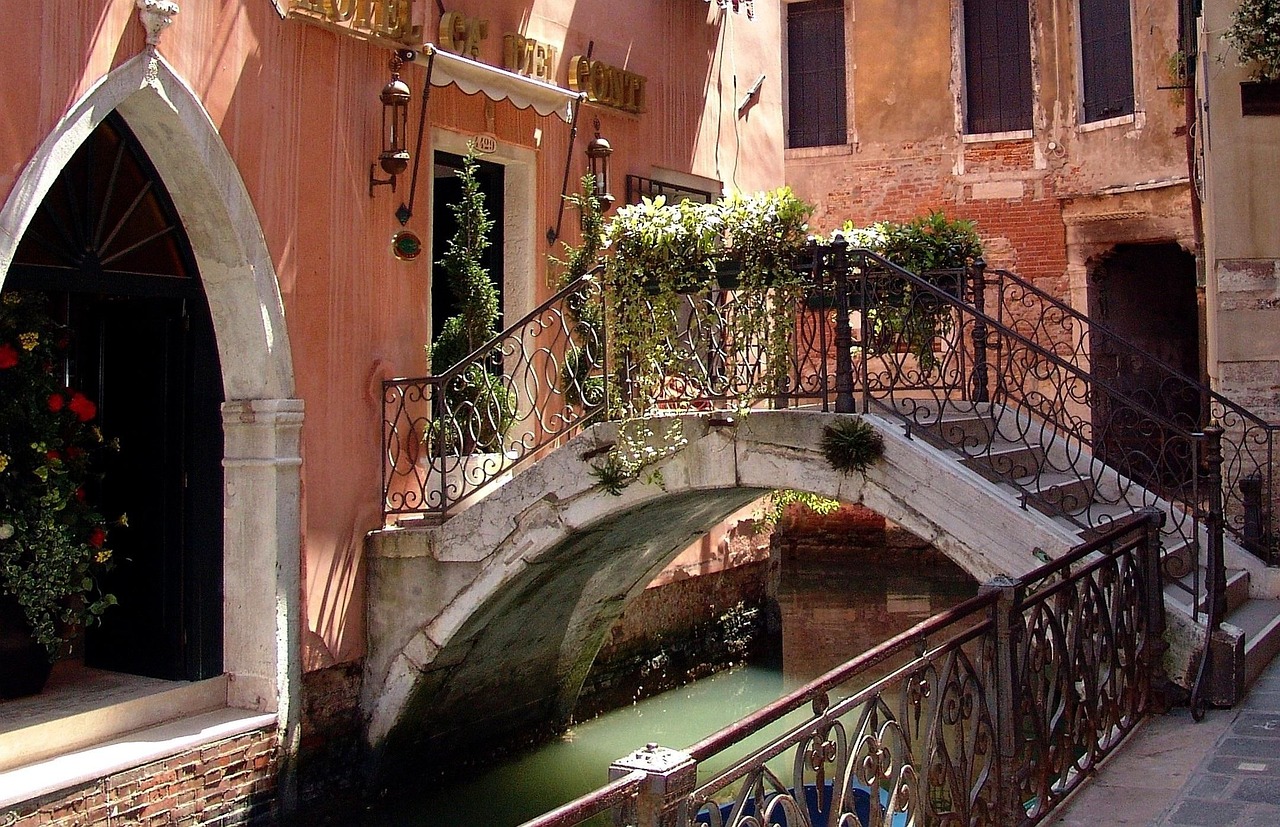
- How many bridges are between that landing and the hotel entrance?
- Are any of those bridges stepped?
- If a bridge has a ramp, is that ramp permanent or temporary?
- Is there any single kerb, threshold or step before reception?
If the answer is “there is only one small bridge,” the route is not step-free. If someone in your party can manage a few shallow steps with assistance, that may still be workable, but it is a different requirement and should be treated as such.
Ask for a route description, not just a yes
A strong reply from a hotel sounds specific: “Get off at San Basilio, turn right along the fondamenta, there are no bridges, and our entrance has a level threshold.” A weak reply says, “Yes, we are accessible.”
Useful Venetian words make these instructions easier to understand. A fermata is a stop, an imbarcadero is the waterbus landing, a ponte is a bridge, a calle is a narrow street, a fondamenta is a waterside pedestrian street, and a campo is a square. A sottoportego is a passage running beneath a building. If the hotel sends a route using these terms, save it offline rather than relying only on a map app.
For general transport orientation, the Italy on Foot guide to getting around Venice explains how walking routes and vaporetti fit together. For mobility planning, however, ask the hotel to confirm every bridge on your specific last-mile route.
Do not assume a water taxi can stop at the hotel door
A private water taxi can remove a long walk and several bridges, but it does not automatically create a level route. Some hotels have a private water entrance. Others use a nearby public or shared landing, leaving a walk through calli and over bridges. Even at a private dock, the height difference between boat and landing can vary, and getting from the dock into the building may involve steps.
Before paying for a private transfer, ask:
- Does the hotel have its own usable water-taxi landing?
- Can the booked vessel carry your particular wheelchair or mobility device?
- Can you board and leave the boat without climbing steps or transferring out of the chair?
- Is the route from the dock to reception level?
- If the hotel dock cannot be used, where will the taxi actually leave you?
Do not rely on “water taxi available” in a booking listing. It may describe a transport option, not an accessible transfer. The Italy on Foot article on taxis and water taxis in Venice is useful for understanding where road transport ends and boat transport begins.
Public boats are often the easier part of the journey
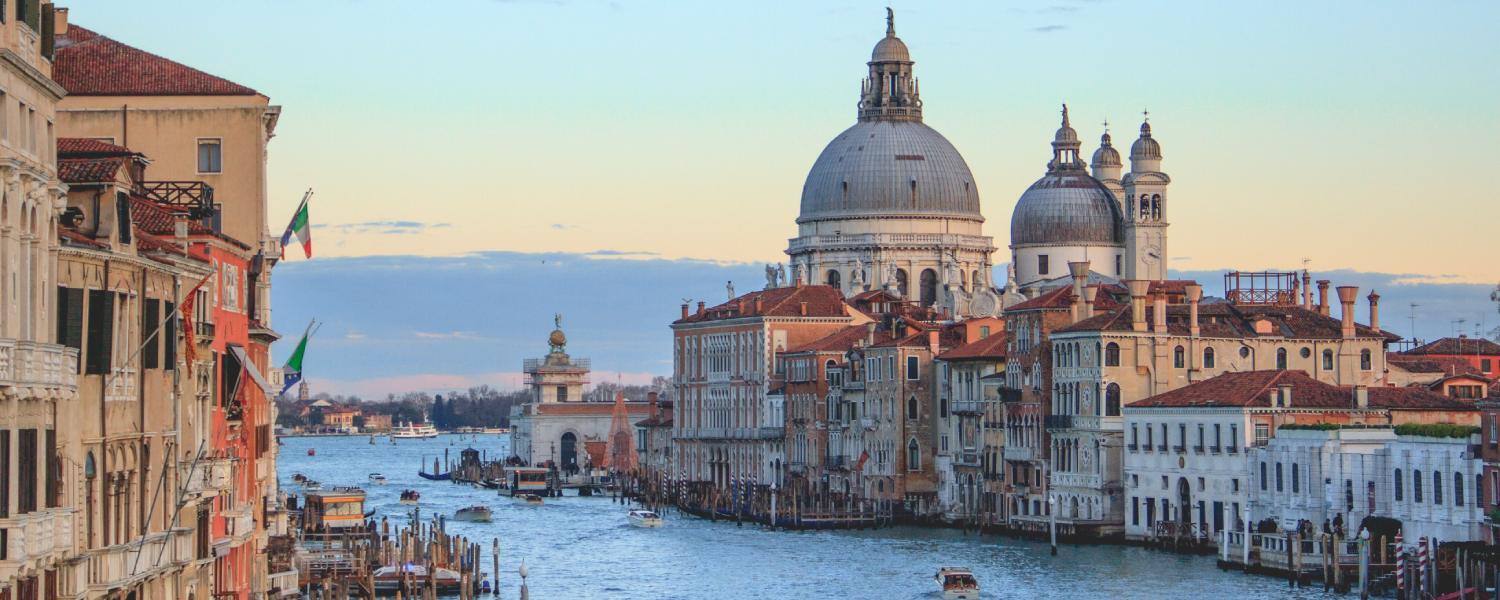
AVM/ACTV states that its waterborne services have designated wheelchair spaces and that navigation services can be used by wheelchair passengers. The municipality also states that vaporetto landing stages are accessible, although very high water can make access ramps excessively steep. Check the operator’s current accessible mobility information and navigation timetables shortly before travel.
This is why a hotel beside a convenient stop can be a better choice than one that appears closer to a major landmark. A room 80 metres from a landing with one stepped bridge may be less practical than a room 400 metres away on a continuous level route.
Questions about the hotel entrance and lift
Once the outside route is confirmed, check the building itself. Historic Venetian hotels often occupy converted palazzi, adjoining buildings or upper floors, so “lift available” does not necessarily mean the lift begins at street level.
Ask the hotel to confirm:
- Is there a completely level entrance, or a portable/permanent ramp?
- If a ramp is used, does staff need to install it?
- Is that entrance available 24 hours a day?
- Does the lift start on the same level as reception?
- Are there steps before or after the lift?
- What are the lift door width and cabin dimensions?
- Can your mobility device turn in the corridor and enter the booked room?
- Is breakfast, the bar or another service you need on an accessible level?
If you use a powered wheelchair or a larger mobility scooter, dimensions matter more than labels. Ask for measurements in centimetres and compare them with your chair at its widest and longest points. If the hotel cannot provide measurements, ask for clear photos of the entrance, lift doorway, lift cabin and room doorway.
The bathroom needs its own checklist
“Accessible bathroom” can describe very different layouts. Ask about the exact room category you are booking, not a generic accessible room somewhere in the property.
- Is the shower genuinely roll-in, or is there a raised tray or lip?
- Are there fixed or folding grab rails by the toilet?
- Is there clear transfer space beside the toilet?
- Is a shower seat fitted, or can one be supplied?
- Can the sink be approached from a seated position?
- Does the bathroom doorway have a threshold?
- Can the bathroom door be opened and closed while a wheelchair is inside?
If you need a particular bed height, hoist clearance, shower chair type or side of transfer, state that explicitly. “Wheelchair user” is not enough information for the hotel to know what works for you.
Ask what changes after midnight
Late arrivals expose access problems that daytime descriptions miss. A level side entrance may be locked overnight. A portable ramp may require reception staff. A service lift may operate only while staff are present.
If you expect to return late, ask whether the same accessible entrance and lift remain available at all hours. Also ask what happens if the main lift is out of service. In a small historic building, there may be no second lift and no alternative route to an upper-floor room.
For a trip with several hotel and transport decisions, you can organize the rest of your Italy route around the stops that actually work for your mobility needs rather than choosing accommodation by straight-line distance.
Acqua alta and temporary ramps can change a route
Venice’s high-water conditions can affect accessibility even when the normal route is level. Official city guidance notes that high tides can make the access ramps at waterbus landings too steep. Some bridge accessibility measures elsewhere in the city have also used removable or seasonal ramps rather than permanent structures.
Do not assume that a ramp shown in an old photo, review or map will be present on your travel date. If your stay falls during a period when high water is possible, ask the hotel which stop and entrance they recommend during acqua alta, and check current ACTV service information before setting out.
Luggage is a separate problem from personal mobility
Even with a step-free route, luggage can make boarding and narrow passages harder. Ask whether hotel staff can meet you at the nearest landing and handle bags. If you use a porter, be clear that you are arranging luggage assistance, not physical lifting or carrying of a wheelchair user over bridges.
Keep medication, mobility-device chargers, transfer aids and anything you cannot be without in a small bag that stays with you. Do not send those essentials ahead with checked luggage or a porter.
What to send the hotel before you book
You can get a much clearer answer by sending one precise message instead of asking, “Is the hotel wheelchair accessible?” Include your actual equipment and arrival method.
Please confirm the following for the exact room I am considering:
- The name of the vaporetto stop or water-taxi landing I should use.
- Whether the route from that point to your entrance has zero bridges with steps and zero other steps.
- Whether the hotel entrance is level and available at all hours.
- The lift door width and cabin dimensions, and whether there are any steps before or after it.
- The room and bathroom doorway widths.
- Whether the shower is roll-in and whether the toilet has side transfer space and grab rails.
- Whether you can send photos of the entrance, lift and bathroom for this exact room category.
Add the width and length of your wheelchair, scooter or walker, whether you can transfer out of it, and whether you can manage any steps with assistance. That gives the property a concrete standard to answer against.
How to judge the hotel’s reply
Book with more confidence when the property names the stop, confirms zero stepped bridges, gives measurements, identifies the exact accessible entrance and sends current photos.
Ask again when the reply says “only a few steps,” “staff can help,” “very close to the station,” or “wheelchair friendly” without describing the route. Those phrases may still describe a workable stay, but they do not prove a continuous level path.
Choose another property if staff cannot tell you which bridge lies between the stop and the hotel, cannot confirm whether the lift is reached without stairs, or cannot identify which room has the bathroom features you need. In Venice, uncertainty about one bridge or one threshold is enough to turn an apparently accessible booking into an unusable one.