In Venice’s historic center, a number such as Cannaregio 2457 is not house 2457 on a street called Cannaregio. Cannaregio is the sestiere, or district, and 2457 is part of one continuous civic-number sequence covering that whole district. Venice addresses therefore work differently from the usual Italian pattern of street name plus house number. For finding a hotel or apartment, keep the sestiere and number together, then use the calle, campo, canal, bridge, or nearby landmark to guide the final few minutes.
The system looks chaotic until you know what information matters. The six historic sestieri each have their own numbering sequence, and the Comune di Venezia treats the combination of sestiere + civic number as more important than the street name. That matters because street names can repeat in different parts of the city, and sometimes even within the same sestiere.
What an address such as San Polo 277 actually means
The Comune di Venezia’s official explanation of civic numbering gives the historic-center format as:
Sestiere / civic number / street name as secondary information
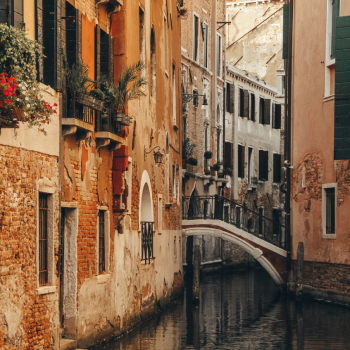
So an address might be written in a form such as:
San Polo 277, Calle dei Preti
Here, San Polo identifies the district and 277 identifies the entrance within San Polo’s district-wide sequence. Calle dei Preti helps describe the physical location, but it does not create a separate Calle dei Preti numbering sequence.
This is why looking for “number 277” while walking along a calle can be misleading. The next buildings on that same lane are not necessarily numbered 275, 276, 277, 278 in the familiar street-by-street pattern.
The six sestieri you need to recognize
The historic center has six districts:
- Cannaregio
- Castello
- Dorsoduro
- San Marco
- San Polo
- Santa Croce
Each has its own progressive civic numbering. That means San Marco 1500 and Castello 1500 are completely different locations. Dropping the district name and keeping only the number removes the most useful part of the address.
If these district names are still unfamiliar, the Italy on Foot guide to where to stay in Venice explains where each sestiere sits and how they differ for travelers.
Why the street name alone may not save you
Venice uses names such as calle, campo, campiello, fondamenta, salizada, rio terà, and ramo instead of relying only on ordinary streets and squares. You will see these names painted on the characteristic white wall signs known as nizioleti.
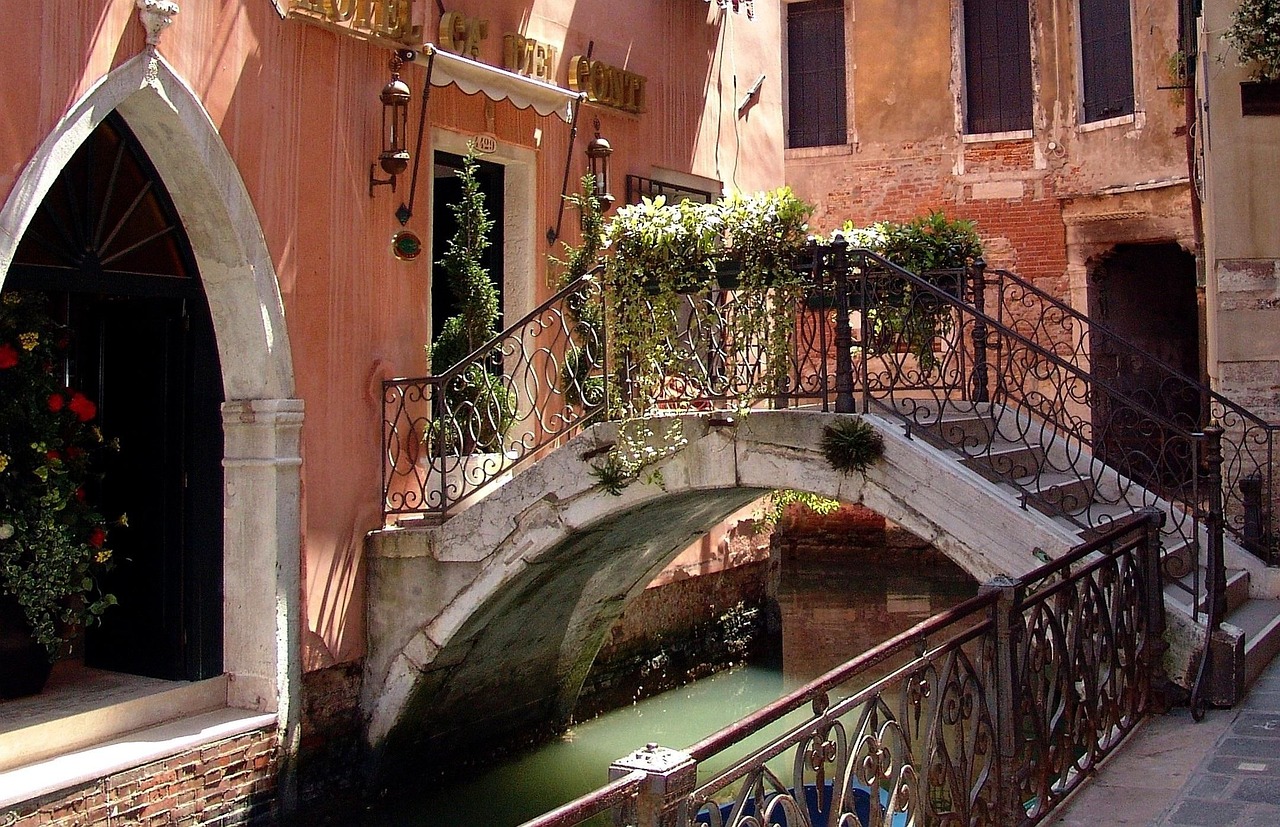
The problem is that some names repeat. The Comune specifically notes this as one reason the sestiere and civic number take priority in the official address structure.
For a visitor, the safest rule is simple: never navigate using only a generic calle name if you also have a district and civic number.
How to find a hotel or apartment step by step
- Save the complete address before arriving. Keep the sestiere, civic number, street or square name, and accommodation name. A screenshot is useful if your connection becomes unreliable.
- Identify the nearest vaporetto stop or major landmark. Getting into the correct part of Venice first is far easier than trying to follow civic numbers across the district.
- Use your map for the broad route. Search the accommodation name first. If that fails, try the sestiere and number together, then try the fuller address supplied by the property.
- Switch from GPS to physical signs for the last streets. Look for the names painted on walls and signs toward major destinations such as Rialto, San Marco, Ferrovia, or Accademia.
- Only start hunting for the civic number when you are close. Numbers are attached or painted near building entrances. Walking half a district while watching the numbers is much less useful than reaching the correct calle or campo first.
- Check the door carefully. Hotels and apartments may occupy only part of a larger building, so the property name can be less prominent than the civic number, doorbell, or small plaque.
Do not assume nearby numbers mean nearby doors
A normal address system trains you to think that number 42 should be near 40 and 44 on one street. That instinct is unreliable here because the sequence belongs to the entire sestiere rather than restarting on every calle.
Two numbers that look numerically close can still require turns, bridges, or a different lane to reach. Conversely, a building that looks physically close across a canal may require a surprisingly indirect walking route because the nearest bridge is elsewhere.
Use the number as an identifier, not as a compass.
What the Venetian words on your directions mean
- Calle: a street or narrow lane.
- Campo: a square. Venice traditionally uses campo for most squares rather than piazza.
- Campiello: a small square or courtyard-like space.
- Fondamenta: a walkway running alongside a canal.
- Salizada: historically a paved street, now simply part of the local street-name vocabulary.
- Ramo: a short branch or side lane.
- Rio terà: a street created where a canal was filled in.
- Sotoportego: a passage running underneath part of a building.
- Ponte: bridge.
- Sestiere: one of the six historic districts.
Knowing these terms is useful because a property’s directions might say something like “cross the ponte, continue along the fondamenta, then turn into the second calle.” That can be clearer on the ground than a map instruction telling you to turn onto what appears to be an insignificant alley.
Use the accommodation name as well as the formal address
For hotels, restaurants, museums, and established businesses, searching by name is often easier than typing the civic address manually. Map databases already associate the business with a geographic point, bypassing some of the ambiguity in Venetian street naming.
For private apartments, guesthouses, and self-check-in rentals, keep more detail. Ask for or save:
- the full civic address;
- the nearest vaporetto stop;
- the name of the nearest campo, church, bridge, or well-known business;
- a photograph of the entrance if the host provides one;
- the doorbell or apartment name;
- instructions for the final turns from a recognizable landmark.
This is particularly valuable after dark, when a tiny apartment plaque can be much harder to spot than a large hotel sign.
Arriving with luggage changes the best route
The shortest walking route on a phone is not necessarily the easiest route with a suitcase. A difference of a few hundred meters can be worth accepting if it removes several stepped bridges.
Before choosing where to leave the vaporetto, check both the walking distance and the number of canal crossings. The Italy on Foot guide to getting around Venice is useful for deciding when to walk and when a water-bus ride saves enough carrying to be worthwhile.
For a complicated arrival, work backward from the property rather than automatically getting off at the stop that looks geographically closest. A stop on the correct side of a canal can produce a much easier luggage route.
What to do when Google Maps appears to be wrong
Do not keep following a blue dot into increasingly implausible alleys. Venice has tiny passages, covered routes, private courtyards, bridges, and canals that make last-minute GPS positioning imperfect.
If the route stops making sense:
- return to the last calle, campo, or fondamenta you can identify by name;
- confirm that you are still in the correct sestiere;
- search the property’s name rather than only its street address;
- compare the next street name with the wall signs;
- use the property’s arrival instructions for the final turns.
If you are organizing several stops across different districts, you can also build your Italy itinerary around recognizable landmarks and transport stops rather than treating civic numbers as normal street numbers.
Giudecca has its own numbering system
Giudecca is an important exception to understand. It is not one of the six historic sestieri in the numbering system described above. Instead, the island has its own progressive civic-number sequence.
An address may therefore begin simply with something such as Giudecca 155, followed by a smaller local place name. The same practical method applies: keep “Giudecca” attached to the number, use the nearest vaporetto stop for the main approach, and use local street information for the final walk.
The unusual system does not apply everywhere in the municipality
Do not assume every address labeled “Venezia” follows historic-center rules. The municipality covers areas with several different systems.
The Comune states that Sant’Elena uses a conventional street-name-plus-number format. Sacca Fisola does too. Murano uses ordinary street-based numbering, while Giudecca has its island-wide progression. The Lido and mainland parts of the municipality also use the more familiar street-and-civic-number structure.
Burano has yet another arrangement, with several named zones and their own progressive numbering. In other words, learn the sestiere system for central Venice, but do not force it onto every lagoon island.
The mistake that causes the most trouble
The easiest way to get lost is to separate information that belongs together. Someone tells you “the hotel is number 3245,” you type 3245 into a map, and the number seems useless. It is useless on its own.
Keep the complete location in layers:
district or island + civic number + local street name + nearby landmark or vaporetto stop.
That combination turns an address that initially looks nonsensical into a workable set of directions. Reach the right district first, follow named calli and landmarks second, and look for the painted civic number only when you are close to the correct doorway.