Visiting the Colosseum is a highlight of any trip to Rome, but it is also among its most misunderstood attractions. Many travelers arrive without realizing that entrance is timed, tickets are limited, names are printed on them, and rules are strictly enforced. This often leads to frustration, long waits, or paying far more than expected. A little preparation makes a huge difference here, and this article walks through all of it: where to buy, which option to pick, when to go, what you cannot bring, what you actually see inside, and how the ruins next door fit into the same day.
Before anything else, it helps to understand that the Colosseum is not a walk-up attraction where you casually buy a ticket and wander inside at your own pace. Access is controlled to protect the site and manage the public, and that affects how you should organize your day. If this is your first time in Rome, you may also want to look at a broader route to see how the amphitheater fits into the rest of your stay. A helpful starting point is this Rome in three days itinerary, which shows how to balance major sights without rushing.
- Why it is not a walk-up attraction
- Buy your tickets the right way
- Choose the best time slot for your visit
- Security rules and what you cannot bring
- Getting there and finding the right entrance
- What you see inside: levels, floor and underground
- The Forum and the hill on the same pass
- Free days and what to expect for visitors
- Guided tour or on your own?
- A simple route for one day
- Questions people ask before going
Why the Colosseum is not a walk-up attraction
Another important thing to keep in mind is location. The Colosseum sits right next to the Roman Forum and Palatine Hill, and every standard pass covers all three. This means your day is not just about one monument but an entire archaeological area, run as a single site by the Parco archeologico del Colosseo. Knowing this ahead of time helps you organize meals, rest breaks, and nearby stops. The site is large, mostly outdoors, and involves a fair amount of walking on uneven stone paths. Comfortable shoes, water, and realistic expectations are essential. Many people underestimate how tiring it can be, especially in warmer months.
The other thing to grasp early is that the amphitheater itself has a clock on it. Your booking gives you a slot and a maximum stay inside the building, 75 minutes on the standard pass, and staff do count. Entry to the ruins next door is a single passage through a gate, with no time limit once inside. Understanding how long you are allowed to stay inside the Colosseum and how to organize the rest of your time is what turns a stressful morning into an enjoyable one. For an overview of what each part of the complex is, see the three parts of the complex explained.
Buy your Colosseum tickets the right way
Use the official website only
The safest and most affordable way to buy is through the official ticketing platform of the Parco archeologico del Colosseo. This is the only place where you can see the real base prices and the full range of official options. Buying here helps you avoid inflated prices, unclear inclusions, and confusing bundles that are common elsewhere, and it is also the only site that sells the reduced fare for EU citizens aged 18 to 25 and the free child passes.
Sales open 30 days before the date, in the morning Rome time, and the most popular slots for the underground and arena passes can go within minutes in high season. Standard slots last longer, sometimes days, but by the week of your visit a sunny Saturday in May will show almost nothing. This is normal and does not mean tickets are unavailable altogether. It usually means you need to check a different hour, an early or late slot, or a nearby date, and refreshing the page in the morning often turns up returns.
All standard tickets require you to choose a specific time for the Colosseum. This is not flexible. The official rule is that it is not possible to enter at a different time from the one booked, and if you arrive late you may be denied with no refund. For this reason, it is smart to be at the gate at least 30 minutes before your slot. Security checks take time, and lines can move slowly even when everyone already has a booking.
Understand the names and what they actually include
One of the most common mistakes travelers make is assuming that all the passes offer the same thing. In reality, the name on the booking matters a lot. The standard pass, called 24h Colosseum, Roman Forum and Palatine, allows a single timed entry to the amphitheater and a single entry to the Forum side within 24 hours before or after it. Your time inside the Colosseum itself is limited to 75 minutes. Once that is up, you must leave, even if you feel you have not seen everything. This rule is strictly enforced.
| Ticket | Price online | Valid for | Colosseum stay | What you get |
|---|---|---|---|---|
| 24h Colosseum, Roman Forum and Palatine | €18 full, €2 reduced, free under 18 | 24 hours | 75 minutes | First and second levels with the panoramic terraces, the small display inside, and the ruins next door |
| Full Experience Arena | €24 | Two consecutive days | About 90 minutes | Everything above plus the reconstructed floor and the SUPER sites |
| Full Experience Underground and Arena | €24 | Two consecutive days | About 90 minutes | The corridors under the floor, the floor itself, the levels above, and the SUPER sites |
| Forum Pass SUPER | €24 | 24 hours | No Colosseum | The Forum, the hill, the Imperial Fora and the special houses, without the amphitheater |
| Only Arena | See the official site | 24 hours | 20 minutes | A short walk onto the floor of the arena, then the ruins next door; it does not include the upper levels |
The two-day passes cost only a few euros more and are the ones to chase if you care about the underground, which is the most interesting part of the building for most people. The Only Arena option is the one people misunderstand: many buy it thinking it includes the full route, and it does not. If you want to see the structure from several levels, the standard pass or a two-day pass is the better choice. Prices are the official 2026 fares, and a small booking fee, the prevendita, applies online. If you are wondering whether you can see anything for nothing, our note on whether you have to pay to see the Colosseum answers that.
Tickets are personal and ID matters
Another detail many travelers overlook is that every pass is nominativo. Your name is printed on them, and staff check a valid photo ID against it at the gate. If the two do not match, you risk being turned away. For visits from May 2026 onward the name can be changed only once, and only by midnight seven days before your date, and only for a spelling error, a wrong pass type or a documented emergency. This is not something you can fix on the spot. Our separate note on the 2026 name change rules has the details.
For groups or families, this means entering correct names for everyone at the time of purchase. Double-check spelling before confirming payment. It may seem like a small detail, but it is among the most common reasons people have problems at the entrance. Taking a few extra minutes during booking can save a lot of disappointment later. Under-18s travel free but still need their own named booking, and a child’s passport or ID card is checked like anyone else’s.
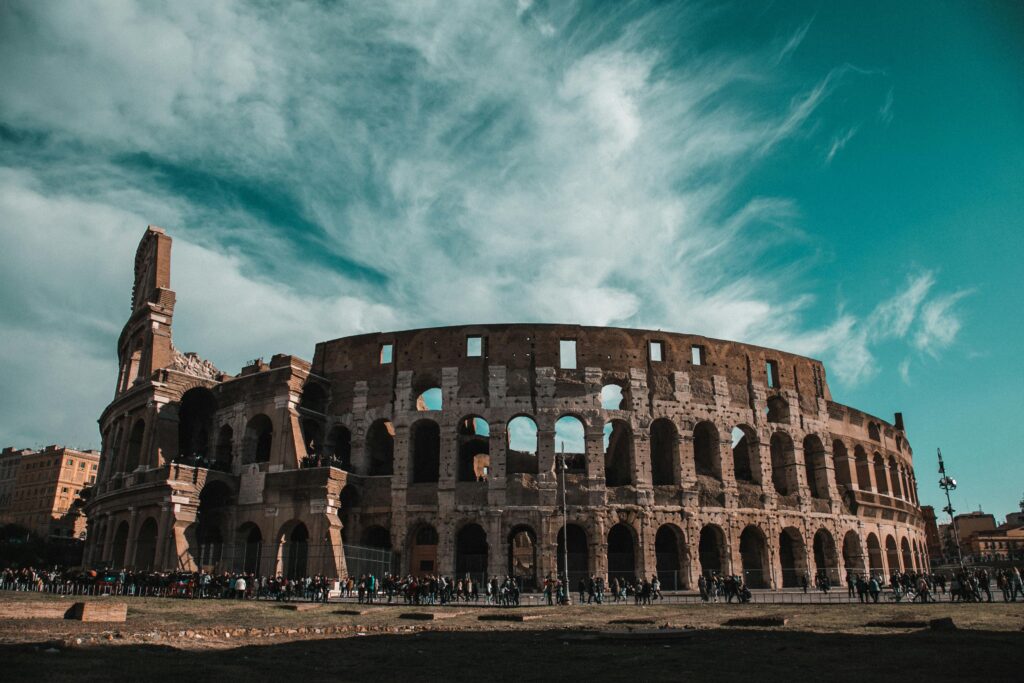
Choose the best time slot for your visit
The time you choose for your Colosseum slot shapes your entire day. The first slot at 8:30 is the quietest inside the building and the coolest in summer, and it leaves the rest of the day for the Forum. Midday slots can be more tiring, especially in warmer periods, but they sometimes have better availability. Late afternoon entrances are beautiful for light and photos, and the last hour before closing is the second quietest, but you must keep an eye on the clock because the gates next door shut at the same time.
Because your time inside is limited, it helps to decide in advance what you want to focus on. Some people like to walk slowly and read every panel. Others prefer to take photos and enjoy the scale of the building. Knowing your style helps you make the most of your 75 to 90 minutes. After leaving the Colosseum, you can usually take your time in the Forum and on the slopes above it, where there is more freedom to wander and rest. This is a good place to slow down and enjoy the atmosphere without watching the clock constantly.
Opening hours through the year
The site follows the sun. From late March to the end of September it opens at 8:30 and closes at 7:15 pm, with last entrance an hour before. In the first half of October the last entrance moves to 5:30 pm, and from late October to the end of February it is 3:30 pm with the gates closing at 4:30 pm. The Forum side opens half an hour later than the amphitheater, at 9:00. The whole complex is closed on 25 December and 1 January. Check the official opening times page close to your date, because the winter switch follows the clocks changing rather than a fixed calendar date.
Consider splitting the Colosseum day in two
If your pass allows the rest of the site at any point in the 24 hours, you do not need to see everything at once. Many travelers benefit from taking a break between the Colosseum and the rest of the site. You might book lunch nearby, return later, or even visit the Colosseum in the morning and the Forum the next morning on a two-day pass. This approach helps avoid fatigue and makes the day more enjoyable, especially for families or anyone who prefers a relaxed pace. In July and August it is close to essential: the Forum has almost no shade, and our summer shade walk for Rome explains how to time it.
Security rules and what you cannot bring
The Colosseum has airport-style security, and all visitors pass through metal detectors and a bag scanner. Certain items are not allowed inside, and this is among the biggest reasons people are delayed or turned away. Large backpacks, wheeled luggage, glass bottles, alcohol, aerosols and sharp objects are not permitted, and tripods and selfie sticks are refused at the gate. There is no cloakroom and no left luggage on site, and relying on finding storage nearby at the last minute is risky. The best approach is to arrive with a small bag and only essential things.
Security staff are strict but efficient. If you follow the rules, the process is usually smooth. If you do not, you may lose valuable time or even miss your slot. This is especially important because the booked time cannot be changed. Families with strollers should also check the official rules, as certain parts of the building have limited access, although the main entrance is step-free and there is a lift to the second level for wheelchairs and pushchairs.
Water is the exception worth knowing. Plastic bottles are fine, and there are drinking fountains, the little nasoni, inside the Roman Forum and around the square outside, so bring an empty bottle and fill it rather than paying for water at the kiosks.
Getting there and finding the right entrance
The easiest way in is the metro. Line B stops at Colosseo, directly opposite the building, and since December 2025 the new Line C station at Colosseo-Fori Imperiali connects to it underground, with display cases of finds from the excavation along the corridors. Buses 51, 75, 85, 87 and 118 stop on Via dei Fori Imperiali or Piazza del Colosseo, and tram 3 stops beside the amphitheater on the Celio side. On foot, it is about 20 minutes from Piazza Venezia along Via dei Fori Imperiali, which is pedestrianised on Sundays. Our note on Rome metro exits tells you which stairs to take so you come up facing the Colosseum.
Ticket holders enter the Colosseum through the single visitor gate on the Piazza del Colosseo side, near the Arch of Constantine, where the queue for security forms. Tour groups have their own lane. For the Forum side there are several gates: the Arch of Titus beside the Colosseum, Largo della Salara Vecchia on Via dei Fori Imperiali, Via del Tulliano and Via del Foro Romano near the Capitoline, and Via di San Gregorio for the upper terraces. Pick whichever is nearest, because each one is a single entrance and you cannot go out and back in.
What you see inside: levels, arena floor and underground
The standard route takes you through the ground level arcades and up to the second tier, where the panoramic terraces give the classic view down into the ellipse and out across the Forum. A small museum on the second level displays finds and models, and the temporary exhibitions are usually here too. The floor you are looking down on is largely gone, which is what makes the underground so visible: a two-storey maze of corridors, lift shafts and animal pens that once sat under the wooden floor.
The arena floor is a reconstructed section at the eastern end, and walking onto it, through the gate the gladiators used, is the part most people remember. It is only on the two-day passes and the Only Arena pass. The underground is on the Underground pass, in an escorted group led by park staff, and adds about 30 to 45 minutes. The attic, the upper tiers with the best views over the rooftops, opens intermittently and is sold as its own experience when it does. If the underground has sold out on the official site, it is the only part worth paying a licensed operator for; the levels above are just as good on the standard pass.
How long does it take? Plan on 75 minutes inside, which is the limit, plus 20 to 30 minutes for the security line, and then two to three hours for the rest of the site. Our piece on how long it takes to walk through the Colosseum breaks that down by pass type.
The Roman Forum and Palatine Hill on the same pass
The Forum is the valley of temples, basilicas and triumphal arches that was the political heart of ancient Rome, and the Palatine is the hill above it where the emperors built their palaces. They form a single enclosed site, connected by the Via Sacra and ramps up the slope, and your Colosseum pass covers both with a single entrance. Most people find they enjoy the Forum more than they expected and the Palatine more than the Forum, because the upper terraces have shade, benches, views over the Circus Maximus and far fewer people.
Give yourself two to three hours, and pick a handful of things rather than trying to read every sign: the Arch of Titus with its relief of the menorah taken from Jerusalem, the Temple of Vesta and the House of the Vestals, the Curia where the Senate met, the Arch of Septimius Severus, and up on the hill the Stadium of Domitian and the Farnese gardens terrace. The Palatine Museum has the best of the sculpture found on the hill and is included. The SUPER sites on the two-day passes add the painted rooms of the House of Augustus and House of Livia and the early medieval frescoes of the Santa Maria Antiqua church, which are worth the upgrade if you like painting.
Just across Via dei Fori Imperiali, and not on the pass, are the Imperial Fora and Trajan’s Markets, which you can see from the pavement or visit with the Imperial Fora museum on a separate pass. The full layout of the site and its gates is in our guide to the Parco archeologico del Colosseo.
Free days and what to expect for visitors
The Colosseum is free on the first Sunday of every month and on 25 April, 2 June and 4 November. While free entrance sounds appealing, it comes with trade-offs. These days are extremely popular, and crowds can be much larger than usual. Entrance is still controlled and capacity limits apply, so you may wait a long time and still not get in at the hour you hoped for. On free Sundays there is no online booking: passes are handed out at the gate on a first come basis, and the line forms well before opening.
Free days are best suited for travelers who are flexible, patient, and comfortable with crowds. If you have limited time in Rome or prefer a calmer day, paying €18 for another date is often worth it. Free days can be rewarding, but they require a different mindset and realistic expectations. Under-18s are free every day, and EU citizens between 18 and 25 pay €2, so for a family the paid option is cheaper than it first looks.
Guided tour or on your own?
You do not need a guided tour to enjoy the Colosseum. The building explains itself on a self-guided visit, the panels are good, and the free official MyColosseum app carries an audio guide in English and Italian. The standard pass with the app and a good pair of shoes is the right choice for most first-time visitors.
A tour earns its price in three situations. The first is when the official site is sold out and a licensed operator still has slots, since operators hold allocations, which is why a Colosseum tour that costs €40 to €70 can be the only way in on a busy week. The second is the underground, which is escorted anyway and much better with someone who knows how the lifts and trapdoors worked. The third is if you have children who will switch off in front of a panel but light up for a storyteller. Evening openings, when they run, are also sold as a night tour, with the interior lit and a fraction of the daytime crowd.
If you book a tour, check that it says which pass it includes, that the meeting point is outside the security line, and that the company is a licensed operator rather than a reseller. The park limits groups to 25 people including the guide, so anything promising a larger group is not going inside as one. For a wider look at when paying to skip a line is worth it in Rome, see how to skip the lines in Rome.
A simple route for one day in the city
For most people, a well-balanced sequence makes the day far more enjoyable. Start with your timed Colosseum slot, arrive early, and focus on enjoying the structure rather than rushing. After leaving, take a short break to rest and hydrate on the shaded side of the square. Then continue through the Arch of Titus into the Roman Forum and up the slope, where you can wander at a slower pace. This sequence works well because the Colosseum has the strictest time limit, while the rest of the site is flexible.
Trying to do everything at once often leads to exhaustion. The site is large, and there is a lot to take in. Giving yourself permission to slow down, sit in the shade, and skip a few less interesting corners can actually make the day more memorable. Rome rewards travelers who pace themselves. A late lunch in Monti, the neighborhood on the slope behind the metro stop, is the natural finish, and the Capitoline Museums or the Pantheon are within a 15-minute walk if you still have energy.
The Colosseum is not an isolated attraction. It sits at the heart of the old imperial capital and connects naturally to many other sights. Treating it as part of a larger route through Rome helps you avoid backtracking and wasted time. Whether you are in Rome for a short stay or a longer trip, knowing how the Colosseum visit fits into your overall days makes everything smoother, and you can build that route around your booked slot rather than the other way round.
With the right preparation, a day at the Colosseum can be among the most rewarding things you do in Rome. Understanding the booking rules, choosing your slot well, and respecting the site’s regulations allow you to focus on what really matters: standing inside one of the most iconic structures in the world and appreciating its history without unnecessary stress.
Questions people ask before going
What is the best way to see the Colosseum?
Book the standard 24h pass on the official site as soon as your date opens, 30 days ahead, take the 8:30 slot, use the free official app as an audio guide, then walk straight on into the Forum afterwards. Upgrade to the Underground pass if it is available for your date.
Can I just show up?
Not with any confidence. Same-day tickets exist in theory, but in practice the online slots are gone and the ticket office at the gate only sells what is left, which in high season is nothing. Book ahead, or accept a licensed tour as the fallback. The exception is a free Sunday, when everyone queues at the gate.
Is it worth going inside?
Yes. The outside is impressive, but the inside is where you understand the building: the scale of the seating, the exposed underground, the reconstructed floor. Most people rate it as the single best thing they did in Rome, and the pass also covers the Forum and the Palatine, which would be worth €18 on their own.
How much time do I need?
Allow half a day for the whole complex: about 30 minutes for security and the approach, the full 75 minutes inside, and two to three hours for the Roman Forum and the Palatine. With the underground, add another 45 minutes. A quick visit to the Colosseum alone, without the rest, is about two hours door to door.
Is a guided option worth the money?
For the underground, or when the official site is sold out, yes. For a standard daytime visit with the app and the panels, most people do fine on their own and save the money for a good lunch in Monti.
What should I bring?
A small bag, your photo ID that matches the name on the booking, a refillable plastic water bottle, sunscreen and a hat from May to September, and comfortable shoes with grip for the Forum’s polished basalt paving. Leave tripods, big backpacks and anything in glass at the hotel.