Binario is the track or platform number you need; Est means east, Ovest means west, and Piazzale usually identifies a separate station area or group of tracks. The important part is that “Binario 1 Est” is not the same boarding place as plain “Binario 1.” Italian train platform names can look irregular because major stations have been expanded in sections over many years, so always follow the entire label shown on the departure board.
What “Binario” means at an Italian station
Binario literally means railway track. Binari is the plural. On departure screens, signs and announcements, however, it is the word travelers should treat as the equivalent of “platform.”
The technical Italian word for the raised passenger platform itself is marciapiede. That distinction rarely matters when catching a train. If the departure board says:
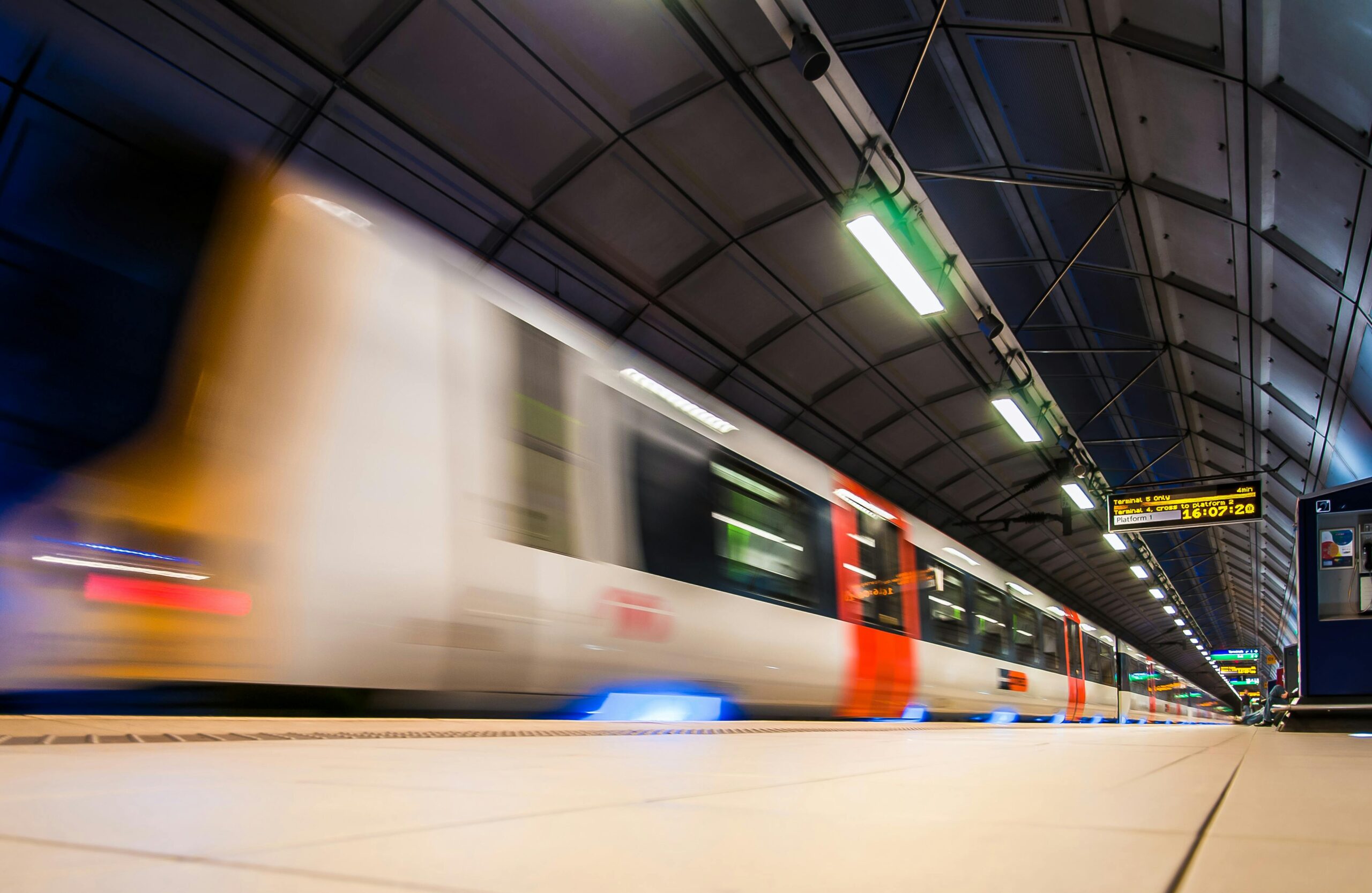
- Binario 7: go to track/platform 7.
- Binario 2 Est: go specifically to 2 East, not ordinary platform 2.
- Binario 3 Ovest: follow signs for 3 West.
Look for Partenze, meaning departures, and find your train by train number and departure time. Then read the complete entry in the Binario column. Using the train number is safer than relying only on the destination, since several trains can leave for the same city within a short period.
Est and Ovest are part of the platform name
Est means east and Ovest means west. At stations that use these suffixes, they identify a particular part of the railway complex. They are not simply telling you which direction the train will travel.
This means three labels such as 1, 1 Est and 1 Ovest can refer to different boarding locations. Seeing the number 1 on a sign is therefore not enough if your departure board says 1 Est.
A useful rule is simple:
- If the board says 4, follow signs for 4.
- If it says 4 Est, keep following signs containing both 4 and Est.
- If it says 4 Ovest, keep following signs containing both 4 and Ovest.
Do not drop the suffix because you have reached a platform with the correct number. At a large station, the similarly numbered track may be in another section entirely.
Bologna Centrale is the classic Est and Ovest example
Bologna Centrale is where this naming system catches many travelers. The station has ordinary surface tracks, east and west terminal sections, and underground high-speed tracks. Current RFI information lists passenger tracks carrying labels such as 1 Est, 2 Est, 1 Ovest and 7 Ovest, while high-speed services also use underground tracks 16 to 19. You can check the current accessibility and station information on the official RFI Bologna Centrale page.
Binari 1-4 Est
The Est tracks are at the eastern end of the surface station. They are terminal tracks rather than simply the eastern ends of ordinary platforms 1 to 4. If your screen shows 1-EST or 2-EST, follow the signs specifically marked Est.
Binari 1-7 Ovest
The western terminal tracks form another distinct group. Station signs may show Binari 1-7 Ovest, and the area serving them is commonly identified as Piazzale Ovest.
This creates the potentially confusing situation where Bologna can have a plain numbered track and another track with the same number followed by Est or Ovest. The suffix is therefore just as important as the number.
Binari 16-19
Tracks 16 to 19 are in Bologna Centrale’s underground high-speed station. Reaching them involves going down through the station rather than walking along the surface platforms. A connection between an underground high-speed train and an Est or Ovest regional departure should therefore be treated as a real station transfer, especially with luggage, a stroller or reduced mobility.
What “Piazzale” means
Piazzale literally means a large open square, forecourt or yard. Railway usage is less literal. At some stations it identifies a particular section of the station complex or the space serving a group of tracks.
At Bologna Centrale, for example, Piazzale Ovest refers to the western station area serving the Ovest tracks. It does not mean that you should leave the railway station and start searching for an ordinary city piazza.
Also, Piazzale Ovest by itself is not necessarily your final boarding location. Once you reach the correct station sector, you still need the specific track number shown for your train.
The word can occasionally appear as part of a more formal railway location name too. In those cases, treat it as a station subsection and continue looking for the actual binario assigned to your departure.
Roma Termini has its own version of the same problem
Rome’s main station does not use Bologna’s full Est/Ovest arrangement, but it does have Binario 1 Est and Binario 2 Est. They are easy to underestimate because their names sound as though they should sit immediately beside platforms 1 and 2.
RFI’s official Roma Termini platform guide says the two Est tracks can be reached by continuing for about 500 metres along platform 1, or directly through the Via Marsala 49 entrance. That is a significant difference if you arrive in the central concourse shortly before departure with heavy bags.
For a broader explanation of the city’s rail hubs, their connections and when to use each one, see our guide to train stations in Rome.
How to find the right platform without guessing
- Find the Partenze board. Do not use the Arrivi screen by mistake.
- Match your train number. This is more reliable than looking only for your destination.
- Read the entire Binario entry. Include Est, Ovest, Bis or any other suffix shown.
- Follow the yellow railway signs. At complex stations they may divide platforms into groups such as 1-11, 1-4 Est, 1-7 Ovest or another station-specific arrangement.
- Check the smaller screen near the track. Before boarding, confirm that the displayed train number and destination match your train.
Do not assume that platform numbering will be geographically logical. Italian stations have different layouts, and names such as Est and Ovest are local solutions rather than a nationwide numbering system.
The Italian signs that matter most
- Partenze: departures
- Arrivi: arrivals
- Binario / Binari: track or platform / tracks or platforms
- Est: east
- Ovest: west
- Piazzale: station forecourt, yard or named station sector depending on context
- Sottopassaggio: underpass
- Ascensore: elevator
- Scale mobili: escalators
- Uscita: exit
- Settore: section of a platform
- Carrozza: train coach or carriage
- Ritardo: delay
- Soppresso: cancelled
- Variazione del binario: platform change
- Bus sostitutivo: replacement bus
Do not confuse the platform with your carriage position
Once you reach the correct track, you may see letters or numbered settori along the platform. These tell you where different coaches are expected to stop. They are a second layer of wayfinding.
For example, your journey might involve:
- Binario 17: the track where the train departs.
- Settore C: the section of that platform where your coach should stop.
- Carrozza 6: your carriage.
- Posto 42: your reserved seat.
Reach the correct binario first. Only then worry about the carriage and platform sector.
Allow extra margin when changing between station sections
A connection that looks simple on a timetable may require an underpass, escalator, elevator or a long walk once the two platform assignments appear. This matters especially at stations where ordinary tracks, terminal tracks and underground platforms coexist.
With large luggage, children or reduced mobility, avoid judging a connection solely by the difference between two platform numbers. Moving from 17 to 18 may be easy in one station, while moving from a central track to “2 Est” can be much more involved.
When putting several rail journeys together, you can plan your Italy route around realistic transfers rather than treating every change of train as identical.
Travelers who need step-free access should also check the specific RFI station page before traveling. RFI lists accessibility by track at many stations and warns that temporary elevator or ramp outages can alter the usable route. This is particularly useful when your train is assigned to a less familiar Est or Ovest section.
What to do if no platform is shown yet
A blank platform field does not mean you should guess based on where the train normally leaves. Stay where you can see an official departure monitor and wait for the assignment.
Platform information can change, so the visual displays and announcements in the station should take precedence over an old screenshot, a previous journey or a platform someone mentioned online. RFI also notes on its station pages that information displayed inside stations can appear a few minutes before the corresponding online information.
Once the platform appears, recheck the complete label. This is exactly when somebody expecting “2” can miss the small but crucial “EST” beside it.
If the platform changes at the last minute
A change may appear on the monitor and be announced over the public-address system. Look for wording involving variazione del binario, then verify your train number before moving.
Use the signed underpass, footbridge, escalator or elevator to change tracks. Never cross railway tracks at platform level unless there is an explicitly designated passenger crossing and staff or signals permit its use.
If you are already in the wrong station section, concentrate on the signs for the new full platform name rather than trying to retrace your route from memory. At Bologna, for example, changing from a plain numbered track to an Ovest track means following signs for the Ovest group, not merely looking for another sign with the same number.
What if the departure is a replacement bus?
During engineering work or disruption, a journey may be marked bus sostitutivo. A normal platform number may then be absent because the replacement vehicle leaves from a bus stop outside or beside the railway station.
Look for temporary notices containing fermata bus, bus sostitutivi or a named street or piazza. Do not wait on a railway platform simply because your original service was supposed to be a train.
The mistakes most likely to cost you a train
- Reading only the number. Binario 1 and Binario 1 Est may be different places.
- Assuming Est describes the train’s direction. It describes the station location.
- Thinking Piazzale must be outside. In railway signage it can identify a station sector.
- Assuming consecutive numbers are beside each other. Complex stations may have separate surface, terminal and underground groups.
- Following the destination without checking the train number. Another service may be leaving for the same city.
- Confusing Settore or Carrozza with Binario. Platform section and carriage information only become useful after you have found the correct track.
If you miss a train because you went to the wrong section, speak to the railway operator that issued your ticket before simply boarding the next service. What you can do next depends on the operator, train category and fare conditions. A flexible regional ticket and a reserved high-speed ticket do not necessarily have the same recovery rules.