Sometimes, and when it works, the boat can pull up to a private landing attached to the hotel itself. But a canal-side address does not automatically mean door-to-door arrival. For Venice water taxi hotel access, three things matter: the hotel must have a usable water entrance, the canal must be accessible to the boat, and the tide must allow the stop. Otherwise, the taxi uses the nearest suitable landing and you finish on foot, possibly with luggage and bridges.
What “direct to the hotel” actually means in Venice
A genuine direct arrival normally means the hotel has its own approdo, pontile, or private water entrance where a licensed boat can embark and disembark guests. In the best cases, you step off the taxi and enter the hotel through a canal-side door or courtyard without touching a bridge.
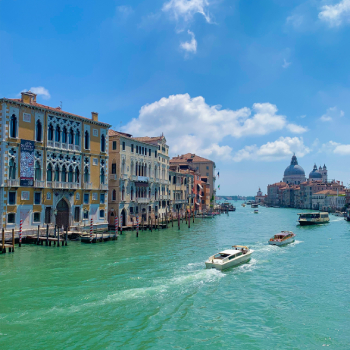
Do not assume this from a photograph of the hotel beside a canal. A building can face water without having a landing suitable for motorboats. Likewise, an online transfer may accept your hotel as the destination while actually taking you to the closest usable riva, meaning a public or accessible canal-side landing.
Venice Water Taxi’s booking information explicitly distinguishes between pickup at a hotel’s water entrance and pickup at the closest bank or dock to an address. That small distinction is the difference between rolling your suitcase into reception and hauling it across a bridge.
Four situations determine where you will get off
1. The hotel has a private dock on an accessible canal
This is the closest Venice gets to true door-to-door transport. Hotels on the Grand Canal, Giudecca Canal and other easily navigable waterways are often straightforward, provided their landing is operational.
If avoiding bridges is the reason you are paying for a private boat, get the hotel to confirm the dock rather than relying on a booking site’s phrase such as “accessible by water taxi.”
2. The hotel has water access, but the canal is difficult
Some hotels sit on small internal canals where access can depend on the width of the canal, turning space, local navigation restrictions and water level. Water-taxi operators specifically warn that narrow, difficult or restricted canals may prevent them from reaching an otherwise waterside property.
In that case, the dispatcher or driver uses another landing nearby. “Nearby” is not a useful enough answer if you have two large suitcases. Ask for the actual landing and the walking route.
3. The hotel has no suitable private landing
The taxi will normally stop at the closest permitted dock or bank from which you can continue on foot. That last section might be 100 metres of flat pavement, or it might involve steps and one or more arched bridges.
This is why the best question is not “Can I take a water taxi to this hotel?” Almost every hotel can be reached by combining boat and walking. Ask instead:
“Can a private water taxi disembark us at the hotel’s own dock, with no walking or bridges?”
4. The normal hotel dock is temporarily unusable
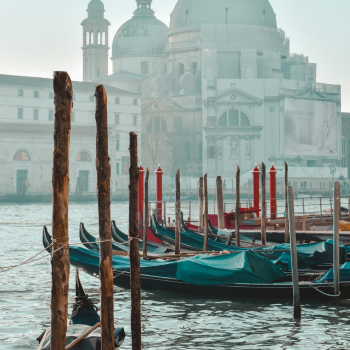
Even a hotel that usually receives taxis directly can lose that advantage on the day. Operators warn that both unusually high and unusually low water can make certain private landings inaccessible.
This matters particularly if you booked the boat to avoid carrying luggage. Have a fallback plan before arrival: ask which alternative landing is normally used, how far it is from reception and how many bridges sit between the two.
How to check a hotel before you book it
Email the property directly. Hotel reservation staff know their own canal access better than a generic accommodation listing, and they can tell you whether the answer changes with tide conditions.
Ask these questions together:
- Do you have your own private water-taxi dock?
- Can a taxi from Marco Polo Airport, Venezia Santa Lucia or Piazzale Roma use that dock?
- If the private dock cannot be used, where exactly will the taxi leave us?
- How many bridges and stairs are there between that alternative landing and reception?
- Can hotel staff meet us there and help with luggage if necessary?
For travelers with heavy bags, a stroller or reduced mobility, the bridge question is as important as the distance. A short Venetian walk can be much harder than its map measurement suggests.
Arriving by water taxi from Marco Polo Airport
The boat does not collect you outside baggage reclaim. Venice Marco Polo has a separate water terminal, or darsena, connected to the passenger terminal by the airport’s covered moving-walkway system. Follow signs for Water Transport or Trasporti via acqua rather than the road-taxi signs outside Arrivals.
The airport officially lists private motorboat services alongside Alilaguna public water transport and advises passengers to check the applicable fare with the operator before boarding. Current transport information and authorized services are available from Venice Marco Polo Airport.
Once aboard, the taxi crosses the lagoon and continues through Venice’s navigable canals to the hotel dock or its nearest usable landing. For a fuller comparison with buses and airport boats, see our guide to getting from Marco Polo Airport to Venice.
Arriving from Venezia Santa Lucia station
This connection is physically simpler. Walk out of Venezia Santa Lucia railway station and the Grand Canal is directly in front of you. Water-taxi boarding points are on the canal bank outside the station area.
Do not confuse the private taxi docks with the ACTV vaporetto platforms. A vaporetto is public transport following fixed stops and routes. A taxi acqueo or private motoscafo provides point-to-point transport.
If your hotel genuinely has an accessible private landing, the station-to-hotel journey can remove the entire bridge-and-suitcase problem. If it does not, ask which landing the boat will use before setting off.
From Piazzale Roma and Tronchetto
Piazzale Roma is where airport buses, road taxis and many private vehicles stop at the edge of historic Venice. Tronchetto is another major vehicle and parking terminal. Both are established places to transfer from wheels to water.
The Comune di Venezia maintains official water-taxi stations around the city, including Piazzale Roma, Tronchetto, the railway station, Rialto and San Marco. It also publishes the applicable municipal water-taxi fare information.
If you are still deciding between walking, vaporetto and private taxi, our overview of how to get around Venice explains where each option makes sense.
Luggage: direct docking solves only part of the problem
Private boats are very useful with suitcases, but baggage allowances and surcharges are operator-specific. Some companies price a certain number of bags into the basic fare and charge for extras, while capacity also depends on the boat and passenger count.
Enter the real number of suitcases when you book, including oversized cases, folding strollers or other bulky items. Do not book for “two passengers” and omit six pieces of luggage because you assume the boat is large enough.
Also separate boat handling from porter service. Getting bags on and off the taxi does not automatically mean somebody will carry them from an alternative public landing across bridges to reception. If the hotel dock cannot be used, arrange assistance with the hotel in advance.
Direct water access does not automatically mean step-free access
Venetian docks often involve changes in height between the boat and the landing, and the difference changes with the tide. Some boats also require passengers to step down into the cabin.
Several Venice taxi operators have boats equipped with hydraulic lifting platforms for passengers with reduced mobility, but these need to be requested rather than assumed. More importantly, an accessible boat does not make an inaccessible hotel landing accessible.
Confirm the whole chain: the departure pier, the boat, the hotel dock and the route from that dock into reception. If any part involves steps you cannot manage, ask the operator and hotel to agree on a suitable alternative before travel day.
Late flights need a more precise plan
Some Venice water-taxi consortia operate around the clock, but that does not mean every airport desk has staff all night or that a suitable boat will be waiting for an unbooked passenger after midnight.
For a late arrival, prebook and save three pieces of information offline: the operator’s phone number, your meeting instructions and the exact fallback landing for the hotel. If your flight is delayed, contact the operator using the procedure in your reservation rather than assuming the original boat will simply wait indefinitely.
For the rest of your transport and sightseeing days, you can plan your Italy route around the places where you will actually arrive, rather than treating the hotel’s street address as a normal road destination.
Do not pay for “door-to-door” without defining the door
Before confirming a transfer, make sure the quoted destination is the hotel’s own private landing rather than simply the hotel name. Give the operator the exact property, passenger count, bag count, arrival details and any mobility requirements.
If booking through the hotel, ask for the total transfer price before approving it. If booking independently, tell the operator that direct docking is important to you and ask what happens if the private landing cannot be reached.
A useful confirmation should look something like this: “The taxi can normally use our private dock. If the water level prevents access, you will disembark at [named landing], which is [number] bridges from the hotel, and we can arrange luggage assistance.”
If the hotel cannot tell you the fallback landing or the number of bridges, assume the transfer is not guaranteed to be door-to-door. In Venice, that one detail matters far more than how close the property looks to a canal on the map.