When an Italian gas stove won’t light, the burner is often waiting for one extra step: keep the control knob pushed down after the flame catches. Turn the knob toward the large-flame or ignition symbol, press it firmly inward, and hold it for several seconds so the safety thermocouple can heat up. If the flame dies the instant you release the knob, this is the first thing to try.
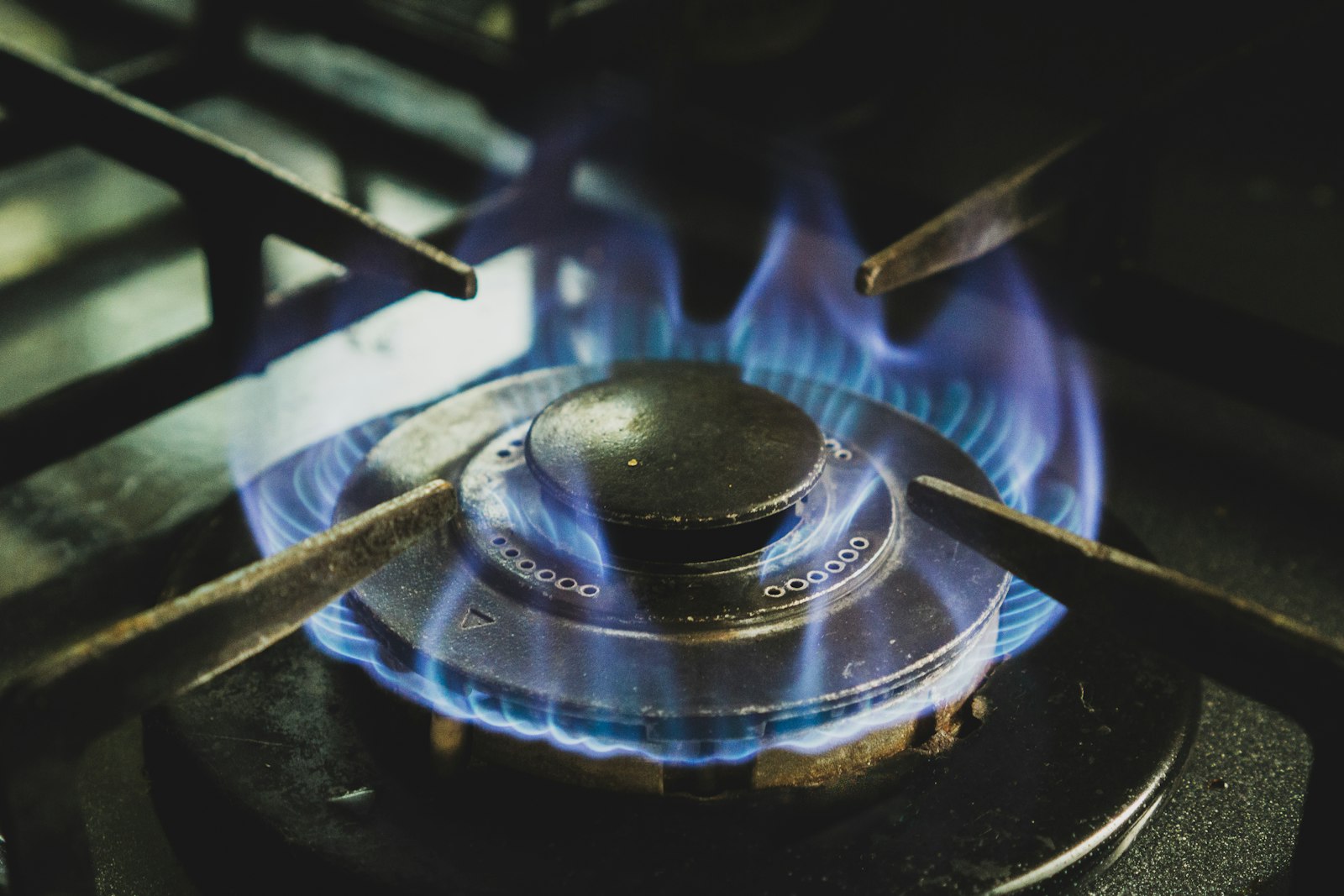
Do not keep feeding unlit gas while experimenting. If the burner has not ignited within about 15 seconds, turn the knob fully off and wait at least one minute before another attempt. If you smell gas, stop troubleshooting completely and follow the gas-leak precautions below.
The knob usually has to be pushed in, not just turned
Gas hobs in Italian apartments commonly have a flame-failure safety device. You may see it described in a manual as a termocoppia, or thermocouple. It detects whether a flame is actually burning and shuts off the gas if the flame disappears.
That safety feature explains a very common tourist complaint: the stove lights perfectly while the knob is held down, then goes out as soon as the knob is released. The thermocouple simply has not become hot enough yet.
Manufacturers specify slightly different holding times. Some models need only a few seconds; others instruct users to hold the knob for roughly 10 seconds. Electrolux’s Italian instructions for a current gas hob, for example, say to keep the knob pressed for about 10 seconds so the thermocouple can warm up.
Try this sequence before messaging the host
- Make sure every burner knob starts in the off position. Look for 0, a filled dot, or another off symbol.
- Choose one burner and press its knob inward. Do not merely turn it.
- While keeping it pushed in, turn anticlockwise toward the ignition symbol or largest flame.
- Watch for the spark and flame. You may hear rapid clicking from the electric igniter.
- Once the flame appears, keep holding the knob down for several more seconds. On a stubborn burner, a hold of roughly 5 to 10 seconds is a reasonable check unless the appliance’s own instructions say otherwise.
- Release the knob slowly. If the flame stays on, turn it to the heat level you want.
If it goes out immediately, repeat once after the recommended waiting period. Do not wedge the knob down, hold it indefinitely, or bypass the safety mechanism.
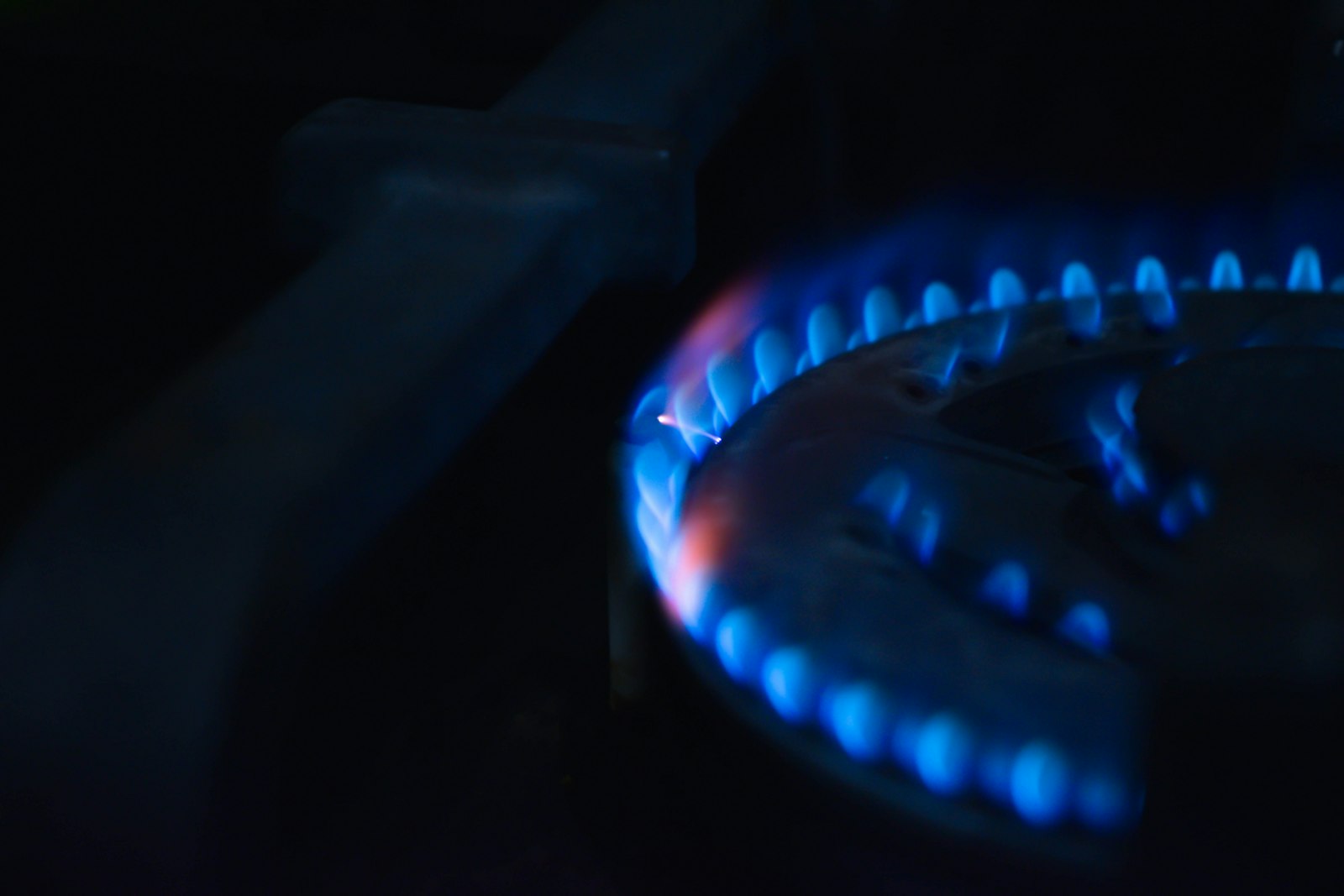
If it clicks but no flame appears
Rapid clicking usually means the electrical ignition system is attempting to make a spark. Look at the burner while operating the knob. A tiny spark should jump near the edge of the burner from a small ceramic-tipped component called the candela di accensione.
If there is clicking but no flame, turn everything off and let the hob cool before checking the removable burner pieces. The circular cap and ring should sit flat and correctly centered. Italian manuals may call these the spartifiamma and corona del bruciatore.
These parts are often moved during cleaning. A cap sitting slightly crooked can stop gas reaching the spark correctly. Lift it, check how it fits, and replace it so it sits level without rocking. Do not unscrew anything underneath.
A recently cleaned burner may simply be wet
Water around the burner or igniter can also cause failed or erratic ignition. Dry the removable cap and burner ring thoroughly and allow moisture around the igniter to evaporate before trying again.
Food residue can obstruct the flame openings too. If the hob is cold, visible surface debris can be removed gently. Do not push needles, wire, toothpicks, or other objects into the gas injector. That moves the problem from “annoying dinner delay” into “appliance repair.”
If the flame appears but dies when you release the knob
This points much more strongly to the flame-safety system. Try the proper press-and-hold technique again, making sure you are pushing the knob fully inward rather than resting your hand on it.
If a 5 to 10 second hold works, nothing necessarily needs repairing. If the flame consistently dies even after following the manufacturer’s procedure, stop there and contact the host. The thermocouple may be dirty, misaligned, or faulty, and those are not guest repairs.
Do not remove the knob, bend the thermocouple, tape the control down, or attempt to disable the gas cutoff. Its entire purpose is to stop unburned gas escaping if the flame goes out.
Use another burner as a quick diagnostic test
Trying one other burner can tell you a surprising amount without taking anything apart.
- One burner fails but the others work: suspect that burner’s cap position, moisture, igniter, or thermocouple.
- All burners click but none produces a flame: the gas supply may be shut off, interrupted, or empty if the property uses an LPG cylinder.
- No burner clicks: the electric ignition may have no power, although this does not automatically mean the gas supply itself is off.
- Every flame dies when the knob is released: confirm the correct lighting technique with the host or appliance manual before assuming several components have failed simultaneously.
No clicking at all does not always mean no gas
Many gas hobs use electricity only to generate the ignition spark. A power cut, unplugged hob, or electrical fault can therefore leave the burners supplied with gas but unable to spark automatically.
Some manufacturers permit manual lighting with a match or gas lighter during a power failure. That is model-specific. Do it only when the appliance instructions or host explicitly confirm that manual ignition is appropriate, and never after an unsuccessful attempt that has left a smell of gas in the room.
If the apartment’s circuit breaker has tripped, do not start resetting electrical switches while you can smell gas. Gas safety takes priority over getting dinner started.
Do not experiment with an unfamiliar gas shutoff
A rental may have a gas tap near the hob, below the counter, beside a meter, or attached to an LPG cylinder. You may see terms such as rubinetto del gas, valvola gas, metano, or bombola GPL.
If the host’s check-in instructions specifically tell you which valve controls the stove and show the correct open position, check that instruction. Otherwise, do not start turning unidentified valves in cupboards or around the meter. Send the host a photo instead.
The same applies to an LPG cylinder. An empty cylinder can make every burner appear broken, but detaching or changing a cylinder is not a sensible guest troubleshooting job unless the accommodation has specifically provided a safe guest procedure.
Stop immediately if you smell gas
A brief whiff during ignition is different from a persistent gas smell, but there is no reason to keep experimenting if the odor remains after the knob is turned off.
Italy’s Vigili del Fuoco advise treating a suspected gas leak as an emergency. Do not light a match, smoke, or operate anything that could create a spark. Do not switch lights or electrical appliances on or off. Open doors and windows to ventilate the room if this can be done safely. If you know exactly which gas shutoff is involved and can reach it safely, close it.
If the odor persists, leave the property. Call the emergency services from outside or another safe location. The Italian Fire Brigade emergency number is 115; 112 can also be used to access emergency assistance in Italy.
Do not go back inside simply because you have messaged the accommodation owner. A possible gas leak is different from an ordinary appliance fault.
When it is time to call the host
There is little value in spending half an evening repeatedly clicking a burner. Contact the host or property manager when:
- no burner works after one or two careful attempts;
- the flame repeatedly goes out despite holding the knob correctly;
- the burner cap is correctly positioned and dry but the burner still will not ignite;
- there is no ignition spark and you have confirmed the apartment has electricity;
- you suspect the gas supply has been intentionally shut off;
- an LPG cylinder appears to be empty;
- the flame is unusually irregular after the burner parts have been seated correctly;
- you see damaged controls, loose components, or anything that looks improvised.
A short video is usually more useful to the host than “the stove doesn’t work.” Film the control knob, the clicking sound, and what the burner does when you release the knob. Do not make a video if you smell gas. Leave instead.
Once the apartment problem is sorted, you can organize the rest of your Italy trip without allowing one temperamental burner to become the evening’s main attraction.
Useful Italian phrases for explaining the problem
- Il fornello non si accende. The burner will not light.
- Fa la scintilla, ma non si accende. It sparks, but it does not light.
- La fiamma si spegne quando lascio la manopola. The flame goes out when I release the knob.
- Devo tenere premuta la manopola? Do I need to keep the knob pressed down?
- Il gas è aperto? Is the gas turned on?
- C’è una bombola del gas? Is there a gas cylinder?
- Potete mandarmi le istruzioni del piano cottura? Can you send me the hob instructions?
If one burner works normally, use that one until the host responds rather than repeatedly attempting to revive the faulty burner. If none work, the correct next move is usually a message to the host, not a screwdriver.